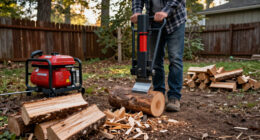
Vertical gas log splitters exist for one reason: rounds too heavy or too gnarly to lift onto a horizontal beam. The BILT HARD 40-Ton Horizontal/Vertical Splitter stands out as the best overall pick for its massive splitting force and dual-mode flexibility, while the Landworks 20-Ton wins on portability for smaller properties and the 35-Ton splitter with hydraulic log lift is the standout for anyone who wants to spare their back completely. The core tradeoff in this category is between tonnage and maneuverability — big machines split knotted hardwood but are heavier to tow and store — plus cycle time differences that add hours over a full cord. Continue reading for the full breakdown, including which engines, wedges, and features actually earn their keep.

Get business pricing on tools and workshop supplies
- Business-only prices and quantity discounts
- Tax-exempt purchasing
- Multiple users, one account, clear invoices
Complete the kit



Key Takeaways
- Ton ratings diverge sharply across the lineup — from 18 to 40 tons — and the sweet spot for most homeowners splitting mixed hardwood falls between 25 and 35 tons; anything under 20 tons struggles with knotted oak and elm.
- The BILT HARD family dominates this roundup with four entries at different price and capacity tiers, which means the real decision is often which BILT HARD model fits your workload, not which brand.
- A hydraulic log lift appears on only one model (the 35-Ton with 4-way and 6-way wedges), and it is the single biggest back-saving upgrade in the entire comparison for anyone splitting large-diameter rounds.
- Nearly every machine here uses a 7 HP / 209-223cc class engine, so engine output is rarely the differentiator — beam design, cycle time, and wedge options separate the winners from the rest.
- The 20-ton models are best treated as occasional-use machines for seasoned or softwood splitters; anyone heating with wood through winter should step up to the 30-ton-and-above group.
| BILT HARD 30-Ton Full Beam Gas Hydraulic Log Splitter, Horizontal/Vertical, 223cc OHV Engine |  | Best Overall | Splitting Force: 30 tons | Engine: 7.5 HP 223cc single-cylinder OHV | Max Log Length: 24 inches | VIEW LATEST PRICE | See Our Full Breakdown |
| SuperHandy 25-Ton Portable Gas Log Splitter with 7 HP Engine |  | Best Lightweight Portability | Splitting Force: 25 tons | Engine: 7 HP AlphaWorks | Hydraulic Pump: Two-stage Bucher gear pump | VIEW LATEST PRICE | See Our Full Breakdown |
| YARDMAX 36-Ton 2-Way Gas Log Splitter with Briggs & Stratton CR950 Engine |  | Best Premium Heavy-Duty Pick | Splitting Force: 36 tons | Engine: Briggs & Stratton CR950, 208cc, 6.5 HP | Operation: 2-way, dual-side loading | VIEW LATEST PRICE | See Our Full Breakdown |
| 20-Ton Gas Log Splitter with 209cc Full Boar Engine |  | Best for Speed and Efficiency | Splitting Force: 20 tons | Engine: 209cc Full Boar, EPA-certified | Pump: 10.5 GPM two-stage | VIEW LATEST PRICE | See Our Full Breakdown |
| 20 Ton Portable Gas Log Splitter with 7HP Engine |  | Best Value for Occasional Use | Splitting Force: 20 tons | Engine: 7HP 4-stroke gas motor | Max Splitting Size: 21″ x 16.5″ | VIEW LATEST PRICE | See Our Full Breakdown |
| BILT HARD 27-Ton Towable Gas-Powered Log Splitter |  | Best for Towing Between Properties | Splitting force: 27 tons (title); description states 25 tons | Engine: 7 HP, 209cc OHV | Pump: 11 GPM, two-stage | VIEW LATEST PRICE | See Our Full Breakdown |
| 20-Ton Gas Log Splitter, 209cc 7 HP Hydraulic Wood Splitter |  | Best Fast-Cycle Value | Splitting force: 20 tons | Engine: 209cc, 7 HP, 4-stroke | Max log length: 20 inches | VIEW LATEST PRICE | See Our Full Breakdown |
| 35 Ton 306cc Gas Log Spliter with 4-Way & 6-Way Wedges and Hydraulic Log Lift |  | Best Premium Workhorse | Splitting force: 35 tons | Engine: 306cc gas | Beam design: BOX-shape | VIEW LATEST PRICE | See Our Full Breakdown |
| Landworks Portable 20-Ton Gas Log Splitter with 7 HP Engine and Rapid Auto Return |  | Best for Woodpile Speed | Splitting force: 20 tons | Engine: 7 HP gas | Hydraulic pump: 2-stage Bucher hydraulic gear pump | VIEW LATEST PRICE | See Our Full Breakdown |
| BILT HARD 18-Ton Gas Log Splitter, 7 HP 209cc |  | Best Budget Entry Point | Splitting force: 18 tons | Engine: 7 HP, 209cc OHV | Hydraulic flow: 10.5 GPM | VIEW LATEST PRICE | See Our Full Breakdown |
| BILT HARD 35-Ton Gas-Powered Horizontal/Vertical Log Splitter |  | Best Heavy-Duty Value | Splitting Force: 35 tons | Engine: 301cc, 10 HP single-cylinder OHV | Operating Positions: Horizontal and vertical | VIEW LATEST PRICE | See Our Full Breakdown |
| Ezasin 20 Ton Gas Log Splitter, 209CC 7HP Hydraulic Wood Splitter with 8s Cycle |  | Best for Fast, Frequent Relocation | Splitting Force: 20 tons | Engine: 209CC 7HP gas | Cycle Time: 8 seconds | VIEW LATEST PRICE | See Our Full Breakdown |
| BILT HARD 40-Ton Gas-Powered Log Splitter, Horizontal and Vertical |  | Best Premium Power | Splitting Force: 40 tons | Engine: 389cc, 13 HP single-cylinder OHV | Operation: Horizontal and vertical | VIEW LATEST PRICE | See Our Full Breakdown |
| 33-Ton Log Splitter with 223cc Full Boar Engine |  | Best Balance of Speed and Force | Engine: 223cc Full Boar OHV | Splitting Force: 33 tons | Cycle Time: 14.3 seconds | VIEW LATEST PRICE | See Our Full Breakdown |
| vertical gas log splitter | Splitting Force | Engine | Cycle Time | Max Log Length |
|---|---|---|---|---|
| BILT HARD 30-Ton Full Beam Gas | 30 tons | 7.5 HP 223cc single-cylinder OHV | — | 24 inches |
| SuperHandy 25-Ton Portable Gas | 25 tons | 7 HP AlphaWorks | 12 seconds | — |
| YARDMAX 36-Ton 2-Way Gas Log S | 36 tons | Briggs & Stratton CR950, 208cc, 6.5 HP | — | 26 inches |
| 20-Ton Gas Log Splitter with 2 | 20 tons | 209cc Full Boar, EPA-certified | 8.5 seconds | — |
| 20 Ton Portable Gas Log Splitt | 20 tons | 7HP 4-stroke gas motor | 8 seconds (up to 530 logs/hour) | — |
| BILT HARD 27-Ton Towable Gas-P | 27 tons (title); description states 25 tons | 7 HP, 209cc OHV | 13 seconds | — |
| 20-Ton Gas Log Splitter | 20 tons | 209cc, 7 HP, 4-stroke | 8 seconds | 20 inches |
| 35 Ton 306cc Gas Log Spliter w | 35 tons | 306cc gas | — | — |
| Landworks Portable 20-Ton Gas | 20 tons | 7 HP gas | 7.5 seconds | 20 inches |
| BILT HARD 18-Ton Gas Log Split | 18 tons | 7 HP, 209cc OHV | 7.5 seconds | 20 inches |
| BILT HARD 35-Ton Gas-Powered H | 35 tons | 301cc, 10 HP single-cylinder OHV | 16 seconds | 24 inches |
| Ezasin 20 Ton Gas Log Splitter | 20 tons | 209CC 7HP gas | 8 seconds | 20.5 inches |
| BILT HARD 40-Ton Gas-Powered L | 40 tons | 389cc, 13 HP single-cylinder OHV | 16 seconds | 24 inches |
| 33-Ton Log Splitter with 223cc | 33 tons | 223cc Full Boar OHV | 14.3 seconds | — |
More Details on Our Top Picks
BILT HARD 30-Ton Full Beam Gas Hydraulic Log Splitter, Horizontal/Vertical, 223cc OHV Engine
This model earns the top spot because it refuses to compromise on the features that matter most for vertical splitting. The 30-ton splitting force pairs with a genuine horizontal/vertical switch, so oversized rounds that should never be lifted can simply be rolled onto the beam and split standing up. Compared with the YARDMAX 36-Ton, it gives up six tons of force but gains a faster 11-second cycle and a friendlier price of ownership in running costs. Against lighter units like the SuperHandy 25-Ton, it simply out-muscles stubborn knotted hardwood.
The tradeoff is mass: at 533 pounds, this is a machine you tow, not carry, so budget for a hitch or ATV. Assembly is required out of the box.
Pros:- 30-ton force powers through knotted oak and hickory that stalls smaller splitters
- True horizontal/vertical operation eliminates heavy lifting on oversized rounds
- Fast 11-second cycle keeps pace during high-volume sessions
- Towable behind ATV/UTV at up to 45 MPH with DOT-certified 16-inch tires
Cons:- At 533 pounds, it demands a tow vehicle and considerable storage space
- Ships partially assembled — expect an afternoon of setup
Best for: Rural property owners heating with wood who need serious tonnage, towability to remote woodlots, and the flexibility to split monster rounds vertically
Not ideal for: Suburban homeowners with small storage sheds or no tow vehicle — the 533-pound weight and DOT-tire setup assume real hauling infrastructure
- Splitting Force:30 tons
- Engine:7.5 HP 223cc single-cylinder OHV
- Max Log Length:24 inches
- Split Cycle Time:11 seconds
- Splitting Wedge:8-inch hardened steel
- Hydraulic System:6-gallon capacity, 14 GPM flow
- Orientation:Horizontal and vertical
- Towing:2-inch ball coupler, up to 45 MPH
- Item Weight:533 lbs
Our verdict“If you split several cords a year and regularly face rounds too heavy to lift, this is the machine that handles both scenarios without compromise.”
SuperHandy 25-Ton Portable Gas Log Splitter with 7 HP Engine
At 90 pounds, this SuperHandy undercuts every full-size splitter here by hundreds of pounds — the BILT HARD 30-Ton weighs nearly six times as much. That changes everything about how you use it: the 10-inch polyurethane wheels and folding handle mean one person can wheel it from shed to truck bed without a ramp or a helper. Despite the light frame, it still converts to vertical operation for rounds up to 24 inches in diameter, which is genuinely rare at this weight class.
The compromises are real, though. The 20-inch log capacity is shorter than the YARDMAX’s 26 inches, the Bucher two-stage pump won’t shrug off green hardwood knots the way a 30-ton machine will, and it arrives without hydraulic fluid — add a jug of AW32 before day one.
Pros:- At just 90 pounds, it’s transportable by one person without towing gear
- Vertical conversion handles 24-inch-diameter rounds despite the compact frame
- 12-second cycle time is competitive with larger splitters
- Folding handle and polyurethane wheels simplify storage and maneuvering
Cons:- Hydraulic fluid is not included, so factor in AW32 before first use
- 20-inch log length capacity trails the 24–26 inch range of full-size rivals
Best for: Weekend wood burners, camp owners, and anyone who needs to muscle a splitter in and out of a truck bed solo
Not ideal for: Homesteaders processing multiple cords of green hardwood — 25 tons and a 20-inch capacity will feel limiting fast
- Splitting Force:25 tons
- Engine:7 HP AlphaWorks
- Hydraulic Pump:Two-stage Bucher gear pump
- Max Log Size:20 inches long, 24 inches diameter
- Cycle Time:12 seconds
- Orientation:Horizontal and vertical
- Wheels:10-inch polyurethane
- Weight:90 pounds
Our verdict“This pick makes the most sense for buyers who value one-person portability over maximum splitting muscle.”
YARDMAX 36-Ton 2-Way Gas Log Splitter with Briggs & Stratton CR950 Engine
Where most splitters here force you to work one side of the beam, the YARDMAX’s dual-side, 2-way operation lets a second person load while you split — effectively doubling throughput on big processing days. With 36 tons of force and a 26-inch table, it out-muscles the BILT HARD 30-Ton on raw capability, and the Briggs & Stratton CR950 engine brings dealer-supported brand credibility that generic 209cc mills can’t match. The U-Beam construction adds rigidity where I-beam designs flex under full load.
Buyers should know this is the most serious commitment on this list: 515 pounds, ongoing gas engine maintenance, and a price that reflects the spec sheet. If your annual volume is under a cord or two, the SuperHandy 25-Ton covers the same basics for less hassle.
Pros:- 36-ton splitting force conquers green, knotted, and frozen hardwood
- 2-way dual-side loading enables a two-person team to work simultaneously
- B&S CR950 engine offers proven durability and parts availability
- U-Beam frame design resists flexing better than typical I-Beam builds
Cons:- At 515 pounds, moving it requires towing infrastructure
- Gas engine ownership means fuel, oil changes, carb maintenance, and winterizing
Best for: Serious firewood producers and small commercial operators who split many cords yearly and want a two-person workflow
Not ideal for: Casual homeowners splitting an occasional cord — the size, maintenance demands, and cost are overkill for light use
- Splitting Force:36 tons
- Engine:Briggs & Stratton CR950, 208cc, 6.5 HP
- Operation:2-way, dual-side loading
- Max Log Length:26 inches
- Frame:U-Beam half-beam design
- Features:Adjustable log cradles and log stripper
- Weight:515 pounds
Our verdict“For high-volume splitting where two people work the pile at once, this is the workstation-grade option in the lineup.”
20-Ton Gas Log Splitter with 209cc Full Boar Engine
An 8.5-second cycle is the headline here — faster than the 11- and 12-second loops of the BILT HARD 30-Ton and SuperHandy 25-Ton — and over a long afternoon, those saved seconds per log compound into real throughput. The auto-return valve with adjustable detent means the ram retracts on its own while you position the next round, so you’re never wasting motion. The wide-angle 5° wedge starts the split sooner and reduces how high you must lift logs onto the beam.
The catch: 20 tons is the entry tier of force here, so stringy elm and green hardwood will test its patience. It’s also not towable, unlike the BILT HARD machines — this is a roll-it-around-the-yard tool, not a woodlot companion, and it arrives dry.
Pros:- 8.5-second cycle is the quickest in this batch, boosting hourly output
- Auto-return valve with adjustable detent eliminates manual retraction work
- Flat-free 10-inch tires mean no seasonal flat repairs
- Compact beam-and-tank design fits tighter storage spaces
Cons:- Not towable, limiting it to around-the-property use
- 20-ton force struggles with very green or twisted-grain logs
Best for: Homeowners splitting mostly seasoned wood who want the fastest possible cycle times in a compact, storable footprint
Not ideal for: Anyone who needs to haul the splitter to remote woodlots or regularly battles green, knotty hardwood — 20 tons and no tow hitch rule it out
- Splitting Force:20 tons
- Engine:209cc Full Boar, EPA-certified
- Pump:10.5 GPM two-stage
- Cycle Time:8.5 seconds
- Wedge:Wide-angle, 5°
- Tires:10-inch flat-free
- Hydraulic Capacity:1.45 gallons (10W AW32/AW22/ISO 32)
- Towable:No
Our verdict“Speed-focused buyers with seasoned wood and modest log sizes get the best efficiency-per-dollar from this pick.”
20 Ton Portable Gas Log Splitter with 7HP Engine
For buyers who want gas-powered independence without full-size splitter costs, this model hits a practical middle ground. The 8-second cycle and up to 530 logs per hour actually edge out the Full Boar 20-Ton’s 8.5-second loop, and the all-steel frame with an alloy wedge feels built for years of seasonal abuse rather than a few weekends. Like the SuperHandy, it runs entirely without electricity — backyard, farm, or forest, it works wherever you roll it on its 10-inch tires and foldable handle.
The honest limitation for this roundup’s focus: it’s horizontal-only. Unlike the BILT HARD 30-Ton, there’s no vertical mode, so rounds too heavy to lift onto the beam are a two-person or split-with-a-maul problem. It also ships with empty reservoirs — oil, fuel, and hydraulic fluid are on you before the first pull.
Pros:- 8-second cycle delivers throughput up to 530 logs per hour
- Runs anywhere with no electricity — works at remote forest and farm sites
- Heavy-duty steel frame and alloy wedge withstand seasonal heavy use
- Foldable handle and 10-inch tires simplify storage and transport
Cons:- Horizontal-only orientation limits handling of very large or heavy rounds
- Requires manual filling of engine oil, fuel, and hydraulic fluid before first use
Best for: Budget-conscious homeowners with modest log sizes who want a fast, durable, no-electricity splitter for a cord or two per season
Not ideal for: Anyone regularly handling massive, un-liftable rounds — the horizontal-only beam means no vertical workaround
- Splitting Force:20 tons
- Engine:7HP 4-stroke gas motor
- Max Splitting Size:21″ x 16.5″
- Cycle Time:8 seconds (up to 530 logs/hour)
- Pump:Dual gear hydraulic pump
- Orientation:Horizontal full beam
- Frame / Wedge:Heavy-duty steel / alloy steel
- Fluid Capacities:1.6 gal hydraulic, 0.74 gal fuel
Our verdict“A sensible value pick if your logs are liftable and your volume is moderate — just don’t expect vertical-mode versatility.”
BILT HARD 27-Ton Towable Gas-Powered Log Splitter
This is the only splitter in this batch built for real travel, with DOT-approved 16-inch tires rated for towing up to 45 MPH and a 2-inch ball coupler that hooks up like a trailer. If your firewood lives on a different property than your garage, that changes everything — the Landworks 20-Ton and the BILT HARD 18-Ton both rely on 10-inch transport wheels that work around the yard but not down the highway. The horizontal/vertical conversion is the other reason to pay attention here: it lets you roll big rounds upright instead of lifting them, something the smaller horizontal-only units can’t do. The tradeoff is weight and paperwork — assembly is required, and the stated splitting force is inconsistent between the title (27 tons) and description (25 tons), which I’d verify before committing to gnarly hardwood.
Pros:- Highway-rated towing setup with DOT-approved 16-inch tires and 2-inch ball coupler
- Converts between horizontal and vertical operation for heavy rounds
- Handles logs up to 24 inches, longer than the 20-inch class machines
- Hydraulic and engine oil included so it’s ready to run after assembly
Cons:- Splitting force listed inconsistently (27 tons in title vs. 25 tons in description)
- Requires assembly before first use
Best for: Rural property owners who split wood at multiple sites and need to tow the splitter legally on public roads
Not ideal for: Suburban homeowners with one woodpile — the towable frame and DOT tires are wasted capability if the machine never leaves your driveway
- Splitting force:27 tons (title); description states 25 tons
- Engine:7 HP, 209cc OHV
- Pump:11 GPM, two-stage
- Cycle time:13 seconds
- Maximum log length:24 inches
- Operation:Horizontal and vertical
- Tires:16-inch DOT-approved
- Maximum towing speed:45 MPH
Our verdict“Buy this if you need one splitter that travels between properties; skip it if all your splitting happens within pushing distance of one shed.”
20-Ton Gas Log Splitter, 209cc 7 HP Hydraulic Wood Splitter
The headline here is the 8-second cycle time, which puts this 20-ton unit near the Landworks 20-Ton (7.5 seconds) in speed while matching it on capacity: 20-inch logs, 16-inch diameter. Where it pulls ahead of the competition is out-of-box readiness — nothing extra to buy before the first split, whereas both the Landworks and the BILT HARD 18-Ton arrive without hydraulic fluid, forcing a side trip to the supply store. At 132 pounds with a compact frame and 10-inch pneumatic tires, it’s among the lighter gas options here, though that also means wrestling it across soft ground or gravel is a two-person job. The 0.74-gallon fuel tank with 2–3 hours of runtime is fine for a weekend cord, not a full heating season.
Pros:- Fast 8-second cycle time speeds through large wood piles
- Handles dry, wet, and knotted logs at 20 tons of force
- Works anywhere without an electrical outlet
- Compact frame with ergonomic handles and pneumatic tires
Cons:- 132 pounds is awkward to move over uneven or soft terrain
- Ongoing fuel and maintenance costs come with any gas engine
Best for: Homeowners splitting a few cords a year who want a ready-to-work machine with a fast cycle at a mid-tier commitment level
Not ideal for: Anyone with green, oversized hardwood rounds — 20 inches and 16 inches of diameter caps out below serious homestead needs
- Splitting force:20 tons
- Engine:209cc, 7 HP, 4-stroke
- Max log length:20 inches
- Max log diameter:16 inches
- Cycle time:8 seconds
- Fuel tank:0.74 gallons (2–3 hour runtime)
- Weight:132 lbs
- Tires:10-inch pneumatic
Our verdict“A sensible middle pick if you want fast cycle times without the size and cost of the towable or 35-ton machines.”
35 Ton 306cc Gas Log Spliter with 4-Way & 6-Way Wedges and Hydraulic Log Lift
This is the heavy end of the lineup, and the 306cc engine with 35 tons of force places it in a different league from the 20-ton machines like the Landworks or the 209cc 20-Ton splitter. Two features justify the premium for serious wood burners. First, the tool-free 2-way, 4-way, and 6-way wedges — a 6-way wedge turns one cycle into six pieces, which matters when you’re processing ten cords instead of two. Second, the 700-lb hydraulic log lift that doubles as a work table, eliminating the back-breaking lifting that smaller splitters demand. The 3.55 inches of vertical wedge adjustment keeps splits centered across log sizes. Be honest about the downsides: this eats storage space, and as a newer listing there’s little long-term ownership feedback to lean on.
Pros:- Tool-free switching between 2-way, 4-way, and 6-way wedges multiplies throughput
- Hydraulic log lift handles 700-lb rounds, reducing back strain
- BOX-shape beam design is stiffer and more stable than traditional I-beams
- Hydraulic wedge adjustment keeps splits centered across varying log sizes
Cons:- Large footprint demands serious storage space in the off-season
- Limited track record makes long-term reliability hard to verify
Best for: High-volume wood burners and small farmsteads processing many cords yearly who want to cut cycle counts and spare their backs
Not ideal for: Casual fireplace users — a 6-way wedge and 700-lb log lift are overkill if you split less than a cord a season
- Splitting force:35 tons
- Engine:306cc gas
- Beam design:BOX-shape
- Wedge options:2-way, 4-way, 6-way (tool-free)
- Wedge vertical adjustment:3.55 inches
- Log lift capacity:700 lbs
Our verdict“The pick when throughput and ergonomics matter more than budget or garage space.”
Landworks Portable 20-Ton Gas Log Splitter with 7 HP Engine and Rapid Auto Return
The 7.5-second cycle time with rapid auto return is the fastest in this batch, edging out the 209cc 20-Ton splitter by half a second and crushing the BILT HARD 27-Ton’s 13-second pace. For batch-splitting straight-grained logs, that speed compounds quickly across a full afternoon. The Bucher two-stage hydraulic gear pump is a name-brand component that inspires more confidence than generic pump offerings at this capacity. Capacity is the standard 20-inch length and 16-inch diameter, same as the 20-Ton and the BILT HARD 18-Ton, so the real differentiator is cycle speed — not raw capability. Two frustrations temper the enthusiasm: hydraulic fluid (AW32) is not included, and 130 pounds is a stretch for the ‘portable’ label, especially on slopes or soft ground where the 10-inch wheels bog down.
Pros:- Fastest cycle time in this batch at 7.5 seconds with auto return
- Name-brand Bucher two-stage hydraulic pump
- 20-ton force handles logs up to 20 inches long and 16 inches in diameter
- Gas power means no dependence on electrical outlets
Cons:- Hydraulic fluid not included, so budget an extra purchase and delay before first use
- 130-pound weight undercuts the portability pitch
- Outdoor use only due to engine exhaust
Best for: Weekend warriors with big straight-grained woodpiles who want the shortest possible cycle time per log
Not ideal for: Anyone expecting true one-person portability — at 130 pounds with small wheels, moving it around a hilly property is a chore
- Splitting force:20 tons
- Engine:7 HP gas
- Hydraulic pump:2-stage Bucher hydraulic gear pump
- Cycle time:7.5 seconds
- Max log length:20 inches
- Max log diameter:16 inches
- Weight:130 lbs
- Transport wheels:10 inches
Our verdict“Choose this over the other 20-ton machines when cycle speed is your priority; skip it if you value a ready-to-run package.”
BILT HARD 18-Ton Gas Log Splitter, 7 HP 209cc
This is the lowest-force machine in this batch, and that’s exactly its selling point: 18 tons still splits seasoned hardwood while keeping the commitment level down for first-time buyers. The 7.5-second cycle time matches the Landworks 20-Ton, so you’re not sacrificing speed — you’re trading two tons of force and the Bucher pump for a lower entry price. The full-beam steel wedge is a sturdier construction than partial-beam designs at this size, and the familiar 20-inch by 16-inch capacity covers typical fireplace rounds. Compared with the 209cc 20-Ton splitter, the main gap is readiness: this one arrives without hydraulic fluid or engine oil, so your first splitting session waits on a supply run. At 146 pounds it’s actually heavier than the 20-ton competitors, which undercuts the portable framing.
Pros:- Fast 7.5-second cycle time despite the lower tonnage
- Full-beam steel wedge is more durable than partial-beam designs
- 10-inch tires allow repositioning around a yard
- Runs anywhere without electrical access
Cons:- Hydraulic fluid and engine oil not included — an extra purchase and delay before first use
- 18 tons is the least force in this batch, limiting it on tough rounds
- At 146 pounds, it’s heavier than the higher-capacity 20-ton competitors
Best for: First-time log splitter buyers with mostly seasoned wood and modest annual volume who want gas power at the lowest entry point
Not ideal for: Anyone splitting green or twisted hardwood — 18 tons is the floor of this lineup, and gnarly rounds will stall the ram
- Splitting force:18 tons
- Engine:7 HP, 209cc OHV
- Hydraulic flow:10.5 GPM
- Cycle time:7.5 seconds
- Max log length:20 inches
- Max log diameter:16 inches
- Weight:146 lbs
- Hydraulic fluid:AW32 recommended (not included)
Our verdict“A reasonable entry into gas splitting if your wood is cooperative and you don’t mind shopping for fluids on day one.”
BILT HARD 35-Ton Gas-Powered Horizontal/Vertical Log Splitter
For buyers who want true commercial-grade splitting force without stepping up to the 40-ton class, this BILT HARD 35-ton model hits a sweet spot. The 301cc engine and 7-gallon hydraulic reservoir give it the muscle for gnarly oak and hickory rounds, and the horizontal/vertical switch means you can roll monster logs under the beam instead of hoisting them onto it. Compared with the BILT HARD 30-Ton splitter elsewhere in this roundup, you gain five tons of force for handling stubborn crotches and forked grain, while keeping the same towable 2-inch coupler and DOT-certified tires for moving between woodlots. The tradeoff is weight — 640 pounds means this is a machine you tow, never carry — and the 16-second cycle is slower than lighter 20-ton rivals.
Pros:- 35 tons of force handles knotty hardwood that stalls 20-ton machines
- Vertical mode eliminates lifting oversized rounds onto the beam
- Tow-ready with 2-inch coupler and 16-inch DOT-certified tires
- 24-inch log capacity suits most firewood lengths
Cons:- 640-pound weight demands a tow vehicle and ample storage space
- 16-second cycle time is slower than lighter-duty competitors
Best for: Rural property owners and homesteaders splitting several cords of dense hardwood each season who need a towable, vertical-capable workhorse
Not ideal for: Suburban users with small sheds or fenced yards — the 640-pound weight and full-size footprint make storage and repositioning a real chore
- Splitting Force:35 tons
- Engine:301cc, 10 HP single-cylinder OHV
- Operating Positions:Horizontal and vertical
- Max Log Length:24 inches
- Cycle Time:16 seconds
- Hydraulic Oil Capacity:7 gallons
- Tires / Coupler:16-inch DOT-certified / 2-inch ball
Our verdict“If you split serious hardwood volumes and want vertical-capable power that tows to the woodpile, this is the force-per-dollar standout.”
Ezasin 20 Ton Gas Log Splitter, 209CC 7HP Hydraulic Wood Splitter with 8s Cycle
Where every other serious splitter here is a tow-behind commitment, the Ezasin EALS01 weighs just 135 pounds and rolls on 10-inch pneumatic tires — a genuinely different machine for a genuinely different buyer. Its 8-second cycle time with an auto-return detent valve is the fastest in this lineup, roughly half the cycle of the BILT HARD 35-ton, so smaller clean logs get processed at a pace the big beam machines can’t match. The catch is capacity: 20 tons and a 20.5-inch max log length put a hard ceiling on what it will tackle, and stringy elm or twisted crotches will stop the ram cold where the 33-ton Full Boar model walks through. Setup also requires filling gas, engine oil, and hydraulic fluid before first use.
Pros:- Fastest cycle time in the lineup at 8 seconds with auto-return valve
- 135-pound weight and pneumatic tires make it genuinely movable by hand
- Dual-stage pump reduces engine strain while keeping throughput high
- Compact 47-inch footprint fits tight storage spaces
Cons:- 20-ton force and 20.5-inch log limit rule out big, gnotty rounds
- Requires gas, engine oil, and hydraulic oil filled before first use
Best for: Homeowners with modest firewood needs, small backyards, or frequent moves between a woodpile, garage, and job site
Not ideal for: Anyone splitting large-diameter or knotty hardwood rounds — 20 tons and a 20.5-inch length limit will frustrate quickly
- Splitting Force:20 tons
- Engine:209CC 7HP gas
- Cycle Time:8 seconds
- Max Log Length:20.5 inches
- Max Log Width:16 inches
- Weight:135 lbs
- Tires:10-inch pneumatic
Our verdict“Buy this if your wood is moderate-sized and your priority is speed and portability; skip it if your rounds are big or gnarly.”
BILT HARD 40-Ton Gas-Powered Log Splitter, Horizontal and Vertical
This is the maximum-force option in the roundup, and the differences from its 35-ton sibling are more than a number: the larger 389cc, 13 HP engine backs the 40-ton rating with real torque, so green elm, frozen maple, and forked crotches that bog down lesser machines get pushed through instead of shrugged at. Like the BILT HARD 35-ton, it offers horizontal and vertical operation, 24-inch log capacity, and a full tow package — the choice between them comes down to how nasty your wood is. Against the Ezasin’s 20-ton rating, it’s simply a different category of machine, trading the Ezasin’s 8-second cycle for raw authority. Note that the 76-pound listed shipping weight clearly reflects the crated package, not the assembled splitter, so plan on two-person assembly and real machinery handling.
Pros:- 40 tons of force conquers the toughest grain in this lineup
- 389cc, 13 HP engine provides torque headroom for green wood
- Vertical mode handles rounds too heavy to lift
- Towable package with DOT-certified tires and 2-inch coupler
Cons:- Gas engine demands ongoing fuel, oil, and hydraulic maintenance
- Highest force rating in the roundup comes with the highest cost and complexity
Best for: Buyers splitting large-diameter, green, or notoriously stringy hardwood who never want to finish a round with a maul
Not ideal for: Casual users burning under a cord a year — this much machine is overkill, over-budget, and oversized for occasional clean splits
- Splitting Force:40 tons
- Engine:389cc, 13 HP single-cylinder OHV
- Operation:Horizontal and vertical
- Max Log Length:24 inches
- Cycle Time:16 seconds
- Hydraulic Oil Capacity:7 gallons
- Tires / Coupler:16-inch DOT-certified / 2-inch ball
Our verdict“When nothing less than 40 tons will do, this is the ceiling of the lineup — buy it only if your wood truly demands it.”
33-Ton Log Splitter with 223cc Full Boar Engine
Sitting between the 20-ton portables and the 40-ton brute, this splitter’s 223cc Full Boar engine and 33-ton rating land in a practical middle zone most firewood cutters actually live in. Its 14.3-second cycle time is quicker than either BILT HARD towable (16 seconds), and the auto-return valve with adjustable detent lets you tune ram retraction to your log length rather than waiting out a full stroke. The heavy-duty H-beam frame adds rigidity under load, and mounting the hydraulic filter inside the reservoir shields it from falling rounds — a small detail that prevents a real mid-session headache. Compared with the BILT HARD 30-Ton splitter, the faster cycle and protected filter justify a look, though it skips the wedge and log-lift extras of the 35-ton 306cc multi-wedge model.
Pros:- 33-ton force sits in the practical sweet spot between light and heavy-duty classes
- 14.3-second cycle beats the 16-second BILT HARD towables
- Auto-return valve with adjustable detent reduces operator fatigue
- Reservoir-mounted hydraulic filter is protected from falling logs
Cons:- No included multi-way wedges or hydraulic log lift like some 35-ton rivals
- Availability is limited to 49 states
Best for: Serious firewood producers who want near-heavy-duty force with a faster cycle and hands-off ram return
Not ideal for: Buyers in states where it isn’t shipped, or those wanting included 4-way wedges and a hydraulic log lift at this price point
- Engine:223cc Full Boar OHV
- Splitting Force:33 tons
- Cycle Time:14.3 seconds
- Control Valve:Auto-return with adjustable detent
- Frame:Heavy-duty H-beam
- Hydraulic Oil Filter:Mounted inside reservoir
- Availability:49 states
Our verdict“This is the pick when you want big-machine splitting force with a quicker, smarter cycle — as long as it ships to your state.”

How We Picked
I evaluated each splitter through the lens that matters most for vertical operation: raw splitting force, cycle time, work height, and how easily big rounds can be maneuvered onto the beam. Tonnage was weighted first because it determines whether a machine handles knotted hardwood or stalls on it — a 20-ton splitter and a 40-ton splitter are fundamentally different tools despite looking similar in photos. I then compared engine displacement, hydraulic cylinder construction, and whether the unit offers horizontal/vertical conversion, since most buyers eventually want both orientations.
Practical factors rounded out the ranking: towability (highway-capable hitch vs. yard-only), wedge options like 2-way through 6-way, log lifts, auto-return valves, and storage footprint. Models earn their positions by matching a clear buyer type — occasional splitters, small-property owners, and firewood-dependent households each get a specific recommendation rather than a generic ‘best’ label. Where two machines overlap on specs, the one with better usability features or stronger build ranked higher.
Factors to Consider When Choosing Vertical Gas Log Splitters
Splitter specs tell only half the story. Before committing to any of the fourteen machines above, think through how you actually process firewood — the answers change which numbers matter.Match Tonnage to Your Wood, Not Your Ambition
The most common mistake buyers make is overbuying tonnage for wood they’ll never split, or — worse — underbuying to save money and discovering their first elm round defeats the machine. As a rough guide, 20 tons handles seasoned softwood and straight-grained hardwood up to about 20 inches in diameter; 25-30 tons covers most green hardwood; 35-40 tons exists for gnarly, knotted, or frozen rounds. If you buy unsplit truckloads of mixed species, always size up one tier beyond what seems sufficient. Remember that tonnage is only as good as the hydraulic system behind it, so a well-built 27-ton unit can outperform a cheaply plumbed 35-ton one. Species matters more than diameter: a clean 24-inch ash round splits easier than a 16-inch crotch of maple.
Cycle Time Is the Hidden Productivity Multiplier
Cycle time — how long the ram takes to extend and retract — rarely gets the attention it deserves, yet it decides whether splitting a cord takes one afternoon or two. A difference of just three seconds per cycle compounds into more than an hour of extra work over a full cord. Machines with auto-return valves, like the Landworks 20-Ton, let the ram retract while you position the next round, which effectively halves your idle time. Two-stage hydraulic pumps also matter here because they deliver fast low-pressure movement until resistance is met, then shift to slow high-pressure splitting. When comparing models with equal tonnage, give the edge to the faster cycle — you will feel it in your shoulders by the end of the day.
Towability and Where You’ll Actually Store It
A splitter that lives 200 feet from your woodpile gets used half as often as one parked beside it. Check whether the model has a highway-rated hitch and tires or is yard-only, and measure your storage space honestly — full-beam 35- and 40-ton machines are genuinely large. If you haul wood from another property, towability becomes non-negotiable and rules out several of the compact 20-ton units. Vertical-only operation also reduces the footprint you need, since you never lift rounds above knee height. Think about winter storage too: hydraulic fluid, engine, and wedge surfaces all benefit from a dry, covered spot, and a machine too heavy to roll into a shed tends to sit under a tarp rusting.
Wedge Configurations and the Log Lift Question
Wedge count determines how many pieces a round becomes in a single stroke. A 2-way wedge splits into halves, a 4-way into quarters, and a 6-way into sixths — each step up multiplies throughput on small-diameter wood but reduces control on large or stringy rounds. If you burn in a wood stove, quarters are usually the right size, making a 4-way wedge the productivity sweet spot. The hydraulic log lift found on the 35-ton model in this roundup is the single most underappreciated feature in the category: it eliminates the heaviest lifting in vertical mode, which is the whole reason you bought a vertical splitter. Buyers under 40 often skip the lift to save money; buyers over 50 rarely regret paying for it.
Engine Class and Long-Term Maintenance Reality
Nearly every splitter here runs a 209-223cc single-cylinder engine, so don’t over-index on small horsepower differences — they mostly affect cold-weather starting and fuel consumption, not splitting power, which comes from the hydraulics. What matters more is engine brand support and parts availability: the Briggs & Stratton CR950 on the YARDMAX has an established dealer network, while generic import engines may leave you ordering carburetors online. Budget for ongoing costs too: hydraulic fluid changes, filter replacements, and wedge sharpening are part of ownership. A machine that sits for months between uses needs fuel stabilizer and a covered exhaust. Finally, confirm the hydraulic cylinder is serviceable — a sealed non-rebuildable unit turns a minor seal failure into a total loss.
Frequently Asked Questions
Is a vertical splitter better than a horizontal one?
Will a 20-ton gas splitter handle knotted hardwood?
Is a hydraulic log lift worth the extra cost?
Can I tow a gas log splitter on the road?
How much splitting force do I actually need for home firewood?
Conclusion
The right vertical gas log splitter depends less on specs and more on how you burn wood. For best overall, the BILT HARD 40-Ton Horizontal/Vertical covers every base: enough force for knotted hardwood, dual-mode flexibility, and room to grow into. The Landworks 20-Ton with rapid auto return is my best value pick for occasional splitters with mostly seasoned or softwood — its cycle time keeps small jobs quick. At the premium end, the 35-Ton with hydraulic log lift and 4-way/6-way wedges is unmatched for back preservation and throughput on big rounds. Beginners should start with the BILT HARD 18-Ton, which keeps things simple and affordable while you learn your actual needs, while the YARDMAX 36-Ton with its Briggs & Stratton engine suits buyers who prioritize long-term parts support and towable durability for large properties. Match the machine to your woodpile, and you’ll only make this purchase once.
Fall Picks
fall essentials
As an affiliate, we earn on qualifying purchases.