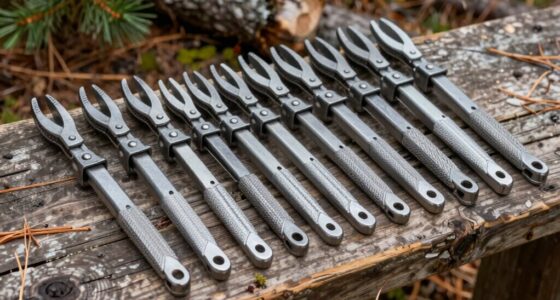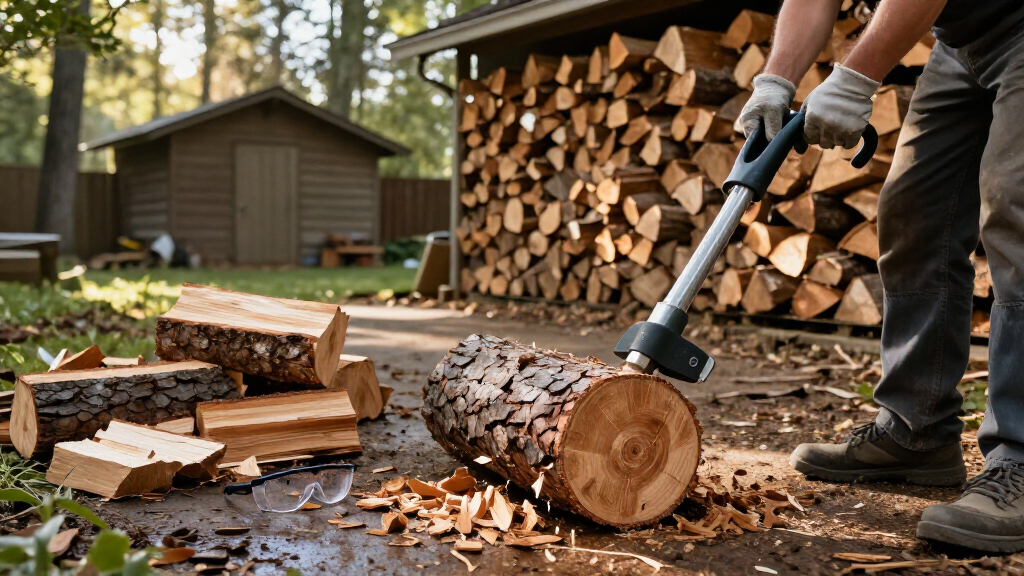
Among these hydraulic log splitters, I’d put the Full Boar 35-ton gas model first for demanding workloads, thanks to its high splitting force, log lift, and included multi-way wedges. For regular firewood processing without that heavy-duty footprint, the Landworks 20-ton gas splitter stands out for portability and rapid auto return, while the BILT HARD 6.5-ton electric splitter is a simpler fit for smaller jobs near power. The main tradeoff is between splitting capacity and the cost, noise, handling effort, and space that come with gas-powered machines. Manual and electric options can suit lighter workloads, but they ask you to work within lower power or slower throughput. Read on for the full breakdown of all 15 models and how I’d match each to a different buyer.

Get business pricing on tools and workshop supplies
- Business-only prices and quantity discounts
- Tax-exempt purchasing
- Multiple users, one account, clear invoices
Complete the kit



Key Takeaways
The 35-ton gas models lead for demanding work: the Full Boar and BILT HARD pair high capacity with a log lift and multi-way wedges, features aimed at processing heavier loads with less manual repositioning.
Several 20-ton gas splitters target the middle ground: Landworks, Ezasin, GasXcel, SuperHandy, and the other 209cc options vary more by portability, return cycle, and stated log capacity than by headline tonnage alone.
Electric options favor convenience over raw force: the BILT HARD 6.5-ton and Ezasin 16-ton models suit different workloads, so buyers should match the motor’s capability to their wood rather than assume all electric splitters are alike.
Manual hydraulic splitters avoid engines and outlets: the EliteEdge and 12-ton two-speed model trade powered throughput for a smaller, simpler setup and hands-on effort.
Tractor owners have a specialized alternative: the Titan Attachments 25-ton three-point splitter uses a Cat 1 tractor connection, making it a different choice from standalone gas, electric, and manual machines.
| Full Boar 35-Ton 306cc Gas Log Splitter with 4-Way and 6-Way Wedges and Hydraulic Log Lift |  | Best for High-Volume, Heavy Logs | Splitting force: 35 tons | Engine displacement: 306 cc | Beam design: Box beam | VIEW LATEST PRICE | See Our Full Breakdown |
| Ezasin 20-Ton Gas Log Splitter, 209cc 7hp |  | Best Value Gas Workhorse | Splitting force: 20 tons | Engine: 209 cc, 7 hp | Maximum log size: 20.5 in long × 16 in wide | VIEW LATEST PRICE | See Our Full Breakdown |
| BILT HARD 6.5-Ton Electric Log Splitter |  | Best Compact Electric Pick | Splitting force: 6.5 tons | Motor: 15 amps | Motor speed: Up to 3,400 RPM | VIEW LATEST PRICE | See Our Full Breakdown |
| Ezasin 16-Ton Electric Log Splitter, 17.4-Amp |  | Best Higher-Force Electric Option | Splitting force: 16 tons | Motor current: 17.4 A | Log capacity: Up to 20.5 inches | VIEW LATEST PRICE | See Our Full Breakdown |
| EliteEdge 12 Ton Manual Hydraulic Log Splitter |  | Best Fuel-Free Manual Splitter | Splitting force: 12 tons | Type: Manual hydraulic | Material: Heavy-duty steel | VIEW LATEST PRICE | See Our Full Breakdown |
| 12-Ton Manual Hydraulic Log Splitter, 18.7-Inch Capacity, Two-Speed Pump |  | Best Manual Pick | Splitting force: 12 tons | Maximum log length: 18.7 inches | Maximum log diameter: 8 inches | VIEW LATEST PRICE | See Our Full Breakdown |
| Titan Attachments 3-Point 25 Ton Hydraulic Log Splitter for Cat 1 Tractors |  | Best for Tractor Owners | Splitting force: 25 tons | Maximum pressure: 2,500 PSI | Maximum log size: 25 x 8.5 inches | VIEW LATEST PRICE | See Our Full Breakdown |
| Landworks Portable 20-Ton Gas Log Splitter, 7 HP, Rapid Auto Return |  | Best for Faster Gas-Powered Cycles | Power source: Gas | Engine: 7 HP | Splitting force: 20 tons | VIEW LATEST PRICE | See Our Full Breakdown |
| BILT HARD 6.5 Ton Electric Log Splitter with Stand |  | Best Electric Work-Height Setup | Splitting force: 6.5 tons | Motor: 15 amp | Voltage: 120V | VIEW LATEST PRICE | See Our Full Breakdown |
| 20 Ton Gas Log Splitter, 209CC 7HP Hydraulic Wood Splitter, 20″ x 18″ Log Capacity, 2-Stage Gear Pump, 8-Second Auto Return, Heavy-Duty Gas Firewood Splitter |  | Best for Off-Grid Firewood Work | Splitting force: 20 tons | Engine: 209cc 4-stroke, 7 HP | Log capacity: 20 inches long x 16 inches in diameter | VIEW LATEST PRICE | See Our Full Breakdown |
| GasXcel 20-Ton Gas Powered Log Splitter |  | Best for Portable Gas-Powered Splitting | Splitting force: 20 tons | Engine: 209CC 4-stroke, 7 HP | Maximum log length: 20 inches | VIEW LATEST PRICE | See Our Full Breakdown |
| BILT HARD 35-Ton Gas Log Splitter with Log Lift and 4-Way and 6-Way Wedges |  | Best for Heavy Logs and High-Volume Work | Splitting force: 35 tons | Engine: 306cc, 10 HP | Hydraulic pump: 18 GPM, two-stage Bucher pump | VIEW LATEST PRICE | See Our Full Breakdown |
| PPOLB 7 Ton Electric Hydraulic Log Splitter with Detachable Cross Blade |  | Best Electric Pick for Multi-Piece Splitting | Splitting force: 7 tons | Motor: 1500W / 15A | Power source: Electric | VIEW LATEST PRICE | See Our Full Breakdown |
| SuperHandy Hydraulic Log Splitter, 20 Ton, Gas Powered |  | Best for a Faster Cycle in a 20-Ton Gas Splitter | Splitting force: 20 tons | Engine: 7 HP AlphaWorks 4-stroke OHV gas engine | Hydraulic pump: Two-stage Bucher hydraulic gear pump | VIEW LATEST PRICE | See Our Full Breakdown |
| BILT HARD 22 Ton Gas Log Splitter with 209cc Engine |  | Best for Fast Home and Farm Splitting | Splitting force: 22 tons | Engine: 209cc gas | Hydraulic pump: Two-stage, 14 GPM | VIEW LATEST PRICE | See Our Full Breakdown |
| hydraulic log splitter | Splitting force | Weight | Cycle time |
|---|---|---|---|
| Full Boar 35-Ton 306cc Gas Log | 35 tons | 1,045 pounds | — |
| Ezasin 20-Ton Gas Log Splitter | 20 tons | 135 pounds | 8 seconds |
| BILT HARD 6.5-Ton Electric Log | 6.5 tons | 98 pounds | 18 seconds |
| Ezasin 16-Ton Electric Log Spl | 16 tons | 124 pounds | 18 seconds |
| EliteEdge 12 Ton Manual Hydrau | 12 tons | 95.8 pounds | — |
| 12-Ton Manual Hydraulic Log Sp | 12 tons | 97.4 pounds | — |
| Titan Attachments 3-Point 25 T | 25 tons | 430 pounds | — |
| Landworks Portable 20-Ton Gas | 20 tons | 148.7 pounds | 7.5 seconds |
| BILT HARD 6.5 Ton Electric Log | 6.5 tons | 114.6 pounds | — |
| 20 Ton Gas Log Splitter | 20 tons | 132 pounds | 8 seconds |
| GasXcel 20-Ton Gas Powered Log | 20 tons | 130 lbs | 8 seconds |
| BILT HARD 35-Ton Gas Log Split | 35 tons | 1,035 lbs | 15 seconds |
| PPOLB 7 Ton Electric Hydraulic | 7 tons | 109 lbs | — |
| SuperHandy Hydraulic Log Split | 20 tons | 148.7 lbs | 7.5 seconds |
| BILT HARD 22 Ton Gas Log Split | 22 tons | 274 lbs | 7 seconds |
More Details on Our Top Picks
Full Boar 35-Ton 306cc Gas Log Splitter with 4-Way and 6-Way Wedges and Hydraulic Log Lift
For buyers processing large rounds in repeated batches, the Full Boar combines 35 tons of force with interchangeable 2-way, 4-way, and 6-way wedges, so one pass can produce several pieces rather than just a split down the middle. Its 700-pound hydraulic log lift addresses a different burden: raising heavy rounds onto the beam, while also serving as a work table. Compared with the Ezasin 20-Ton Gas Log Splitter, this is a much more substantial setup for demanding wood piles, but its 1,045-pound weight makes moving or positioning it a serious logistical task. The box beam and adjustable wedge add flexibility, yet this scale is excessive for occasional small batches. It is also listed as restricted in California, which can rule it out for some buyers.
Pros:- 35 tons of splitting force for demanding rounds
- Interchangeable 2-way, 4-way, and 6-way wedges support different splitting needs
- Hydraulic lift handles logs up to 700 pounds and doubles as a work table
- Adjustable wedge positioning accommodates different log sizes
Cons:- At 1,045 pounds, it is difficult to transport and position
- Its size and capability are excessive for light, occasional firewood work
- Listed as restricted in California
Best for: Landowners and firewood operators splitting heavy rounds in large batches who can keep a substantial machine at a fixed work area.
Not ideal for: Buyers who need a splitter they can move by hand, process only occasional small logs, or live in California.
- Splitting force:35 tons
- Engine displacement:306 cc
- Beam design:Box beam
- Blade options:2-way, 4-way, and 6-way
- Wedge adjustment range:3.55 inches
- Hydraulic log lift capacity:700 lbs
- Log tray length:32 inches
- Weight:1,045 pounds
Our verdict“Choose the Full Boar for high-volume work with heavy rounds and let the hydraulic lift and multi-way wedges justify its size.”
Ezasin 20-Ton Gas Log Splitter, 209cc 7hp
The Ezasin 20-Ton Gas Log Splitter is a practical middle ground for buyers who want gas-powered hydraulic splitting without stepping up to the Full Boar’s much heavier 35-ton machine. Its 20-ton ram handles logs up to 20.5 inches long and 16 inches wide, while the 8-second cycle and automatic return help keep a batch moving. The dual-stage pump aims to balance splitting force with cycle speed, and pneumatic tires make yard or worksite repositioning more manageable at 135 pounds. That portability is relative: it is still a substantial machine, and it needs gasoline, engine oil, and hydraulic oil before use. Compared with the electric BILT HARD 6.5-Ton, this Ezasin offers more force and freedom from a power cord, but brings engine upkeep and exhaust with it.
Pros:- 20-ton force and capacity for logs up to 20.5 inches long and 16 inches wide
- 8-second cycle with automatic ram return supports repeated work
- Dual-stage pump balances splitting power and cycle speed
- Pneumatic tires aid movement around a yard or worksite
Cons:- Requires hydraulic oil, engine oil, and gasoline before operation
- At 135 pounds, it is not lightweight despite its tires
- Gas engine operation brings exhaust and more upkeep than electric models
Best for: Homeowners or small-acreage firewood users who split varied, moderately large logs outdoors and want gas-powered mobility.
Not ideal for: Buyers who want quiet, fume-free operation, avoid engine maintenance, or need a splitter that is easy to lift and carry.
- Splitting force:20 tons
- Engine:209 cc, 7 hp
- Maximum log size:20.5 in long × 16 in wide
- Cycle time:8 seconds
- Hydraulic pump:Dual-stage aluminum gear pump
- Wedge:90-degree alloy steel
- Tires:10-inch pneumatic
- Weight:135 pounds
Our verdict“Pick this Ezasin if you need a movable gas splitter with more capacity than a light-duty electric model without the Full Boar’s heavy-duty scale.”
BILT HARD 6.5-Ton Electric Log Splitter
For small firewood jobs near an electrical outlet, the BILT HARD 6.5-Ton keeps operation simple: it uses a 15-amp electric motor, produces no exhaust, and weighs 98 pounds with transport wheels for repositioning. Its 20.5-inch log-length capacity is useful, but the 9.8-inch diameter limit makes log size the real boundary; long rounds can fit while thick ones may not. Compared with the Ezasin 16-Ton Electric Log Splitter, this BILT HARD gives up substantial force and has the same 18-second cycle, so it is better matched to smaller rounds and lighter workloads than tough, high-volume splitting. Two-hand controls support safer operation, though they do not compensate for the limited capacity. The 90-day warranty is also short, and extension-cord reach is restricted.
Pros:- Electric operation produces no exhaust emissions
- Two-hand controls support safer operation
- Wheels help with repositioning
- Accepts logs up to 20.5 inches long
Cons:- Limited to logs up to 9.8 inches in diameter
- Recommended extension cord length is no more than 15 meters
- 90-day warranty is short
Best for: Homeowners processing smaller-diameter logs near a suitable outlet who want fume-free operation and a relatively compact machine.
Not ideal for: Buyers with thick or knotty rounds, large recurring wood piles, or a work area far from a power source.
- Splitting force:6.5 tons
- Motor:15 amps
- Motor speed:Up to 3,400 RPM
- Maximum log diameter:9.8 inches
- Maximum log length:20.5 inches
- Cycle time:18 seconds
- Controls:Two-hand
- Weight:98 pounds
Our verdict“Choose this BILT HARD for modest, smaller-diameter firewood jobs near power, not for thick rounds or sustained heavy splitting.”
Ezasin 16-Ton Electric Log Splitter, 17.4-Amp
The Ezasin 16-Ton is the stronger electric choice in this group for buyers who want to avoid gasoline without settling for the BILT HARD 6.5-Ton’s modest splitting force. Its two-stage pump and automatic ram return support repeated cycles, while motor overload and temperature protection add safeguards during yard work. Electric power also avoids exhaust, and the stated 65 dB noise level makes it a quieter alternative to the gas-powered Ezasin 20-Ton. The tradeoff is that the electric model still needs a suitable power connection, and its 18-second cycle is not faster than the smaller BILT HARD’s. At 124 pounds, it has wheels and a handle but may still be awkward for one person to move. Its horizontal-only setup also limits working positions.
Pros:- 16-ton splitting force exceeds the BILT HARD 6.5-Ton’s capacity
- Two-stage pump and automatic ram return support repeated splitting
- Electric operation avoids gasoline storage and exhaust fumes
- Motor overload and temperature protection add safeguards
Cons:- Horizontal-only working design limits how it can be used
- At 124 pounds, it may be difficult for one person to move
- Requires an electrical connection, unlike the gas-powered Ezasin 20-Ton
Best for: Homeowners who want more splitting force than a light-duty electric model can offer, with no gasoline or exhaust in their yard work.
Not ideal for: Buyers who need gas-powered freedom from an electrical connection, vertical operation, or easy one-person lifting and transport.
- Splitting force:16 tons
- Motor current:17.4 A
- Log capacity:Up to 20.5 inches
- Cycle time:18 seconds
- Pump:Two-stage aluminum gear pump
- Transport wheels:8 inches
- Noise level:65 dB
- Weight:124 pounds
Our verdict“Choose the Ezasin 16-Ton if you want a higher-force electric hydraulic splitter and can work within its horizontal, cord-dependent setup.”
EliteEdge 12 Ton Manual Hydraulic Log Splitter
The EliteEdge offers a different kind of hydraulic splitting: 12 tons of force without a motor, fuel, or electrical connection. That makes it useful where quiet operation and placement flexibility matter more than fast batch processing. Its two-speed control and 37-inch handles are intended to reduce pumping effort, while wheels help move the 95.8-pound unit across uneven ground. Compared with the powered BILT HARD 6.5-Ton, it provides a higher stated force and avoids dependence on an outlet, but every cycle still requires manual pumping. That effort can add up quickly when preparing a large wood pile. The product data also does not state a maximum log size or cycle time, so buyers with specific round dimensions should confirm fit before choosing it. It suits measured, smaller workloads better than high-volume production.
Pros:- 12-ton hydraulic force without fuel, exhaust, or electrical power
- Two-speed control and 37-inch handles are designed to reduce pumping effort
- Wheels support movement over grass, dirt, and uneven terrain
- Steel construction suits farm, backyard, and homestead use
Cons:- Manual pumping can become tiring during large splitting sessions
- At 95.8 pounds, it may be difficult to lift or set up
- Maximum log size and cycle time are not stated in the supplied product data
Best for: People splitting occasional firewood in quiet or remote areas who prefer a fuel-free tool and can handle repeated manual pumping.
Not ideal for: Buyers processing large volumes, seeking automatic ram cycles, or unable to manage a 95.8-pound machine and manual operation.
- Splitting force:12 tons
- Type:Manual hydraulic
- Material:Heavy-duty steel
- Handle length:37 inches
- Control:Two-speed
- Dimensions:46.06 × 11.42 × 14.17 inches
- Weight:95.8 pounds
- Manufacturer:EliteEdge
Our verdict“Pick the EliteEdge for quiet, fuel-free occasional splitting where manual effort is acceptable and powered throughput is not the priority.”
12-Ton Manual Hydraulic Log Splitter, 18.7-Inch Capacity, Two-Speed Pump
I’d choose this manual hydraulic splitter for firewood work where fuel, outlets, and engine noise are unwelcome. Its 12 tons of force exceeds the BILT HARD 6.5 Ton Electric Log Splitter’s rated force, while the two-speed pump lets the operator use a faster approach before applying pressure to the split. The 18.7-inch length and 8-inch diameter limits suit modest rounds, not oversized or especially knotty logs. Unlike the gas-powered Landworks Portable 20-Ton, it avoids engine upkeep and exhaust, but each round takes physical pumping rather than a powered cycle. Built-in wheels help move its 97.4-pound frame around a yard, though they do not make it light to lift. I’d favor it for intermittent, hands-on splitting—not a large woodpile or a buyer seeking effortless throughput.
Pros:- Manual operation requires no electricity, fuel, or power cord.
- 12-ton force is higher than the BILT HARD 6.5 Ton Electric Log Splitter’s rated force.
- Two-speed pump and 37-inch handles support controlled operation.
- Built-in wheels help reposition the 97.4-pound splitter around a yard.
Cons:- Hand pumping demands repeated physical effort and slows high-volume work.
- Capacity is limited to logs up to 18.7 inches long and 8 inches in diameter.
Best for: Homeowners splitting modest quantities of smaller rounds who need a fuel-free tool for a yard without convenient power.
Not ideal for: People processing large, knotty logs or substantial firewood volumes; the manual pumping and 18.7-inch by 8-inch capacity limit make that work slow.
- Splitting force:12 tons
- Maximum log length:18.7 inches
- Maximum log diameter:8 inches
- Pump:Two-speed manual
- Handle length:37 inches
- Return mechanism:Spring-loaded knob
- Mobility:Built-in wheels
- Weight:97.4 pounds
Our verdict“Choose this manual model for smaller, occasional batches when independence from fuel and electricity matters more than speed.”
Titan Attachments 3-Point 25 Ton Hydraulic Log Splitter for Cat 1 Tractors
This is the lineup’s clear choice for buyers who already own a compatible Category 1 tractor and want a splitter powered through its hydraulic setup. At 25 tons, it offers more force and a longer 25-inch log capacity than the Landworks Portable 20-Ton, making it better suited to substantial hardwood rounds. Horizontal and vertical operation also gives the operator a way to handle larger logs without relying on the Landworks’ portable, engine-powered layout. The tradeoff is the tractor dependency: this is not a standalone machine for a backyard without compatible equipment. At 430 pounds, it also calls for planning around delivery, setup, and storage. I’d rank it highly for a farm or woodlot with a Cat 1 tractor, but not for a homeowner seeking a self-contained splitter.
Pros:- 25-ton force and capacity for logs up to 25 inches long suit demanding hardwood work.
- Horizontal and vertical operating modes accommodate different log sizes and handling needs.
- Hydraulic setup includes hoses, Pioneer couplers, and an auto-return valve.
- Hardened-steel construction and a log catcher support heavy-duty use.
Cons:- Requires a compatible Category 1 3-point-hitch tractor and its hydraulic system.
- At 430 pounds, setup and storage require substantial equipment and planning.
Best for: Farmers and woodlot owners with a Category 1 3-point-hitch tractor who regularly split large hardwood rounds.
Not ideal for: Buyers without a compatible tractor or those who need a standalone, easily moved splitter; the 430-pound unit depends on tractor compatibility and planned setup.
- Splitting force:25 tons
- Maximum pressure:2,500 PSI
- Maximum log size:25 x 8.5 inches
- Compatibility:Category 1 3-point-hitch tractors
- Operating modes:Horizontal and vertical
- Hydraulic features:Auto-return valve, hoses, and Pioneer couplers
- Material:Hardened steel
- Weight:430 pounds
Our verdict“Pick the Titan when a compatible tractor is already part of your operation and its higher capacity justifies a heavy, tractor-dependent attachment.”
Landworks Portable 20-Ton Gas Log Splitter, 7 HP, Rapid Auto Return
The Landworks fits buyers who want gas-powered mobility and a stated 7.5-second cycle without moving up to a tractor-mounted machine like the Titan Attachments 25 Ton. Its 20-ton force and 20-inch by 16-inch capacity provide considerably more room for larger rounds than the manual Takywep, while transport wheels make it easier to reposition around a property. The two-stage Bucher hydraulic gear pump pairs with the 7 HP engine for work away from an outlet, but gas operation brings engine care, exhaust, and outdoor-only use. Hydraulic fluid is not included, so setup requires sourcing the recommended AW32 fluid before operation. I’d choose it for mobile firewood work where a powered cycle matters; buyers who want a ready-to-run electric option may prefer the BILT HARD 6.5 Ton, subject to its power requirements.
Pros:- 20-ton force and 20-inch by 16-inch capacity handle larger rounds than the Takywep manual model.
- 7.5-second cycle time supports faster powered work.
- Gas engine operates without an electrical outlet.
- Transport wheels aid movement around a property.
Cons:- Hydraulic fluid is not included; AW32 is recommended.
- Gas operation requires outdoor use with proper ventilation and brings engine upkeep.
Best for: Rural property owners who need a wheeled, gas-powered splitter for medium-to-large rounds and work away from electrical outlets.
Not ideal for: Users who need quiet indoor-adjacent operation, want to avoid engine maintenance, or expect the unit to arrive ready to run without sourcing hydraulic fluid.
- Power source:Gas
- Engine:7 HP
- Splitting force:20 tons
- Hydraulic pump:Two-stage Bucher hydraulic gear pump
- Maximum log size:20 inches long x 16 inches in diameter
- Cycle time:7.5 seconds
- Hydraulic fluid:Not included; AW32 recommended
- Weight:148.7 pounds
Our verdict“Choose the Landworks for mobile, powered splitting and larger logs, provided you are prepared for outdoor gas operation and fluid setup.”
BILT HARD 6.5 Ton Electric Log Splitter with Stand
I’d point buyers toward this BILT HARD when electric operation and an elevated work position matter more than raw force. Its included stand places the splitter at a 33-inch working height, a practical distinction from the low, hand-operated Takywep and the gas-powered Landworks. The 15-amp, 120V motor avoids fuel and exhaust, while the two-hand control provides a defined operating setup. Its 6.5-ton rating is far below the Landworks’ 20 tons, so this is better matched to smaller rounds than tough, oversized hardwood. The listed capacity reaches 20.5 inches long and 9.8 inches in diameter, but capacity dimensions alone do not make it equivalent to a higher-force gas machine. At 114.6 pounds, its wheels help, yet moving it still takes effort; the stated 40-amp breaker requirement also needs checking against the intended circuit.
Pros:- Electric motor avoids gas, exhaust, and fuel handling.
- Included stand raises the working height to 33 inches.
- Rated capacity covers logs up to 20.5 inches long and 9.8 inches in diameter.
- Two-hand control and large wheels are included.
Cons:- 6.5 tons of force is substantially less than the Landworks Portable 20-Ton’s 20 tons.
- At 114.6 pounds, it is heavy to move despite its wheels.
- The listed 40-amp circuit-breaker requirement may limit where it can be used.
Best for: Homeowners with a suitable electrical setup who split smaller rounds and want a stand that raises the work to 33 inches.
Not ideal for: People splitting tough, large hardwood or those without a suitable circuit; its 6.5-ton force is well below the 20-ton Landworks and the listed breaker requirement may complicate setup.
- Splitting force:6.5 tons
- Motor:15 amp
- Voltage:120V
- Maximum log diameter:9.8 inches
- Maximum log length:20.5 inches
- Working height:33 inches
- Wheel size:5.7 inches
- Weight:114.6 pounds
Our verdict“Choose this electric splitter for smaller rounds and a raised working position if your circuit can support its stated requirements.”
20 Ton Gas Log Splitter, 209CC 7HP Hydraulic Wood Splitter, 20″ x 18″ Log Capacity, 2-Stage Gear Pump, 8-Second Auto Return, Heavy-Duty Gas Firewood Splitter
This AACULPET makes sense for buyers who need a standalone gas splitter for farms, campsites, or woodlots without convenient power. Its 20-ton rating and stated 20-inch-by-16-inch log capacity put it in the same broad work class as the Landworks Portable 20-Ton, but the Landworks has a slightly quicker listed 7.5-second cycle compared with this model’s 8-second cycle. The AACULPET’s 209cc, 7 HP four-stroke engine and pneumatic tires support off-grid use, while its 132-pound weight is lighter than the Landworks’ 148.7 pounds. A 0.74-gallon tank is listed for about two to three hours of runtime, so extended sessions call for refueling breaks. This is a more capable workhorse than the electric BILT HARD 6.5 Ton for larger rounds, but it brings fuel, engine care, and outdoor operation.
Pros:- 20-ton force and capacity for logs up to 20 inches long and 16 inches in diameter.
- 209cc, 7 HP engine runs without an outlet or extension cord.
- Eight-second cycle supports powered work, though the Landworks lists a slightly faster cycle.
- Pneumatic tires and 132-pound weight support transport between work areas.
Cons:- Gas operation requires outdoor use, fuel handling, and engine maintenance.
- The 0.74-gallon tank is listed for only about two to three hours of runtime.
- Its eight-second cycle is slower than the Landworks’ listed 7.5-second cycle.
Best for: Woodlot, farm, and campsite owners who need 20-ton splitting capacity away from outlets and can manage gas equipment.
Not ideal for: Buyers who want quiet, emission-free operation or long uninterrupted sessions; the gas engine needs outdoor use and the listed tank runtime is about two to three hours.
- Splitting force:20 tons
- Engine:209cc 4-stroke, 7 HP
- Log capacity:20 inches long x 16 inches in diameter
- Cycle time:8 seconds
- Fuel tank capacity:0.74 gallons; listed runtime of 2–3 hours
- Dimensions:60 x 24 x 36 inches
- Weight:132 pounds
- Mobility:Pneumatic tires
Our verdict“Pick the AACULPET for off-grid 20-ton splitting if pneumatic-tire portability and a standalone gas engine outweigh refueling and maintenance.”
GasXcel 20-Ton Gas Powered Log Splitter
The GasXcel pairs 20 tons of hydraulic force with an 8-second auto-return cycle, making it a practical choice for homeowners who want a mobile gas unit without stepping up to a full-size towable machine. Its 209CC engine avoids the need for an outlet, while the pneumatic tires and handles help with repositioning on uneven ground. Compared with the SuperHandy 20-Ton, it accepts wider logs—up to 18 inches in diameter versus 16—though the SuperHandy lists a slightly quicker 7.5-second cycle. The 130-pound weight is lower than the SuperHandy’s, but it still takes effort to lift or load. It suits moderate firewood workloads; buyers processing very large rounds or wanting to avoid engine maintenance should look at the BILT HARD 35-Ton or an electric splitter instead.
Pros:- 20-ton force and an 18-inch diameter capacity suit many knotted or mixed-wood rounds
- Eight-second auto-return helps keep a steady pace between splits
- Pneumatic tires and handles support movement over varied terrain
- Gas engine works in locations without electrical access
Cons:- At 130 pounds, it can be difficult to lift into a vehicle or move up steps
- Requires gasoline and routine engine maintenance
- Its capacity and force are below those of the 35-ton BILT HARD
Best for: Homeowners who split mixed-size firewood away from an outlet and need wheels for moving the unit around a yard or woodlot
Not ideal for: People who regularly handle oversized rounds, need a log lift, or want to avoid gasoline and engine upkeep
- Splitting force:20 tons
- Engine:209CC 4-stroke, 7 HP
- Maximum log length:20 inches
- Maximum log diameter:18 inches
- Cycle time:8 seconds
- Weight:130 lbs
- Dimensions:46 x 26 x 34 inches
- Model number:SEDLS01-1
Our verdict“Choose the GasXcel for mobile, medium-duty splitting with a wider log diameter limit, but not for oversized rounds or maintenance-free operation.”
BILT HARD 35-Ton Gas Log Splitter with Log Lift and 4-Way and 6-Way Wedges
This BILT HARD is the lineup’s heavy-duty option: 35 tons of force, a 700-pound log lift, and interchangeable 4-way and 6-way wedges are aimed at large, demanding workloads. The lift addresses a task smaller machines leave to the operator, while the multi-way wedges can split a round into several pieces per pass. Compared with the 22-ton BILT HARD, this model accepts logs up to 24 inches long and 20 inches in diameter, but its 15-second cycle is slower than that smaller machine’s seven-second cycle. Its 1,035-pound weight and towing setup make it a poor fit for casual backyard use or buyers without a suitable vehicle. Assembly and space are part of the commitment, too; this is a worksite-style machine, not a splitter to carry between storage spots.
Pros:- 35-ton force and 24-inch log-length capacity are suited to large rounds
- 700-pound log lift reduces the need to raise heavy logs by hand
- Interchangeable 4-way and 6-way wedges support multi-piece splitting
- DOT-approved tires and a 2-inch ball hitch support towing
Cons:- At 1,035 pounds, it requires a suitable towing vehicle and substantial storage space
- The 15-second cycle is slower than the 22-ton BILT HARD’s seven-second cycle
- Assembly is required, and the log lift and towing setup add complexity
Best for: Landowners and firewood operators processing large rounds who can tow the splitter and want mechanical help lifting heavy logs
Not ideal for: Occasional users with limited storage, no suitable towing vehicle, or a preference for a quick, lightweight backyard splitter
- Splitting force:35 tons
- Engine:306cc, 10 HP
- Hydraulic pump:18 GPM, two-stage Bucher pump
- Cycle time:15 seconds
- Log lift capacity:700 lbs
- Maximum log size:24 inches long; 20 inches in diameter
- Wedges:Interchangeable 4-way and 6-way; 12-inch wedge
- Weight:1,035 lbs
- Towing:2-inch ball hitch; up to 45 mph
Our verdict“Pick this BILT HARD for large logs, lifting assistance, and demanding workloads, provided you have the vehicle and space to handle its size.”
PPOLB 7 Ton Electric Hydraulic Log Splitter with Detachable Cross Blade
The PPOLB offers a different kind of convenience from the gas models: its 15-amp electric motor avoids fuel and exhaust, while the detachable cross blade can turn a single pass into multiple pieces. That setup is useful for smaller firewood rounds near a garage or cabin, but the product data does not list a cycle time or log-size capacity, so I would not choose it for a workload that depends on those limits. Its 7-ton force is well below the GasXcel’s 20 tons, making the GasXcel a better fit for tough, oversized rounds; the PPOLB’s trade is quieter, outlet-based operation and a compact footprint. At 109 pounds, it is still heavy for a compact splitter, and the dual-control system means buyers should be comfortable operating its hand-and-foot controls.
Pros:- Electric motor runs without gasoline or exhaust
- Detachable cross blade can produce multiple pieces per pass
- Dual hand-and-foot controls include overload protection
- Transport wheels and compact dimensions help with storage and repositioning
Cons:- Seven-ton force is substantially below the GasXcel and other gas options
- Requires access to a suitable 15-amp electrical circuit
- At 109 pounds, it is heavy despite its compact footprint
Best for: Cabin and backyard users with a suitable 15-amp circuit who split manageable hardwood rounds and value a cross blade over gas-powered portability
Not ideal for: People splitting large or very tough logs, working far from an outlet, or expecting a lightweight machine they can easily carry
- Splitting force:7 tons
- Motor:1500W / 15A
- Power source:Electric
- Cutting attachment:Detachable cross blade
- Controls:Dual hand-and-foot control with overload protection
- Dimensions:39 x 18.9 x 11.6 inches
- Weight:109 lbs
- Model number:PPWS-1002
Our verdict“Choose the PPOLB for outlet-accessible firewood work where the cross blade and fume-free electric drive matter more than high splitting force.”
SuperHandy Hydraulic Log Splitter, 20 Ton, Gas Powered
The SuperHandy’s strongest distinction is its 7.5-second cycle, paired with a 20-ton rating and a two-stage Bucher gear pump. For repeat splitting, that quicker return can make the work flow more smoothly than with the GasXcel, whose listed cycle is eight seconds. The SuperHandy, however, is limited to 16-inch-diameter logs, while the GasXcel lists an 18-inch maximum, so the faster cycle does not make it the better choice for wider rounds. Its folding handle and 10-inch tubeless wheels help with repositioning, but at nearly 149 pounds it is still a substantial unit. Buyers also need to supply AW32 hydraulic fluid, which is not included. This is a focused option for moderate-size logs and portable gas operation, rather than a high-capacity or ready-to-run purchase.
Pros:- Seven-and-a-half-second cycle is slightly quicker than the GasXcel’s listed cycle
- Two-stage Bucher hydraulic gear pump supports its 20-ton splitting force
- Folding handle and 10-inch tubeless wheels aid storage and movement
- Gas engine operates without an electrical outlet
Cons:- Maximum log diameter is 16 inches, below the GasXcel’s 18-inch limit
- Hydraulic fluid is not included and must be purchased separately
- At 148.7 pounds, it remains difficult for many users to lift
Best for: Firewood users who prioritize a quick return cycle and want a 20-ton gas splitter for logs within its 16-inch diameter limit
Not ideal for: Buyers who routinely split logs wider than 16 inches, want a lighter machine, or expect hydraulic fluid to be included
- Splitting force:20 tons
- Engine:7 HP AlphaWorks 4-stroke OHV gas engine
- Hydraulic pump:Two-stage Bucher hydraulic gear pump
- Maximum log length:20 inches
- Maximum log diameter:16 inches
- Cycle time:7.5 seconds
- Weight:148.7 lbs
- Wheels:10-inch tubeless polyurethane
- Hydraulic fluid:Not included; AW32 recommended
Our verdict“Pick the SuperHandy for a quicker cycle on moderate-size logs, but choose the GasXcel if wider rounds matter more.”
BILT HARD 22 Ton Gas Log Splitter with 209cc Engine
This BILT HARD sits between the 20-ton portable gas models and the much larger 35-ton towable splitter. Its 22-ton force and seven-second cycle make it a strong fit for repeated home or farm firewood work, while its 21-inch log-length capacity exceeds the 20-inch limits listed for the GasXcel and SuperHandy. It does not match the 35-ton BILT HARD for force, log diameter, lifting assistance, or multi-way wedges, but it avoids that model’s 1,035-pound scale and specialized towing footprint. The tradeoff is still substantial: at 274 pounds, it is much heavier than either 20-ton alternative, and it operates horizontally only. The supplied specs list a two-stage 14 GPM pump, but do not give a maximum log diameter, so buyers should confirm that capacity suits their rounds.
Pros:- Seven-second cycle supports brisk repeated splitting
- 22-ton force exceeds the GasXcel and SuperHandy’s 20-ton ratings
- 21-inch maximum log length is longer than the two 20-ton models’ listed capacity
- Steel frame and 13-inch wheels support transport and outdoor use
Cons:- At 274 pounds, it is far heavier than the GasXcel or SuperHandy
- Horizontal-only operation offers no alternate working position
- Maximum log diameter is not listed in the supplied product data
Best for: Homeowners and small-acreage users who process firewood regularly, need a fast cycle, and can move a 274-pound horizontal splitter
Not ideal for: People who need vertical operation, a stated large-diameter capacity, a log lift, or an easily lifted portable unit
- Splitting force:22 tons
- Engine:209cc gas
- Hydraulic pump:Two-stage, 14 GPM
- Maximum log length:21 inches
- Cycle time:7 seconds
- Weight:274 lbs
- Operation:Horizontal
- Package dimensions:44.49 x 18.7 x 11.42 inches
Our verdict“Choose this BILT HARD for faster, higher-force firewood work than a 20-ton portable model, if its weight and horizontal-only layout suit your setup.”
How We Picked
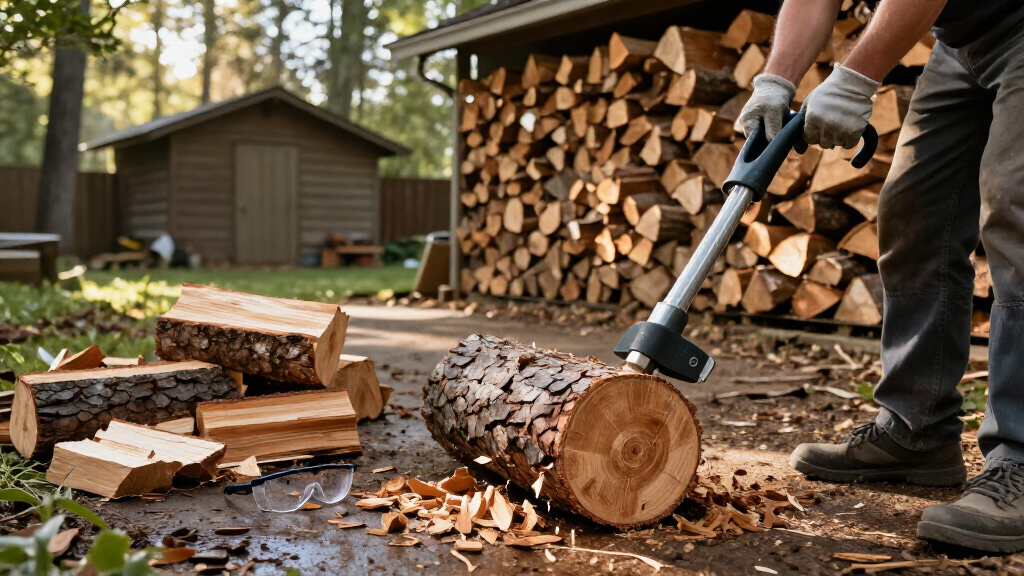
I ranked these hydraulic log splitters by how well their stated design and features match real buyer needs: splitting force, power source, log handling, cycle or return details where provided, portability, and workload. I also weighed practical ownership factors such as access to electricity or a tractor, engine and hydraulic-system upkeep, storage footprint, and how much manual handling a machine appears to require. A higher tonnage figure alone did not earn a higher position; equipment such as a log lift or multi-way wedge matters most when it serves a demanding, repeated workload.
The order reflects the balance of capability and intended use across the lineup. Heavy-duty gas machines rank ahead for sustained, difficult splitting, while portable gas, electric, and manual models earn their places for buyers who value mobility, quieter operation, simpler setup, or a lower-intensity workload. Models with closely matched headline specifications are separated by their named features and use case, not by unsupported claims about performance. Product descriptions do not provide a complete basis for comparing every hydraulic rating, cycle time, or log diameter, so I avoid treating missing specifications as proof of an advantage.
Factors to Consider When Choosing Hydraulic Log Splitters
Before choosing a splitter, I’d start with the work pattern rather than the biggest tonnage number. Wood species, log diameter, how often you split, and where you do the work all shape whether gas, electric, manual, or tractor-mounted power makes sense. These broader checks can help prevent buying more machine than you can store—or less capacity than your wood requires.
Match Splitting Force to Your Wood, Not Just the Label
Rated tonnage is a useful starting point, but it cannot describe every piece of wood you’ll encounter. Grain, knots, dryness, and log diameter can all make a round harder to split than a straight, seasoned piece of the same size. Think about the toughest wood you regularly process, not the occasional unusual round, and compare that workload with the manufacturer’s stated limits. A large safety margin can reduce frustration, but a much higher rating may bring extra weight, expense, and storage demands. If product details omit a maximum log diameter or hydraulic information, check the manufacturer’s specifications before relying on the headline tonnage.
Choose a Power Source That Fits Your Work Site
Gas models make sense when you need to work away from an outlet or process a substantial volume, but they bring engine noise, fuel handling, exhaust, and routine maintenance. Electric splitters avoid fuel and engine upkeep, though their usefulness depends on a suitable power supply and the machine’s capacity. Manual hydraulic designs sidestep both fuel and electrical access, but each round still demands time and physical effort. Tractor-mounted equipment can suit an owner who already has a compatible tractor, but it is a poor fit if the tractor or correct connection is unavailable. Check your site, power access, and transport plan before comparing machines on force alone.
Estimate Throughput Across a Whole Work Session
A fast return feature can shorten the time between splits, but total work also depends on how quickly you load, position, and remove each round. A two-stage pump or rapid auto return may matter more during repeated processing than during occasional small batches. Multi-way wedges can reduce the number of passes on suitable rounds, although they do not remove the need to handle and position the wood safely. Ask how many rounds you expect to split in one session and whether you’ll be working alone. For sporadic use, a simpler machine may be a better match than paying for features designed to keep a large workload moving.
Plan for Loading, Moving, and Storage
Splitter ownership involves more than the splitting stroke: heavy rounds must still reach the machine, and the machine must fit your work area. A log lift can reduce repeated lifting, which may matter more than a modest increase in rated force for someone handling large rounds. Portable designs help when wood is spread across a property, while a tractor attachment relies on access to the tractor and a suitable working area. Measure storage space, gates, paths, and trailer or vehicle capacity before choosing a large gas model. Also check what transport and setup are required; a splitter that is difficult to position may slow down work even if its specifications look strong.
Compare Hydraulic and Engine Upkeep Before You Buy
Hydraulic splitters require attention to their hydraulic system, and gas models add engine-related maintenance. Before purchase, look for the manufacturer’s maintenance schedule, fluid requirements, service access, and instructions for storage between seasons. Electric models avoid engine servicing but still need suitable cords, outlets, and safe handling of powered equipment. Manual units are mechanically simpler, though their pumping and positioning demands remain part of the daily workload. Compare the support and parts information available for the exact model, rather than assuming that similar tonnage means similar maintenance needs.
Spend More Only for Features Your Work Will Use
A log lift, multi-way wedge, higher capacity, or faster return can justify a more capable machine when it saves effort across repeated sessions. Those features offer less value if you split only a small batch now and then or mostly handle manageable rounds. On the other side, choosing a low-force unit to save space can lead to repeated work if your usual wood is difficult to split. Write down your normal round size, annual workload, work location, and who will operate the machine before setting priorities. That short list helps distinguish useful capacity from specifications that mainly add weight and complexity.
Frequently Asked Questions
Is a 20-ton gas splitter enough for most home firewood?
It can suit many home firewood workloads, but the number alone does not guarantee that every round will split easily. Wood species, knots, grain direction, moisture, and diameter all affect resistance. If most of your wood is moderate in size and you process it regularly, a 20-ton model may offer a practical balance of capacity and mobility. For frequent large or difficult rounds, compare higher-capacity machines and check their stated log limits. Match the rating to your hardest routine wood, not just the easiest pieces in the pile.
Should I choose an electric splitter or a gas model?
Choose based on where you work, how much wood you process, and the force your wood tends to require. Electric splitters avoid gasoline and engine maintenance, but they need suitable electrical access and have model-specific capacity limits. Gas machines can work away from outlets and often appear in higher-capacity designs, though they add fuel, noise, exhaust, and engine upkeep. A smaller electric unit may be a good fit for occasional, manageable rounds near a power source. For remote or heavier work, a gas option may better match the job.
Do I need a log lift or a multi-way wedge?
These features are most useful when they reduce repeated effort during a large or physically demanding work session. A log lift can help with loading heavy rounds, while a multi-way wedge can split suitable pieces into multiple sections in a pass. Neither feature makes every round easier: wood shape and grain can affect whether a multi-way split is practical, and the machine still needs careful loading and operation. For occasional light work, those additions may bring more size and complexity than benefit. For frequent processing of heavy rounds, reduced lifting or fewer passes can matter more than a small increase in headline tonnage.
Can I use a tractor-mounted splitter if I do not own a Cat 1 tractor?
The Titan Attachments model in this roundup is described as a three-point splitter for Cat 1 tractors, so it is intended to connect to a compatible tractor. Without access to that equipment, it is not a straightforward substitute for a standalone gas or electric splitter. Before choosing a tractor-mounted unit, verify the tractor’s hitch compatibility and the manufacturer’s connection and hydraulic requirements. Also consider whether you can bring the tractor to the wood and maneuver it safely at the work site. If not, a portable standalone model is likely a more practical direction.
What should I check before buying a splitter with a high tonnage rating?
Check the stated log diameter and length limits, power source, cycle or return information, and whether the rating is presented with enough supporting specifications to compare models. Look at handling features and machine size as well as splitting force; high-capacity equipment can be harder to move and store. Confirm what hydraulic maintenance is required and, for gas models, what engine service the manufacturer specifies. If important specifications are absent from the listing, consult the manufacturer rather than treating a large tonnage label as a complete performance measure. Your usual workload and work-site constraints should decide whether the added capacity is worth the ownership demands.
Conclusion
For the best overall heavy-duty choice, I’d start with the Full Boar 35-ton gas splitter, whose log lift and multi-way wedges complement its high stated capacity. Buyers seeking a premium, high-output alternative can compare it with the BILT HARD 35-ton model, which also includes a log lift and multi-way wedges. For a value-focused regular-use option, I’d look closely at the Landworks 20-ton gas splitter for its portable design and rapid auto return, while checking its specifications against your wood and work site. The BILT HARD 6.5-ton electric model is my beginner-friendly pick for lighter work near power; experienced owners with a compatible Cat 1 tractor should consider the Titan Attachments splitter for a specific tractor-based setup. If you split only a small amount and prefer to avoid engines and electrical access, compare the manual hydraulic models, accepting their slower, hands-on pace.
Halloween Picks

10 ft Halloween Inflatable Archway with Built-in LEDs

Halloween Inflatable Haunted House Maze – 20×20 ft with Removable Roof and Blower

Panefright Halloween Window Projector – Scary Projector for Spooky Decor
As an affiliate, we earn on qualifying purchases.