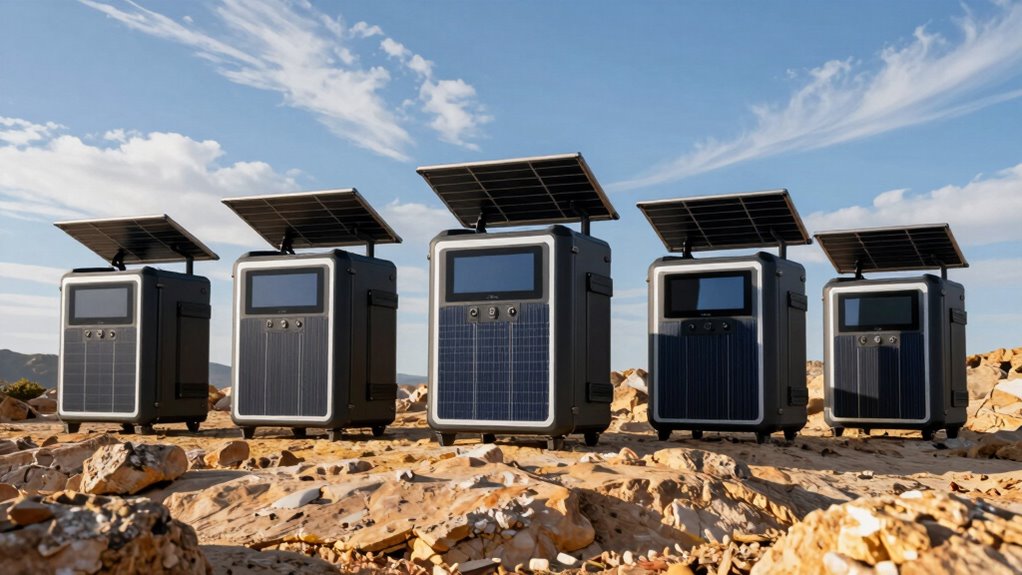

When choosing a solar generator with a 3000-watt capacity, I focus on reliability, power output, portability, and recharging options. The DABBSSON Portable Power Station 3000L stands out for its high capacity and fast recharge, making it ideal for heavy-duty use. The Jackery HomePower 3000 offers a balanced mix of capacity and portability, perfect for outdoor and emergency scenarios. Meanwhile, the Jackery HomePower 3600 Plus provides substantial expansion capacity for larger household needs, though at a higher price and complexity. Each has tradeoffs: some excel in power and longevity, others in portability or expandability, so your choice depends on your primary use case and budget.

Get business pricing on tools and workshop supplies
- Business-only prices and quantity discounts
- Tax-exempt purchasing
- Multiple users, one account, clear invoices
Complete the kit


Key Takeaways
- Capacity and surge wattage are vital for running heavy appliances reliably.
- Portability varies widely; heavier models offer more power but are harder to move.
- Fast recharging options, especially solar or hybrid, are essential for continuous use.
- Battery longevity and safety features like LiFePO4 matter for long-term investment.
- Expandability and multiple charging inputs can significantly extend use cases.


| solar generator 3000 watt | Capacity | Weight | AC Output |
|---|---|---|---|
| DABBSSON Portable Power Statio | 3072Wh | 59.5 pounds | — |
| Jackery HomePower 3000 Portabl | 3072Wh | Lightweight and compact | 3600W |
| Jackery HomePower 3000 with 2x | 3072Wh | Lightweight and compact | 3600W |
| Jackery Solar Generator 1000 V | 1070Wh | 23.8 lbs | 1500W |
| Jackery HomePower 3600 Plus Po | 3584Wh | Lightweight with wheels | — |
More Details on Our Top Picks
DABBSSON Portable Power Station 3000L, 3072Wh, 3000W AC Output, Solar Generator for Home Backup, Camping & RVs
This model stands out for its impressive 3072Wh capacity and 3000W continuous power, making it suitable for running multiple heavy appliances during outages or outdoor adventures. Compared with similar options, it features rapid recharging—just 1.38 hours via AC—thanks to advanced LiFePO4 batteries that promise safety and longevity. Its multiple charging options including solar and car input add flexibility, though its weight nears 60 pounds, limiting portability. It’s a top choice for users needing robust, reliable power, but those prioritizing lightweight design should consider alternatives.
Pros:- High capacity of 3072Wh for long-lasting power
- Fast recharge in under 1.5 hours via AC
- Advanced LiFePO4 batteries for safety and lifespan
Cons:- Heavy at nearly 60 pounds, difficult to carry
- Limited to 120V outlets, not suitable for higher voltage needs
- Price not specified, potentially expensive
Best for: Heavy-duty outdoor use, home backup, or job sites requiring sustained high power
Not ideal for: Users needing ultra-lightweight or portable solutions for frequent movement
- Wattage:3000 watts
- Capacity:3072Wh
- Recharge Time:1.38 hours
- Battery Type:LiFePO4
- Weight:59.5 pounds
- Dimensions:19.1″L x 9.57″W x 11.6″H
Our verdict“A top-tier choice for those who need serious power and don’t mind the weight.”
Jackery HomePower 3000 Portable Power Station, 3072Wh, 3600W AC Output
The Jackery HomePower 3000 offers a solid 3072Wh capacity and a 3600W continuous output, making it suitable for home backup and outdoor adventures alike. Its reliable LiFePO4 batteries provide an extended cycle life of 4,000 cycles at 70% capacity, outlasting many competitors. It features quick recharge options—under 2 hours via hybrid AC/DC—and multiple ports, including USB-C and RV-ready outlets. While it is somewhat heavier than smaller portable units, its balance of power and portability makes it ideal for users who need dependable backup power without excessive weight. The main tradeoff is its higher price and reliance on solar panels for optimal solar recharge.
Pros:- Reliable LiFePO4 batteries with 4,000 cycles
- Fast recharging via multiple inputs
- Multiple versatile ports for various device types
Cons:- Relatively heavy for portability
- Higher cost compared to entry-level models
- Requires solar panels for best solar charging setup
Best for: Home backup, outdoor adventures, and users seeking long-term durability
Not ideal for: Those needing ultra-lightweight or very budget-friendly options
- Capacity:3072Wh
- AC Output:3600W
- Surge Power:7200W
- Cycle Life:4,000 cycles
- Ports:AC, USB-C, USB-A, DC, RV port
- Weight:Lightweight and compact
Our verdict“A dependable, long-lasting power station suited for consistent backup needs.”
Jackery HomePower 3000 with 2x200W Solar Panels, 3072Wh, 3600W AC Output
This configuration pairs the same reliable 3072Wh power station with dual 200W solar panels, enabling fast recharging—roughly 1.7 hours with combined inputs. Its 3600W AC output supports most home essentials and outdoor tools. The batteries are LiFePO4, offering over 4,000 cycles, which contributes to long-term value. The main consideration is that solar panels are shipped separately, which could complicate setup and increase initial cost. Its portability is decent, but the need for additional accessories makes it more suitable for dedicated backup or off-grid setups.
Pros:- Fast recharging with included solar panels
- Reliable LiFePO4 batteries with long lifespan
- Multiple ports for diverse device compatibility
Cons:- Solar panels shipped separately
- Weight and size may limit portability
- Requires additional setup and accessories
Best for: Solar-powered backup for homes or remote off-grid stations
Not ideal for: People looking for a ready-to-go portable setup without extra accessories
- Capacity:3072Wh
- AC Output:3600W
- Charge Time (solar):Approx. 1.7 hours
- Cycle Life:4,000 cycles
- Ports:AC, USB-C, USB-A, DC, RV port
- Weight:Lightweight and compact
Our verdict“An excellent solar-focused backup solution for those prepared for additional setup steps.”
Jackery Solar Generator 1000 V2 with 200W Solar Panel, 1070Wh, 1500W AC
The Jackery Solar Generator 1000 V2 offers a compact 1070Wh capacity with a 1500W AC output, perfect for camping, road trips, and light emergencies. Its lightweight design at under 24 pounds, combined with a foldable handle, makes it highly portable. While it provides less power and capacity than the 3000-watt models, it features fast charging—just 1 hour with a compatible charger—and durable batteries rated for over 10 years and 4,000 cycles. It’s less suited for heavy-duty appliances but excels as a reliable, portable energy source for smaller devices or as an emergency backup.
Pros:- Lightweight at 23.8 lbs with portable design
- Fast charging with compatible accessories
- Long-lasting batteries with over a decade lifespan
Cons:- Lower capacity limits its use for heavy appliances
- Solar panel shipped separately
- Limited power output for larger devices
Best for: Outdoor adventurers, lightweight emergency backup, and mobile use
Not ideal for: Heavy appliances or large household backup needs
- Capacity:1070Wh
- AC Output:1500W
- Surge Peak:3000W
- Weight:23.8 lbs
- Charge Time:1 hour
- Lifespan:Over 10 years
Our verdict“An ideal choice for portability and outdoor use, but not for high-power needs.”
Jackery HomePower 3600 Plus Portable Power Station with 2 Solar Panels
The Jackery HomePower 3600 Plus provides a massive 3584Wh capacity with an expandable design supporting up to 21kWh with multiple units. Its 3600W output can power most household essentials during outages, and its wheels and telescopic handle make it easier to move despite the size. Multiple charging options—including solar, AC, and a gas generator—offer flexible use for large-scale backup or off-grid living. The main tradeoff involves multiple units and accessories required for full expansion, plus higher initial investment. It’s best suited for users who need large, scalable power solutions for extended outages or off-grid homes.
Pros:- Massive expandable capacity up to 21kWh
- Multiple charging options including solar and gas generator
- Wheeled design with long lifespan of 6,000 cycles
Cons:- Requires multiple units for full capacity
- Solar panels shipped separately
- Size and weight may limit ease of transport
Best for: Large household backup, off-grid living, and emergency preparedness
Not ideal for: Individuals needing portable, lightweight solutions or small-scale use
- Power Output:3600W (7200W in parallel)
- Capacity:3584Wh
- Expandable Capacity:Up to 21kWh
- Charge Time:2-4 hours depending on input
- Cycles:6,000 cycles
- Weight:Lightweight with wheels
Our verdict“A highly scalable power system suited for large households or off-grid setups, albeit with higher complexity.”

How We Picked
My selections are based on a combination of capacity, power output, recharging speed, battery technology, portability, and user versatility. I prioritized models with at least 3000W continuous power and 3000Wh capacity, as these are crucial thresholds for heavy appliances and backup needs. I also examined charging options, weight, and expansion capabilities to ensure the list covers different user scenarios—from rugged outdoor use to large household backup. Real-world tradeoffs like weight, price, and complexity influenced the rankings, aiming to balance raw power with practical usability.
Factors to Consider When Choosing Solar Generator 3000 Watt
Choosing the right 3000-watt solar generator involves balancing power needs, portability, recharge options, and long-term durability. First, consider your primary use—whether for heavy appliances, outdoor activities, or household backup—as this influences the ideal capacity and features. Next, evaluate portability: heavier models offer more power but are harder to move, while lighter units excel for outdoor use but may lack sustained high wattage. Recharging options are equally important; fast recharging via solar or hybrid inputs can minimize downtime. Battery technology impacts lifespan and safety, with LiFePO4 batteries offering longer cycles and better stability. Finally, assess expandability if large or continuous power is needed, especially for off-grid or large household setups.
Capacity and Power Output
For a 3000W generator, the continuous wattage determines how many appliances can run simultaneously. A capacity of around 3000Wh or more supports essential devices for hours, especially for backup. Surge wattage is equally vital, as some appliances draw more power at startup. When comparing options, look for models offering at least 3000W surge capacity to handle start-up loads confidently. If running heavy-duty appliances such as refrigerators or power tools, prioritize units with higher surge ratings.
Portability and Weight
Weight varies significantly among these models, from the lightweight 23.8 lbs Jackery 1000V2 to the nearly 60 lbs DABBSSON. Heavier units generally provide more power and longer runtime but can be cumbersome to move—especially during setup or re-location. Consider how often you’ll need to transport your generator. For frequent outdoor use, a lighter, more compact model makes sense, while stationary backup setups can justify heavier, more powerful options.
Recharging Options and Speed
Fast recharging is essential for minimizing downtime, especially if you plan to rely heavily on solar or hybrid inputs. Models like the DABBSSON recharge in under 1.5 hours via AC, while Jackery units with fast chargers or solar panels can recharge in approximately 1-2 hours under ideal conditions. Keep in mind that solar panels are often sold separately, and setup complexity varies. For continuous off-grid use, ensure the generator’s solar input compatibility and charging speed meet your needs.
Battery Technology and Lifespan
LiFePO4 batteries dominate in these models for their safety, long cycle life, and stability. Many units offer 4,000 or more cycles, translating into years of reliable use. This investment in quality batteries can be especially worthwhile for backup power, as they withstand frequent charging and discharging better than traditional lithium-ion types. Always verify the cycle life and safety certifications, particularly for large-scale or permanent installations.
Expandability and Use Cases
Some options, like the Jackery HomePower 3600 Plus, support multiple units or external expansion, making them suitable for large households or off-grid living. Others, like the portable units, are better suited for temporary outdoor use or emergency camping. Consider your long-term power needs: if you anticipate expanding your setup, choose a model that supports modular growth, even if it requires higher initial investment.
Frequently Asked Questions
How long does it take to recharge a 3000W solar generator?
Recharge times depend on the model and input method. Many units, like the DABBSSON 3000L, can recharge in under 1.5 hours using AC power, while solar recharging typically takes longer—around 4 to 6 hours under ideal sunlight for larger panels. Hybrid charging options can speed up the process, but always factor in your available sunlight and setup time when planning your backup strategy.
Can a 3000W solar generator run my refrigerator and power tools at the same time?
Yes, if the generator’s continuous power exceeds the combined wattage of your appliances. For example, a generator with a 3000W output can run most refrigerators and power tools simultaneously, provided their total startup surge wattage doesn’t exceed the generator’s surge capacity. Always check the appliances’ starting wattage and compare it with the generator’s surge rating to prevent overloads.
What are the main advantages of LiFePO4 batteries in solar generators?
LiFePO4 batteries offer higher safety, longer cycle life, and more stable performance compared to traditional lithium-ion batteries. Many of these generators feature over 4,000 cycles, translating into years of reliable use, even with frequent charges and discharges. They also operate more safely at higher temperatures and are less prone to thermal runaway, making them a safer long-term investment for backup power.
Is portability a concern for high-capacity solar generators?
Absolutely. Higher capacity units tend to be heavier and bulkier, which can limit portability. For outdoor or mobile use, lighter models with sufficient power, like the Jackery 1000V2, are preferable. For stationary backup, weight is less of a concern, and heavier models can provide sustained power for extended periods. Always consider your mobility needs when selecting a model.
Can I expand the capacity of a 3000W solar generator for larger needs?
Some models, like the Jackery HomePower 3600 Plus, support expansion through additional units or external batteries, making them suitable for larger household or off-grid setups. However, expansion often requires extra investment in hardware, and compatibility must be verified. For small-scale needs, a single unit may suffice, but for extensive backup, choosing a scalable system is wise.
Conclusion
For users needing heavy-duty, reliable power for home backup or professional use, the DABBSSON Portable Power Station 3000L offers unmatched capacity and fast recharging, though at the expense of portability. Outdoor enthusiasts or those prioritizing lightweight design should consider the Jackery Solar Generator 1000 V2 for its portability and ease of use. Large households or off-grid setups will benefit from the Jackery HomePower 3600 Plus’s expandability, despite requiring more setup. Ultimately, your choice hinges on balancing power, portability, and future expansion plans—matching your specific needs with the right model.
Fall Picks
fall essentials
As an affiliate, we earn on qualifying purchases.