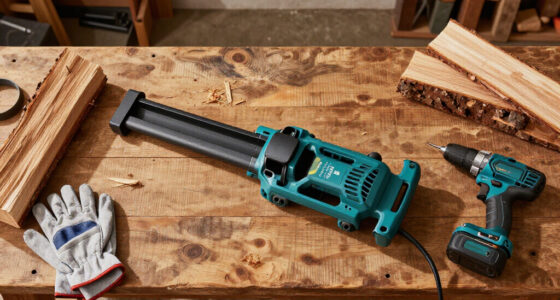
This checklist is for DIY woodworkers who want to make a workshop more useful for everyday building, fitting, sanding, and assembly. It covers dust collection alongside tools that support accurate drilling, clamping, measuring, sanding, and holding work.

Get business pricing on tools and workshop supplies
- Business-only prices and quantity discounts
- Tax-exempt purchasing
- Multiple users, one account, clear invoices
The sections follow the workshop tasks each item supports, with a pick or practical guidance for each slot. The dust collector section is advice only; the other sections name a specific tool to consider.
Use the checklist to match each tool to your projects, available workspace, and existing equipment. Before buying, check the dimensions and compatibility details against your workpieces, bench, power setup, and accessories.
Workshop Dust Collector
Dust collection is a useful workshop upgrade to consider when cutting, sanding, or shaping wood. The right setup depends on the machines you use, how they connect, and the space available for a collector and its hoses. Start by listing your dust-producing tools and checking their connection requirements. Match the system to your machines instead of choosing one based on appearance alone.
A common buying mistake is overlooking hose connections, adapters, or the room needed to route a hose without interfering with work. Check each machine’s dust port and the collector’s inlet details, then plan where the collector will sit. Consider how often you will need to move it and whether the hose can reach the tools you use. Check fit and placement before settling on a setup, and compare the manufacturer’s specifications for the equipment involved.
Keep the plan practical: prioritize the machines you use most and make sure the proposed connections work with your existing setup. A carefully matched arrangement is easier to use consistently. Confirm every connection before buying components.
What to look for:
- Dust port dimensions for each machine
- Collector inlet details and compatible connections
- Hose reach from the planned collector location
- Space for the collector and hose routing
- Adapters required for your existing tools
Benchtop Drill Press
A benchtop drill press supports repeatable drilling when hand drilling makes it difficult to keep holes aligned or consistent. The listed pick is the JET 12-Inch Variable-Speed Benchtop Drill Press, 1/2 HP, 115V (JWDP-12. Its variable-speed operation is a feature to weigh against the materials and drilling tasks in your workshop. Check the product specifications and confirm the model designation before ordering.
One frequent mistake is choosing a drill press without accounting for its footprint or the work that must fit around it. Measure the bench area and consider the size of your typical workpieces. Also check the available clearance for positioning stock and confirm that the listed 115V power requirement suits your workspace. Do not assume the tool will fit every project simply because it is benchtop-sized; verify the relevant capacity and adjustment details in the specifications.
Before buying, compare the press’s stated capacity with your intended work and make sure your bench can support the setup. Think through how you will hold each piece securely and whether your usual bits and accessories are compatible. Check capacity and clearance against the actual jobs you plan to tackle.
What to look for:
- Confirmed JWDP-12 model designation
- Bench footprint and mounting requirements
- Workpiece clearance and stated capacity
- 115V power compatibility
- Compatibility with your intended bits and accessories
JET 12-Inch Variable-Speed Benchtop Drill Press, 1/2 HP, 115V (JWDP-12)

This corded benchtop drill press has a 1/2 HP induction motor with variable speeds from 530 to 3,100 RPM and more than 3-1/8 inches of spindle travel. Its cast-iron base, LED work light, depth stop, roller extension, and XACTA Laser support stable, accurate drilling.
Pros:
- Variable-speed operation from 530 to 3,100 RPM
- XACTA Laser and depth stop help with accurate, consistent drilling
- LED work light improves visibility
- Compact cast-iron base fits work benches with limited space
Cons:
- At 85 lb, it may be difficult to move frequently
- Requires a corded power source
Best for: Woodworkers seeking a benchtop drilling setup
Not ideal for: Projects that exceed the press’s verified capacity
Bottom line: Check the model, power, footprint, and capacity against your workspace and projects.
Parallel Bar Clamps
Parallel bar clamps help hold pieces together during glue-ups and assembly. The listed pick, Parallel Clamps for Woodworking, 24-inch, 2-Pack, offers a stated 24-inch length and comes as a pair. Whether that suits your work depends on the dimensions of the panels, frames, or other assemblies you build. Measure typical glue-ups before deciding if this size belongs in your clamp collection.
A common mistake is buying clamps that are too short for the work or assuming one pair will cover every assembly. Check the usable clamping range and confirm the product’s specifications for the exact model. Consider how many clamps you need to distribute pressure across your project and where they can be positioned without getting in the way. Plan clamp placement around the shape and size of your workpiece, and check that the bar and jaw arrangement suits your workflow.
Confirm the package contents and dimensions before ordering. If your projects vary, compare the stated length with the largest assemblies you routinely make, and plan how additional clamps would fit into storage. Match length to your glue-ups rather than relying on the product title alone.
What to look for:
- Verified 24-inch clamp length
- Usable clamping range in the specifications
- Package contents and number of clamps
- Jaw arrangement suited to your workpieces
- Storage space for the clamps you need
Parallel Clamps for Woodworking, 24-inch, 2-Pack

These heavy-duty parallel clamps feature a 4-way pressure design with parallelogram couplers, ensuring flat panels and flush joints in woodworking projects. Fully adjustable to accommodate panels up to 24 inches wide and 3 inches thick, they are built from durable steel with a powder-coat finish for longevity.
Pros:
- Innovative 4-way pressure for even clamping
- Fully adjustable for various project sizes
- Durable construction with rust-resistant finish
- Includes two clamps for efficient workflow
Cons:
- May be heavier than standard clamps
- Adjustments require manual setup
Best for: Woodworkers whose projects suit 24-inch clamps
Not ideal for: Assemblies wider than the verified clamping range
Bottom line: Measure your typical glue-ups and confirm the package details before choosing this pair.
Digital Caliper
Accurate measuring helps when sizing parts, checking stock, and fitting components. The listed pick is the Starrett Basic Electronic Tool Set, 6" Caliper & 1" Micrometer. Its stated 6-inch caliper and 1-inch micrometer make it important to check that the measuring ranges suit the dimensions you work with. Look at the product specifications for included tools and their measurement capabilities.
A common mistake is treating every measuring tool as interchangeable. A caliper and a micrometer serve different measuring needs, so consider what you most often need to check and whether the set covers those tasks. Verify the display and measurement details in the listing, along with any included accessories or instructions. Match the range to your work and make sure you understand the stated precision before relying on a tool for a close fit.
Also consider how you will store and protect the tools between uses. Confirm the exact set contents and check that the stated dimensions match your intended measurements. If your work routinely involves pieces outside those ranges, identify that limitation before ordering. Check both instruments’ ranges against your projects and measuring habits.
What to look for:
- Confirmed Starrett set contents
- Caliper range for the parts you measure
- Micrometer range for your intended checks
- Stated precision and display details
- Storage and care instructions
Starrett Basic Electronic Tool Set, 6" Caliper & 1" Micrometer

This starter set includes a 6-inch caliper and a 1-inch micrometer, ideal for electronic measuring projects. Made of durable materials, the tools are designed for accuracy and ease of use, suitable for professionals and DIY enthusiasts alike.
Pros:
- Includes essential measuring tools for various projects
- Durable and made of high-quality materials
- User-friendly and easy to operate
Cons:
- Limited to basic measurement tools
- No digital display for easier readings
- May not suit advanced or industrial needs
Best for: Woodworkers checking smaller dimensions
Not ideal for: Measurements outside the verified tool ranges
Bottom line: Confirm the set contents and ranges fit the measurements you make most.
Random Orbital Sander
A random orbital sander can support surface preparation and finish sanding across woodworking projects. The listed pick is the Bosch GET75-6N Electric Orbital Sander, 7.5 Amp, 6-Inch Disc. Its stated 6-inch disc and 7.5 amp rating are useful details to compare with your workspace, sanding needs, and available accessories. Check the manufacturer’s specifications to confirm the exact model and included items.
A common buying mistake is overlooking consumables and handling needs. Verify the disc attachment type and make sure you can get compatible abrasives in the grits you use. Check how the dust collection connects to your existing setup, and review the tool dimensions and controls to see whether they suit the surfaces you sand. Confirm disc compatibility before assuming your current sanding discs will fit.
Consider the kinds of workpieces you handle and whether a 6-inch disc is appropriate for them. Check the product details for any operating modes or accessories you expect to use, and compare those details with your routine. Make sure the power requirements match your workspace. Review the specifications against your sanding tasks before ordering.
What to look for:
- Confirmed GET75-6N model
- Compatible 6-inch sanding discs
- Dust connection suited to your collection setup
- Included accessories and stated operating features
- Power requirements for your workspace
Bosch GET75-6N Electric Orbital Sander, 7.5 Amp, 6-Inch Disc

The Bosch GET75-6N is a versatile 6-inch orbital sander featuring dual modes: standard random orbit and turbo for aggressive removal. It offers variable speed control, passive dust collection, and ergonomic design for smooth finishes on various surfaces.
Pros:
- Dual sanding modes for versatile use
- High removal rate with turbo mode
- Ergonomic design with soft grip and auxiliary handle
- Compatible with a wide range of abrasive discs
Cons:
- Requires vacuum hose for dust collection (sold separately)
- Heavy for prolonged use
- Limited to corded power source
Best for: Woodworkers whose projects suit a 6-inch disc
Not ideal for: Work requiring a different disc size or setup
Bottom line: Check disc, dust, and power compatibility before adding this Bosch sander.
Workbench Vise
A workbench vise gives you a way to hold work securely while you shape, fit, or assemble pieces. The listed pick is the Wilton Reversible Bench Vise, 8" Jaw Width (Model 4800R). Its stated 8-inch jaw width and reversible design are details to compare with your bench and the workpieces you expect to hold. Confirm the model and mounting specifications before purchase.
A frequent mistake is choosing a vise without checking how it attaches to the bench. Measure the available mounting area, check the vise’s mounting pattern and hardware requirements, and make sure the bench can accommodate the setup. Consider the size and shape of your usual workpieces, along with the jaw opening and reach listed for this model. Verify mounting fit instead of assuming the vise will suit any workbench.
Check the manufacturer’s specifications for the reversible feature and how it is used, then decide whether it matches your clamping needs. Confirm that the vise’s dimensions leave room for other bench tasks and that its stated capacity suits your work. Match the vise to your bench and the pieces you plan to secure.
What to look for:
- Confirmed Wilton Model 4800R
- 8-inch jaw width and stated jaw opening
- Mounting pattern and hardware requirements
- Bench space and mounting compatibility
- Capacity suited to your typical workpieces
Wilton Reversible Bench Vise, 8" Jaw Width (Model 4800R)

The Wilton 4800R is a reversible bench vise with an 8-inch jaw width, offering a 9-1/4" jaw opening in normal position and 14-1/2" when reversed. It features built-in pipe jaws, dual lockdowns, a 360° swivel base, replaceable serrated hardened steel jaws, and two anvil work surfaces.
Pros:
- Reversible jaws provide an extra-wide 14-1/2" opening for large workpieces
- Heavy-duty cast iron and ductile iron construction built to last
- 360° swivel base and dual lockdowns for stability and positioning flexibility
- Backed by Wilton’s lifetime warranty
Cons:
- Heavy weight may make installation and repositioning difficult
Best for: Woodworkers with a compatible bench setup
Not ideal for: Benches that cannot accommodate the mounting pattern
Bottom line: Check mounting fit, jaw dimensions, and capacity against your bench and work.
If you are upgrading gradually, start with the gap that most often slows your work, then prioritize the tools that fit your current projects and workspace. Confirm dimensions and compatibility before adding accessories or equipment, and check product specifications where the title does not answer a fit question.
A workshop does not need every tool at once to become more useful. Choose the next item with a clear job in mind, make sure it fits your setup, and build your checklist around the work you enjoy doing. One well-matched upgrade can be a sensible next step.
Veterans Day Picks

Shark Matrix Plus 2-in-1 Robot Vacuum and Mop with 60-Day Self-Emptying Base
As an affiliate, we earn on qualifying purchases.