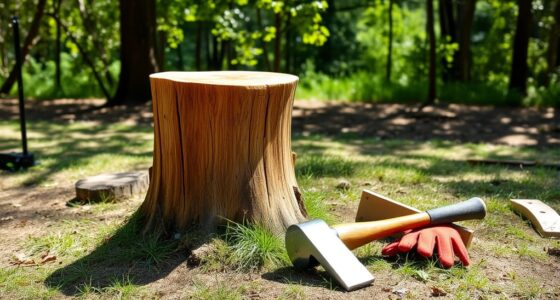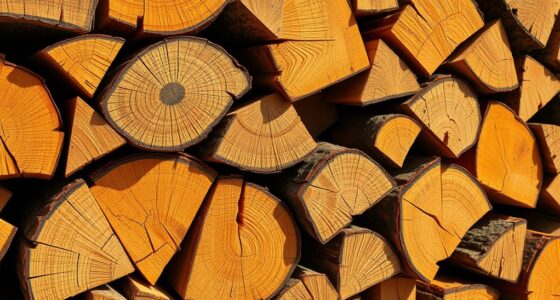
To decide when to split your wood, wait until it’s fully seasoned—usually after at least six months—so it dries to about 20% moisture. If you split green wood too early, it won’t dry enough and will burn poorly. Splitting seasoned wood speeds up drying and makes it easier to ignite. If you want to maximize safety, efficiency, and enjoyment, understanding the best timing for splitting is essential—keep going to explore this further.
Key Takeaways
- Split green wood immediately to increase surface area and accelerate drying, but wait until it’s properly seasoned before burning.
- Split seasoned wood to facilitate faster drying and ensure moisture content drops below 20% for efficient burning.
- Do not split wood too early; allow green wood to season fully for at least 6-12 months before splitting for optimal use.
- Splitting green wood helps in drying, but burning green wood is inefficient; split only when the wood is seasoned.
- For best results, split wood after it has seasoned to ensure quicker ignition, cleaner burn, and reduced creosote buildup.
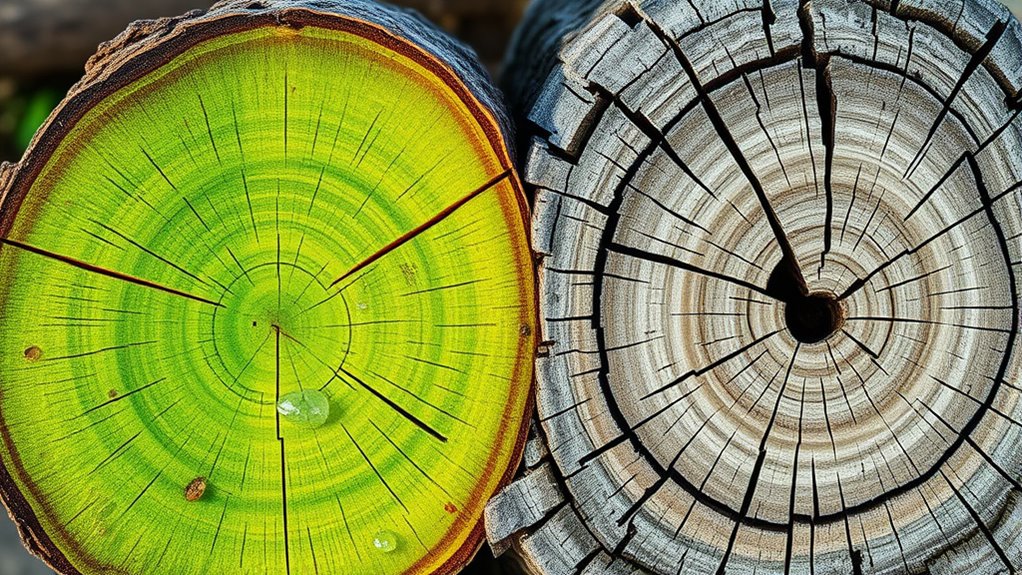
When choosing between green and seasoned wood for your fire, understanding their differences can make a big impact on your experience. The key factors to consider are moisture content and burning efficiency. Green wood, freshly cut from a tree, has high moisture levels, often exceeding 60%. This excess moisture makes it harder to ignite and causes inefficient burning, producing more smoke and creosote buildup in your chimney. Seasoned wood, on the other hand, has been properly dried, usually for at least six months, reducing its moisture content to around 20% or less. This lower moisture level considerably improves burning efficiency, allowing your fire to burn hotter, cleaner, and with less effort.
Choosing seasoned wood over green improves burn efficiency, reduces smoke, and enhances safety.
When you try to burn green wood, you’ll notice it’s more difficult to get started. It tends to produce a lot of smoke, which can fill your space with unpleasant odors and contribute to creosote accumulation in your chimney—posing potential fire hazards. Additionally, green wood tends to burn slowly and unevenly because the excess moisture absorbs much of the heat meant for combustion. This inefficiency means you’ll need more wood to generate the same amount of heat, making your fire less economical and more labor-intensive. The high moisture content also causes the wood to crackle and pop, which might be entertaining but can be disruptive if you’re trying to enjoy a quiet evening by the fire.
In contrast, seasoned wood offers a much better experience. Its reduced moisture content allows for higher combustion temperatures and more complete burning. This results in less smoke and fewer creosote deposits, making it safer and more environmentally friendly. You’ll find that seasoned wood ignites quickly and burns steadily, providing consistent heat and a cozy atmosphere. Plus, because seasoned wood burns more efficiently, you’ll use less wood over time—saving you money in the long run. It also produces less ash, meaning less cleanup afterward.
Splitting green wood before storing it can help speed up the seasoning process. The increased surface area exposes more wood to air, accelerating moisture loss. However, even split green wood needs time to dry thoroughly before it can burn efficiently. If you’re enthusiastic to start a fire, opting for seasoned wood is the smarter choice, especially if you want a cleaner, more efficient burn. Properly dried wood not only simplifies your fire-starting process but also enhances the overall experience, making every fire safer, more effective, and more enjoyable.
Frequently Asked Questions
How Long Does Green Wood Take to Fully Season?
Green wood usually takes about 6 to 12 months to fully season, depending on the type of wood and drying conditions. You should check its moisture content; ideally, it should be below 20% for burning. During this drying time, guarantee good airflow and keep the wood off the ground. Proper seasoning reduces moisture content, making your wood easier to burn and more efficient.
Can Green Wood Be Used Immediately After Splitting?
Sure, you can use green wood immediately after splitting—if you’re into smoke signals and excessive creosote buildup. Green wood has high moisture content, making it tough to burn efficiently. Proper splitting techniques expose more surface area, helping it dry faster, but it’s still not ready for prime time. To get the best burn, wait until it’s seasoned; otherwise, you’re just creating a smoky, inefficient fire that’s more trouble than it’s worth.
What Are Signs That Seasoned Wood Is Ready to Burn?
You’ll know seasoned wood is ready to burn when it has a moisture content below 20%, making it lighter and easier to split. Look for cracks in the ends and a dull, grayish color. When you burn it, expect a steady flame and minimal smoke, indicating better combustion efficiency. Properly seasoned wood also produces less creosote buildup, ensuring safer, cleaner fires.
Does Wood Type Affect Splitting Timing and Seasoning?
Imagine your fire’s future, and you’ll see that wood type influences splitting timing and seasoning. Hardwoods like oak require more time and different splitting techniques to break down, affecting moisture levels. Softwoods like pine split easily and season faster. You must consider wood moisture and select appropriate splitting techniques to guarantee your wood dries properly. This way, your wood’s readiness reflects its nature, ensuring a warm, efficient fire.
Are There Environmental Benefits to Using Green Versus Seasoned Wood?
Using green wood can have environmental drawbacks, like increasing your carbon footprint and reducing air quality due to higher emissions during burning. Seasoned wood burns more efficiently, producing less smoke and pollutants. By choosing properly seasoned wood, you help improve air quality and lower your environmental impact, making it a smarter, eco-friendlier choice. Green wood may seem convenient, but seasoned wood ultimately benefits the planet and your health.
Conclusion
When you choose between green and seasoned wood, you’re planting the seeds for a warm, crackling fire. Green wood may burn bright but struggles to ignite your cozy dreams, while seasoned wood is like a seasoned storyteller, ready to whisper warmth and comfort. Trust your intuition—split and select wisely, and let your fire dance with life. In the end, your choice fuels more than just flames; it sparks memories that warm your soul for years to come.