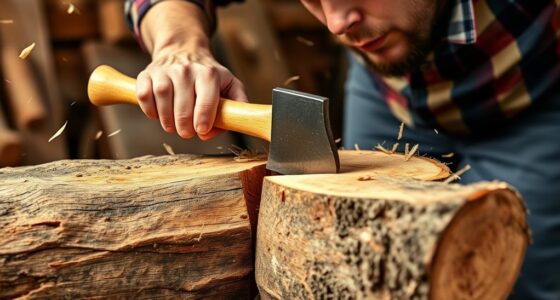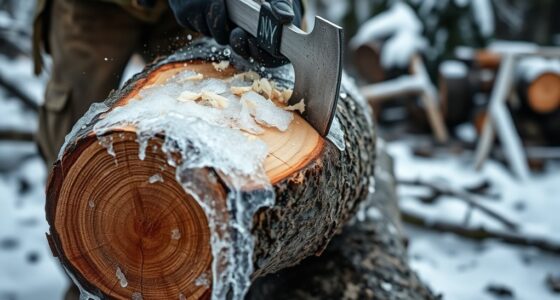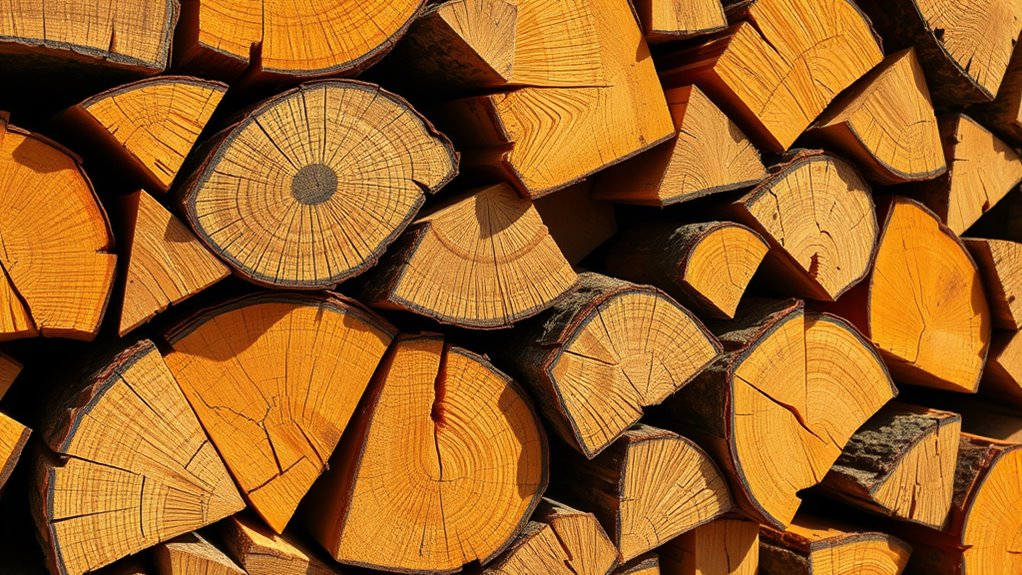

For ideal firewood, aim for splits that are about 16 to 18 inches long and 3 to 6 inches in diameter. This size makes handling easier, allows for faster drying, and promotes efficient burning. Smaller splits dry quicker thanks to increased surface area, while larger ones store more energy. Proper sizing helps prevent mold and ensures safer stacking. If you want to find out more about how to choose the best size, keep exploring.
Key Takeaways
- Aim for splits around 16 to 18 inches in length for easy handling and efficient drying.
- Diameter should typically be between 3 to 6 inches, depending on wood type and storage space.
- Smaller splits dry faster due to increased surface area, but larger chunks store more energy.
- Consistent sizing helps ensure uniform drying and easier stacking for better airflow.
- Balance split size to optimize drying time, storage, and safe handling during stacking.

Have you ever wondered what the ideal size for firewood splits is? The size you choose can profoundly impact how quickly your wood dries, how easy it is to handle, and how efficiently it burns. When it comes to firewood stacking, the size of your splits matters because it affects airflow and drying time. Smaller splits tend to dry faster because they have a larger surface area relative to their volume, making them ideal for quick seasoning. Larger chunks, on the other hand, may take longer to dry but can store more energy per piece. Striking the right balance involves understanding your drying process and storage space.
Choosing the right firewood size improves drying, handling, and burning efficiency.
If you’re using traditional wood drying techniques, splitting your logs into smaller pieces is often recommended. You want your splits to be roughly 16 to 18 inches long, which is a manageable size for most fireplaces and wood stoves. The diameter should be around 3 to 6 inches, depending on the species of wood and the available space in your stack. Smaller splits promote faster drying because they allow more air to circulate around each piece, reducing moisture content more quickly. Proper firewood stacking plays an essential role here; stacking your splits in a crisscross pattern or with plenty of space between them enhances airflow, which is vital for efficient drying. Additionally, proper airflow is critical to prevent mold and rot during the drying process.
Choosing the right size also makes handling and stacking easier, preventing injuries and reducing the effort needed to move heavy logs. When splitting wood, aim for consistent sizes to guarantee uniform drying. If some pieces are considerably larger, they’ll retain moisture longer, which can lead to mold or rot if not dried properly. Conversely, overly small pieces may burn out too quickly or produce more creosote buildup in your chimney, so finding that middle ground is best.
Remember that wood drying techniques are most effective when paired with appropriate split sizes. If you’re stacking your firewood outdoors, cover the top but leave the sides open to allow air to flow freely. This setup accelerates drying and keeps your firewood in good condition. If you prefer indoor storage, ensure your splits are dry and stacked in a way that encourages good ventilation. Ultimately, the right split size depends on your firewood storage method, how quickly you want your wood to dry, and the type of wood you’re working with. By paying attention to these details, you’ll guarantee your firewood burns cleaner, longer, and more efficiently.
Frequently Asked Questions
What Is the Ideal Size for Split Firewood?
You should aim for firewood splits about 3-6 inches in diameter, which balances easy handling and efficient burning. If you’re using seasoned wood, it’s best to split it to this size for better drying and combustion. Green wood, however, may need slightly larger splits to help it dry faster. Always split with the grain for cleaner cuts, ensuring your firewood burns hotter and produces less smoke.
How Does Split Size Affect Burning Efficiency?
Smaller splits burn more efficiently because they dry faster, reducing moisture content and improving combustion. When your splits are appropriately sized, you’ll notice better heat output and less smoke. Proper storage methods, like keeping firewood off the ground and covered, help maintain low moisture levels. This combination guarantees your firewood burns hotter and cleaner, maximizing efficiency and making your fires easier to start and sustain.
Can You Use Smaller Splits for Kindling?
Yes, you can use smaller splits for kindling. Aim for a size with a split thickness of about 1 to 2 inches, making it easy to ignite. Smaller, thinner pieces catch fire quickly and burn efficiently, helping you start fires more easily. Just make certain your kindling isn’t too fine, as it could burn too fast, making it harder to maintain a steady fire.
What Tools Are Best for Splitting Firewood?
You should use a sharp, sturdy axe or a splitting maul for splitting firewood. Always prioritize axe safety by wearing gloves and eye protection, and make sure your tools are in good condition. To optimize split storage, aim for consistent sizes that stack easily and dry efficiently. Using the right tools and maintaining safety helps you split firewood effectively, ensuring safer handling and better storage.
How Do Split Sizes Vary by Wood Type?
Think of wood types as different musical instruments, each demanding a unique approach. Softwoods like pine are gentle and split easily into smaller pieces for quick fires, perfect for seasonal splitting. Hardwoods like oak require larger, sturdy splits for long-lasting warmth. You adjust your cuts based on wood storage needs, ensuring each piece fits your fireplace perfectly. Tailoring split sizes to wood type keeps your fire burning bright and efficient.
Conclusion
Choosing the right firewood split size is like tuning a guitar—you want just the right note for a warm, efficient fire. Smaller splits ignite faster and burn hotter, perfect for quick warmth, while larger pieces last longer for sustained heat. Listen to your fire’s rhythm and your needs, and you’ll craft a symphony of cozy nights. Get it just right, and your fire will sing a song of comfort all season long.