
A masonry heater is a durable heating system that stores heat in bricks, stone, or concrete, then radiates warmth slowly over hours. It absorbs heat from a fire and gradually releases it, providing even, cozy heat while using less fuel. Key parts include the firebox, thermal mass, and chimney. If you want to discover how it manages heat and the benefits it offers, keep exploring for more details.
Key Takeaways
- Masonry heaters are heat-retaining structures made from bricks, stone, or concrete that store and radiate heat over time.
- They work by burning wood in a firebox, directing hot gases through internal channels to heat the masonry mass.
- The stored heat is gradually released as radiant warmth, providing consistent and energy-efficient home comfort.
- Key components include the firebox, thermal mass, flues, chimney, and control systems for regulation.
- Benefits include reduced fuel use, even heat distribution, eco-friendliness, and added aesthetic value to homes.
What Is a Masonry Heater?
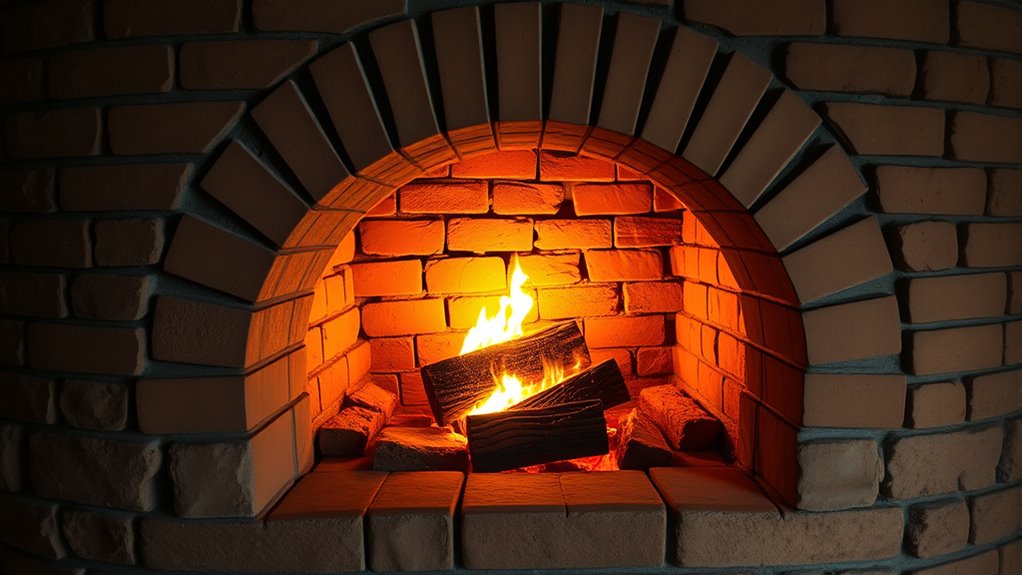
Have you ever wondered how some homes stay warm even during the coldest nights? That’s where a masonry heater comes in. It’s a type of highly efficient heating system made from bricks, stone, or concrete, designed to store and radiate heat slowly. Unlike traditional fireplaces, masonry heaters absorb heat from a fire and then release it gradually over hours, keeping your home warm and cozy. They’re built to maximize heat retention and minimize wood consumption. The radiant heat from the masonry surface warms your space evenly, creating a comfortable environment. These heaters are not only functional but also add a rustic charm to your home. Additionally, protective styling benefits of masonry heaters help reduce wear and tear on your home’s structure. The construction of masonry heaters often involves thermal mass, which enhances their ability to store heat effectively. Overall, a masonry heater offers an energy-efficient, eco-friendly way to maintain warmth during harsh winters.
How Do Masonry Heaters Work?
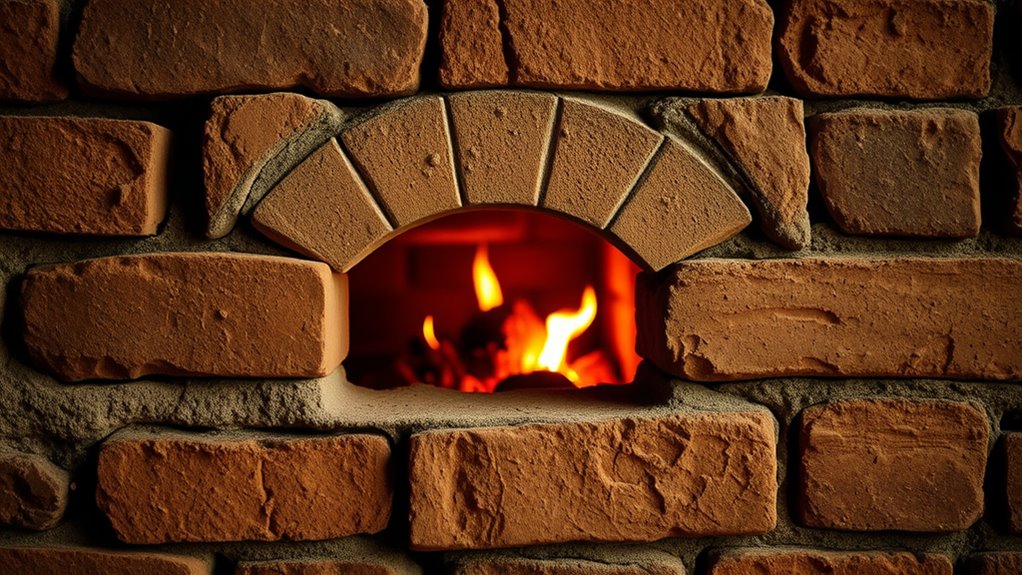
Masonry heaters work by efficiently capturing the heat generated from a fire and slowly releasing it into your home. When you start a fire, the heat rises through a system of channels inside the heater, warming the masonry mass. This mass absorbs and stores the heat, acting like a thermal battery. As the fire burns, the gases are directed through a flue system that maximizes heat transfer, ensuring most of the warmth is captured. Once the fire dies down, the stored heat radiates out gradually, warming your space over many hours. This process minimizes heat loss and maximizes efficiency. Because of this design, your home stays warm longer, even after the fire has gone out, providing comfortable, consistent heat with less fuel. Incorporating thermal mass in the design enhances heat retention and improves overall efficiency. Proper insulation around the heater ensures minimal heat loss and optimal performance. Additionally, proper airflow management is also essential to maintain efficient combustion and heat transfer, which can be improved through the use of headphones to monitor internal sounds during operation. Understanding combustion efficiency can further optimize your heater’s performance and energy savings.
Key Components of a Masonry Heater
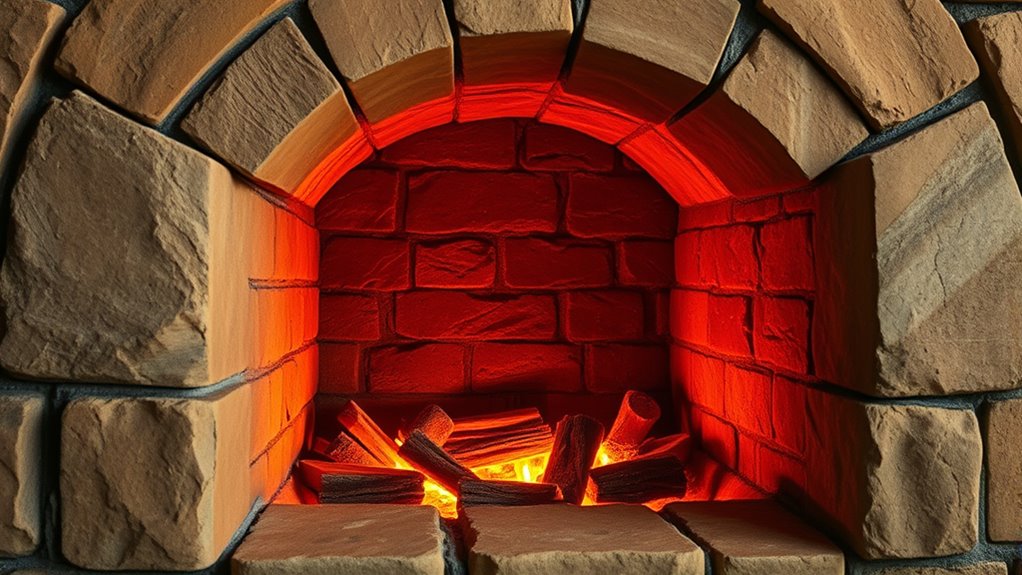
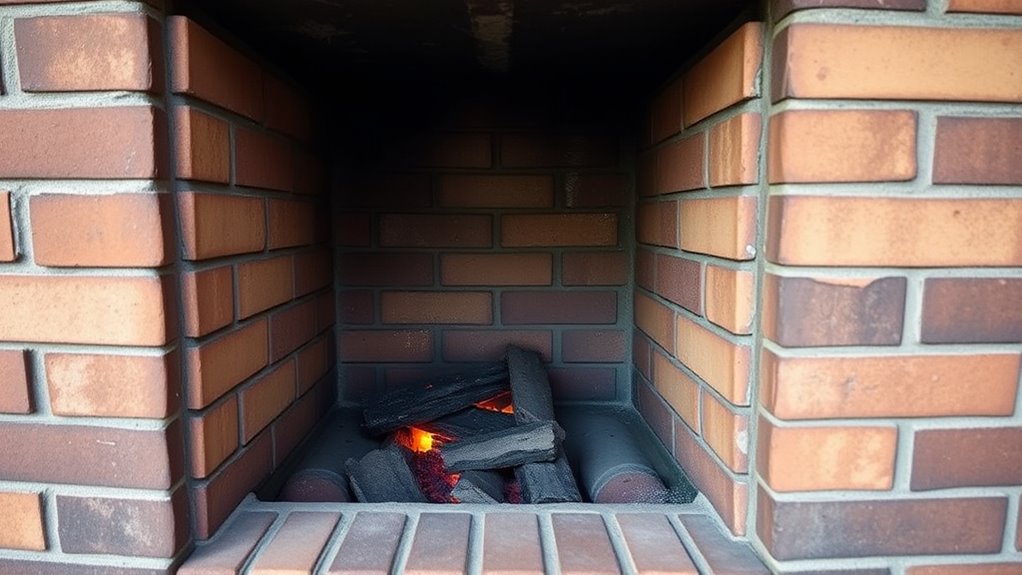
A masonry heater consists of several essential components that work together to efficiently store and distribute heat. The firebox is where you burn your wood, designed for complete combustion and easy loading. Surrounding the firebox is the mass, typically made of bricks or stones, which absorbs and stores heat from the fire. Flues and passages direct the hot gases through the mass, maximizing heat transfer before venting outside. The chimney exhausts the gases efficiently, ensuring proper draft. An ash pit collects residual ash for easy cleanup. Some heaters include a damper or control system to regulate airflow and combustion rate. These components work in harmony, allowing your masonry heater to store heat for hours and radiate warmth evenly throughout your space. Understanding the heat transfer process is crucial for optimizing your heater’s performance and efficiency. Additionally, proper insulation around the heater enhances heat retention and overall efficiency. To further improve performance, selecting high-quality firebricks and ensuring proper sealing can prevent heat loss and reduce energy waste, thereby enhancing safety. Proper maintenance practices also play a vital role in keeping your masonry heater operating safely and efficiently.
Benefits of Using a Masonry Heater
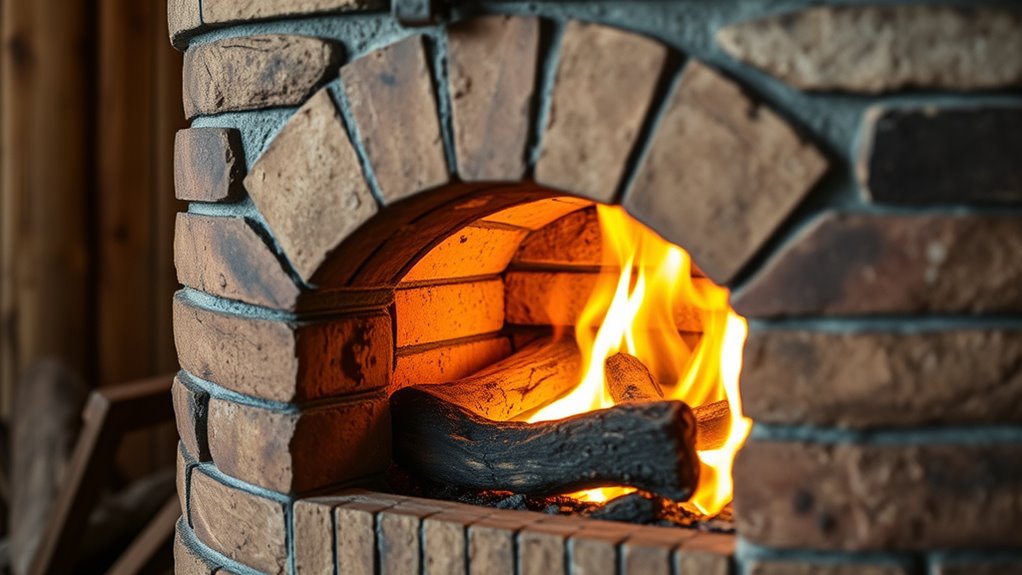
Using a masonry heater offers numerous advantages that can enhance your comfort and save energy. Its efficient heat retention provides consistent warmth, reducing your reliance on traditional heating systems. The radiant heat warms your space gently, creating a cozy environment. Plus, it burns less fuel, lowering your energy bills and environmental impact. The following table highlights key benefits:
| Comfort | Efficiency | Cost Savings |
|---|---|---|
| Cozy warmth | Long-lasting heat | Lower utility bills |
| Even distribution | Minimal fuel waste | Reduced maintenance |
| Natural feel | Eco-friendly operation | Increased home value |
Additionally, vetted options ensure you select a reliable and effective masonry heater that can meet your specific needs. Incorporating energy-efficient features can further optimize performance and savings. When selecting a masonry heater, considering modern design options can enhance both functionality and aesthetic appeal. Furthermore, understanding heat retention principles can help you maximize the benefits of your masonry heater, leading to improved thermal performance.
Installation and Maintenance Considerations

When installing your masonry heater, you need to make certain the foundation and site are solid enough to support its weight. Proper chimney and venting setups are essential for safe operation and efficient heat flow. Regular cleaning practices help maintain performance and prevent buildup that could cause issues over time. Cultivating a bias to action during installation can help address unforeseen challenges quickly and effectively.
Foundation and Site Prep
Ensuring a solid foundation is essential for the stability and longevity of your masonry heater. Proper site prep prevents shifting or cracking over time. First, choose a level, stable spot with minimal moisture exposure. Second, excavate to a depth that reaches stable soil, usually below frost lines in colder climates. Third, build a reinforced concrete footing, ensuring it’s flat and square. This provides a sturdy base that distributes weight evenly. Use gravel or crushed stone beneath the footing for drainage and stability. Keep the area clear of debris, roots, or soft soil. Proper foundation prep minimizes settling and structural issues, ensuring your heater remains safe and functional for years to come. Remember, investing time in site prep saves headaches during installation and maintenance.
Chimney and Venting Needs
A properly designed chimney and venting system are essential for the safe and efficient operation of your masonry heater. You need to guarantee the chimney is tall enough to promote proper draft and prevent smoke from entering your home. Use high-quality materials that withstand high temperatures and resist creosote buildup. Proper vent placement is critical to avoid downdrafts, which can cause smoke spillage. Remember to incorporate clean-out access to facilitate maintenance. Additionally, ensure the chimney is well-supported and insulated to prevent heat loss and condensation. Regular inspections help identify cracks or blockages early, maintaining ideal airflow. Correct installation and ongoing maintenance of your chimney and venting system are vital for safety, efficiency, and longevity of your masonry heater.
Regular Cleaning Practices
Regular cleaning is essential to keep your masonry heater operating safely and efficiently. Proper maintenance prevents buildup that can cause smoke, inefficiency, or fire hazards. To keep your heater in top shape, follow these steps:
- Remove ashes regularly to ensure proper airflow and combustion.
- Check and clean the chimney and flue to prevent creosote buildup, which can ignite.
- Inspect the firebox and masonry for cracks or damage, addressing issues promptly.
Comparing Masonry Heaters to Other Heating Options
Masonry heaters stand out from other heating options because they efficiently store and radiate heat over long periods, reducing the need for constant firing. Unlike forced-air systems or electric heaters, masonry heaters absorb heat from a single, intense fire and then release it gradually, maintaining consistent warmth. This makes them energy-efficient and cost-effective over time. They also produce less dust and allergens, improving indoor air quality. However, they require more space and upfront investment compared to traditional systems. While electric or gas heaters can provide quick heat, they often result in higher operating costs and less comfort. Masonry heaters excel in long-lasting warmth and energy savings, making them ideal for those seeking a sustainable, cozy heating solution.
Frequently Asked Questions
How Long Does a Typical Masonry Heater Last?
You might wonder how long a masonry heater lasts. Generally, with proper maintenance and care, these heaters can serve you for 50 years or more. The durable materials and solid construction mean they stand up well over time. Regular inspections, cleaning, and addressing any cracks early help extend their lifespan. So, if you keep up with maintenance, your masonry heater can be a reliable, long-lasting source of warmth for decades.
Can a Masonry Heater Be Built Into Existing Homes?
You might think fitting a masonry heater into your home is impossible, but it’s actually doable. You can build one into existing homes with proper planning and modifications, especially in homes with enough space and a solid foundation. While it requires some work and possibly permits, a masonry heater can efficiently heat your home and add charm. Consult a professional to guarantee a smooth installation tailored to your space.
What Types of Fuel Are Suitable for Masonry Heaters?
You might wonder what fuels work best for masonry heaters. These heaters are versatile and can burn a variety of fuels like seasoned wood, which is most common, providing efficient and clean heat. Some models also handle pellet fuel or coal, but wood remains the favorite. Always make certain your heater is designed for the specific fuel type you choose, and follow safety guidelines for peak performance.
Are Masonry Heaters Suitable for All Climates?
Did you know that masonry heaters can efficiently heat homes in temperatures as low as -20°F? While they work well in most climates, they’re especially effective in colder regions due to their high thermal mass. You might find they require longer burn times and proper insulation to perform ideally. So, if you live in a mild climate, a masonry heater can still be beneficial, but you’ll want to reflect on your specific heating needs.
How Much Space Is Required for Installation?
You need enough space for your masonry heater to be installed safely and efficiently. Typically, you should allocate a dedicated area that allows for proper ventilation, access for maintenance, and clearance from combustible materials—usually about 3 to 4 feet of clearance around the unit. Keep in mind your specific model’s size and local building codes, which might require additional space or clearance. Planning ahead guarantees safe, effective operation.
Conclusion
So, now that you know all about masonry heaters, you’re practically a DIY heating guru. Who needs modern technology when you can bask in the glow of a massive brick fireplace that’s more work than a full-time job? Just remember, while they’re charming and cozy, they’ll also keep you busy cleaning and stoking for years. But hey, at least you’ll have the warmest, most architecturally impressive thing on the block—your very own fiery fortress.