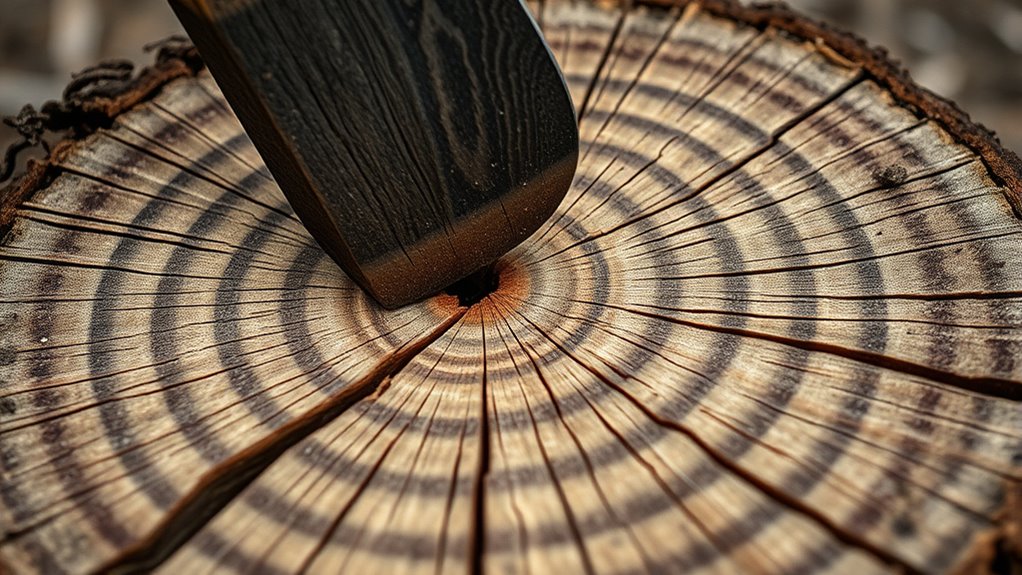

The physics of wood splitting involves understanding how internal stresses build up as force is applied along the grain or across it. Factors like moisture content, natural flaws, and grain orientation play pivotal roles in how easily wood fractures. Sharp wedges focus force efficiently, causing stress to concentrate at weak points like knots, cracks, or grain boundaries. To succeed, you need to contemplate these variables—and if you keep exploring, you’ll discover how these forces interact for easier splitting.
Key Takeaways
- Wood splitting involves applying force to create internal stress exceeding the material’s threshold, causing fracture along the grain.
- Sharp wedges focus force efficiently, concentrating stress and reducing the effort needed to split wood.
- Grain orientation influences splitting; along the grain allows gradual stress buildup, while across the grain causes easier fiber separation.
- Natural flaws like knots and cracks act as stress concentrators, requiring less force to initiate splitting.
- Moisture content impacts brittleness; dry, seasoned wood is more brittle and easier to split than green or moist wood.
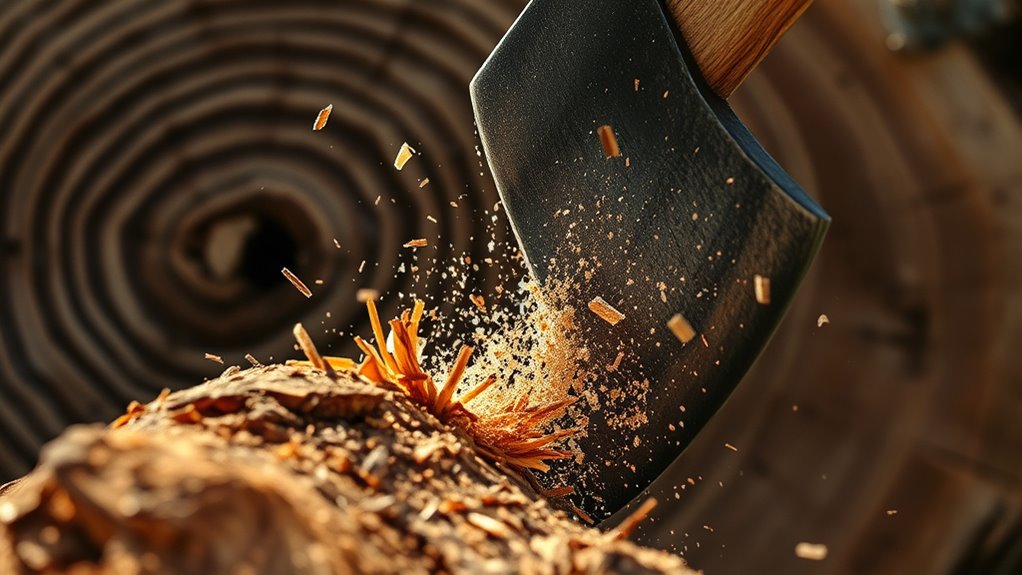
Splitting wood might seem straightforward, but it actually involves complex physical principles. When you strike or press a wedge into a log, you’re applying a splitting force that must overcome the material stress within the wood. Material stress refers to the internal forces resisting deformation or fracture, and understanding this helps explain how and why the wood splits the way it does. Every piece of wood has a certain strength, determined by its species, moisture content, and grain orientation, which directly influences how much force you need to apply.
Understanding how internal material stress causes wood to split helps improve your splitting technique.
As you exert force, you’re essentially creating a concentrated load at a specific point. This load increases the internal stress along the grain of the wood, pushing it toward its breaking point. Wood naturally resists splitting because of its fibrous structure, which distributes stress along the grain. When the applied splitting force exceeds the material stress threshold, bonds between fibers weaken and break, causing the wood to split apart. The key is to focus that force effectively; a sharp wedge concentrates force more efficiently, reducing the amount of effort you need.
The way the wood’s fibers are aligned plays a vital role here. Along the grain, the fibers are tightly packed, providing high resistance to splitting. Across the grain, the fibers are weaker and easier to separate. When you apply force along the grain, the material stress builds up gradually, allowing the wood to resist longer before fracturing. Conversely, applying force perpendicular to the grain causes the fibers to separate more readily, reducing the required splitting force. Understanding this helps you direct your effort more effectively, aiming along the grain for larger logs or across it for smaller, more manageable pieces.
Another factor influencing the splitting process is the presence of natural flaws like knots or cracks. These imperfections act as stress concentrators, where material stress peaks and the wood is more likely to fracture. When you strike near these flaws, less force is needed because the material stress already approaches the breaking point. Conversely, well-seasoned, dry wood tends to be more brittle, requiring less force to split, whereas green or moist wood is more resilient, needing more effort. Additionally, the moisture content of the wood significantly impacts its brittleness and splitting behavior.
Frequently Asked Questions
How Does Moisture Content Affect Wood Splitting Efficiency?
Moisture variation considerably impacts your wood splitting efficiency. When the moisture content is high, the wood is tougher and more resistant, making splitting harder. As the moisture decreases, the wood becomes drier and easier to split, boosting efficiency. To optimize your efforts, aim for moderately dried wood with balanced moisture content. This way, you can split more easily and quickly, saving time and effort in your wood-splitting tasks.
Can Different Wood Species Influence the Physics of Splitting?
Different wood species definitely influence how you split wood because of their unique grain orientation and fiber strength. Softwoods with straight, uniform grains split more smoothly, while hardwoods with twisted or irregular grains resist easier splitting. Recognizing these differences helps you predict the power needed and plan your approach, making your splitting session safer and more efficient. Always consider the wood’s species to optimize your splitting technique.
What Role Does Temperature Play in Wood Fracture?
Temperature markedly influences wood fracture by affecting its brittleness and strength. When it’s cold, thermal expansion decreases, making the wood more brittle and easier to fracture. Conversely, warmer temperatures increase flexibility. You should consider fracture mechanics, as they explain how cracks propagate differently at various temperatures. Understanding these effects helps you predict how wood will behave under different thermal conditions, optimizing your splitting technique and safety.
How Do Natural Defects Impact Splitting Forces?
Think of natural defects as cracks in a mirror, revealing hidden truths. They weaken the wood’s grain structure, making splitting easier or more unpredictable. Defect types like knots, checks, or splits disrupt uniformity, concentrating forces and reducing the force needed to split. You’ll find that these flaws act as weak points, guiding the split along these lines and markedly impacting the amount of force required to break the wood apart.
Are There Safety Considerations Based on the Physics Involved?
Yes, you should prioritize safety when splitting wood. Always wear protective gear like goggles and gloves to shield yourself from flying splinters. Pay attention to splitting angles, as incorrect angles can cause unpredictable forces and increase risks of injury. Stay alert, maintain a stable stance, and use proper tools to control the splitting process. Following these precautions helps prevent accidents and keeps you safe while working with wood.
Conclusion
So, next time you swing that axe, remember you’re wielding not just muscle but physics in disguise. It’s ironic how such a simple act relies on complex forces and stress fractures, yet we often overlook the science behind it. You might think splitting wood is straightforward, but in reality, you’re orchestrating a delicate dance of energy and matter. Who knew that a humble log could teach you so much about the universe’s hidden mechanics?