
To guarantee sustainable sourcing for your firewood business, focus on responsible forest management and certification standards like FSC or PEFC. Choose native, native tree species and use selective harvesting techniques to minimize environmental impact. Regularly monitor forest health, manage harvest areas for regeneration, and work with trusted suppliers committed to sustainable practices. Staying informed about environmental regulations and industry updates helps you maintain legitimacy and protect long-term resources—discover more ways to make your sourcing truly sustainable.
Key Takeaways
- Obtain certification from recognized standards like FSC or PEFC to ensure responsible sourcing.
- Follow forest management plans that prioritize regeneration, biodiversity, and soil health.
- Use selective harvesting techniques to minimize environmental impact and avoid overharvesting.
- Maintain detailed records of logging activities to demonstrate compliance with sustainability thresholds.
- Ensure legal adherence to local and international forestry laws for sustainable and reputable sourcing.
Understanding Forest Stewardship and Certification Programs
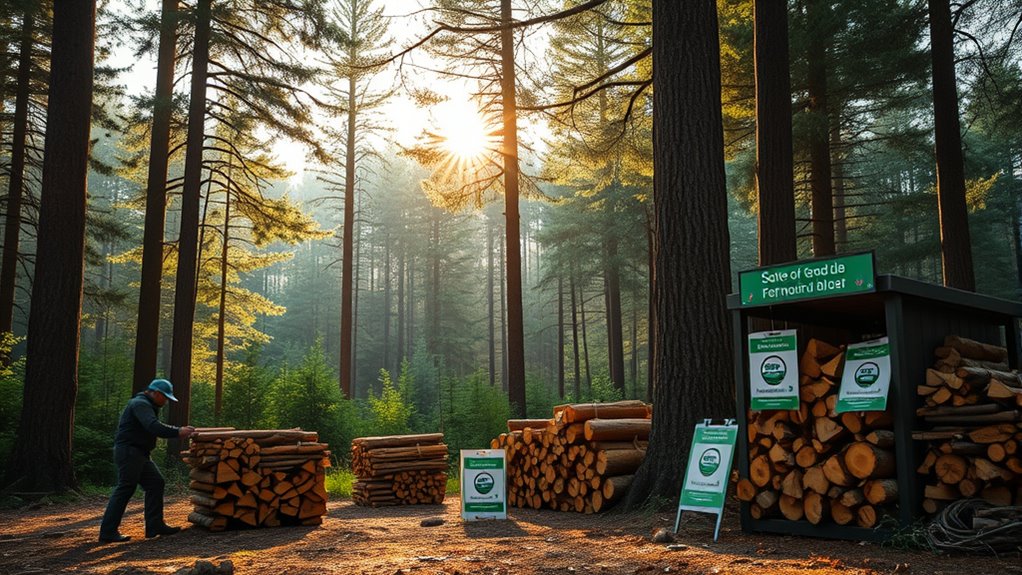
Understanding forest stewardship and certification programs is essential for firewood businesses aiming to source sustainably. These programs set standards for responsible forest management, ensuring that wood is harvested without harming ecosystems or depleting resources. When you choose certified wood, you support practices that protect biodiversity, maintain soil health, and promote forest regeneration. Certifications like FSC (Forest Stewardship Council) and PEFC (Programme for the Endorsement of Forest Certification) provide assurance that the wood comes from well-managed forests. By prioritizing certified sources, you demonstrate your commitment to environmental responsibility and build trust with eco-conscious customers. Knowing what these certifications entail helps you make informed decisions, ensuring your firewood supply aligns with sustainable principles and supports long-term forest health. forest management practices are central to maintaining the health and productivity of forest ecosystems over time. Additionally, understanding sustainable harvesting methods can further optimize responsible sourcing and support ecosystem resilience, ensuring that certified wood continues to be a reliable resource for your business. Incorporating forest monitoring techniques can help verify that management practices remain effective and compliant with certification standards, and adopting adaptive management strategies can further enhance ecosystem sustainability and resilience.
Selecting Responsible Harvesting Methods

Choosing the right harvesting techniques guarantees you minimize environmental impact and maintain forest health. You’ll also need a forest management plan to guide sustainable practices and meet certification standards. By integrating these elements, you can harvest firewood responsibly while supporting long-term forest resilience. You can also consider soil preservation methods to prevent erosion and maintain ecosystem stability during harvesting. Implementing proper workspace organization can further enhance efficiency and ensure sustainable operations. Additionally, staying informed about harvesting regulations helps ensure compliance and promotes ethical sourcing practices. Incorporating remote monitoring tools can assist in tracking forest conditions in real-time, optimizing sustainable harvesting efforts. Moreover, understanding ecological indicators allows for better assessment of forest health and guides adaptive management strategies.
Harvesting Techniques
To guarantee sustainable firewood harvesting, selecting responsible methods is essential. You should focus on techniques that minimize environmental impact and promote forest health. For example, selective cutting involves removing only mature or diseased trees, leaving younger ones to grow and sustain the ecosystem. Avoid clear-cutting, which can cause erosion and habitat loss. Use proper equipment to prevent unnecessary damage to surrounding vegetation and soil. Cutting at the correct height helps trees recover and reduces root disturbance. Also, stagger harvesting schedules to allow forest regeneration. Always plan your work to reduce waste and ensure that the forest can replenish itself naturally. Implementing these responsible techniques helps maintain the forest’s vitality, supports sustainable sourcing, and preserves resources for future firewood needs.
Forest Management Plans
Developing a thorough forest management plan is essential for guaranteeing responsible harvesting methods. It helps you balance your firewood needs with forest health and sustainability. Your plan should outline harvesting schedules, methods, and regeneration strategies. Consider factors like tree age, species diversity, and soil condition to minimize environmental impact. Regular monitoring allows you to adapt practices and prevent overharvesting. Incorporating scientific skepticism can help validate the effectiveness of your practices and ensure they are based on reliable information. Additionally, understanding forest management plans can assist in aligning your operations with best practices for sustainable resource use. Employing sustainable harvesting techniques ensures long-term forest vitality while meeting your firewood demands.
Certification Standards
Implementing certification standards guarantees that your firewood harvesting aligns with responsible practices recognized by industry and environmental organizations. These standards set clear guidelines for sustainable sourcing, ensuring you minimize ecological impact and protect forest health. By adhering to certifications like FSC or PEFC, you commit to responsible harvesting methods, such as selective cutting and maintaining biodiversity. Certification also involves regular audits, which help you stay accountable and improve your practices over time. This not only boosts your credibility with customers but also ensures your business contributes positively to forest conservation. Selecting responsible harvesting methods under certification standards helps you avoid practices that lead to deforestation or habitat destruction. Incorporating vertical storage solutions can further optimize your storage space for equipment and supplies, supporting your sustainable practices. Staying informed about electric bike technology can also inspire innovative approaches to transportation and logistics within your business. Understanding the importance of ethical practices in sourcing can help you build a reputation for integrity and environmental stewardship. Building awareness about sustainable forestry and implementing it into your practices demonstrates your dedication to sustainability and builds trust with clients who value eco-friendly sourcing. Additionally, adopting certification standards encourages continuous improvement by establishing benchmarks for responsible management.
Prioritizing Local and Native Tree Species
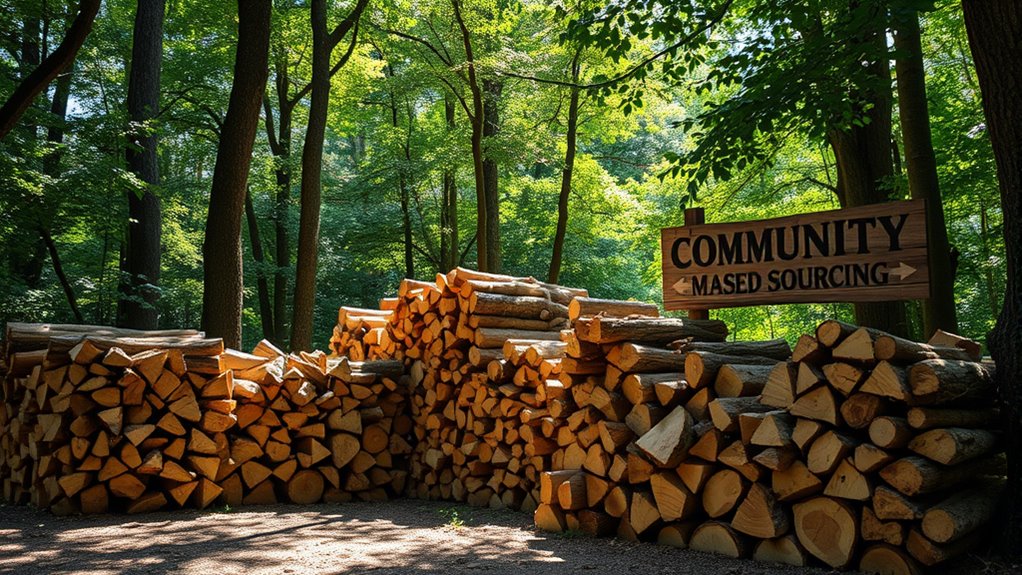
Focusing on local and native tree species is crucial for sustainable firewood sourcing because these trees are better adapted to the region’s ecosystem and require less maintenance. Using native species reduces reliance on imported wood, decreasing transportation emissions and supporting local biodiversity. Prioritizing native trees also helps preserve regional ecological balance and guarantees the resilience of local forests.
| Benefits of Native Species | Challenges to Take into Account |
|---|---|
| Lower maintenance needs | Limited availability |
| Supports local biodiversity | Ensuring sustainable harvests |
| Reduced environmental impact | Regulatory restrictions |
Implementing Sustainable Logging Practices
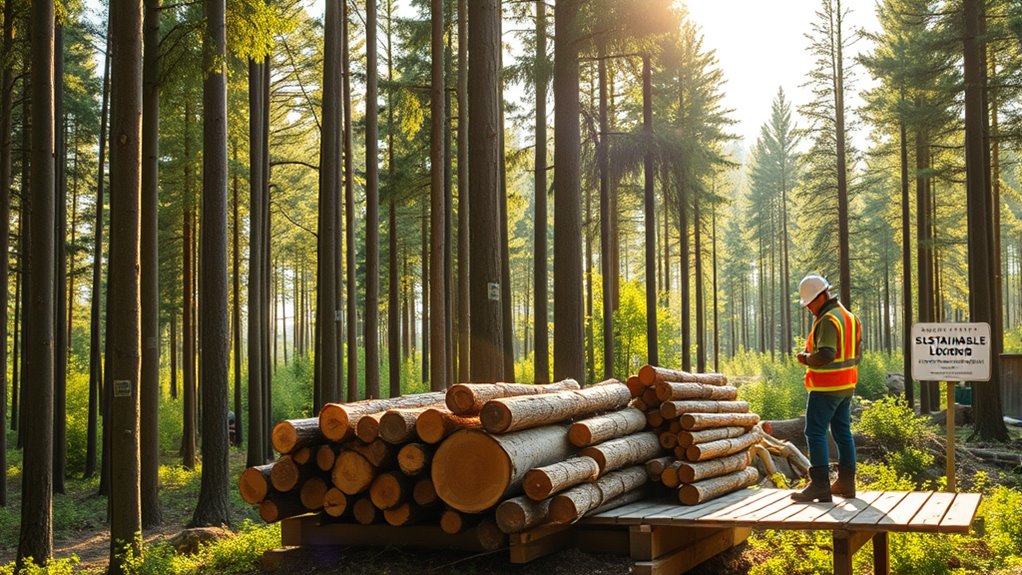
To implement sustainable logging practices, you need to use selective harvesting techniques that minimize environmental impact. Replant trees and promote natural regrowth to guarantee long-term forest health. Regularly monitoring forest conditions helps you stay ahead of potential issues and maintain a balanced ecosystem.
Selective Harvesting Techniques
Selective harvesting is crucial for maintaining healthy forests and guaranteeing sustainable firewood supplies. By carefully choosing which trees to harvest, you minimize environmental impact and promote forest vitality. Focus on removing only mature or diseased trees, leaving younger growth intact to support natural regeneration. Use tools like chainsaws and directional felling techniques to target specific trees, reducing damage to surrounding vegetation. Avoid clear-cutting or overharvesting areas, which can lead to erosion and habitat loss. Keep track of your harvests to ensure you’re staying within sustainable limits and respecting forest health. Proper planning and careful execution help maintain biodiversity and soil stability. Ultimately, selective harvesting balances your immediate firewood needs with the long-term sustainability of the forest ecosystem.
Replanting and Regrowth Strategies
After carefully selecting trees for harvest, implementing effective replanting and regrowth strategies guarantees the forest remains healthy and productive. You should prioritize planting native species suited to your region, ensuring genetic diversity and resilience. Use a planned rotation system to balance harvests with regrowth, preventing overharvesting. Protect young saplings from pests and harsh weather to promote robust development. Consider soil health and manage thinning to reduce competition. Here’s a simple guide:
| Step | Action | Purpose |
|---|---|---|
| Select native species | Replant with local trees | Enhance adaptability and growth |
| Implement rotation plan | Schedule harvests & planting | Maintain continuous forest cover |
| Protect young trees | Use barriers or watering | Increase survival rates |
| Manage soil & thinning | Reduce competition, fertilize | Support healthy regrowth |
Monitoring Forest Health
How can you guarantee that your logging practices support long-term forest health? The key is consistent monitoring. Regularly inspect tree populations, noting species diversity, age distribution, and signs of disease or pest infestations. Use GPS and mapping tools to track harvest areas and ensure you’re not overharvesting any single zone. Keep detailed records of logging activities and compare them against sustainable thresholds. Engage local experts or forestry professionals to assess forest vitality periodically. Monitoring helps you identify early warning signs of degradation, allowing you to adapt your practices promptly. By staying vigilant and data-driven, you protect forest ecosystems, safeguarding they remain resilient and productive for future generations while maintaining your business’s sustainability.
Managing Harvesting Areas to Promote Regeneration

To guarantee sustainable firewood harvesting, managing your harvesting areas effectively is essential for promoting natural regeneration. You should implement rotational harvesting, dividing your land into sections and harvesting from one area at a time. This allows untouched sections to recover and regrow naturally. Avoid overharvesting by setting clear limits on the amount of wood you take and sticking to them. Protect young saplings and seed-producing trees to ensure future growth. Maintaining diversity in tree species also supports resilience and regeneration. Regularly monitor the health of your areas, noting signs of stress or decline. By practicing these strategies, you help sustain the forest’s ability to renew itself, ensuring a continuous supply of firewood while safeguarding the environment for future generations.
Building Strong Relationships With Trusted Suppliers
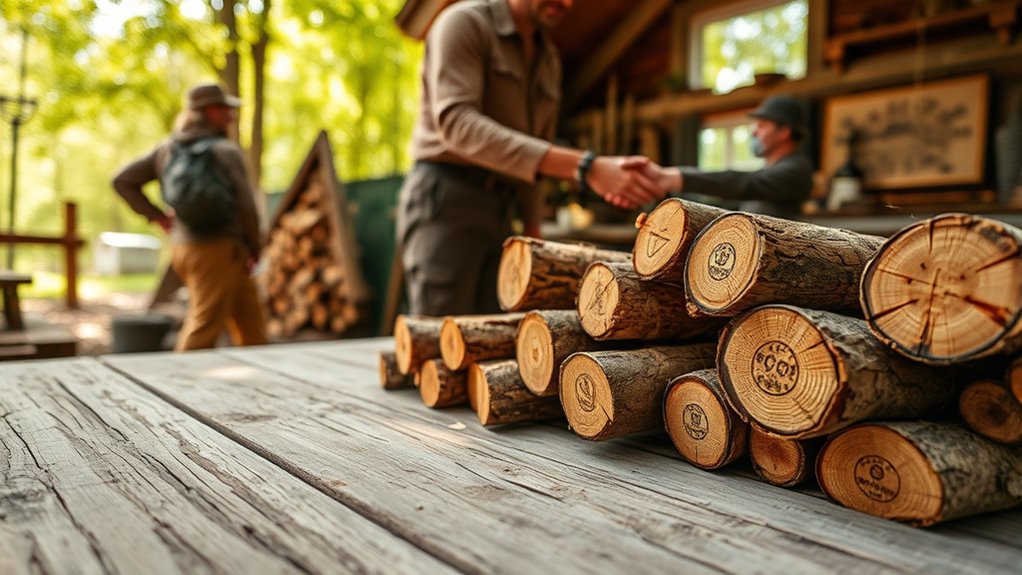
Building strong relationships with trusted suppliers guarantees you have a reliable source of quality firewood while supporting sustainable practices. By establishing clear communication, you assure transparency about harvesting methods and environmental commitments. Developing trust means choosing suppliers who prioritize responsible sourcing, adhere to regulations, and share your sustainability values. Regularly visiting supplier sites and providing feedback helps strengthen this relationship and encourages continuous improvement. Negotiating fair prices and terms fosters mutual respect and stability. Maintaining open dialogue allows you to stay informed about supply availability and potential challenges. A dependable supplier network not only secures your inventory but also reinforces your reputation as a responsible business. Building these partnerships is essential for long-term success and promoting sustainable firewood sourcing practices.
Monitoring and Documenting Sourcing Practices
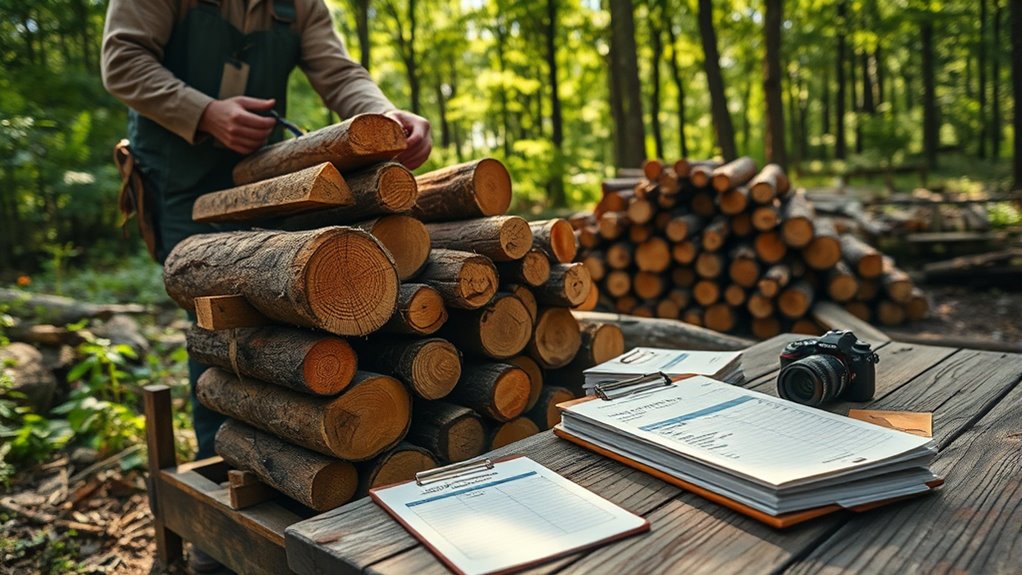
Monitoring and documenting your sourcing practices is essential to guarantee your firewood business maintains transparency and upholds sustainability standards. You should keep detailed records of where your firewood originates, including supplier information, harvest locations, and collection dates. Regularly auditing these records helps ensure compliance with environmental regulations and sustainability commitments. Use digital tools or spreadsheets to track data consistently and accurately. Implementing a system for verifying sources, such as GPS tagging or photographic evidence, adds an extra layer of accountability. Documenting your practices also helps identify areas for improvement and demonstrates your commitment to responsible sourcing to customers and regulators. By maintaining thorough records, you protect your business from potential legal issues and strengthen your reputation as a sustainable firewood provider.
Educating Customers About Sustainable Firewood Choices
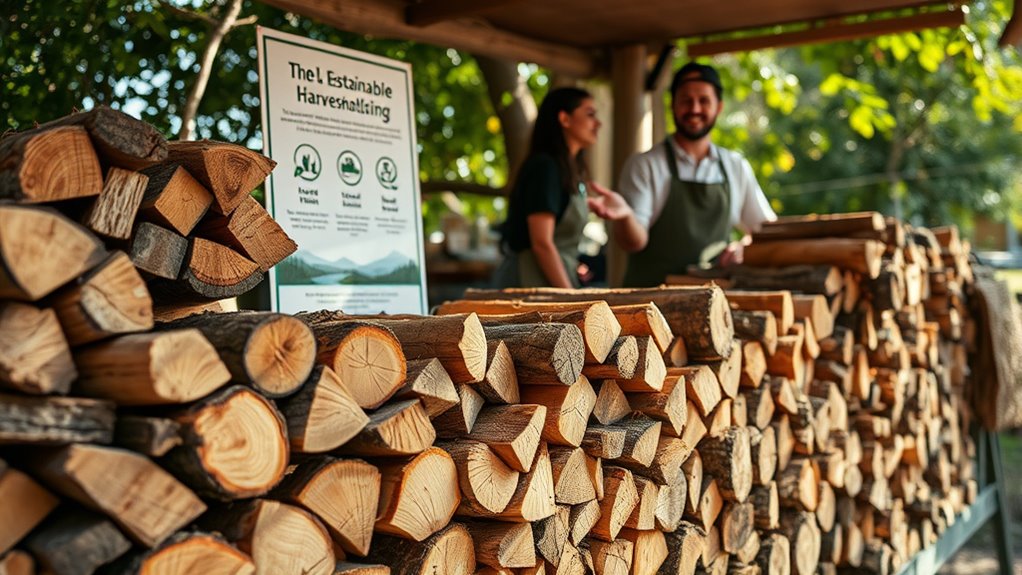
Educating your customers about sustainable firewood choices is essential for promoting responsible consumption and supporting environmental conservation. When customers understand the benefits of eco-friendly options, they’re more likely to make informed decisions. Here are four ways you can guide them:
- Explain the importance of sourcing firewood locally to reduce transportation emissions.
- Highlight the value of selecting certified or sustainably harvested wood.
- Share tips on how to identify properly seasoned firewood for better burning.
- Educate about the environmental impacts of illegal or unsustainable harvesting practices.
Staying Informed on Environmental Regulations and Standards
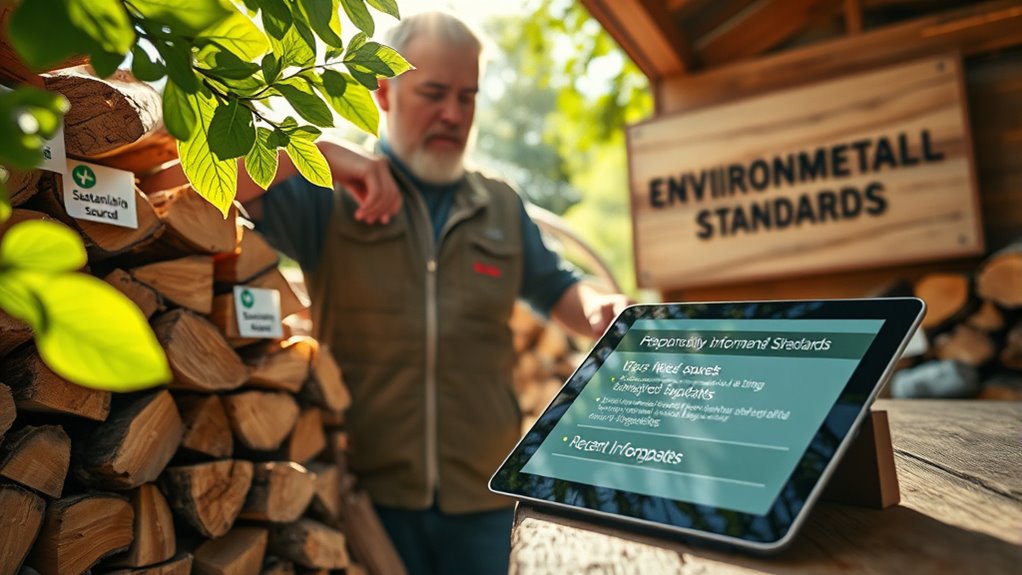
Staying informed on environmental regulations and standards is crucial for firewood businesses to operate responsibly and avoid legal issues. Regulations can change frequently, so it’s essential to monitor updates from local, state, and federal agencies. This awareness helps you ensure your sourcing practices remain compliant and environmentally sound. To stay current, consider subscribing to industry newsletters, joining trade associations, and attending workshops. Here’s a quick guide to key areas to watch:
| Regulation Area | Key Focus | Responsible Agency |
|---|---|---|
| Sustainable Harvest | Harvest quotas and permits | USDA, State Forestry |
| Emission Standards | Air quality and combustion emissions | EPA |
| Logging Practices | Logging certifications and legality | FSC, PEFC |
| Waste Management | Disposal of wood waste | Local Environmental Agencies |
| Certification Updates | Industry standards updates | Forest Certification Bodies |
Remaining informed ensures your business operates sustainably and avoids costly penalties.
Frequently Asked Questions
How Can I Verify a Supplier’S Sustainability Claims Effectively?
You want to verify a supplier’s sustainability claims effectively. Start by asking for detailed documentation, like certifications or third-party audits, to back their claims. Do your research on their sourcing practices and visit their operations if possible. Check reviews or case studies from other clients. Trust transparent suppliers who willingly provide evidence and are open to inspections. This approach guarantees you’re partnering with genuinely sustainable sources.
What Are the Costs Associated With Sustainable Certification Programs?
You’re wondering about the costs of certification programs. These can vary widely depending on the certification type, your business size, and location. Expect to pay application fees, annual renewal fees, and possibly costs for audits and assessments. While initial expenses may seem high, they often lead to long-term savings, improved reputation, and access to new markets. Investing in certification can be a valuable step toward sustainable, responsible business practices.
How Does Sustainable Sourcing Impact Firewood Pricing?
This question is vital because sustainable sourcing can dramatically influence firewood pricing, making it look like a tiny pebble compared to the mountain of benefits. When you prioritize responsible harvesting, you might see higher costs upfront due to eco-friendly practices and certifications. However, this investment can lead to more loyal customers and a stronger reputation, ultimately balancing the scales and ensuring your firewood business thrives sustainably.
Are There Specific Tools to Assess Forest Health After Harvesting?
You want to know if there are tools to assess forest health after harvesting. Yes, several tools can help you monitor forest conditions. Remote sensing technologies like satellite imagery and drones provide detailed data on forest vitality. Forest inventory software tracks tree growth and health. Field surveys and soil testing also offer valuable insights. Using these tools, you can guarantee your harvesting methods support forest sustainability and long-term health.
How Can Small Businesses Implement Sustainable Sourcing Practices Affordably?
You can implement sustainable sourcing practices affordably by starting with simple steps. Use local knowledge and community resources to assess forest health, and prioritize certified or well-managed forests. Establish good relationships with suppliers who share your commitment to sustainability. Keep records of your sourcing, and educate yourself on best practices. Small investments in responsible sourcing can lead to long-term benefits, ensuring resource availability and boosting your reputation.
Conclusion
By choosing sustainably sourced firewood, you’re helping protect forests and support local communities. Did you know that certified forests grow twice as fast as non-certified ones? Staying informed about responsible harvesting and building strong supplier relationships guarantees your business stays eco-friendly. Together, you can make a real difference, reducing environmental impact while providing quality firewood. Commit to sustainable sourcing — it’s good for the planet, your customers, and your business’s future.