
If splitting wood suddenly feels impossible, your grain pattern is likely key. Irregular or twisted grain resists splitting and makes your effort unpredictable. Check if the grain runs in different directions or is interlocked; these cause more resistance. Dull tools also worsen the problem by requiring more force. Properly analyzing the grain, keeping your tools sharp, and adjusting your technique can turn the difficulty around. Keep going, as understanding what your wood is telling you can make all the difference.
Key Takeaways
- Irregular or twisted grain can resist splitting, making the task unexpectedly difficult.
- Grain running in different directions creates unpredictable splits and increased resistance.
- Interlocked or tightly packed grain weakens natural lines of weakness, hindering splitting efforts.
- Grain patterns that are not aligned with your tool or technique require adjustments for successful splitting.
- Recognizing changes in grain pattern can help identify weak spots and improve splitting effectiveness.
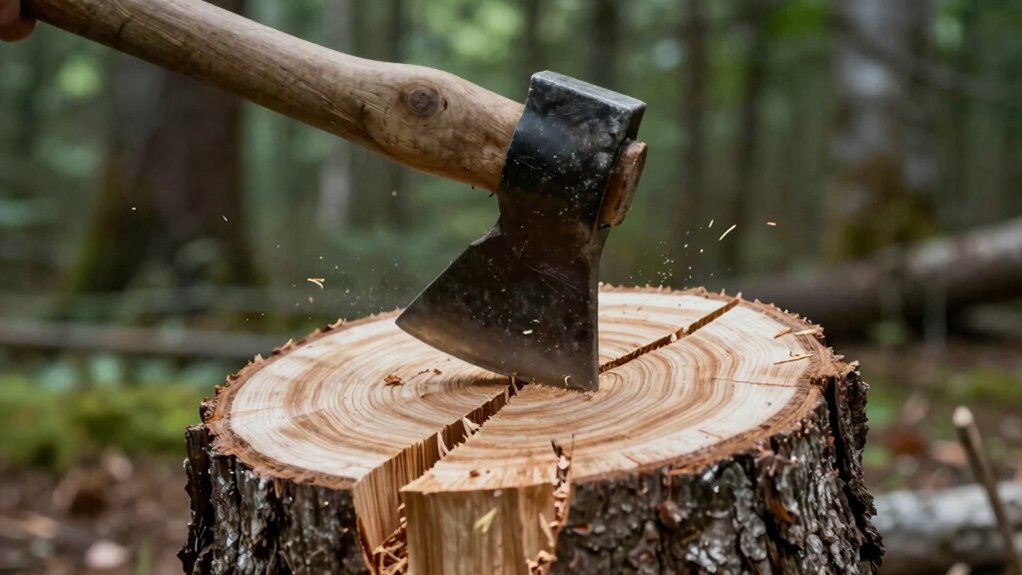
Have you ever tried to split a stubborn log and felt like it’s impossible? It’s frustrating when your usual methods suddenly seem ineffective, but often, the problem isn’t your strength—it’s the wood’s grain. The grain of the wood plays a vital role in how easily it splits. By analyzing the grain, you can better understand what’s happening inside the log and adjust your approach accordingly. When you notice that a log resists splitting, take a moment to observe the grain pattern. Is it tight and straight or irregular and twisted? Understanding these details can save you time and effort. Sometimes, the grain runs parallel and makes splitting straightforward, but if it runs in different directions or is interlocked, you might need to change your technique.
Another key factor is tool maintenance. Dull tools are your biggest enemy when it comes to splitting wood, especially if the grain doesn’t cooperate. A dull axe or maul requires more force and can cause the wood to chip or split unpredictably, making the task seem impossible. Regularly sharpening your tools ensures clean, effective cuts and reduces the risk of accidents. Keep the blades free of rust and debris, and check for any chips or damage that could compromise performance. Proper tool maintenance isn’t just about safety; it’s about efficiency. When your tools are sharp and well-kept, you can better follow the natural grain lines, making splitting easier and less physically taxing.
If you’re still struggling despite analyzing the grain and maintaining your tools, consider adjusting your technique. For tightly grained wood, it helps to use a wedge to split along the natural lines of weakness. Also, ensure your chopping surface is stable and your stance is solid—stability gives you better control and power. Sometimes, it’s worth trying different angles or starting from a different point on the log to find the grain’s weak spot. Remember, patience is key. Rushing can cause the wood to split in unpredictable ways, or worse, injure you.
Ultimately, understanding your wood’s grain and keeping your tools in top condition are the most effective ways to turn that impossible-sounding task into a successful split. When you analyze the grain pattern carefully and keep your equipment sharp, you’ll find that what once felt like an insurmountable challenge becomes manageable. With these insights, you’ll approach each log with confidence, knowing you’re working smarter, not harder.
Frequently Asked Questions
Can Seasoning Wood Improve Splitting Ease?
Absolutely, seasoning wood can turn the impossible into a breeze! When you properly dry your wood using expert seasoning techniques, the grain patterns become less dense and more uniform, making splitting way easier. Wet, unseasoned wood fights back with tough, stubborn fibers, but seasoned wood with ideal moisture levels splits effortlessly. So, yes, seasoning your wood is like giving it a gentle but firm nudge to split smoothly.
Does Wood Type Affect Splitting Difficulty?
Yes, wood type considerably affects splitting difficulty because of differences in grain density and wood hardness. Hardwoods like oak or hickory have dense, tight grains that resist splitting, making it more challenging. Softer woods like pine or cedar split more easily due to their less dense grain structures. Knowing your wood’s grain density and hardness helps you choose the right tools and techniques for easier splitting.
How Does Moisture Content Influence Splitting?
Moisture content greatly influences splitting by affecting the wood’s grain consistency. When wood is too wet, it becomes more elastic and tougher to split, while dry wood tends to crack more easily. You should use a moisture measurement tool to check the wood’s moisture level; ideally, it should be around 20% for easier splitting. Keeping an eye on moisture helps you predict how well your wood will split.
Is It Better to Split Wet or Dry Wood?
It’s better to split dry wood because it responds more predictably to splitting direction and grain alignment. When wood is wet, the moisture weakens the fibers, making it harder to split along the intended grain. Dry wood’s grain alignment is clearer, allowing you to follow the natural splitting direction more easily. This reduces effort, prevents damage to your tools, and results in cleaner, more efficient splits.
Can Improper Tools Make Splitting Impossible?
Improper tools can make splitting impossible by hindering tool selection and dulling blade sharpness. When your axe or wedge isn’t suited for the wood, or if the blade isn’t sharp enough, you struggle to penetrate the grain. Choose the right tools designed for your wood type, and keep blades sharp. Proper tool selection and maintaining blade sharpness create a clear path, making splitting easier and more efficient.
Conclusion
Remember, every piece of wood has its own story, and sometimes, it just needs a gentle nudge to reveal its true nature. When splitting feels like an uphill climb, maybe it’s just asking for a little patience and a fresh perspective. Trust in your tools and your instincts—soon enough, you’ll find that the stubborn grain begins to bend, revealing the warm glow of success beneath. Keep at it, and the forest’s secrets will unfold before you.