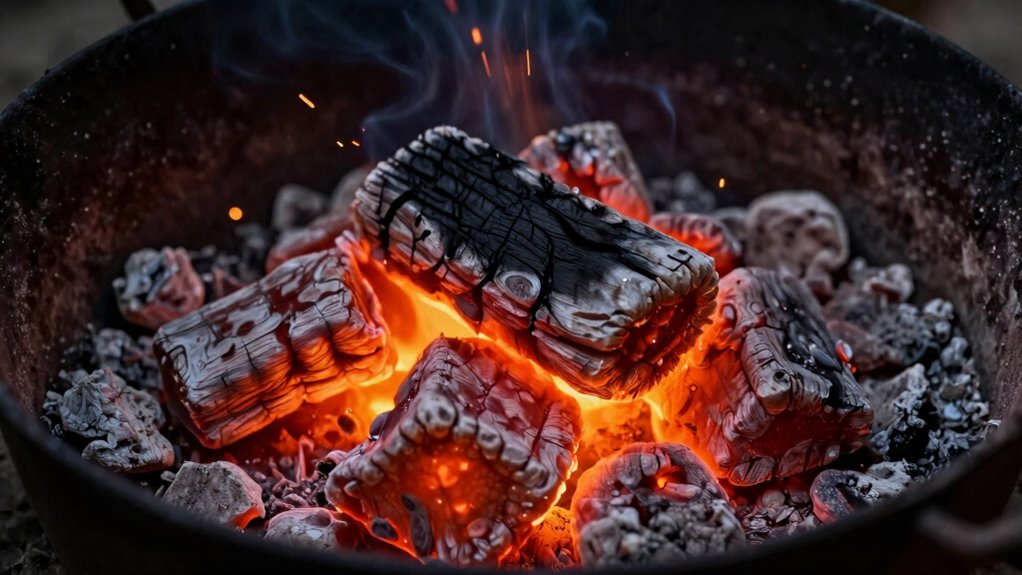

Good coals for reloading your stove are dense, uniform, and well-dried to guarantee quick ignition and even burn. They should produce steady heat with minimal smoke and emissions, helping you maintain better temperature control. Properly chosen coals also reduce ash and prevent smoldering. To keep your stove safe and efficient, you’ll need to pay attention to chimney maintenance and ash removal. Keep these tips in mind, and you’ll discover more ways to optimize your stove’s performance.

Get business pricing on tools and workshop supplies
- Business-only prices and quantity discounts
- Tax-exempt purchasing
- Multiple users, one account, clear invoices
Key Takeaways
- Good coals are dense, uniform in size, and well-dried for quick ignition and even burning during reloading.
- They produce steady heat with minimal smoke, ensuring cleaner and more efficient combustion.
- Properly selected coals reduce ash buildup, making reloading and cleanup easier.
- Using high-quality coals prevents smoldering and maintains consistent heat output.
- Well-seasoned coals help sustain a clean, safe, and efficient fire with less need for frequent adjustments.
When reloading a stove, choosing the right coals can make all the difference in maintaining efficient and consistent heat. Good coals burn steadily, produce minimal smoke, and generate the right amount of heat without requiring constant adjustments. But to keep your stove operating smoothly, you need more than just quality coals—you need proper chimney maintenance and regular ash removal. Neglecting these steps can lead to inefficient burning, smoke buildup, and even dangerous chimney fires.
Choosing the right coals, maintaining your chimney, and removing ash ensure efficient, safe, and clean burning.
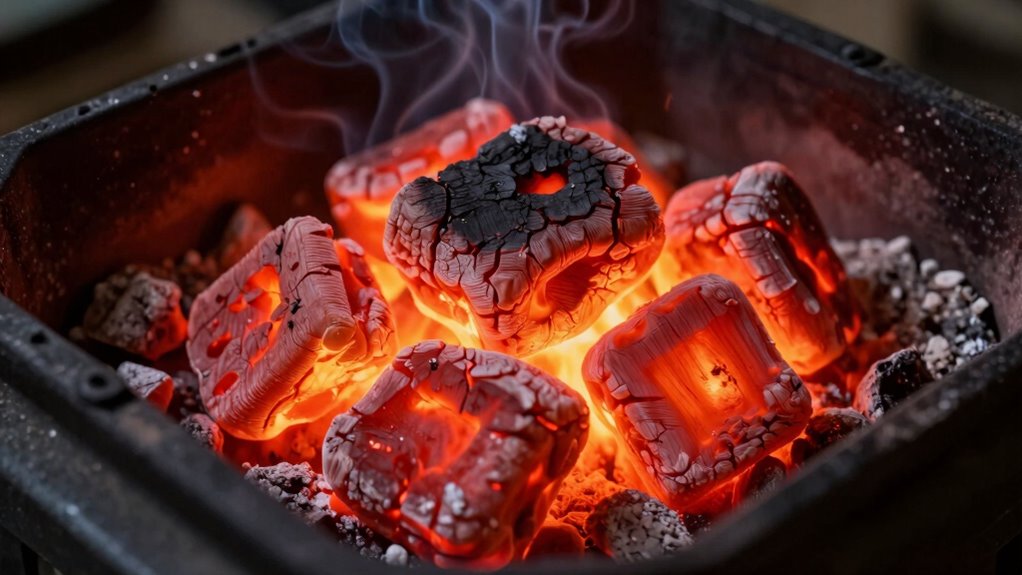
First, selecting the best coals involves understanding their composition and how they burn. Good coals are typically dense and uniform in size, which helps them ignite quickly and burn evenly. They produce a steady heat, giving you better control over your stove’s temperature. When you load your stove, avoid overly wet or improperly cured coals, as these tend to smolder and produce excess smoke. Instead, opt for well-dried, seasoned coals that have been stored in a dry environment, ensuring they ignite easily and burn cleanly. Proper coal storage is essential to prevent moisture absorption and ensure optimal burn quality. Additionally, choosing coals that are free from impurities can help achieve a cleaner and more efficient burn. Using high-quality coals can also reduce ash production, making maintenance easier.
Proper chimney maintenance directly impacts the quality of your burn. A clean chimney ensures good airflow, which is essential for complete combustion of your coals. Regular inspections and cleaning prevent creosote buildup—a sticky, flammable substance that can cause dangerous chimney fires. When your chimney is clear, your stove will draw in enough oxygen, resulting in cleaner, more efficient burning. This not only prolongs the life of your stove but also improves heat output and reduces smoke emissions. Routine chimney cleaning can significantly reduce the risk of fire and improve overall stove performance.
Ash removal is another critical aspect of maintaining good burning conditions. As your coals burn, they produce ash, which can quickly accumulate and block airflow if not regularly removed. Excess ash insulates the coals, limiting oxygen supply and causing inefficient combustion. Make it a habit to check and clean out ash after each fire, ensuring that fresh air can circulate freely around the remaining coals. This promotes a hotter, cleaner burn and helps you get the most out of your fuel. Proper chimney ventilation is essential to maintain optimal airflow and combustion efficiency. Keeping your stove and chimney well-maintained contributes to safer, more effective heating during colder months. Regularly removing ash also helps prevent buildup of combustible materials, reducing fire risk and maintaining the efficiency of your stove.
high quality seasoned coal for stove
As an affiliate, we earn on qualifying purchases.
As an affiliate, we earn on qualifying purchases.
Frequently Asked Questions
How Do I Store Leftover Coals Safely?
To store leftover coals safely, you should let them cool completely before handling. Use a metal container with a tight-fitting lid for coal storage, ensuring it’s away from flammable materials. This promotes fire safety and prevents accidental fires. Never store hot coals indoors or in a plastic container. Regularly check on stored coals and dispose of any that show signs of smoldering or unexplained heat to keep your home safe.
Can I Use Different Types of Wood for Good Coals?
Yes, you can use different wood types for good coals, but keep in mind that some woods burn more efficiently than others. Hardwoods like oak, hickory, and maple generally provide better burning efficiency and longer-lasting coals. Softer woods like pine may produce quicker, less efficient coals that burn faster and generate more creosote. Choose your wood based on the burn quality and efficiency you desire for your stove.
How Long Do Good Coals Typically Last?
Good coals typically last between one to three hours, depending on the coal types and fire maintenance. Hardwood coals, like oak or hickory, tend to burn longer and produce steady heat, while softer woods burn quicker. To maximize their lifespan, you should maintain proper airflow and avoid overloading the stove. Regularly tending to your fire guarantees the coals stay hot longer, providing consistent warmth and efficient heat output.
What’s the Best Way to Reignite Cooled Coals?
To reignite cooled coals, start by carefully arranging them, with some fresh coal on top. Use a small amount of firelighter or crumpled paper to aid coal ignition, then gently blow or fan to boost airflow. This fire revitalization technique helps the heat spread evenly. Keep the damper open to guarantee proper oxygen flow, which accelerates coal ignition, bringing your stove back to a warm, steady burn efficiently.
Are There Health Risks With Handling Hot Coals?
Handling hot coals is like walking a tightrope—you must stay cautious. There are health concerns with coal safety, including burns and inhaling harmful fumes if not vented properly. Always wear gloves and keep a fire extinguisher nearby. Avoid touching or inhaling fumes directly, and guarantee good ventilation. Taking these precautions minimizes health risks, allowing you to enjoy your fire safely while respecting the dangers of hot coals.
Conclusion
In the gentle dance of reloading your stove, choosing the right coals is like selecting the perfect notes for a melody. When you handle good coals with care, you set the stage for warmth and comfort to softly embrace your home. Remember, patience and attention turn simple moments into cozy memories. So, trust the process, and let those well-chosen coals work their quiet magic, making every fire a warm, inviting whisper in your everyday life.
Halloween Picks
halloween
As an affiliate, we earn on qualifying purchases.