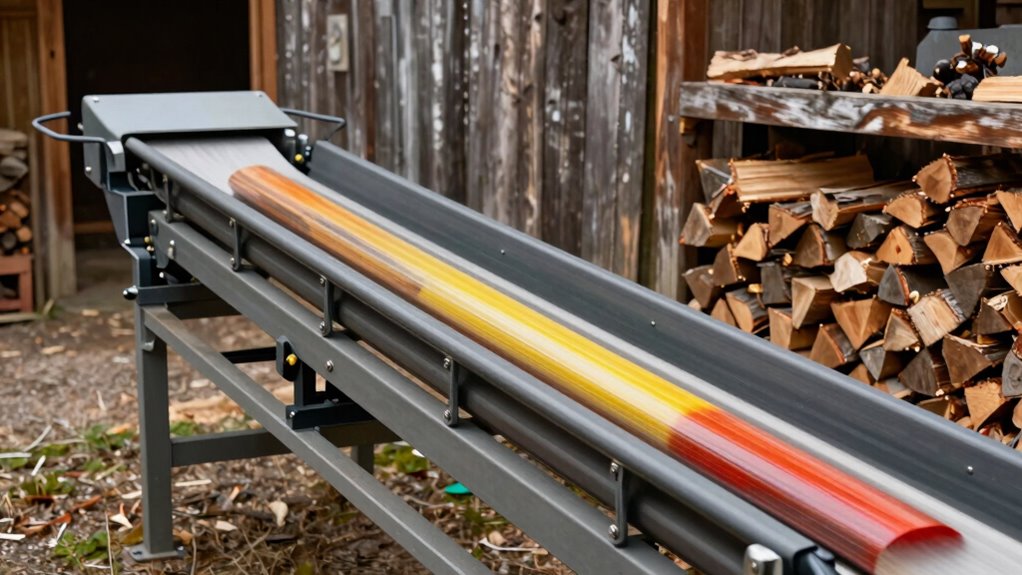

Firewood conveyors are a serious time saver if you process large volumes of logs regularly. They streamline log movement, cut down manual effort, and speed up your workflow, especially during busy seasons. Proper setup and maintenance guarantee you get the most from your investment, making them a practical addition rather than just a luxury. Want to discover how they can transform your log handling and boost productivity? Keep exploring to find out more.
Key Takeaways
- Firewood conveyors significantly increase productivity by automating log movement, saving time during peak processing periods.
- Proper setup and maintenance are essential to maximize efficiency and prevent operational disruptions.
- They reduce manual labor, improve safety, and ensure consistent workflow, making them a valuable investment.
- Suitable for large workloads, they turn labor-intensive tasks into streamlined, efficient processes.
- Regular use and proper upkeep extend equipment lifespan, ensuring long-term cost-effectiveness.
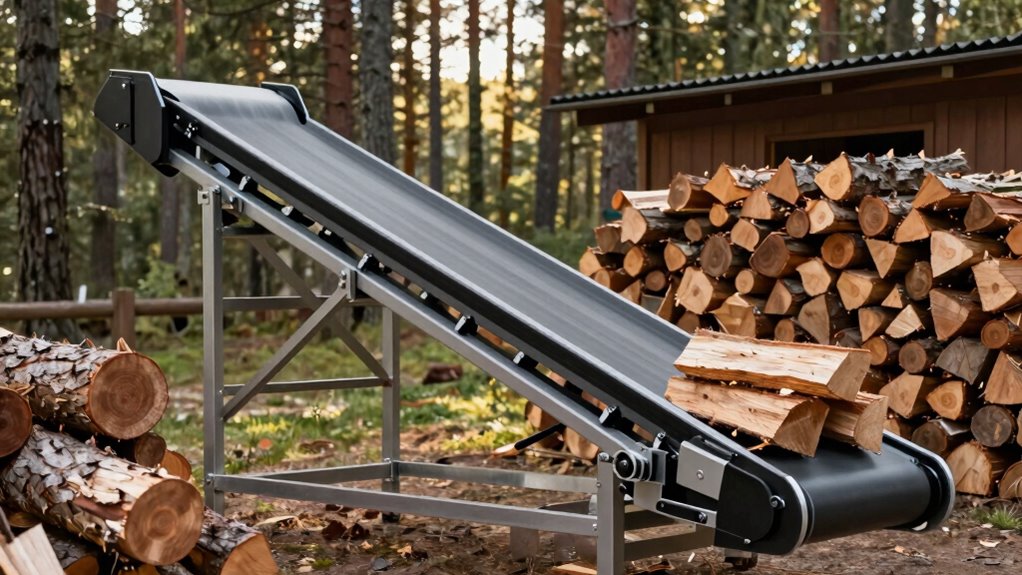
Firewood conveyors are essential tools that streamline the process of moving and stacking logs, saving you time and effort. When you’re handling large quantities of firewood, manually lifting and transporting logs can become exhausting and inefficient. A conveyor helps you move logs smoothly from one area to another, making log processing much faster. Instead of spending hours bending, lifting, and sorting, you can set up a conveyor to do most of the heavy work, freeing you to focus on other tasks like stacking or seasoning the wood.
Firewood conveyors save time and effort by efficiently moving logs, making processing faster and less tiring.
Using a firewood conveyor isn’t just about convenience; it’s about improving your overall workflow. With the right setup, you can process logs more consistently and safely, reducing the risk of injury from heavy lifting. Plus, you’ll notice a significant boost in productivity, especially during peak seasons when demand for firewood spikes. A conveyor allows you to handle larger volumes in less time, so you can keep up with your customers or your own supply needs without feeling overwhelmed. Proper conveyor setup is key to maximizing efficiency and preventing operational issues. Regular inspection of the system can help identify potential problems early and keep your operation running smoothly.
However, to keep your firewood conveyor running smoothly, regular conveyor maintenance is crucial. You’ll want to check for worn belts, loose bolts, and any debris that might cause jams or operational issues. Proper maintenance ensures that your conveyor functions efficiently and minimizes downtime. It’s also wise to keep lubrication points greased and inspect motors and gears periodically. When you prioritize conveyor maintenance, you extend the lifespan of your equipment and avoid costly repairs, making your investment more worthwhile in the long run. An understanding of equipment longevity can help you plan for upgrades and replacements over time.
While some might see a firewood conveyor as a luxury, especially if they only process small amounts of wood, it’s really a serious time saver once you scale up. If you’re processing logs regularly, the initial investment can pay off quickly by drastically reducing manual labor and speeding up your log processing. The convenience of a conveyor means you spend less energy on routine tasks and more on ensuring the quality of your firewood. It’s an efficient addition that turns what used to be a labor-intensive process into a streamlined operation.
In the end, whether a firewood conveyor is a luxury or a necessity depends on your workload. For those who handle large volumes, it’s an invaluable tool that can transform your efficiency. Just remember, proper conveyor maintenance is key to keeping it working at peak performance. When maintained well, it becomes a reliable partner in your firewood business or hobby, making the entire process smoother, faster, and less tiring. Regular use of firewood conveyors can significantly enhance your workflow and productivity.

7HP Gas Firewood Conveyor 18FT Hydraulic Adjustable Height Wood Elevator with 9.25" PVC Anti-Slip Belt, Manual Pull Start, Trailer Hitch & Tires – Portable Log Conveyor for Farm, Home, Commercial Use
- Powerful 7HP Engine: Reliable 212cc gasoline engine
- 18ft Long Conveyor: Ideal for large-scale firewood handling
- 9.25-inch PVC Anti-Slip Belt: Durable and safe for logs and debris
As an affiliate, we earn on qualifying purchases.
As an affiliate, we earn on qualifying purchases.
Frequently Asked Questions
What Is the Average Cost of a Firewood Conveyor?
The average cost of a firewood conveyor usually ranges from $2,000 to $5,000, depending on size and features. When considering firewood storage, a conveyor boosts efficiency by automating the stacking process, saving you time and effort. Investing in one can notably streamline your firewood handling, making it a worthwhile upgrade. Keep in mind that higher-end models offer better durability and advanced features, which can justify the cost for frequent use.
How Much Space Is Needed for Installation?
You’ll find installing a firewood conveyor requires a bit of room to breathe, roughly matching its conveyor dimensions plus some extra clearance for safe operation. Typically, you’ll need an installation space that accommodates the length, width, and height of the conveyor, ensuring smooth movement without constraints. Planning for sufficient space helps prevent tight spots, allowing your conveyor to operate efficiently, seamlessly integrating into your workflow and maximizing its time-saving potential.
Are Firewood Conveyors Suitable for All Types of Wood?
Firewood conveyors are suitable for most types of wood, but you should consider wood drying processes and conveyor safety. Hardwoods and softwoods can both be moved efficiently, yet guarantee the conveyor system is designed to handle the specific weight and size of your wood. Properly drying your wood before conveying reduces moisture issues, and maintaining safety measures prevents accidents, making the process smoother and more efficient.
What Maintenance Is Required for These Conveyors?
Think of your firewood conveyor as a resilient workhorse—requiring regular TLC to stay in peak form. You’ll need to keep an eye on conveyor durability, inspecting for wear and tear, and grease moving parts to prevent rust. Maintenance frequency depends on usage, but monthly checks and occasional belt adjustments will keep it running smoothly. With proper care, your conveyor will serve you faithfully, saving time and effort for years to come.
How Long Does It Take to Set up a Conveyor System?
Setting up a firewood conveyor system typically takes a few hours to a full day, depending on its size and complexity. This process involves assembling components, guaranteeing proper alignment, and integrating safety features. By doing this efficiently, you improve overall productivity and safety considerations. Proper setup minimizes downtime, maximizes efficiency improvements, and guarantees the system operates smoothly, allowing you to save time and reduce hazards during firewood handling.
Conclusion
Imagine the crackling warmth of a fire, your woodpile neatly stacked and ready to light. A firewood conveyor transforms that scene from a laborious chore into a smooth, effortless flow. It’s not just a luxury—it’s a game-changer, saving you time and back-breaking effort. With each piece gliding seamlessly into place, you’ll feel the satisfaction of a cozy fire without the usual strain. Embrace the ease, and let your firewood work for you.