
Pressure washers are powerful tools that can make equipment cleanup quick and effective, helping you remove dirt, grease, and grime easily. However, they can be easy to misuse, risking damage to delicate parts or creating safety hazards, so it’s important to follow proper techniques and safety precautions. Using the right pressure and tools guarantees you get the best results without harm. If you want to know how to do it safely and effectively, there’s more to learn.
Key Takeaways
- Pressure washers efficiently remove dirt and grime, restoring equipment’s appearance and prolonging its lifespan.
- Proper safety precautions, like protective gear and correct techniques, are essential to prevent injuries and equipment damage.
- Adjust pressure settings based on equipment material and grime to avoid chipping, warping, or stripping coatings.
- Avoid pressure washing electrical components, bearings, or delicate finishes to prevent costly damage.
- Regular, careful pressure washing as part of maintenance helps prevent rust, mold, and buildup, extending equipment usability.
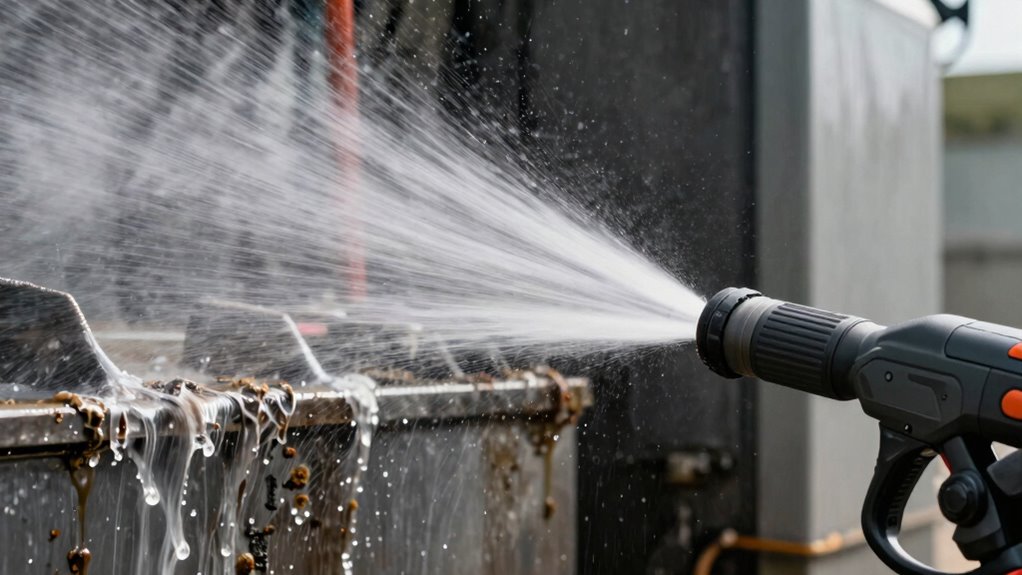
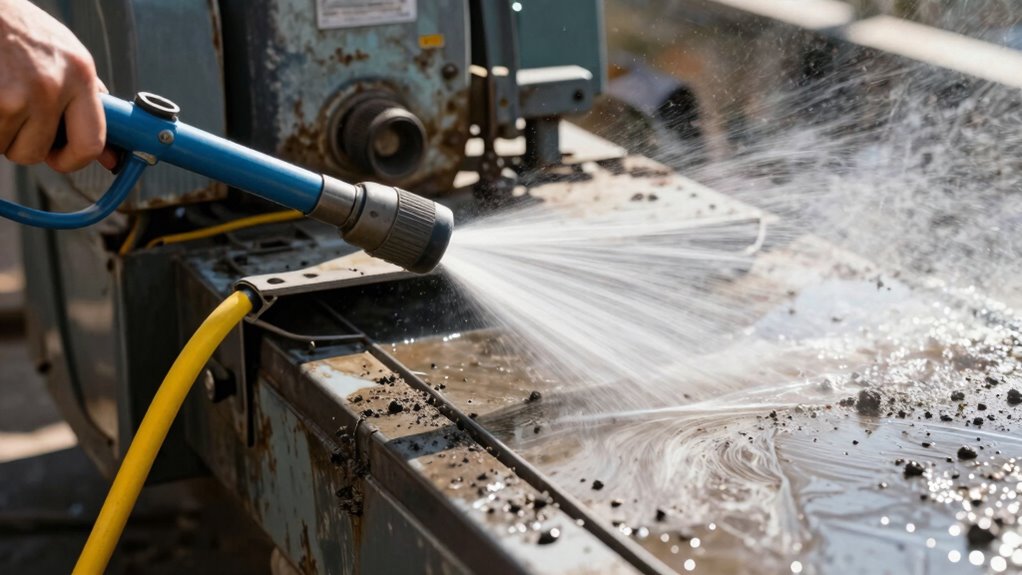
Ever wondered how to keep your equipment looking like new without too much hassle? Pressure washers are a game-changer for equipment cleanup, offering a powerful and efficient way to remove dirt, grease, and grime. They quickly restore your gear’s appearance and functionality, but it’s essential to use them correctly. When it comes to cleaning safety, you need to be cautious. The force of a pressure washer can cause injuries or damage if not handled properly. Always wear protective gear, such as goggles and gloves, and keep the nozzle at a safe distance to prevent accidental harm. Knowing how to operate your pressure washer safely isn’t just about protecting yourself—it’s also about ensuring your equipment isn’t damaged during cleaning. Proper cleaning safety practices include understanding the correct pressure settings and techniques to prevent accidents and damage.
Using a pressure washer for equipment maintenance can save you time and effort, but it’s easy to misuse if you’re not careful. Many users assume that more pressure equals better cleaning, but that’s not always true. Excessive pressure can chip paint, warp parts, or strip away protective coatings. Adjusting the pressure to suit the specific surface and type of grime is *essential*. For delicate equipment, start with a lower setting and gradually increase if needed. Keep the nozzle moving in smooth, controlled motions to avoid concentrating too much force in one spot, which could cause damage. Regular maintenance, including cleaning with a pressure washer, helps extend the lifespan of your tools and machinery. It prevents buildup that can lead to corrosion or malfunction over time. A proper technique involves not only adjusting pressure but also choosing the right nozzle and cleaning pattern for different surfaces. Additionally, understanding equipment materials can help you determine the safest cleaning approach for each item. Moreover, understanding the different pressure washer types can ensure you select the right equipment for each cleaning task, reducing the risk of damage and improving efficiency.
Adjust pressure carefully, move nozzle smoothly, and avoid damage to keep equipment in top shape.
Another *important* aspect of equipment maintenance is understanding what not to pressure wash. Electrical components, bearings, or delicate finishes should be cleaned using gentler methods to avoid damage. Always consult your equipment’s manual before using a pressure washer, and verify that the parts you’re cleaning are suitable for high-pressure water. Proper cleaning safety practices include turning off and unplugging devices before cleaning, ensuring no residual water can cause shorts or rust. After washing, dry your equipment thoroughly to prevent moisture-related issues like rust or mold. Incorporating pressure washing into your routine can keep your gear in top shape, but it’s *imperative* to do so thoughtfully and carefully. By following these guidelines, you can maintain your equipment’s integrity while reaping the benefits of efficient cleaning.
pressure washer for equipment cleaning
As an affiliate, we earn on qualifying purchases.
As an affiliate, we earn on qualifying purchases.
Frequently Asked Questions
What Safety Gear Should I Wear When Using a Pressure Washer?
When using a pressure washer, you should wear protective clothing like gloves, goggles, and long sleeves to shield yourself from debris and high-pressure spray. Always choose the right nozzle for your task to prevent accidents, as a narrow nozzle can cause more harm. Proper protective gear and nozzle selection help guarantee your safety, making your cleaning process effective without risking injury. Stay cautious and prepared at all times.
How Often Should Equipment Be Pressure Washed for Maintenance?
Think of equipment maintenance like tending a garden—regular care keeps everything thriving. You should pressure wash your equipment every 3 to 6 months, depending on usage and environment. This helps preserve the pressure washer lifespan and guarantees peak performance. Frequent cleaning removes dirt and grime that can cause wear and tear, preventing costly repairs. Staying consistent with this routine keeps your equipment in top shape, much like a well-tended garden flourishes over time.
Can Pressure Washers Damage Delicate Equipment Components?
Yes, pressure washers can damage delicate equipment components if you’re not careful. To avoid this, check equipment compatibility before use, ensuring the parts can handle high pressure. Always select the right pressure washer ratings—lower pressure settings are safer for sensitive areas. Use proper nozzles and maintain a safe distance. By following these precautions, you protect your equipment from unintended damage while effectively cleaning.
What Is the Ideal Pressure Setting for Cleaning Different Equipment Types?
Think of pressure calibration and nozzle selection as your control panel for safe cleaning. For delicate equipment, set the pressure low, around 1000-1500 PSI, and choose a wide-angle nozzle to prevent damage. For tougher grime, increase pressure gradually, using a narrow nozzle. Always adjust your pressure and nozzle based on the equipment’s material and fragility, ensuring you clean effectively without risking harm.
Are There Environmentally Friendly Pressure Washer Options Available?
Yes, eco-friendly pressure washer options are available. You can choose models designed for sustainable cleaning methods and use eco friendly detergents that reduce environmental impact. These washers typically operate with lower water and energy consumption, making them better for the environment. By selecting environmentally conscious equipment, you guarantee effective cleaning while protecting nature, helping you maintain your equipment responsibly without sacrificing performance.
Conclusion
In summary, pressure washers are a mighty tool for equipment cleanup, offering power, convenience, and efficiency—just like the trusty steam engine of yore. But remember, with great power comes great responsibility. Use them carefully to avoid damage, and don’t be tempted to wield them like a medieval knight’s sword. When handled properly, these modern marvels will keep your gear shining brighter than the crown jewels, ensuring your work remains as pristine as the halls of Versailles.