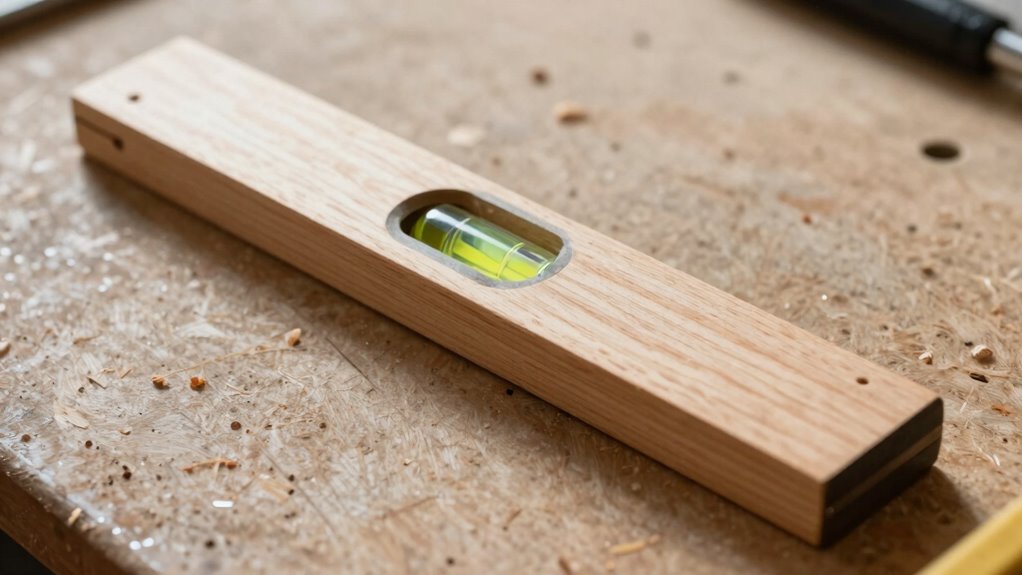

To know if your splitter is sitting level enough, start by placing a bubble level on top of the splitter or along its beam. Check if the bubble is centered; if not, adjust the legs or supports until it is. Use a straightedge to verify the wedge alignment, ensuring it’s straight and properly aligned. Regular checks improve safety and accuracy, and maintaining a level splitter helps prevent damage. Keep exploring for more tips on keeping your equipment in top shape.
Key Takeaways
- Place a bubble level on top of the splitter or along its beam and check if the bubble is centered.
- Ensure the surface underneath the splitter is flat, stable, and free of uneven patches.
- Adjust adjustable feet or supports until the bubble level indicates a level position.
- Use a straightedge or ruler to verify that the splitting wedge is aligned straight with the base.
- Regularly perform these checks to maintain safety, efficiency, and accurate cuts.

Regularly checking the splitter level is crucial to guarantee your equipment operates efficiently and safely. When your splitter isn’t sitting level, it can cause uneven cuts, strain on the motor, or even damage the machine. Confirming proper alignment is especially important if you’re using it for outdoor landscaping projects or maintaining a well-organized garage. An uneven setup can make your work more difficult and reduce the lifespan of your equipment.
Start by inspecting the surface where your splitter rests. Whether it’s in your garage or outside on your lawn, the ground should be flat and stable. If you notice uneven patches, you might need to level the ground or reposition the machine. For garage organization, keeping your workspace level and clutter-free helps in quick, accurate checks. For outdoor landscaping, it’s best to find a flat, firm spot for the splitter to sit on, which minimizes the risk of tipping or shifting during operation.
Once the surface is confirmed level, you should check the actual position of the splitter itself. Many models have built-in bubble levels or spirit levels—place one on the top of the machine or along the beam to gauge whether it’s sitting evenly. If it’s off, you need to adjust the machine’s legs or supports. Some splitters come with adjustable feet; if yours does, turn these until the bubble centers. For models without adjustable supports, consider placing shims or padding under the legs to achieve the right level position.
It’s also essential to verify the alignment of the splitting wedge. If it’s crooked, your cuts won’t be straight, and you may risk damaging the equipment or creating unsafe conditions. Use a straightedge or a ruler to check that the wedge is aligned with the base. If it’s misaligned, follow the manufacturer’s instructions for realigning or tightening any loose components.
Regularly checking the splitter level isn’t just about safety; it’s about efficiency. When your garage organization is tight, and outdoor landscaping projects rely on precise cuts, a level splitter helps you work faster and with less frustration. It prevents unnecessary wear and tear, saving you money in the long run. By making these simple checks part of your routine, you’ll keep your equipment in top condition and ensure every project, whether indoors or outside, goes smoothly. Proper equipment maintenance is key to extending the lifespan of your tools and ensuring optimal performance.
As an affiliate, we earn on qualifying purchases.
Frequently Asked Questions
What Tools Are Best for Measuring Splitter Level?
You’ll want a reliable level, like a bubble or laser level, for measuring splitter level. These tools guarantee precise calibration and ideal leveling accuracy. Use a spirit level for quick checks or a laser level for detailed accuracy across larger surfaces. Regularly verifying your splitter’s level with these tools helps maintain proper calibration, prevents uneven watering, and ensures your system functions efficiently and effectively.
How Often Should I Check My Splitter’s Level?
You should check your splitter’s level at least once a season or after significant weather changes. Regular maintenance tips include inspecting for shifts or unevenness, which might require adjustment techniques like re-leveling the unit. Use a level tool to guarantee proper alignment, and make small adjustments as needed. Consistent checks help prevent uneven cutting, prolonging your splitter’s lifespan and ensuring peak performance every time you use it.
Can Uneven Terrain Affect Splitter Leveling?
Uneven terrain can definitely affect your splitter’s leveling, especially if soil compaction or vegetation interference exists. These factors create irregular surfaces that make it hard for the splitter to sit perfectly level. You should regularly check and adjust the splitter, particularly after working on uneven ground. Clearing vegetation and addressing soil compaction can help maintain a stable, level position, ensuring safer and more effective operation.
What Safety Precautions Are Needed During Leveling?
Oh, what fun—leveling your splitter! First, gear up with safety gear like gloves and goggles—trust me, splinters are no joke. Keep emergency procedures in mind, like knowing how to shut off the machine quickly. Make sure the area is clear of bystanders, and use proper tools. Stay alert, and don’t get cocky; safety’s no game. Better safe than sorry, especially with a splitter in hand!
How Do Weather Conditions Impact Splitter Stability?
Weather effects, like rain or snow, can make the terrain more challenging and unstable, impacting your splitter’s stability. Wet or icy ground can cause slipping or sinking, so you need to be extra cautious. Wind can also push or shift the equipment. To guarantee safety, check the weather forecast before starting, and choose a flat, firm spot. Adjust your setup as needed to maintain balance and prevent accidents.
Conclusion
Ensuring your splitter sits level is vital for maximum operation and safety. By regularly checking its position, you avoid uneven wear and potential damage. Did you know that uneven equipment can reduce efficiency by up to 15%? So, take a few moments to verify your splitter’s level—it’s a simple step that can save you time and money in the long run, keeping your projects running smoothly and safely.