
When working near power lines and utilities, always keep at least 10 feet distance and watch for utility markings to identify underground lines. Use insulated tools, wear protective gear, and avoid overreaching or leaning equipment into lines. Never touch fallen or damaged wires, and report incidents immediately. Staying alert and following safety protocols can prevent serious electrical accidents. For detailed safety tips and precautions, continue exploring essential guidelines for staying safe around electrical infrastructure.

Get business pricing on tools and workshop supplies
- Business-only prices and quantity discounts
- Tax-exempt purchasing
- Multiple users, one account, clear invoices
Key Takeaways
- Maintain a minimum of 10 feet distance from energized overhead power lines, adjusting based on local regulations.
- Always check for utility markings before beginning outdoor projects to identify underground lines.
- Use insulated tools and proper equipment rated for electrical work near utility lines.
- Never attempt to move or touch fallen power lines; report them immediately to authorities.
- Follow safety protocols, wear protective gear, and stay alert to surroundings when working near utilities.
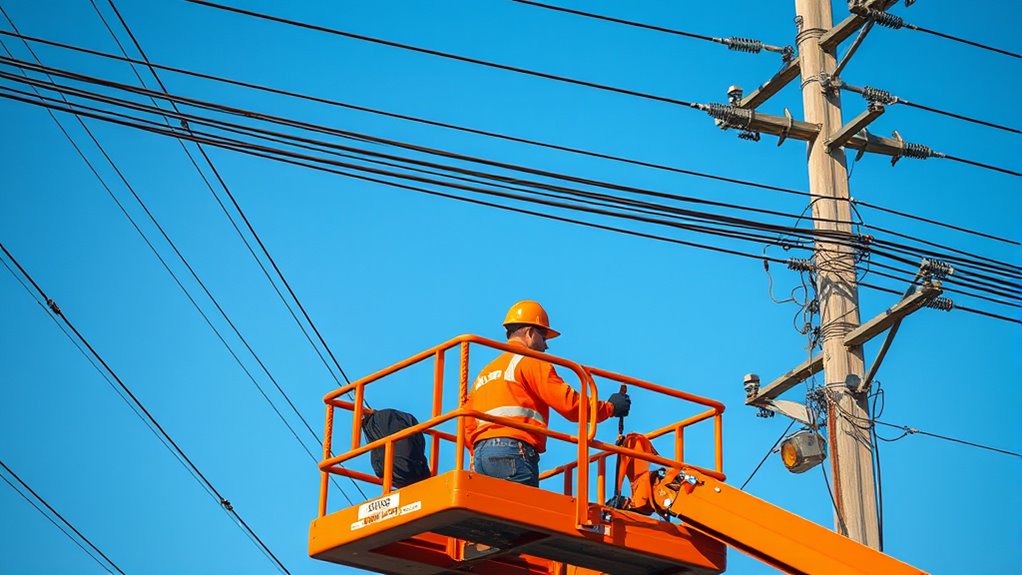
Power lines and utility equipment pose serious hazards if not approached with caution. When you’re working near or around these systems, understanding electrical hazards is vital to preventing accidents and injuries. Electricity can arc, even without direct contact, causing severe shocks or burns. Utility safety isn’t just about following rules; it’s about recognizing how easily a small mistake can lead to dangerous consequences. Whether you’re using a ladder, operating machinery, or digging, always be aware of the proximity to power lines. A single misjudgment can result in contact with live wires, which could be fatal.
To guarantee safety, always maintain a safe distance from overhead power lines. The general rule is to stay at least 10 feet away from energized lines, but this distance can vary based on local regulations and voltage levels. If you’re working on a construction site or doing outdoor projects, check for utility markings before beginning any activity. Utility companies often mark underground lines with spray paint or flags, making it easier to avoid accidental contact. Never assume that a line is de-energized or safe to approach — always verify with the utility provider first.
Using the right tools and equipment also plays a key role in maintaining utility safety. Use insulated tools whenever working near electrical sources, and ensure that all equipment is properly maintained and rated for the task. When operating cranes, ladders, or scaffolding, be cautious about their height and reach. Contact with power lines can result in electrocution, so plan your work to keep equipment and yourself well clear of live wires. Avoid overreaching or leaning objects into utility lines, even if they seem out of reach. A moment of carelessness can turn a routine task into a life-threatening situation.
If you notice a fallen power line or damaged utility equipment, stay far away and report it immediately to the utility company. Do not attempt to move or touch the equipment — downed lines can still be energized and dangerous. Educating yourself about electrical hazards and practicing good utility safety habits can save your life. Always follow safety protocols, wear appropriate protective gear, and stay alert to your surroundings. Remember, electricity is invisible but deadly, and respecting its power is your best defense. Proper projector placement and awareness of electrical hazards can significantly reduce the risks associated with working near utility lines. By staying cautious and informed, you can work safely around power lines and utilities, reducing the risk of accidents and ensuring everyone’s safety on the job or at home.
As an affiliate, we earn on qualifying purchases.
Frequently Asked Questions
What Should I Do if a Power Line Falls on My Vehicle?
If a power line falls on your vehicle, stay inside and avoid touching anything metal. Call emergency services immediately and keep others away from the vehicle to guarantee vehicle safety. Do not attempt to exit unless there’s a fire or danger of explosion. Follow emergency procedures by waiting for trained personnel to handle the situation. Your safety depends on remaining calm and acting swiftly to prevent electrocution or injuries.
How Close Can I Operate a Crane Near Power Lines?
You should never operate a crane within a hair’s breadth of power lines—it’s an electrifying disaster waiting to happen. Keep a safe distance, usually at least 10 feet, to prevent electrical hazards. Use spotters and warning signs to ensure safety distances are maintained. Remember, even a slight touch or close approach can cause severe shocks or fires, so always prioritize safety and stay well back from live electrical lines.
Are There Safety Guidelines for Working Near Underground Utilities?
Yes, you should always follow safety guidelines when working near underground utilities. Before excavation, obtain the necessary excavation permits and call the utility companies to get utility markings. These markings identify underground lines, helping you avoid damaging utilities and preventing accidents. Always respect these markings, use appropriate protective equipment, and follow proper procedures to guarantee safety for yourself and others working on the site.
What Protective Gear Is Recommended When Working Near Power Lines?
When working near power lines, protective clothing and insulated gloves are essential. You should wear flame-resistant clothing to prevent burns and insulated gloves to block electrical shocks. These protective gears act as your first line of defense against unexpected contact. Don’t forget to also wear a hard hat and safety boots. Staying protected minimizes risks, allowing you to focus on your work safely while respecting the power lines’ dangers.
Who Should I Contact if I Suspect a Utility Line Is Damaged?
If you suspect utility damage, you should contact your local utility company immediately. Follow their reporting procedures carefully to make sure the issue is addressed quickly. Don’t attempt to repair or handle the damage yourself, as this can be dangerous. Reporting promptly helps prevent accidents, power outages, or further damage. Keep a record of your call and any details you provide to ensure the utility company responds effectively.
Conclusion
Remember, staying alert and respecting power lines and utilities can prevent serious accidents. Always keep a safe distance and follow proper procedures when working near these hazards. Doesn’t your safety and that of others deserve your utmost attention? By staying cautious and informed, you protect yourself and those around you. Don’t take chances—prioritize safety every time you’re near power lines, because a moment’s oversight can have lasting consequences.
Halloween Picks
halloween
As an affiliate, we earn on qualifying purchases.