When fueling small engines, always use approved containers and make sure they’re tightly sealed. Turn off the engine and let it cool before refueling to prevent spills or fires. Use a funnel to control the flow and fill slowly, avoiding overfilling. Work in a well-ventilated area, away from sparks or flames, and wipe away any drips immediately. Proper storage, handling, and cleanup are key—keep learning for safer, cleaner fueling practices.

Get business pricing on tools and workshop supplies
- Business-only prices and quantity discounts
- Tax-exempt purchasing
- Multiple users, one account, clear invoices
Key Takeaways
- Always turn off the engine and allow it to cool before fueling to prevent fires.
- Use approved containers and avoid overfilling to minimize spills and fuel expansion.
- Work in a well-ventilated area away from sparks, flames, or heat sources.
- Clean up any fuel spills immediately and thoroughly to prevent hazards.
- Ensure tank caps are securely tightened after fueling to prevent leaks and leaks.
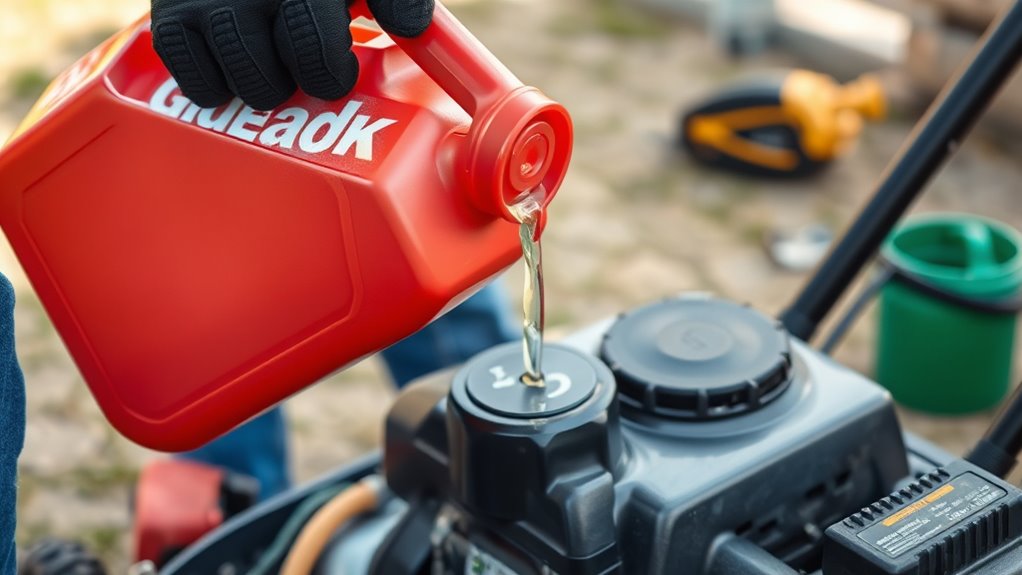
Fueling small engines safely is essential to prevent accidents and guarantee peak performance. Proper fuel storage and spill prevention are key parts of this process. You want to make sure that the fuel you keep on hand is stored correctly to avoid leaks, fires, or environmental hazards. Use approved containers designed for fuel storage, and always keep them tightly sealed when not in use. Store fuel in a cool, well-ventilated area, away from heat sources, direct sunlight, or anything that could ignite fumes. Avoid keeping large quantities of fuel at home, and never store fuel inside the garage or near living spaces. Proper storage not only reduces the risk of spills but also minimizes the chance of accidental ignition, protecting both your property and health.
When it’s time to fuel your small engine, always take steps to prevent spills. Start by turning off the engine and allowing it to cool completely. This reduces the risk of ignition from hot surfaces or fumes. Use a funnel or spout when pouring fuel to control the flow and prevent overfilling. Don’t rush the process — take your time to fill the tank carefully. Keep a rag nearby to wipe up any drips immediately. If you do spill fuel, don’t try to start the engine until you’ve cleaned up the spill thoroughly. Remember, even small drips can be dangerous, so always work in a well-ventilated area and away from open flames or sparks. Additionally, understanding proper fuel storage practices can significantly reduce safety risks and environmental impact.
Another vital safety tip is to handle fuel with care. Never smoke or create sparks near your fueling station. When refueling, avoid filling the tank to the very top; leave some space to allow for expansion and to reduce spillage risk. Be mindful of the environment — dispose of any rags or materials used for clean-up safely and in accordance with local regulations. After fueling, wipe the tank cap and surrounding areas to remove any residual fuel. Always double-check that the cap is securely tightened to prevent leaks during operation. When finished, store any leftover fuel in approved containers, clearly labeled, and in a safe location.
Products Worth Considering

Ring Battery Doorbell and Chime (3rd Gen), Satin Nickel

Ring Battery Doorbell (2nd Gen), Indoor Cam Plus, and Chime (3rd Gen) Bundle

Samsung 42-Inch S90H OLED 4K Smart TV Bundle
As an affiliate, we earn on qualifying purchases.
Frequently Asked Questions
Can I Use Gasoline With Ethanol in Small Engines?
Yes, you can use gasoline with ethanol in small engines, but be aware of ethanol effects. Ethanol can absorb moisture, leading to fuel separation and potential engine problems. It also reduces fuel stability over time, so it’s best to use fuel with a higher ethanol content sparingly or add fuel stabilizer. Always follow your engine manufacturer’s recommendations to keep your small engine running smoothly and avoid damage.
How Often Should I Replace My Fuel Filter?
You should replace your fuel filter every 25 to 50 hours of use or at least once a season, depending on your engine’s conditions. Regular fuel filter maintenance guarantees peak performance and prevents clogs that can damage your small engine. Check the manufacturer’s recommendations for specific replacement intervals. If you notice difficulty starting or reduced power, it’s a sign you might need to replace the fuel filter sooner.
Are There Eco-Friendly Fuel Alternatives for Small Engines?
Yes, you can choose eco-friendly fuel alternatives for small engines. Biodegradable fuels, like ethanol-free gasoline or plant-based blends, reduce environmental impact and emissions. Additionally, consider solar-powered engines, which eliminate the need for fuel altogether and run cleanly using solar energy. Switching to these options helps protect the environment, reduces pollution, and promotes sustainable practices for your small engine use.
What Should I Do if I Spill Fuel During Fueling?
Imagine a sudden splash as fuel spills onto the ground—you freeze. Quickly, you shut off the engine and avoid ignition sources. For fuel spill cleanup, use absorbent materials like kitty litter or sand, then dispose of them properly. Follow safety precautions by working in a well-ventilated area, wearing gloves, and avoiding flames. Act fast to prevent fire hazards and environmental harm, ensuring your safety and the surroundings.
How Can I Prevent Fuel System Corrosion?
To prevent fuel system corrosion, you should add fuel stabilizers and corrosion inhibitors to your small engine’s fuel. These additives help protect metal parts from moisture and chemical damage, especially if you store your equipment for a while. Always use fresh fuel and follow the manufacturer’s instructions for additives. Regularly inspecting and cleaning your fuel system also keeps corrosion at bay, ensuring your engine runs smoothly when you need it.
Conclusion
Remember, safety comes first when fueling your small engine. Always work in a well-ventilated area, avoid spills, and never smoke nearby. Keep your fuel container tightly closed and handle fuel with care—it’s better to be cautious than sorry. As the saying goes, “Better safe than sorry,” so take these simple steps to protect yourself and your equipment. Practicing safe fueling ensures your tools stay in top shape and you stay injury-free.