To buck more safely on a hillside, start by evaluating the terrain for instability like cracks or leaning trees, and avoid working on unstable ground. Clear debris and ensure your tools are sharp and in good condition. Always cut from the top down and stabilize logs with wedges or chocks before cutting. Wear proper safety gear, work with a partner, and stay alert to shifting logs or ground conditions. Keep these tips in mind to improve safety; more strategies await your next steps.

Get business pricing on tools and workshop supplies
- Business-only prices and quantity discounts
- Tax-exempt purchasing
- Multiple users, one account, clear invoices
Key Takeaways
- Assess hillside stability and avoid working on unstable or loose soil to prevent slips and rolling logs.
- Clear debris and secure logs with wedges before cutting to maintain control and stability.
- Cut from the top down and position yourself uphill to reduce the risk of logs rolling toward you.
- Use sharp, well-maintained tools and safety features to minimize kickback and accidents.
- Work with a partner for assistance, and continuously monitor ground and log movement during cutting.
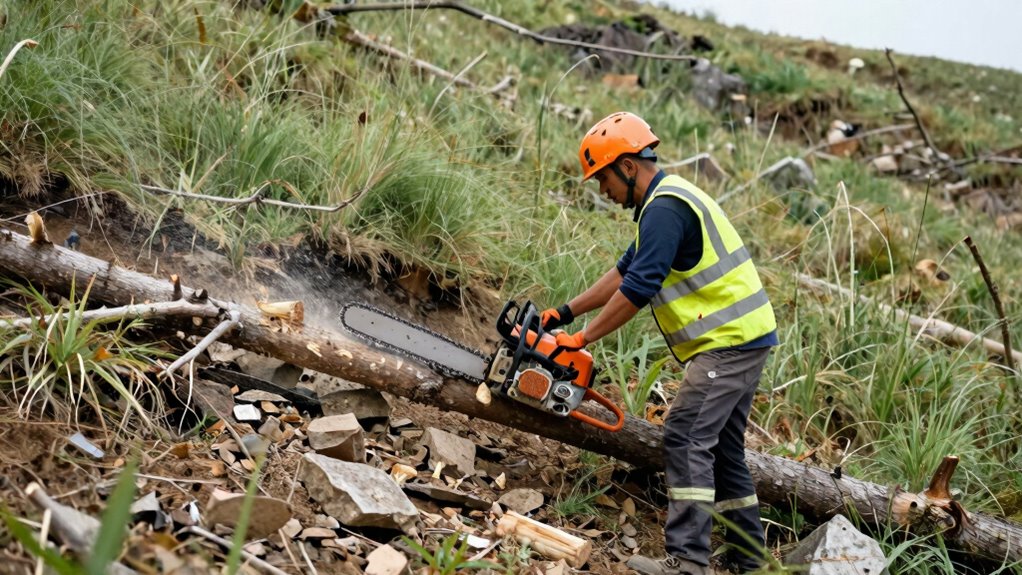
Working on a hillside can be risky, but with the right techniques, you can buck logs more safely. The key is understanding slope stability and prioritizing equipment safety. Hillsides are unpredictable, and unstable ground can shift unexpectedly, so evaluating the terrain before you start is essential. Look for signs of slope instability, like cracks, leaning trees, or loose soil. If the land seems unstable, it’s best to avoid working there or take extra precautions. Ensuring the ground is firm enough to support your weight and equipment minimizes the risk of slipping or rolling logs downhill uncontrollably.
Assess slope stability before working to prevent slipping and ensure safe log bucking on hillsides.
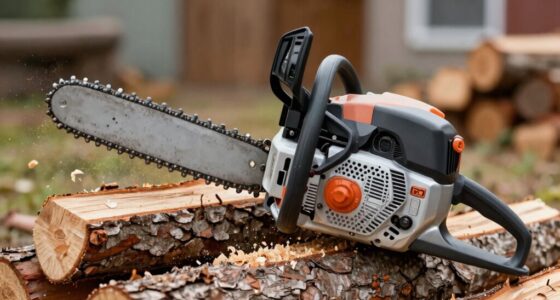
When preparing to buck logs on a hillside, always set up your work area with safety in mind. Clear any loose debris or rocks that could cause your equipment to slip. Make sure your chainsaw or other tools are in good condition, with sharp blades and functioning safety features. Using sharp tools reduces the effort required and lessens the chance of kickback, which can throw the saw back toward you. Always wear protective gear—helmet, eye protection, gloves, and sturdy boots—to keep yourself safe from unexpected accidents.
Positioning yourself correctly is critical for maintaining control and safety. Stand on the uphill side of the log whenever possible to prevent logs from rolling downhill toward you. When bucking, cut from the top down, which helps prevent logs from pinching the saw or falling unpredictably. Be mindful of the slope’s angle; steeper inclines increase the chance of logs slipping or rolling away. Use wedges or chocks to stabilize logs before making your cuts, especially on uneven terrain. These tools help prevent logs from shifting unexpectedly, which can be dangerous. Additionally, understanding slope stability can guide you in choosing safer working locations and techniques. Familiarity with ground conditions can also help you assess potential hazards more effectively. Being aware of soil composition can further inform your safety precautions on different types of terrain. It’s also important to recognize the signs of unstable ground early to prevent accidents.
Pay close attention to equipment safety at all times. Keep your hands on the saw’s handles and maintain a firm grip, especially when working on uneven ground. Avoid overreaching or cutting from awkward angles that could compromise your balance. If a log begins to shift or roll, stop cutting immediately and retreat to a safe distance. Regularly inspect your gear for damage, and never bypass safety features on your tools. Working with a partner can also improve safety—someone can assist or call for help if needed.
As an affiliate, we earn on qualifying purchases.
Frequently Asked Questions
What Tools Are Best for Bucking on a Hillside?
You should use a sharp, well-maintained chainsaw for bucking on a hillside. Regular chainsaw maintenance guarantees it cuts efficiently and safely. Make sure you have proper footing by stabilizing yourself and choosing secure ground before starting. Use a lightweight, ergonomic chainsaw to reduce fatigue and improve control. Always wear safety gear, and keep your saw’s chain tension correct to prevent accidents, especially on uneven terrain.
How Do Weather Conditions Affect Hillside Bucking Safety?
Weather hazards considerably impact hillside bucking safety. Rain can make slopes slippery, increasing the risk of slips and falls, while wind can destabilize trees and tools. Cold temperatures may cause your limbs to stiffen, reducing control, and snow or ice can obscure hazards. Always check hillside stability and weather forecasts before working. If conditions are unsafe, delay your task until weather hazards lessen, ensuring your safety during bucking operations.
How Can I Prevent My Chainsaw From Slipping?
To prevent your chainsaw from slipping, regularly perform chainsaw maintenance by sharpening the chain and checking the tension. Always wear proper personal protective equipment, like gloves and anti-slip boots, to maintain good grip and control. Keep the chainsaw’s bar and chain clean and lubricated, ensuring smooth operation. Using the right technique and maintaining your equipment reduces slipping risks, making hillside bucking safer and more efficient for you.
What Is the Safest Way to Handle Falling Trees?
Handling falling trees is like guiding a wild horse—careful planning keeps you safe. First, assess tree stability and identify the fall direction before making any cuts. Clear the area of obstacles and keep an escape route open. Use proper techniques, such as felling on the side of the fall direction, and always wear personal protective equipment. Staying alert and cautious minimizes risks, ensuring you control the fall safely.
How Should I Plan My Escape Route?
You should plan your escape route by evaluating tree stability before starting work. Identify multiple paths that lead away from falling trees and unstable ground. Keep these routes clear of obstacles and mark them if needed. As part of your emergency preparedness, always stay alert to changing conditions, and make sure your escape routes are quick and easy to access. Regularly review and practice your plan to stay ready for any situation.
Conclusion
Remember, safety should always come first when bucking on a hillside. Always check your equipment, plan your cuts carefully, and stay alert to changing conditions. Did you know that falls are responsible for nearly 30% of logging injuries? Staying cautious and prepared can greatly reduce your risk of accidents. By following these tips, you’ll protect yourself and ensure a safer, more efficient work experience. Stay safe out there—your well-being is worth it.
Fall yard work Picks
leaf blowers
As an affiliate, we earn on qualifying purchases.