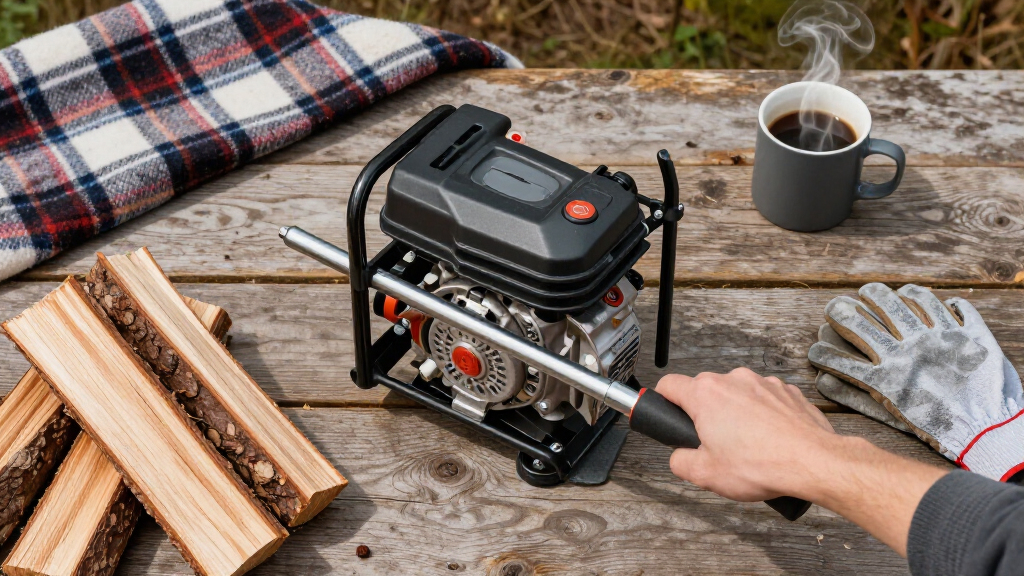
Gas-powered log splitters trade portability for raw splitting force, and the sweet spot depends on how much wood you burn and how gnarly your logs are. For serious firewood volume, the Champion 40-Ton PRO Grade stands out as my top pick thanks to its full-size 437cc engine, horizontal/vertical operation, and towing-ready build. If you want similar capability for less, the BILT HARD 35-Ton with a 301cc engine delivers near-pro performance at a friendlier price, while the Champion 8-Ton Compact suits occasional burners with limited storage. The main tradeoffs in this category are between tonnage and maneuverability, cycle speed and engine size, and single-purpose horizontal units versus convertible horizontal/vertical machines. Keep reading for the full breakdown of all 13 models.

Get business pricing on tools and workshop supplies
- Business-only prices and quantity discounts
- Tax-exempt purchasing
- Multiple users, one account, clear invoices
Complete the kit



Key Takeaways
- Tonnage ratings clustered into three clear tiers — 18–22 ton for casual firewood duty, 25–35 ton for homesteads, and 40 ton for pro-grade or twisted hardwood — and matching your tier to your wood supply mattered more than any single feature.
- Almost every mid-range model here runs a 209cc engine, so what actually separated them was pump design (two-stage vs. standard), cycle time, and auto-return valve quality rather than headline horsepower.
- Horizontal/vertical conversion became the deciding feature for buyers handling logs over 24 inches in diameter — lifting rounds that size onto a beam is where most splitting injuries happen.
- Towability varied wildly: only the 40-ton and 27-ton units shipped street-ready with hitch and lights, making them the only practical picks if you split wood at multiple locations.
- Compact models like the 8-ton and 18-ton units gave up log capacity (16–21 inches) but fit in a garage corner and cost far less to run — overbuying tonnage was the most common mistake this comparison surfaced.


| gas-powered log splitter | Engine | Cycle Time | Splitting Force |
|---|---|---|---|
| Champion Power Equipment 40-To | 338cc Champion single-cylinder OHV | 11.3 seconds | — |
| BILT HARD 40-Ton Gas Powered L | 389cc, 13 HP, 4-cycle OHV | — | 40 tons |
| BILT HARD 27-Ton Towable Gas P | 209cc OHV | — | 27 tons |
| BILT HARD 22 Ton Gas Log Split | 209cc gas | 7 seconds | 22 tons |
| Champion Power Equipment 8-Ton | 79cc | 20 seconds | — |
| 20 Ton Gas Log Splitter with 2 | 209cc EPA-certified | 8.5 seconds | 20 tons |
| Ezasin Gas Log Splitter 20 Ton | 209CC 7HP | 8 seconds | — |
| 20 Ton Gas Log Splitter | 209CC 7HP 4-stroke | 8 seconds | 20 tons |
| BILT HARD 35-Ton Gas Powered H | 301cc, 10 HP OHV | 16 seconds | 35 tons |
| BILT HARD 18-Ton 7HP 209cc Por | 7HP 209cc | 7.5 seconds | 18 tons |
| Landworks Portable 20-Ton Gas | — | 7.5 seconds | — |
| 33 Ton Log Splitter with 223cc | 223cc Full Boar OHV | 14.3 seconds | 33 tons |
| SuperHandy 25 Ton Gas Log Spli | 7 HP gas | 12 seconds | — |
More Details on Our Top Picks
Champion Power Equipment 40-Ton PRO Grade Gas Log Splitter
When a splitter has to chew through gnarly oak rounds all weekend, 40 tons of force paired with an 11.3-second cycle time is the combination that keeps production moving, and this Champion delivers both. Compared with the BILT HARD 40-Ton, it trades a slightly smaller engine (338cc versus 389cc) for a faster auto-return cycle and highway-rated towing at up to 70 mph, which matters if you move between properties or woodlots. The horizontal-to-vertical conversion is genuinely useful for rounds too heavy to lift onto the beam. The tradeoffs are real: this is a big, heavy machine that assumes you have a tow vehicle and somewhere to store it, and gas engines demand seasonal maintenance.
Pros:- 40 tons of force handles knotty hardwood that stalls smaller units
- Fast 11.3-second cycle with auto-return keeps production high
- Highway-rated towing up to 70 mph for moving between sites
- 2-year warranty with lifetime technical support
Cons:- Heavy and requires a tow vehicle for transport
- Overkill for occasional residential firewood needs
Best for: Serious firewood producers and small-scale operations splitting large-diameter hardwood regularly
Not ideal for: Suburban homeowners with occasional splitting needs — the size, towing requirement, and 40-ton capacity are wasted on small jobs
- Splitting Capacity:40 tons
- Engine:338cc Champion single-cylinder OHV
- Cycle Time:11.3 seconds
- Towing Capacity:up to 70 mph
- Conversion:Horizontal to vertical
- Warranty:2-year limited
Our verdict“If you split wood in serious volume and want one machine that will not be outgrown, this is the one to buy.”
BILT HARD 40-Ton Gas Powered Log Splitter with Auto Return and Full Beam Operation
This BILT HARD matches the Champion 40-Ton’s splitting force while offering a larger 389cc, 13 HP engine and full-beam operation that helps stabilize long, awkward logs. The 7-gallon hydraulic system running at 14 GPM keeps the ram moving briskly even under load, and a 24-inch log capacity covers most firewood lengths without re-cutting. Where it falls short of the Champion is towing — there is no 70 mph highway rating, so plan for slower back-road transport. Compared with the BILT HARD 27-Ton, you give up nothing in log size but gain the headroom to split twisted, crotch-heavy rounds without bogging down. Setup takes two people, and the storage footprint is substantial.
Pros:- 389cc engine provides robust power for dense hardwoods
- Full beam operation stabilizes longer logs
- Handles logs up to 24 inches long
- Towable design with DOT-certified tires and safety chains
Cons:- Two-person setup and positioning is realistic given the size
- Large footprint demands serious storage space
Best for: Buyers who want maximum 40-ton capability at a lower price point than premium brands
Not ideal for: Anyone without ample storage space or a second person to help with initial setup and positioning
- Engine:389cc, 13 HP, 4-cycle OHV
- Splitting Force:40 tons
- Splitting Wedge:8-inch hardened steel
- Log Capacity:up to 24 inches long
- Hydraulic System:7-gallon capacity, 14 GPM
- Tires:16-inch DOT-certified
- Coupler:2-inch ball with 24-inch safety chains
Our verdict“A strong pick if 40-ton performance is the priority and premium-brand pricing is not in the plan.”
BILT HARD 27-Ton Towable Gas Powered Log Splitter with 209cc OHV Engine
The sweet spot in this lineup is arguably right here: 27 tons of force clears nearly everything a homestead will throw at it, without the bulk and cost of the 40-ton machines. Its 6-gallon hydraulic reservoir with an 11 GPM two-stage pump delivers steady splitting, and the dual-position beam lets you roll monster rounds under it vertically rather than hoisting them — the same trick as the Champion 40-Ton, at a friendlier scale. Compared with its BILT HARD 22-Ton sibling, the extra 5 tons and vertical mode make it the better long-term choice if your wood includes elm, maple, or other stringy hardwoods. Note the 45 mph towing rating, which rules out highway speeds, and its weight still demands a hitch.
Pros:- 27 tons handles most residential and homestead hardwoods
- Horizontal and vertical operation for oversized rounds
- Two-stage 11 GPM pump keeps cycles productive
- DOT-approved tires and 2-inch coupler for easy towing
Cons:- Towing rated only to 45 mph, limiting transport routes
- Heavy and awkward to reposition without a hitch
Best for: Rural homeowners and homesteaders processing 5+ cords a year of mixed hardwood
Not ideal for: Casual users burning a half-cord annually — the towing requirement and maintenance burden outweigh the capacity
- Splitting Force:27 tons
- Engine:209cc OHV
- Hydraulic System:6-gallon reservoir, 11 GPM two-stage pump
- Wedge Size:7 inches
- Log Capacity:Up to 24 inches long
- Tires:16-inch DOT-approved
- Towing Speed:45 mph max, 2-inch ball coupler
Our verdict“The best balance of power, versatility, and manageable size for people who heat with wood but do not run a commercial operation.”
BILT HARD 22 Ton Gas Log Splitter, 209cc Engine with 2 Stage 14 GPM Hydraulic Pump
What sets this model apart is its 7-second cycle time — quicker than anything else in this batch — thanks to the 14 GPM two-stage pump paired with the 209cc engine. For repetitive splitting of seasoned rounds, that speed translates directly into more cords per hour, and it outpaces the slower BILT HARD 27-Ton despite the lower force rating. The catch is horizontal-only operation: unlike the 27-Ton or either 40-ton machine, there is no vertical mode for rounds too heavy to lift, so budget for a strong back or a log lifter. The 21-inch capacity covers standard stove lengths, and the 25 mph towing limit keeps it a around-the-property machine rather than a road-tripper.
Pros:- Fast 7-second cycle time leads this lineup
- 14 GPM two-stage pump maintains speed under load
- 22 tons is plenty for seasoned hardwood
- Compact footprint compared with towable 40-ton units
Cons:- Horizontal-only design forces you to lift every log onto the beam
- 25 mph towing limit restricts transport to short moves
Best for: Firewood processors who value speed and split mostly liftable, seasoned logs
Not ideal for: Anyone regularly splitting massive green rounds — no vertical mode means heavy lifting every time
- Splitting Force:22 tons
- Engine:209cc gas
- Hydraulic Pump:2 stage, 14 GPM
- Log Capacity:21 inches
- Cylinder Size:3.5 x 19 inches
- Cycle Time:7 seconds
- Weight:344 pounds
- Towing Speed:up to 25 mph
Our verdict“The pick for buyers who prioritize throughput on manageable logs and can live without vertical splitting.”
Champion Power Equipment 8-Ton Compact Horizontal Gas Log Splitter with Auto Return
Not everyone needs 40 tons, and this Champion proves it. The 8-ton capacity with a 79cc engine handles the kind of logs most suburban households actually face — seasoned splits and rounds in the 10-inch range — without the towing, storage, and maintenance burden of the big beam machines. Its low-profile deck with an integrated log cradle makes loading easier than on taller units, and the handle plus never-flat tires mean one person can wheel it around a garage or shed. Compared with the 20-ton models elsewhere in this roundup, it gives up raw force and speed — the 20-second cycle is leisurely — and it cannot pivot vertical like the BILT HARD 27-Ton. But for occasional use, the simplicity wins.
Pros:- Compact and light enough for one person to move and store
- Never-flat tires and handle simplify transport around the property
- Low-profile cradle makes loading easier than tall beam splitters
- 2-year warranty and lifetime technical support
Cons:- 8 tons struggles with green or knotty wood
- Horizontal-only operation with a slow 20-second cycle
Best for: Suburban and small-property owners splitting a cord or two of seasoned wood per year
Not ideal for: Anyone splitting dense green hardwood or large-diameter rounds — 8 tons will stall out on tough material
- Splitting Capacity:8 tons
- Engine:79cc
- Cycle Time:20 seconds
- Operation:Horizontal only
- Features:Auto-return valve, low-profile design, integrated log cradle
- Portability:Handle and never-flat tires
- Warranty:2 years
Our verdict“The right choice for light-duty household splitting where a full-size towable splitter would be pure overkill.”
20 Ton Gas Log Splitter with 209cc Engine, Auto-Return Control, Wide-Angle Wedge, and Flat-Free Tires
This option stands out for its flat-free tires, a detail most competitors skip — including the Ezasin 20-Ton, which relies on pneumatics that can go flat in a shed over winter. Combined with a compact footprint and an ergonomic transport handle, this model makes the most sense for buyers who move their splitter between a storage spot and the splitting pile on rough gravel or frozen ground. The wide-angle 5° wedge does real work on stringy hardwood, peeling fibers apart rather than stalling the ram, and the 8.5-second cycle time keeps pace with the faster Ezasin. The tradeoffs are real, though: unlike the BILT HARD 35-Ton, there’s no towing hitch, so it’s a roll-it-yourself machine, and hydraulic oil ships separately, so it isn’t ready to run out of the box.
Pros:- Flat-free tires eliminate flat-tire maintenance season after season
- Wide-angle 5° wedge bites aggressively into stringy or knotted wood
- Two-stage 10.5 GPM pump balances speed with fuel efficiency
- Compact frame stores in a tighter footprint than towable units
Cons:- Hydraulic oil not included, so it needs a supply run before first use
- No hitch or DOT-rated setup — rolling it is the only transport option
Best for: Homeowners with sheds or gravel paths who want zero-hassle mobility and don’t need to tow the splitter anywhere
Not ideal for: Rural buyers processing logs far from home — it isn’t towable, so distance means pushing or loading it into a truck
- Engine:209cc EPA-certified
- Splitting Force:20 tons
- Cycle Time:8.5 seconds
- Hydraulic Pump:10.5 GPM two-stage
- Piston Rod Diameter:45mm
- Wedge Angle:5°
- Tires:Flat-free
Our verdict“This pick makes the most sense for homeowner firewood production where flat-free portability matters more than raw tonnage or towing.”
Ezasin Gas Log Splitter 20 Ton, 209CC 7HP Hydraulic Wood Splitter, 8s Cycle
At 135 pounds with an 8-second cycle time, the Ezasin hits a sweet spot the heavier machines in this roundup can’t touch. Compared with the BILT HARD 35-Ton at 640 pounds, this is a splitter one reasonably fit person can muscle onto a pickup bed solo, yet its 20-ton ram still handles the 16-inch-diameter hardwood most firewood cutters bring home. The auto-return valve means you’re not cranking the ram back by hand between logs, which matters more than most buyers expect over a two-hour session. The compromises: it accepts logs only up to 20.5 inches, so longer rounds need pre-cutting, and it’s a loud machine — hearing protection isn’t optional. Like several budget splitters here, oils ship separately.
Pros:- Fast 8-second cycle keeps a steady splitting rhythm without waiting on the ram
- Auto-return valve cuts operator fatigue during long sessions
- Lightest in this batch at 135 pounds — genuinely one-person portable
- Handles logs up to 16 inches wide, matching larger stationary units
Cons:- Louder than average, which can be a problem on small properties
- Engine and hydraulic oil not included, delaying first use
Best for: Suburban or small-property owners who want full-size 20-ton performance in a body they can load and move alone
Not ideal for: Buyers with hearing-sensitive neighbors or tight lots — engine noise is a frequent complaint, and long logs won’t fit without cutting down
- Engine:209CC 7HP
- Hydraulic Ram Capacity:20 tons
- Cycle Time:8 seconds
- Max Log Length:20.5 inches
- Max Log Width:16 inches
- Weight:135 pounds
Our verdict“Choose the Ezasin if solo portability and cycle speed outrank quiet operation and big-log capacity on your list.”
20 Ton Gas Log Splitter, 209CC 7HP Hydraulic Wood Splitter for Firewood, 20″ x 16″, 2-Stage Gear Pump, Auto Return
This splitter’s identity is its hardened alloy steel wedge paired with a 4-stroke engine tuned for fuel economy — a combination aimed squarely at the buyer who processes already-seasoned rounds in volume. It matches the Ezasin on the headline numbers (20 tons, 8-second cycle) but pulls ahead on emissions and fuel efficiency thanks to the four-stroke design, which matters for anyone running long weekend sessions. The catch is that small 0.74-gallon fuel tank: compared with the BILT HARD 35-Ton’s larger setup, you’ll be refueling more often on big jobs. And this machine is honest about its limits — it’s built for dry or knotted logs, so buyers splitting fresh-cut green oak should look at the higher-tonnage BILT HARD units instead.
Pros:- 4-stroke engine burns cleaner and stretches fuel further than comparable two-stroke designs
- Hardened alloy wedge holds its edge through repeated hard use
- 8-second cycle time with auto-return matches pricier rivals
- At 132 pounds, it’s among the easiest full-size splitters to reposition
Cons:- Small 0.74-gallon tank forces refueling breaks during large jobs
- Performance drops noticeably on green or very large logs
Best for: Firewood producers who split dry or partially seasoned wood in long weekend sessions and want fuel efficiency over brute force
Not ideal for: Anyone processing green hardwood or oversized rounds — the 20-ton rating assumes seasoned material and can struggle otherwise
- Splitting Force:20 tons
- Engine:209CC 7HP 4-stroke
- Log Capacity:20″ long, 16″ diameter
- Cycle Time:8 seconds
- Fuel Tank Capacity:0.74 gallons
- Weight:132 lbs
Our verdict“This model is better suited to seasoned-wood workflows than raw power demands — efficient and quick, as long as your logs are dry.”
BILT HARD 35-Ton Gas Powered Hydraulic Log Splitter with 301cc OHV Engine
When the rest of this batch tops out at 20 tons, the BILT HARD 35-Ton plays in a different league. Its 301cc OHV engine and 35-ton ram take on the green oak and twisted maple that stall a 20-ton unit like the Ezasin, and the dual horizontal/vertical operation is the feature that sells it — flip it vertical and split rounds too heavy to lift onto a beam, which is exactly where smaller splitters fail their users. Add a 2-inch ball coupler and 16-inch DOT tires, and this is the only machine in this batch you can legally tow between properties. The price of that capability is weight: at 640 pounds, it demands dedicated storage space, and the 16-second cycle time is roughly double the smaller units’, so high-volume small-log work actually goes faster on a 20-ton machine.
Pros:- 35-ton ram powers through green and knotted hardwood that stalls 20-ton machines
- Horizontal/vertical conversion eliminates lifting massive rounds onto the beam
- DOT tires and 2-inch coupler make it genuinely towable on roads
- 7-gallon hydraulic reservoir supports long, continuous work sessions
Cons:- 640-pound weight and large footprint demand serious storage and setup space
- 16-second cycle time is slower than lighter splitters for small-diameter logs
Best for: Rural property owners and small firewood businesses processing green or oversized hardwood who need towing between sites
Not ideal for: Casual homeowners heating a single room — 640 pounds, doubled cycle time, and a big footprint are overkill for a few cords a year
- Splitting Force:35 tons
- Engine:301cc, 10 HP OHV
- Cycle Time:16 seconds
- Maximum Log Length:24 inches
- Hydraulic Capacity:7 gallons
- Hydraulic Flow:14 GPM
- Tires:16-inch DOT rated, 2-inch ball coupler
Our verdict“If you’re splitting big, heavy, or green rounds and want to tow the machine to the wood instead of the wood to the machine, this is the pick.”
BILT HARD 18-Ton 7HP 209cc Portable Gas Log Splitter with Auto Return Ram System
This 18-ton model is the quickest ram in the batch at 7.5 seconds, and that speed is its whole argument. Against the 20-ton Ezasin and the flat-free-tire 20-ton model, it gives up two tons of force but gives back a faster cycle — for clean, split-ready rounds under 16 inches, you’ll finish the pile sooner with this one. The full-beam steel wedge adds durability where cheap splitters cut corners, and the same 209cc/10.5 GPM platform as its bigger siblings means components are proven rather than experimental. The honest tradeoff: those two missing tons show up on gnarly crotches and green wood, where the BILT HARD 35-Ton walks through what this one has to work at. It’s also outdoor-only, so shed-splitting in bad weather isn’t an option.
Pros:- Fastest cycle time in this batch at 7.5 seconds per split
- Full-beam steel wedge construction outlasts bolt-on designs
- Proven 209cc engine and 10.5 GPM pump shared with higher-rated models
- Accepts full 20-inch-long, 16-inch-diameter logs despite its smaller rating
Cons:- Lowest force rating here — expect workarounds on knotted or green wood
- Fluids not included and outdoor-only design rules out covered workspaces
Best for: Weekend warriors with mostly straight, seasoned logs under 16 inches who value throughput speed over maximum force
Not ideal for: Buyers facing green wood, twisted grain, or big crotches — 18 tons is the floor of this lineup and it will show on stubborn rounds
- Splitting Force:18 tons
- Engine:7HP 209cc
- Hydraulic System:10.5 GPM
- Cycle Time:7.5 seconds
- Log Capacity:Up to 20″ length, 16″ diameter
- Wheels:10″ heavy-duty tires
- Weight:146 pounds
Our verdict“This is the right pick when your wood is cooperative and your priority is an empty splitting pile, fast — not conquering the ugliest rounds.”
Landworks Portable 20-Ton Gas Log Splitter, 7 HP, Rapid Auto Return
Speed is where this Landworks 20-ton splitter separates itself from nearly everything else in this roundup. A 7.5-second cycle time means you can process a full cord of firewood in a single afternoon without feeling like you’re waiting on the ram. Compare that to the 33 Ton Full Boar model, which takes nearly twice as long per cycle at 14.3 seconds — that difference compounds quickly over a few hundred logs. The Bucher two-stage gear pump is the same hardware found on the SuperHandy 25 Ton, so hydraulic quality here punches above its price class. The tradeoff is capacity: 20 tons handles most hardwoods, but gnarly elm or oversized rounds are better left to the bigger BILT HARD units. You’ll also need to supply your own hydraulic fluid before the first use.
Pros:- Fastest cycle time in this batch at 7.5 seconds
- Bucher two-stage hydraulic gear pump for consistent pressure
- Only 130 lbs with 10-inch transport wheels, easy to reposition solo
- 20-ton capacity covers the vast majority of residential firewood needs
Cons:- Hydraulic fluid not included, so it’s not ready to run out of the box
- Horizontal-only operation limits flexibility with very heavy rounds
- Comparable in price to higher-tonnage options like the 33 Ton Full Boar
Best for: Homeowners who split several cords a year and value fast cycle times over maximum force
Not ideal for: Anyone regularly splitting twisted, knotty hardwoods or logs over 16 inches in diameter — the 20-ton rating will struggle there
- Engine Power:7 HP
- Splitting Capacity:20 tons
- Cycle Time:7.5 seconds
- Max Log Length:20 inches
- Max Log Diameter:16 inches
- Hydraulic Pump:2-stage Bucher hydraulic gear pump
- Weight:130 lbs
- Transport Wheels:10 inches
Our verdict“This pick makes the most sense for homeowners who want to finish splitting fast rather than brute-force the toughest logs.”
33 Ton Log Splitter with 223cc Full Boar Engine
When the job involves green hardwood, knotted oak, or rounds the size of truck tires, this 33-ton Full Boar splitter is built for it. Its heavy-duty H-beam construction resists the twisting and flexing that lighter boxed-beam designs exhibit under full load — a real advantage over the Landworks 20-ton when you’re pushing the machine to its limits week after week. The auto return valve with adjustable detent lets you fine-tune where the ram stops, which saves seconds on every short log. Compared with the BILT HARD 27-Ton Towable, this model trades a slightly slower 14.3-second cycle for substantially more crushing force. The main frustration is availability: it cannot ship to every state, so check your region before committing. It’s also heavier and less nimble than the 90-pound SuperHandy, so plan for a dedicated spot in the shed.
Pros:- 33 tons of force handles green and knotted hardwood other splitters stall on
- Heavy-duty H-beam frame minimizes flex under maximum load
- Auto return with adjustable detent improves efficiency on short logs
- 223cc OHV engine built for extended, continuous sessions
Cons:- Not available in all 50 states, limiting where it can ship
- 14.3-second cycle time is slower than the Landworks and SuperHandy options
- Substantial size and weight make storage and repositioning harder
Best for: Rural property owners and small-scale firewood sellers who regularly split dense, green, or knotted hardwood
Not ideal for: Suburban users with modest firewood needs — the tonnage and bulk are overkill, and the slower cycle time makes small jobs drag
- Engine:223cc Full Boar OHV
- Splitting Force:33 tons
- Cycle Time:14.3 seconds
- Control Valve:Auto return with adjustable detent
- Frame Design:Heavy-duty H-beam
- Availability:Ships to 49 states
Our verdict“This model is better suited to buyers who need serious force for difficult wood and can accept a slower, heavier machine in exchange.”
SuperHandy 25 Ton Gas Log Splitter with 7HP Engine, Bucher Gear Pump, Horizontal/Vertical Steel Wedge
The standout feature here isn’t the tonnage — it’s the 24-inch maximum log diameter, the largest in this batch, paired with horizontal/vertical operation. That vertical mode is the real differentiator: instead of wrenching a 150-pound round onto the beam, you tip the splitter on its side and split the log where it lies. Neither the Landworks 20-ton nor the 33 Ton Full Boar offers that flexibility, which matters enormously if your back has opinions. At 90 pounds with polyurethane wheels and an ergonomic handle, it’s also the most transportable full-size splitter here, and its 12-second cycle time splits the difference between the speedy Landworks and the slower Full Boar. The catch: despite the light frame, it still requires the same fueling, oil changes, and hydraulic fluid purchase (not included) as any gas machine.
Pros:- Handles logs up to 24 inches in diameter, the largest capacity in this batch
- Horizontal/vertical operation eliminates heavy lifting on big rounds
- Lightest full-size option at 90 lbs with polyurethane wheels
- Balanced 12-second cycle time between speed-focused and force-focused rivals
Cons:- Hydraulic fluid sold separately, adding cost and delay before first use
- Lightweight frame may feel less planted than H-beam models under full load
- Requires ongoing gas engine maintenance and fueling
Best for: Anyone splitting large-diameter rounds who wants vertical operation to avoid lifting heavy logs onto the beam
Not ideal for: Buyers wanting a grab-and-go machine with zero setup — you’ll still need to buy hydraulic fluid and commit to gas engine maintenance
- Engine:7 HP gas
- Splitting Capacity:25 tons
- Hydraulic Pump:Bucher 2-stage gear pump
- Max Log Size:20 inches long, 24 inches diameter
- Cycle Time:12 seconds
- Operation Modes:Horizontal and vertical
- Weight:90 lbs
- Wheels:10-inch polyurethane
Our verdict“This option stands out for buyers whose biggest headache is oversized rounds, thanks to vertical splitting and the widest diameter capacity here.”
How We Picked
My ranking logic started with matching tonnage to realistic workloads, because a 40-ton machine is wasted money on seasoned softwood and an 18-ton unit will stall on knotted oak. I grouped these 13 splitters into duty tiers, then judged each against what buyers in that tier actually need: cycle speed for volume producers, beam height and log capacity for consistency, and wedge design for gnarly grain. Engine displacement and pump configuration mattered here — a two-stage pump with fast auto-return translates directly into more cords per hour.
From there I weighed build quality, usability, and versatility: full-beam versus half-beam construction, steel plate thickness, tire type, hitch and lighting provisions, and whether the unit converts from horizontal to vertical. Maintenance access (oil drain placement, filter availability, hydraulic fluid capacity) separated models that will age well from ones that frustrate owners after a season. Finally, I factored value — not just cost, but whether each machine’s capabilities justify its tier — so the ordering reflects who each splitter is for, not just raw specs.
Factors to Consider When Choosing Gas-powered Log Splitters
Before settling on a specific model, it helps to understand what actually drives performance and long-term satisfaction with gas-powered log splitters. These are the factors that shaped my rankings — and the ones buyers most often get wrong.Match Tonnage to Your Wood, Not Your Ambitions
Tonnage ratings describe the maximum splitting force, and the honest rule of thumb is this: seasoned softwood and straight-grained hardwood split fine under 20 tons, while green oak, elm, or crotchy maple can demand 30 tons or more. The most common mistake I see is buyers purchasing a 40-ton machine for ten cords of pine — you pay more upfront, burn more fuel, and haul a heavier unit for force you never use. The reverse mistake is worse: an underpowered splitter that stalls on knotty rounds forces you to noodle logs with a chainsaw, which is slower and more dangerous than splitting. Think about the species and condition of your typical woodpile over the next five years, not just this season. If you buy mixed loads from arborists, budget an extra 10 tons above your best guess.
Cycle Time and Two-Stage Pumps Decide Your Throughput
Cycle time — how long the ram takes to extend and retract — determines how many cords you can process in an afternoon, and it matters more than engine horsepower. A two-stage pump moves fluid fast under light load and shifts to high pressure only when resistance spikes, which is why otherwise similar 209cc machines can differ by several seconds per cycle. Over a hundred logs, a two-second difference compounds into nearly ten minutes of standing around. Auto-return valves that retract the ram automatically once a split completes let you reposition the next log instead of babysitting a lever. If you split more than five cords a season, prioritize a two-stage pump and auto-return together; for occasional use, a slower single-stage machine is perfectly adequate.
Horizontal Versus Vertical: The Safety Question Nobody Asks
Every splitter in this roundup splits horizontally, but only some convert to vertical mode, and that feature is about safety and backs, not convenience. Once rounds exceed roughly 24 inches in diameter or 80 pounds, lifting them onto a waist-high beam is where strains and dropped-log injuries happen. A vertical-capable machine lets you roll the round into place and drop the beam down to it. The tradeoff is weight, cost, and a more complex latch mechanism that adds a failure point. If most of your wood arrives pre-cut in manageable rounds, skip the convertible and save the money. If you fell your own trees or take free logs of unknown size, vertical operation is worth every extra dollar and pound.
Build Quality: Beam Design, Steel, and Welds
Splitter frames divide into full-beam and half-beam designs, and the difference shows up after a few hundred splits. Full-beam machines run the cylinder the length of a welded I-beam, flexing less under max load and holding alignment longer. Half-beam designs save cost and weight but can twist the cylinder mount over years of hard use, especially at tonnage above 25. Look closely at wedge steel thickness, whether the wedge is bolted (replaceable) or welded (not), and the quality of the welds themselves — porous or inconsistent welds on a pressure vessel under 40 tons of force are a genuine red flag. Cradle height also matters: a taller cradle catches split halves before they hit the ground, saving your back.
Transport, Storage, and Legal Towing
Even a compact splitter weighs 100 pounds or more, and the big units exceed 500, so plan for how the machine moves before you buy. Towable models need a hitch coupler, and road use legally requires lights and a license plate in most states — some budget towables ship without them, leaving you to retrofit. Flat-free tires are a small feature that pays for itself the first time you roll over a nail in the woodlot. For garage or shed storage, measure your footprint honestly: a 40-ton splitter with tongue and beam runs over seven feet long. If you’ll never tow it, a lighter horizontal-only unit saves money, space, and registration hassle.
Engine Displacement, Fuel, and Maintenance Reality
Nearly all mid-tier splitters here use 209cc (7 HP class) engines, while the 35–40 ton machines step up to 300cc-plus, and that displacement difference drives fuel consumption, noise, and winter starting behavior. Larger engines are harder to start in cold weather without a choke routine and drink noticeably more gas per hour. Whatever engine you choose, check parts availability before buying — off-brand engines can be nearly unfixable when a carburetor or recoil fails. Factor in hydraulic fluid capacity too: bigger reservoirs run cooler during marathon sessions, and heat is what kills pumps. Budget for an hour of seasonal maintenance (oil, filter, hydraulic fluid check, grease the beam) regardless of which model you pick.
Frequently Asked Questions
Is a 20-ton gas splitter enough for hardwood like oak and maple?
For most seasoned oak and maple, a 20-ton unit is adequate — the trouble starts with green wood, crotches, and crotchy grain. Dry, straight-grained hardwood typically needs 15–20 tons of force, while the same wood green can demand 25–30 tons. If you split mostly seasoned rounds under 20 inches in diameter, a 20-ton machine will handle the vast majority of what you feed it, and the occasional stubborn piece can be rotated or notched. But if your supply is fresh-cut hardwood in 24-inch-plus diameters, stepping up to the 27–35 ton range will save you real frustration and hours each season.
What’s the real difference between a 209cc engine and the bigger 301cc/437cc engines?
Engine size mostly determines how much hydraulic flow and pressure the pump can sustain, not how fast the ram moves on easy splits. The 209cc engines paired with two-stage pumps handle up to about 27 tons comfortably; beyond that, larger displacement keeps the pump from laboring at max pressure. In practice, the 301cc and 437cc machines cycle faster on resistant wood, run cooler during long sessions, and last longer under commercial-style use. For a homeowner splitting ten cords a year, the 209cc class is the better value. For daily or heavy homestead use, the bigger engines earn their keep through durability and consistent speed on nasty logs.
Do I really need auto-return, or is a manual lever fine?
Auto-return — the ram retracting on its own once a split completes or the lever is released — is one of those features that seems minor until you’ve run a few hundred logs. Without it, you hold the lever through the entire return stroke, and that’s thousands of extra lever-seconds per cord plus added hand fatigue. With it, you use the return time to position the next round, which can realistically boost throughput 20–30 percent. Manual-lever machines are simpler, cheaper, and have one less valve to fail, so they’re defensible for occasional use. But if you split more than a few cords a season, I’d treat auto-return as a must-have rather than a luxury.
Can I legally tow one of these splitters on the road?
It depends on the model and your state, and this trips up a lot of buyers. Most states require any towed implement over a certain width — commonly 48 to 60 inches, splitters included — to have working taillights, a license plate, and in some cases reflectors or a safety chain setup. Some of the towable models here ship with lights and a standard hitch coupler ready to go, while others arrive with just a tongue and leave the lighting to you. Check your state’s implement-towing rules before the first trip, and verify the coupler size matches your hitch (2-inch ball is standard). Never exceed the splitter’s tire speed rating, which on most units caps out well below highway speeds.
Is a gas splitter overkill if I only burn a few cords a year?
Possibly, and it’s worth an honest look at electric options before committing. Electric splitters (typically 5–7 ton) are quieter, need no fuel or oil changes, and work indoors or under cover — a real advantage in wet climates. Gas becomes the right call when you exceed roughly three cords a season, split anything green or knotty, or need to work away from power. If your answer to those is no, a compact gas unit like an 8–18 ton model is a reasonable middle path: real splitting force, no extension cord, but manageable storage and fuel use. The full-size machines only make sense with substantial annual volume or hard wood.
Conclusion
The right choice here depends almost entirely on your woodpile. For best overall, the Champion 40-Ton PRO Grade earns the top spot with its big 437cc engine, horizontal/vertical flexibility, and street-ready towing package — it’s the machine that handles whatever you roll up to it. The BILT HARD 35-Ton with 301cc engine takes best value in the heavy-duty class, delivering most of that capability for less. Best for beginners and casual burners goes to the Champion 8-Ton Compact: simple, storable, and matched to small seasoned wood without overwhelming its owner. Among the crowded 20-ton tier, the BILT HARD 22-Ton with its 14 GPM two-stage pump stands out as the best value for volume, pairing fast cycle times with real capacity, while the BILT HARD 27-Ton Towable is the best pick for multi-property use thanks to its towing-ready design. If your rounds are big, green, or gnarly, prioritize the vertical-capable 35–40 ton machines; if your wood is seasoned and modest, resist the tonnage arms race — a 20-ton unit will finish the job and leave money in your pocket.
Fall yard work Picks
leaf blowers
As an affiliate, we earn on qualifying purchases.