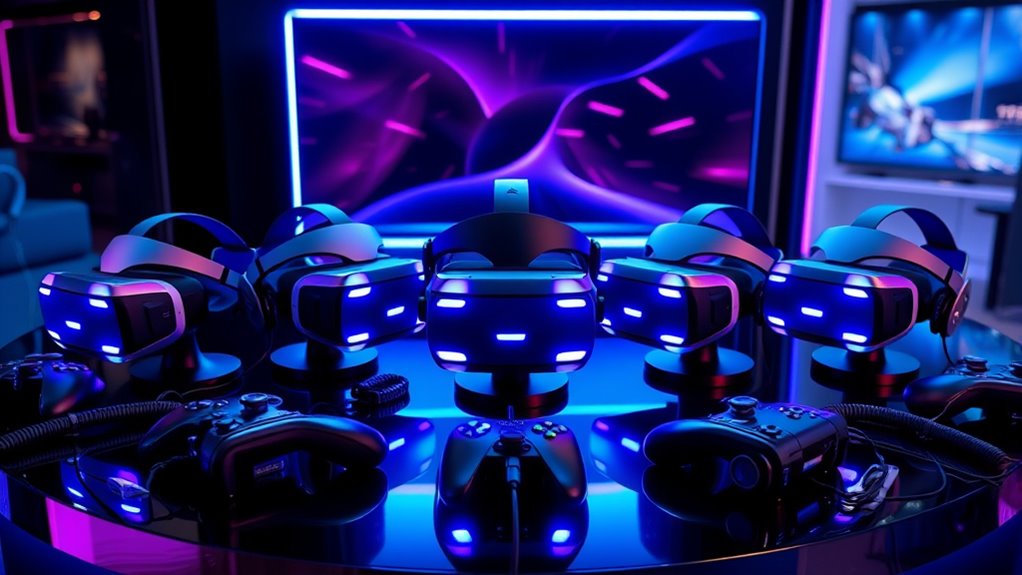

For serious gamers seeking the best in virtual reality, highend VR headsets offer cutting-edge visuals, precise tracking, and immersive experiences. The Meta Quest 3 stands out as the best overall choice, thanks to its balanced performance and versatility. The Pimax Crystal excels for wide FOV and eye-tracking, while the HTC Vive Focus Vision offers a seamless mixed reality experience. Each of these options involves tradeoffs—whether in price, setup complexity, or compatibility—so understanding your priorities is key. Continue reading for a detailed breakdown that helps you find the perfect highend VR headset for gaming in 2026.

Get business pricing on tools and workshop supplies
- Business-only prices and quantity discounts
- Tax-exempt purchasing
- Multiple users, one account, clear invoices
Complete the kit
Key Takeaways
- The best highend VR headsets balance visual fidelity, tracking accuracy, and ease of use, but often involve higher costs and setup complexity.
- Wide FOV and eye-tracking are common features among premium options, providing more immersive experiences at a premium price.
- Wireless models like the Meta Quest 3 offer convenience but may sacrifice some performance aspects compared to wired headsets.
- Compatibility with existing gaming ecosystems and PC specifications significantly influence which headset makes sense for each user.
- Price ranges within highend headsets vary greatly, making it essential to prioritize features that align with your gaming style and setup.
| Meta Quest 2 Advanced All-In-One Virtual Reality Headset 256 GB |  | Best Overall High-End VR Headset for Gaming | Storage Capacity: 256GB | Display Resolution: 1832 x 1920 Pixels Per Eye | Processor: Blazing-fast processor | VIEW ON AMAZON | See Our Full Breakdown |
| HTC Vive Focus Vision — Mixed Reality and PC VR Headset with Controllers |  | Best for Mixed Reality and PC VR Integration | Display: 5K resolution (2448 x 2448 pixels per eye) | Field of View: up to 120° | Refresh Rate: 90 Hz | VIEW ON AMAZON | See Our Full Breakdown |
| Meta Quest 3 512GB Virtual Reality Headset with Gorilla Tag Bundle |  | Best for Wireless High-Resolution VR with Extended Storage | Storage: 512GB | Display: 4K+ Infinite Display | Processor: Snapdragon XR2 Gen 2 | VIEW ON AMAZON | See Our Full Breakdown |
| Pimax Crystal Super VR Headset, 3840×3840 per Eye, Ultrawide, 140° FOV, Eye-Tracking, PC Connection |  | Best for Ultra-High-Resolution and Wide FOV Gaming | Resolution: 3840×3840 per eye | Field of View: 140° | Display Technology: QLED & Mini-LED with Local Dimming | VIEW ON AMAZON | See Our Full Breakdown |
| Meta Quest 3S 128GB Virtual Reality VR Headset (Renewed Premium) |  | Best for Budget-Conscious High-Res Wireless VR | Storage: 128GB | Display: 4K+ Infinite Display | Processor: Snapdragon XR2 Gen 2 | VIEW ON AMAZON | See Our Full Breakdown |
| HTC Vive Focus Vision Wired Bundle — XR Headset with DisplayPort PC VR Streaming Kit |  | Best Overall High-End VR Headset for Immersive Full-Body Tracking | Display Resolution: 2448 x 2448 pixels per eye | Field of View: up to 120° | Refresh Rate: 90 Hz | VIEW ON AMAZON | See Our Full Breakdown |
| Pimax Crystal Super VR Headset & VR Glasses with Micro-OLED, 53 PPD, 3840×3552 Per Eye, 116° Field of View, Eye Tracking |  | Best for Ultra-High-Resolution Visuals and Wide Field of View | Display Technology: Micro-OLED | Resolution: 3840 x 3552 per eye | Field of View: 116° | VIEW ON AMAZON | See Our Full Breakdown |
| Pimax Crystal Light VR Headset for PC, 2880×2880 per Eye, 8K QLED Display with Local Dimming, Inside-Out Tracking, PC VR Headset for Flight Sims, iRacing & Gaming |  | Best Balance of High Resolution and Comfort for Extended Play | Resolution: 2880 x 2880 per eye | Display Technology: QLED with local dimming | Field of View: Large, close to natural vision | VIEW ON AMAZON | See Our Full Breakdown |
| Pimax Crystal Light VR Headset with Controllers, 8K QLED Display with Local Dimming, Lightweight & Comfortable, for Flight Sims, iRacing & PC Gaming | | Best for Comfort and Versatile Refresh Rates in High-Resolution VR | Display: 8K QLED with Local Dimming | Resolution: 2880×2880 per eye | Field of View: Large | VIEW ON AMAZON | See Our Full Breakdown |
| Oculus Rift S PC-Powered VR Gaming Headset |  | Best for Budget-Conscious VR Gamers Seeking Smooth Room-Scale Experience | Display: Next-generation lenses with sharper display | Tracking: Oculus Insight room-scale tracking | Controllers: Oculus Touch controllers | VIEW ON AMAZON | See Our Full Breakdown |
| Meta Quest Pro Headset with Virtual Reality Field Trips |  | Best Overall High-End VR for Versatile Gaming and Education | Storage: 256 GB | RAM: 12 GB | Sensors: 10 VR/MR sensors | VIEW ON AMAZON | See Our Full Breakdown |
| Pimax Dream Air Slam VR Headset with Controllers |  | Best High-Resolution PC VR with Wide Field of View | Display Resolution: 3840 x 3552 per eye | Field Of View: 110 degrees | Display Technology: Micro-OLED | VIEW ON AMAZON | See Our Full Breakdown |
| highend vr headsets for gaming | Field of View | Tracking |
|---|---|---|
| Meta Quest 2 Advanced All-In-O | — | — |
| HTC Vive Focus Vision | up to 120° | Eye, hand, face, and body tracking |
| Meta Quest 3 512GB Virtual Rea | — | — |
| Pimax Crystal Super VR Headset | 140° | — |
| Meta Quest 3S 128GB Virtual Re | — | — |
| HTC Vive Focus Vision Wired Bu | up to 120° | submillimeter accuracy with 4 cameras and infrared floodlight |
| Pimax Crystal Super VR Headset | 116° | 6DOF inside-out |
| Pimax Crystal Light VR Headset | Large, close to natural vision | Inside-out |
| Pimax Crystal Light VR Headset | Large | Inside-out or expandability with Lighthouse |
| Oculus Rift S PC-Powered VR Ga | — | Oculus Insight room-scale tracking |
| Meta Quest Pro Headset with Vi | — | — |
| Pimax Dream Air Slam VR Headse | 110 degrees | — |
More Details on Our Top Picks
Meta Quest 2 Advanced All-In-One Virtual Reality Headset 256 GB
This model stands out for its combination of high-resolution visuals, comfort features, and large storage, making it ideal for dedicated gamers seeking a versatile standalone headset. Compared to the Pimax Crystal, the Quest 2 is more accessible and easier to set up, but it sacrifices the ultra-wide FOV and eye-tracking that high-end PC-tethered headsets offer. The built-in 256GB storage ensures plenty of space for large game libraries, while the adjustable knuckle straps and anti-slip grips boost comfort during extended sessions. Its main tradeoff is that it requires a safe, open space and isn’t as graphically powerful as PC-connected options. This pick makes the most sense for gamers who prioritize convenience and high-res standalone performance without the complexity of PC tethering or the need for ultra-wide FOVs.
Pros:- High-resolution display delivers immersive visuals
- Comfortable anti-slip grips and adjustable straps
- Large 256GB storage for extensive game libraries
- All-in-one design simplifies setup
Cons:- Renewed product may have limited warranty
- Requires ample space for safe VR use
Best for: Dedicated VR gaming enthusiasts who want a high-quality, standalone experience with ample storage
Not ideal for: Players seeking the absolute widest FOV or advanced eye-tracking features for simulation or immersive experiences
- Storage Capacity:256GB
- Display Resolution:1832 x 1920 Pixels Per Eye
- Processor:Blazing-fast processor
- Controller Features:Anti-slip grips, adjustable knuckle straps
- Connectivity:Standalone (no PC required)
- Weight:Lightweight for prolonged use
Our verdict“This is an excellent choice for serious gamers wanting a high-res, standalone VR headset with reliable comfort and storage.”
HTC Vive Focus Vision — Mixed Reality and PC VR Headset with Controllers
This headset excels with its 5K display, eye and hand tracking, and versatile mixed reality capabilities, making it ideal for gamers who want immersive visuals combined with realistic interaction. Compared with the Meta Quest 3, the Vive Focus Vision provides more advanced tracking and scene understanding, but its setup is more complex and it tends to be heavier, which can cause discomfort during long gaming sessions. The hot-swappable battery supports longer play periods, yet its weight and intricate setup may be barriers for casual or less tech-savvy users. This device is best suited for gamers who want a blend of PC VR and mixed reality, especially for those who value detailed tracking and immersion over simplicity.
Pros:- High-resolution 5K display for stunning visuals
- Advanced eye and hand tracking for realistic interactions
- Hot-swappable battery extends gaming sessions
- Supports both standalone and PC VR experiences
Cons:- Complex setup may require additional accessories
- Heavy design can cause discomfort over extended use
- Limited platform compatibility details
Best for: VR enthusiasts who want a comprehensive mixed reality experience with detailed tracking and longer sessions
Not ideal for: Casual gamers seeking a lightweight, plug-and-play headset or those with limited space for setup
- Display:5K resolution (2448 x 2448 pixels per eye)
- Field of View:up to 120°
- Refresh Rate:90 Hz
- Tracking:Eye, hand, face, and body tracking
- Battery:Hot-swappable front battery
- Connectivity:DisplayPort, Ethernet, 3.5 mm audio
Our verdict“Perfect for tech-savvy gamers who want maximum immersion and detailed tracking in mixed reality and PC VR environments.”
Meta Quest 3 512GB Virtual Reality Headset with Gorilla Tag Bundle
This headset offers a wireless, high-res VR experience with its 4K+ display and a robust Snapdragon XR2 Gen 2 processor, making it a top choice for users who want freedom of movement and impressive visuals. Compared to the Pimax Crystal, the Quest 3 is more portable and easier to use but doesn’t match the Crystal’s ultra-wide FOV or eye-tracking capabilities. The 512GB storage and included bundle with Gorilla Tag gear and game trials add significant value, yet battery life is somewhat limited at around two hours, which could be restrictive during long gaming sessions. This headset is ideal for gamers who prioritize wireless convenience, high resolution, and a comprehensive bundle at a more accessible price point.
Pros:- Wireless untethered experience for freedom of movement
- High-resolution 4K+ display enhances visual immersion
- Includes exclusive bundle items and 3-month game trial
- Powered by a Snapdragon XR2 Gen 2 for smooth gameplay
Cons:- Battery life may limit extended play
- Higher price for premium refurbished model
- Requires charging for longer sessions
Best for: Wireless VR gamers who value portability and high-res visuals with enough storage for large game libraries
Not ideal for: Players seeking maximum FOV or advanced eye-tracking features for simulation or detailed interaction
- Storage:512GB
- Display:4K+ Infinite Display
- Processor:Snapdragon XR2 Gen 2
- Battery Life:2+ hours
- Connectivity:Wireless (standalone)
- Memory:8GB RAM
Our verdict“A leading choice for those wanting a wireless, high-res VR with generous storage and bundled extras for gaming anywhere.”
Pimax Crystal Super VR Headset, 3840×3840 per Eye, Ultrawide, 140° FOV, Eye-Tracking, PC Connection
This headset is unmatched in visual clarity and peripheral awareness, with a stunning 3840×3840 per eye resolution and an expansive 140° FOV, making it ideal for simulation and immersive gaming. Compared with the Meta Quest 3, the Pimax Crystal demands a powerful PC and more setup effort, but it compensates with exceptional image sharpness and an ultra-wide view that enhances spatial presence. Its eye-tracking adds to immersion and interaction, though the high-end specs come with a premium price and compatibility considerations. This choice is perfect for gamers and simulation enthusiasts who want the best possible visuals and field of view, provided they have a capable PC and are prepared for a more involved setup.
Pros:- Ultra-high resolution with 50 PPD for crisp visuals
- Wide 140° FOV enhances peripheral awareness
- Advanced eye-tracking for realistic interaction
- Replaceable facial interfaces for comfort
Cons:- Requires a high-end PC to run smoothly
- Expensive and potentially overkill for casual users
- Limited compatibility info for non-PC platforms
Best for: High-end PC gamers and simulation fans seeking maximum visual fidelity and expansive peripheral vision
Not ideal for: Casual gamers or those without a powerful gaming PC, as setup and hardware requirements are demanding
- Resolution:3840×3840 per eye
- Field of View:140°
- Display Technology:QLED & Mini-LED with Local Dimming
- Refresh Rate:90Hz and beyond
- Eye-Tracking:Yes
- Connection:DisplayPort (DP)
Our verdict“Ideal for dedicated PC gamers and professionals demanding top-tier visuals and immersive peripheral vision, if they can handle the setup complexity and cost.”
Meta Quest 3S 128GB Virtual Reality VR Headset (Renewed Premium)
This renewed version offers a compelling wireless VR experience with a Snapdragon XR2 Gen 2 processor and 8GB RAM, delivering solid performance and portability. Compared with the Quest 2, the Quest 3S provides a higher-res 4K+ display and longer-lasting performance, but at a higher refurbished cost and with a shorter battery life of around two hours. It’s an excellent option for users who want a premium, untethered experience without upgrading to more expensive PC-tethered headsets like the Pimax or Vive Focus Vision, though they must accept some limitations on session length and battery endurance. This makes it suitable for casual to moderate gamers who prioritize convenience and high resolution in a portable package.
Pros:- Wireless untethered VR for freedom of movement
- Enhanced graphics with a 4K+ display
- Includes a 3-month trial for extensive game access
- Powered by a next-gen Snapdragon XR2 processor
Cons:- Battery life may limit extended gaming
- Higher price for a refurbished model
- Requires frequent charging for prolonged use
Best for: Wireless VR users who want a high-quality experience on a budget and are okay with shorter play sessions
Not ideal for: Long-session gamers or users seeking ultra-wide FOV and advanced tracking features
- Storage:128GB
- Display:4K+ Infinite Display
- Processor:Snapdragon XR2 Gen 2
- Battery Life:2 hours
- Cameras:Dual RGB
- Connectivity:Wireless
Our verdict“Great for wireless VR fans who want high-resolution visuals and mobility, provided they accept limited battery life and higher cost for a refurbished unit.”
HTC Vive Focus Vision Wired Bundle — XR Headset with DisplayPort PC VR Streaming Kit
The HTC Vive Focus Vision stands out for its impressive 5K resolution and full-body tracking capabilities, making it ideal for users seeking a comprehensive VR experience. Unlike the Pimax Crystal models, which focus on ultra-wide FOV and visual fidelity, the Vive Focus emphasizes lifelike interactions through built-in eye and hand tracking, plus support for PC VR streaming via DisplayPort. However, its setup can be complex, involving multiple accessories, and its weight may cause discomfort during extended sessions. This headset is best suited for serious VR enthusiasts who want a standalone device with PC connection options, but it might be less appealing for those prioritizing simplicity or ultra-lightweight design.
Pros:- High-resolution 5K display for immersive visuals
- Full-body and hand tracking enable realistic interactions
- Supports PC VR streaming via DisplayPort
- Adjustable ergonomic fit and glasses compatibility
Cons:- Complex setup with multiple accessories
- Relatively heavy, which may cause discomfort over time
- Requires external PC or streaming setup
Best for: VR gamers who want full-body tracking and PC streaming in a high-resolution all-in-one headset
Not ideal for: Casual players or those who prefer a lightweight, simple device for quick sessions
- Display Resolution:2448 x 2448 pixels per eye
- Field of View:up to 120°
- Refresh Rate:90 Hz
- Tracking:submillimeter accuracy with 4 cameras and infrared floodlight
- Battery:hot-swappable with reserve front battery
- Storage:up to 2 TB via MicroSD card
Our verdict“This pick is best for dedicated VR users seeking full-body tracking and high-fidelity visuals, accepting some complexity and weight for immersive realism.”
Pimax Crystal Super VR Headset & VR Glasses with Micro-OLED, 53 PPD, 3840×3552 Per Eye, 116° Field of View, Eye Tracking
The Pimax Crystal Super combines exceptional visual clarity with a 116° FOV, making it ideal for users who prioritize immersion through sharp, panoramic displays. Its Micro-OLED technology rivals the clarity of the Quest 3 but with even broader FOV, surpassing the Pimax Crystal Light models. The inclusion of advanced eye tracking and 6DOF inside-out tracking enhances interactive realism. Nonetheless, its high cost and the need for a powerful PC to run smoothly may deter casual users or those with limited hardware. Compared to the Oculus Rift S, which offers a more straightforward setup, the Pimax Crystal Super is better suited for dedicated enthusiasts seeking maximum visual fidelity and wide-angle immersion.
Pros:- Ultra-sharp 3840×3552 per eye resolution with Micro-OLED
- 116° wide field of view for panoramic immersion
- Advanced eye tracking and 6DOF inside-out tracking
- High refresh rate for smooth gameplay
Cons:- High price point compared to simpler headsets like Oculus Rift S
- Requires a very capable PC for optimal performance
- Potentially complex setup for new users
Best for: VR enthusiasts focused on cutting-edge visuals and wide viewing angles for simulation and immersive gaming
Not ideal for: Beginners or users with limited PC hardware, due to its high cost and setup complexity
- Display Technology:Micro-OLED
- Resolution:3840 x 3552 per eye
- Field of View:116°
- Refresh Rate:90Hz
- Tracking:6DOF inside-out
- Additional Features:Eye tracking
Our verdict“Ideal for users who demand top-tier visuals and wide FOV, accepting the higher cost and setup challenges involved.”
Pimax Crystal Light VR Headset for PC, 2880×2880 per Eye, 8K QLED Display with Local Dimming, Inside-Out Tracking, PC VR Headset for Flight Sims, iRacing & Gaming
The Pimax Crystal Light strikes a compelling balance with its 2880×2880 per eye resolution and 8K QLED display, delivering vivid visuals and high contrast, especially appealing for flight and racing simulations like iRacing. Its local dimming feature enhances color depth and realism, rivaling more expensive models. Compared to the heavier Pimax Crystal Super, this version emphasizes lighter ergonomics and flexible refresh rate options, making it suitable for long gaming sessions. The main tradeoff is that its setup can be complex for newcomers, and it demands a powerful PC for the best experience. It’s a smart choice for gamers seeking premium visuals without the bulk of heavier headsets.
Pros:- High-resolution 8K QLED display with local dimming
- Lightweight and comfortable for extended use
- Vivid colors and high contrast for realism
- Flexible refresh rate options (72Hz, 90Hz, 120Hz)
Cons:- Setup can be challenging for beginners
- Requires a high-end PC to run smoothly
- Limited info on battery life or accessories included
Best for: Flight simulator and racing game fans who want high-res, vivid visuals combined with comfort for long sessions
Not ideal for: Beginners or casual VR gamers who prefer plug-and-play simplicity over detailed setup
- Resolution:2880 x 2880 per eye
- Display Technology:QLED with local dimming
- Field of View:Large, close to natural vision
- Refresh Rate Options:72Hz, 90Hz, 120Hz
- Weight:Approximately 815 grams
- Tracking:Inside-out
Our verdict“Perfect for serious VR users wanting high-res, vibrant visuals in a lighter design for long gaming marathons.”
Pimax Crystal Light VR Headset with Controllers, 8K QLED Display with Local Dimming, Lightweight & Comfortable, for Flight Sims, iRacing & PC Gaming
The Pimax Crystal Light with controllers offers 2880×2880 per-eye resolution and a large field of view, making it well-suited for immersive flight and racing simulators. Its lightweight design (30% lighter than previous models) helps reduce fatigue during extended sessions, a significant advantage over bulkier headsets like the Pimax Crystal Super. Its multiple refresh rate options allow users to tailor performance to their GPU capabilities, ensuring smooth gameplay. However, setup complexity remains, and it demands a powerful PC for optimal results. This headset makes the most sense for dedicated sim racers and VR enthusiasts who prioritize comfort and high visual quality without sacrificing ease of wear.
Pros:- High-resolution 8K QLED display with local dimming
- Lightweight and ergonomic for extended use
- Multiple refresh rate options for performance tuning
- Compatible with SteamVR and PC gaming
Cons:- Setup can be complex for beginners
- Requires a high-end PC for smooth operation
- Limited details on accessories included
Best for: Sim racers and flight sim fans seeking high-res visuals combined with comfort for long play sessions
Not ideal for: VR newcomers or casual gamers who prefer straightforward, plug-and-play headsets
- Display:8K QLED with Local Dimming
- Resolution:2880×2880 per eye
- Field of View:Large
- Refresh Rate Options:72Hz, 90Hz, 120Hz
- Weight:Approx. 815 grams
- Tracking:Inside-out or expandability with Lighthouse
Our verdict“Best suited for dedicated sim racers who want high-res visuals and maximum comfort in a lighter headset.”
Oculus Rift S PC-Powered VR Gaming Headset
The Oculus Rift S remains a compelling choice for gamers wanting a wide library of VR titles and a simple, room-scale experience. Its improved optics reduce the screen-door effect significantly, offering clearer visuals than older headsets like the original Oculus Rift. Unlike the Pimax headsets, which prioritize ultra-wide FOV and ultra-high resolution, the Rift S emphasizes ease of use and a more straightforward setup with Oculus Insight tracking. While it demands a Facebook account and has limited tracking in complex environments, it offers a strong balance of performance and affordability for newcomers or casual users who don’t need the highest resolutions or FOV.
Pros:- Large library of VR games and exclusives
- Improved optics reduce screen-door effect
- Comfortable, ergonomic design
- Room-scale tracking with Oculus Insight
Cons:- Requires Facebook account for login
- Limited tracking in complex environments
- No external sensors needed but less precise in some scenarios
Best for: Casual VR gamers who want a reliable, easy-to-set-up headset with a large game library
Not ideal for: Enthusiasts seeking ultra-wide FOV or the highest visual fidelity, like Pimax or Quest 3 users
- Display:Next-generation lenses with sharper display
- Tracking:Oculus Insight room-scale tracking
- Controllers:Oculus Touch controllers
- Design:Ergonomic Halo headband
- Compatibility:Requires Facebook account
Our verdict“Ideal for casual players seeking a straightforward, comfortable VR experience without the complexity of high-end setups.”
Meta Quest Pro Headset with Virtual Reality Field Trips
The Meta Quest Pro stands out for its advanced mixed reality passthrough, offering a full-color, high-resolution view that enhances immersive gaming and collaborative experiences, especially when compared to the Quest 2’s simpler visual setup. Its intuitive controllers with self-tracking cameras enable detailed finger movements, making it ideal for complex interactions and social VR, though the hardware’s premium price and the need for a verification process for returns may deter casual buyers. The inclusion of a 1-month educational VR field trip subscription adds value for those interested in learning and exploration, but this limited offer may frustrate users seeking ongoing content. Overall, this headset best suits dedicated gamers and professionals who want cutting-edge visual fidelity and mixed reality features, with the tradeoff being a higher cost and setup complexity.
Pros:- Immersive mixed reality passthrough with full-color sensors
- Intuitive controllers with detailed finger tracking and self-tracking cameras
- High-resolution display with advanced visual clarity
- Includes a 1-month subscription to VR field trips
Cons:- Requires a serial number verification process for returns
- Potentially high cost for premium features
- Limited to one-month subscription for educational content
Best for: Tech-savvy gamers and professionals who prioritize immersive mixed reality experiences and detailed hand tracking.
Not ideal for: Casual gamers or those with budget constraints who might find the high price and verification process cumbersome.
- Storage:256 GB
- RAM:12 GB
- Sensors:10 VR/MR sensors
- Controllers:Meta Quest Touch Pro with self-tracking cameras
- Haptics:Multi-point advanced haptics
- Mixed Reality Passthrough:High resolution, full-color sensors
Our verdict“This headset is best suited for enthusiasts seeking high-end mixed reality and collaborative features despite its premium price and setup complexity.”
Pimax Dream Air Slam VR Headset with Controllers
The Pimax Dream Air Slam excels in delivering vivid visuals thanks to its 3840 x 3552 pixel Micro-OLED displays per eye and a broad 110° field of view, surpassing the Quest Pro’s visual clarity for intensive gaming. Its eye and hand tracking add a layer of interaction that rivals the Quest Pro’s controllers, but unlike the Quest, it requires a powerful gaming PC and does not function independently, which can be a significant barrier for standalone use. The headset’s high resolution and wide FOV make it ideal for detailed simulations and immersive gaming, yet the need for high-end PC specifications and its steep price point limit accessibility. This pick makes the most sense for PC gamers who value premium visuals and are willing to invest in a dedicated system, with the tradeoff being complexity and cost of setup.
Pros:- High-resolution Micro-OLED display for vivid visuals
- Wide 110° field of view for immersive gameplay
- Includes eye and hand tracking for enhanced interaction
- Compatible with SteamVR and Windows PCs
Cons:- Requires powerful PC hardware, making setup costly and complex
- No built-in standalone mode, limiting portability
- Potentially high cost for premium features
Best for: Hardcore PC gamers seeking the highest visual fidelity and wide field of view for immersive gaming experiences.
Not ideal for: Casual users or those looking for a standalone, plug-and-play VR headset, due to its requirement for high-end PC hardware.
- Display Resolution:3840 x 3552 per eye
- Field Of View:110 degrees
- Display Technology:Micro-OLED
- Refresh Rate:90Hz
- Connectivity:DisplayPort, USB Type A
- Sensors:Accelerometer, Gyroscope
- Built-in Features:Eye Tracking, Hand Tracking, Spatial Audio, Passthrough Camera
Our verdict“This headset is ideal for dedicated PC gamers wanting exceptional visual quality and wide FOV, despite requiring a powerful system and a steep investment.”

How We Picked
The products in this roundup were evaluated based on performance, build quality, visual clarity, tracking precision, and ease of use. We prioritized headsets that are designed specifically for highend gaming, meaning they deliver superior image quality, low latency, and reliable tracking. Cost was a factor, but only in relation to the value they provide for immersive gameplay. We also considered compatibility with popular gaming platforms and PC configurations to ensure each option serves a distinct user need. The ranking reflects a combination of overall excellence, versatility, and how well each headset balances premium features with usability.Factors to Consider When Choosing Highend Vr Headsets For Gaming
Choosing a highend VR headset for gaming involves weighing multiple factors to match your specific needs and setup. While features like resolution and tracking are crucial, broader considerations such as ecosystem compatibility, comfort, and future-proofing often determine long-term satisfaction. Making the right choice requires understanding what tradeoffs you’re willing to accept, whether that’s price, ease of use, or performance. Here are key aspects to consider before making your investment.Display Quality and Resolution
High-end VR headsets typically feature high-resolution displays for crisp, clear visuals that enhance immersion. Look for models with at least 2880×2880 pixels per eye, as lower resolutions can cause pixelation and reduce realism. However, higher resolution displays demand more from your GPU, potentially requiring a powerful PC. Balancing visual fidelity with your system’s capabilities is key to avoiding lag or stuttering during gameplay.
Tracking Accuracy and Latency
Precise tracking of head and hand movements significantly impacts your experience and comfort. Many premium headsets incorporate inside-out tracking, which avoids external sensors and simplifies setup. Low latency tracking minimizes motion sickness and keeps actions in sync with visuals. If you’re into fast-paced or VR-intensive titles, prioritize models with proven tracking reliability to maintain immersion without frustration.
Ecosystem and Compatibility
Ensuring your chosen headset works seamlessly with your existing gaming setup is essential. Some headsets are optimized for PC use, while others are standalone or hybrid devices. Compatibility with popular platforms like SteamVR or Meta’s ecosystem influences game availability and software updates. Consider whether you want a headset that’s easy to set up or one that integrates deeply with your preferred gaming environment.
Comfort and Fit
Highend headsets often feature premium padding, adjustable straps, and balanced weight distribution to allow for longer gaming sessions. Ill-fitting or heavy models can cause fatigue or discomfort, reducing your overall experience. If you plan to play for extended periods, prioritize models with customizable fit options and breathable materials. Comfort should not be sacrificed for the sake of features or visuals.
Price and Future-Proofing
Highend VR headsets are a significant investment, with prices ranging from around $1,000 to over $2,500. Consider whether the features offered justify the cost and if the headset will remain relevant as technology advances. Future-proofing involves looking at upgrade paths, software support, and compatibility with upcoming hardware releases. Sometimes paying more upfront results in longer-lasting satisfaction and better gaming performance.
Frequently Asked Questions
Is a wired or wireless highend VR headset better for gaming?
Wired headsets generally offer lower latency and more stable connections, which is crucial for fast-paced gaming. Wireless models, like the Meta Quest 3, provide greater freedom of movement and convenience, but may experience slight delays or connection issues depending on your environment. Your choice depends on your priority: if you value maximum performance and reliability, wired options are preferable. However, for comfort and ease of use, wireless headsets are often more appealing, especially if your system supports high-quality wireless transmission.
Can I use a highend VR headset with my current gaming PC?
Most highend VR headsets are designed to work with a range of gaming PCs, but compatibility varies based on hardware specifications. Check the minimum GPU, CPU, and USB requirements specified by the manufacturer. For instance, headsets like Pimax Crystal demand a powerful GPU to fully leverage their high-resolution displays. Upgrading your PC may be necessary if your current system doesn’t meet these standards, ensuring smooth, immersive gameplay without lag or visual issues.
Are highend VR headsets worth the investment for casual gamers?
For casual gamers, highend VR headsets might be more than they need, as many premium features are designed for intensive or professional use. If you only play occasionally or stick to less demanding titles, a mid-range or standalone headset could suffice, offering good immersion without the hefty price tag. However, if you’re passionate about VR and plan dedicated gaming sessions, investing in a highend headset can significantly improve your experience and provide longer-term value.
How important is field of view (FOV) in highend VR headsets?
Field of view greatly influences immersion, with wider FOV providing a more natural and encompassing visual experience. Many highend headsets feature FOVs around 120° to 140°, which closely mimic human vision and reduce the feeling of looking through a tunnel. However, increasing FOV often comes with higher costs and may impact system performance. If your priority is maximum immersion, choosing a headset with a broader FOV is advisable, but be aware of the tradeoffs in price and hardware demands.
What should I prioritize if I want a headset primarily for flight sims or racing?
For flight sims or racing games, a high refresh rate (90Hz or higher), wide FOV, and precise tracking are essential. Comfort during extended sessions also matters, so adjustable straps and lightweight design are beneficial. Headsets like the Pimax Crystal Light, with their high-resolution displays and wide FOV, are tailored for these experiences. Investing in a headset with good motion tracking and a comfortable fit will make continuous gameplay more enjoyable and realistic.
Conclusion
For most gamers seeking a balanced experience, the Meta Quest 3 offers excellent value with versatile standalone and PC compatibility, making it the best overall choice. If your priority is maximum visual fidelity and immersive features, the Pimax Crystal stands out as the premium option, especially for wide FOV and eye-tracking enthusiasts. Budget-conscious buyers who still want high-end features might consider the Meta Quest 3S (Renewed), which provides solid performance at a lower price point. Beginners should look at models with easier setup and lighter designs, like the Quest series, while dedicated sim racers or VR enthusiasts will benefit from headsets optimized for extended use and specialized features. Ultimately, your ideal choice depends on your gaming style, setup, and budget.
Halloween Picks
halloween
As an affiliate, we earn on qualifying purchases.