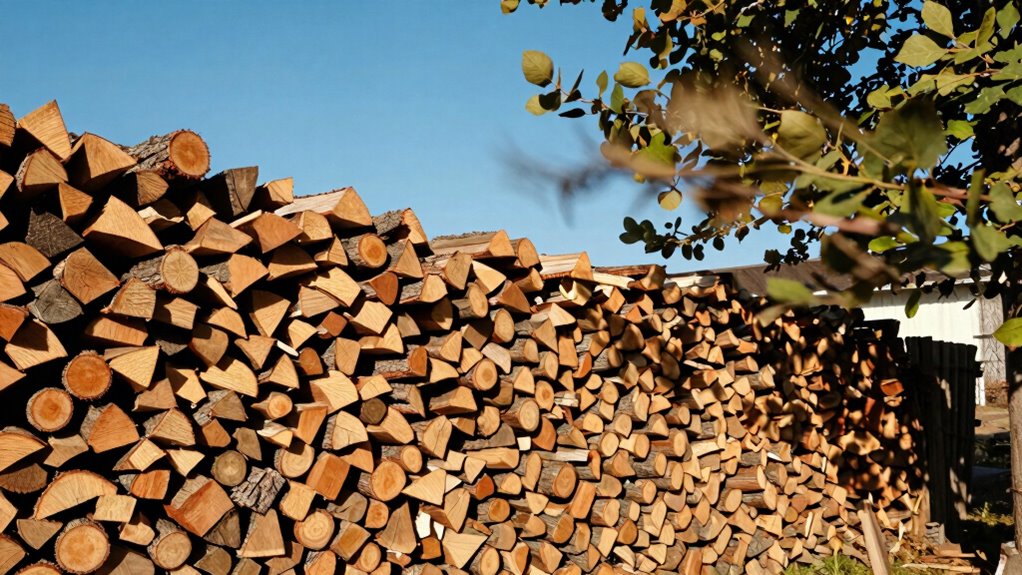
You’ll find that both sun and wind are essential for drying firewood effectively. Sun heats the outer layers and accelerates surface moisture evaporation, but it alone can be limited during cloudy or rainy weather. Wind helps carry away moisture-laden air and promotes deeper drying inside the wood. Combining both ensures quicker, more thorough drying, resulting in better-burning firewood. Keep exploring to discover how these elements work together for ideal firewood preparation.

Get business pricing on tools and workshop supplies
- Business-only prices and quantity discounts
- Tax-exempt purchasing
- Multiple users, one account, clear invoices
Key Takeaways
- Sunlight accelerates surface drying but may be insufficient alone in cloudy or rainy conditions.
- Wind effectively removes moisture-laden air, promoting deeper and more uniform drying.
- Combining sun and wind optimizes drying speed and reduces moisture content more efficiently.
- Proper stacking and ventilation enhance the benefits of both sun and wind exposure.
- Relying solely on sun can leave residual moisture; wind helps achieve optimal firewood dryness.
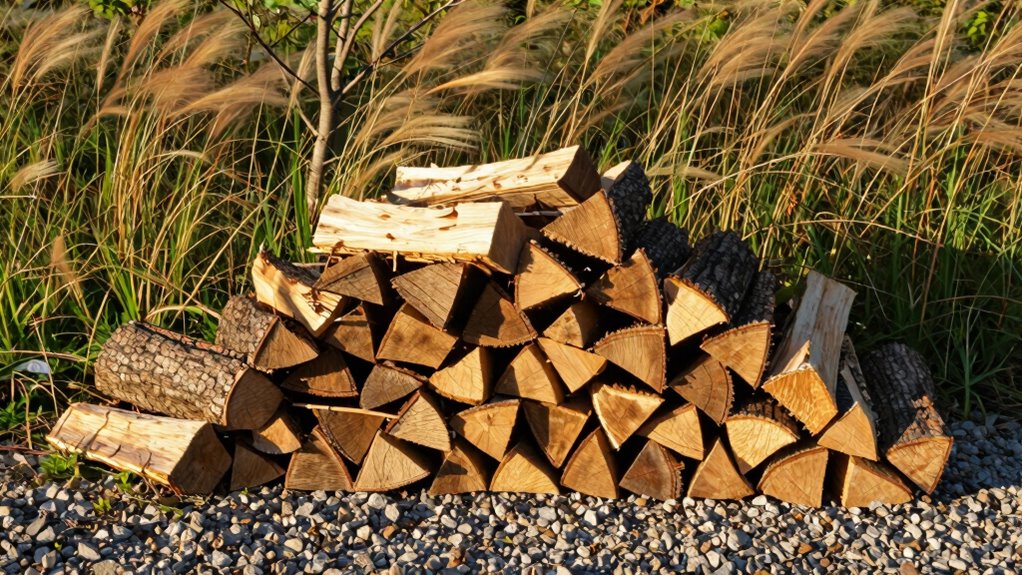
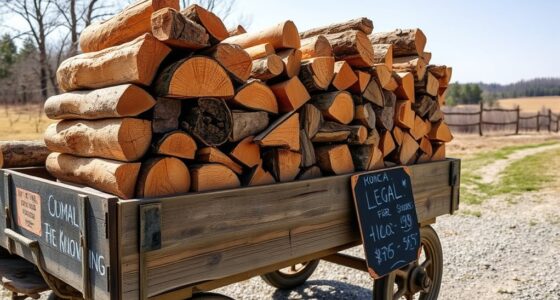
When your wood is exposed to sunlight, the heat helps evaporate surface moisture quickly. The sun’s rays penetrate the outer layers of the wood, warming it up and accelerating the drying process. However, relying solely on sun exposure can be insufficient, especially in cloudy or rainy weather, where moisture from the environment can seep back into the wood. That’s where wind becomes a powerful ally. Wind promotes evaporation by carrying away moisture-laden air from around the firewood, helping to lower the overall moisture content. It’s not just about drying the surface but also about pulling moisture from deeper within the wood. Proper firewood storage involves stacking your wood off the ground in a way that promotes airflow and minimizes contact with moisture from the soil. This setup prevents mold and rot, ensuring your wood dries thoroughly. As the moisture content drops, the firewood becomes easier to ignite, burns hotter, and produces less smoke, making your heating experience more efficient and environmentally friendly. To maximize drying efficiency, it’s important to consider airflow management and how environmental factors like humidity and rain can influence the process. Additionally, understanding the moisture content of your firewood allows you to better gauge when it is ready to burn. If you want to optimize firewood storage for faster drying, combine sun and wind exposure. Stack your firewood in a way that allows maximum airflow around each piece, ideally in a sunny, breezy spot. Cover the top of your stack with a tarp or other waterproof material to shield it from rain, but leave the sides open to allow air to circulate freely. This approach harnesses sunlight’s heat and wind’s drying power simultaneously, reducing the moisture content more effectively than either element alone. Remember, the goal is to reach a moisture content of around 20%, which is considered ideal for burning. When your firewood has a low moisture content, it ignites easily, burns steadily, and produces less creosote buildup in your chimney. Additionally, controlling environmental factors like exposure to moisture from the environment can further enhance the drying process. Proper ventilation plays a crucial role in ensuring even drying and preventing damp spots that can lead to decay. Ensuring adequate air circulation around the stacks further accelerates the drying process and reduces the risk of mold formation.
As an affiliate, we earn on qualifying purchases.
Frequently Asked Questions
How Does Humidity Affect Drying Time Differently for Sun and Wind?
Humidity slows down drying time for both sun and wind, but it impacts solar efficiency more profoundly. High humidity reduces the sun’s ability to evaporate moisture, extending drying periods. Meanwhile, wind speed can help offset humidity’s effects by carrying away moisture-laden air. So, in humid conditions, wind can still aid drying, but overall, high humidity hampers drying efficiency for both sun and wind, making the process take longer.
Can Combining Sun and Wind Methods Improve Drying Efficiency?
Combining sun and wind methods can boost drying efficiency considerably—up to 50% faster than using either alone. You’ll benefit from improved solar efficiency and higher wind speeds, which remove moisture more effectively. As wind speed increases, it carries away moisture-laden air, while the sun’s heat accelerates moisture evaporation. Together, they create a powerful drying duo, helping you dry firewood faster and more thoroughly.
What Are the Best Times of Year for Drying Firewood Outdoors?
You should dry firewood outdoors during late spring to early fall when seasonal temperatures are higher and solar intensity is strongest. Warm, sunny days promote faster drying, while longer daylight hours give more opportunity for moisture to escape. Avoid damp, rainy seasons, as consistent moisture slows drying. Aim for a period of dry, sunny weather, ideally lasting several weeks, to guarantee your firewood is properly seasoned and ready for use.
How Do Moisture Levels Impact the Quality of Dried Firewood?
Moisture content in your firewood is like a silent thief, stealing its burning quality and causing wood cracking. When moisture levels are high, your fire will sputter and produce more smoke. Properly dried wood with low moisture content burns hotter and cleaner, making your fire more efficient and enjoyable. Keep an eye on moisture levels, and you’ll enjoy crack-free, high-quality firewood every time, igniting warmth and comfort effortlessly.
Are There Specific Wood Types That Dry Better With Sun or Wind?
Certain wood types dry better with sun or wind based on their density and bark removal. For dense woods like oak, sun drying helps reduce moisture evenly, especially with bark removed, which allows better airflow. Lighter woods like pine dry faster with wind, as their lower density facilitates moisture escape. Removing bark enhances airflow and speeds up drying regardless of the method, ensuring more efficient and even drying for all wood types.
Conclusion
So, next time you choose between sun and wind to dry your firewood, remember—nature’s own methods often seem simple, yet their true power lies in what they hide. While the sun’s warmth promises quick dryness, the wind’s breeze quietly works its magic in ways you might overlook. Ironically, it’s the unseen, gentle breeze that may leave your wood perfectly seasoned, proving sometimes, the slow and steady approach truly wins the race—if only we pay attention.
Fall yard work Picks
leaf blowers
As an affiliate, we earn on qualifying purchases.