Wood moisture meters help you check whether lumber is ready for a project or whether moisture may be affecting a building material. My best overall pick is the Wagner Meters Orion 950 for its pinless wood-focused approach, while the General Tools MMD950 stands out for buyers who want both pin and pinless modes, and the FLIR MR55 adds Bluetooth for connected workflows. The main tradeoff is between pin meters, which make small holes, and pinless models, which scan without puncturing the surface but can be affected by material thickness and density. Price, calibration needs, wood species settings, and how much area you need to check also shape the choice. Read on for the full comparison and guidance on matching a meter to your work.

Get business pricing on tools and workshop supplies
- Business-only prices and quantity discounts
- Tax-exempt purchasing
- Multiple users, one account, clear invoices
Complete the kit



Key Takeaways
- Pinless models lead when surface condition matters: The Wagner Orion 950 and Tramex ME5 avoid probe holes, while pin readings can be useful when checking moisture at a specific point.
- Combination meters offer flexibility at the cost of added complexity: General Tools MMD950 and Lignomat V-2M Ligno-VersaTec cover more measurement situations than single-method options.
- Bluetooth and expanded functions suit repeatable workflows: FLIR MR55 is a better fit for users who want connected readings than for someone seeking a simple spot-check tool.
- Compact meters address basic jobsite checks: General Tools MMP100, Klein Tools ET140, and RDINSCOS are simpler choices than feature-rich professional kits.
- Accessories and workflow matter as much as the meter: Delmhorst models with an electrode or kit configuration can suit broader contractor work, but may be more than casual users need.
| FLIR MR55 Pin Moisture Meter with Bluetooth |  | Best for Connected Material Checks | Measurement method: Electrical resistance with replaceable 10 mm electrode pins | Material settings: 11 groups: 9 wood types and 2 building-material groups | Wood moisture range: 7–29% at ±2%; 30–99% reference only | VIEW LATEST PRICE | See Our Full Breakdown |
| Klein Tools ET140 Pinless Moisture Meter |  | Best for Damage-Free Surface Scans | Model: ET140 | Detection method: Pinless electromagnetic field (EMF) | Detection depth: Up to 3/4 inch (19 mm) | VIEW LATEST PRICE | See Our Full Breakdown |
| General Tools MMP100 Compact Digital Moisture Meter |  | Best Compact Pick for Quick Checks | Model: MMP100 | Measurement type: Pin-style moisture detection | Compatible materials: Wood, drywall, and other building materials | VIEW LATEST PRICE | See Our Full Breakdown |
| Klein Tools ET150 Pin Moisture Meter |  | Best for Compact Multi-Material Pin Testing | Model: ET150 | Measurement type: Pin moisture meter | Pin insertion depth: Up to 8 mm | VIEW LATEST PRICE | See Our Full Breakdown |
| General Tools MMD950 Pin and Pinless Moisture Meter | 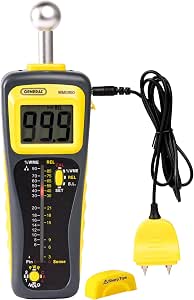 | Best for Versatile Inspection Work | Measurement modes: Pin (%WME) and pinless (REL) | Sensor depth: Up to 4 inches | Remote probe cable: 46 inches | VIEW LATEST PRICE | See Our Full Breakdown |
| COCZOW PM6811A Pin-Type Wood and Building Material Moisture Meter |  | Best for Multi-Material Checks | Measurement method: Two-pin | Wood moisture range: 2.0%–75.0% | Building material moisture range: 1.5%–30% | VIEW LATEST PRICE | See Our Full Breakdown |
| Delmhorst TechCheck Plus 2-in-1 Moisture Meter |  | Best for Logged Pin-and-Scan Readings | Measurement modes: Pin and pinless scan | Wood moisture range: 5%–60% | Drywall moisture range: 0.1%–6% | VIEW LATEST PRICE | See Our Full Breakdown |
| Wagner Meters Orion 950 Pinless Wood Moisture Meter | 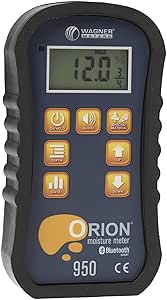 | Best Premium Pinless Pick | Measurement type: Pinless, non-damaging | Measurement depths: 1/4 inch and 3/4 inch | Connectivity: Bluetooth | VIEW LATEST PRICE | See Our Full Breakdown |
| RDINSCOS Pin-Type Moisture Meter |  | Best for Basic Firewood and Wall Checks | Model: MT19B | Testing type: Pin-type | Listed uses: Wood, drywall, walls, and floors | VIEW LATEST PRICE | See Our Full Breakdown |
| TopTes TS-630 Digital Wood Moisture Meter with 2.25-Inch LCD, Tricolor Backlight, and Pins |  | Best Value for Clear Readouts | Measurement type: Pin-type | Material modes: 2 | Calibration scales: 7 | VIEW LATEST PRICE | See Our Full Breakdown |
| Tramex Moisture Encounter ME5 Pinless Moisture Meter |  | Best for Non-Destructive Checks | Measurement type: Pinless, non-destructive | Wood moisture range: 5–30% | Comparative scale: 0–100 for other materials | VIEW LATEST PRICE | See Our Full Breakdown |
| Lignomat V-2M Ligno-VersaTec Wood Moisture Meter Complete Kit |  | Best for Professional Versatility | Measurement modes: Pin, pinless, and relative humidity | Pinless measuring depths: 1/4 inch and 3/4 inch | Moisture range: Up to 99% | VIEW LATEST PRICE | See Our Full Breakdown |
| General Tools MMD4E Digital Pin Moisture Meter for Wood and Building Materials |  | Best for Straightforward Home Inspections | Probe type: 8 mm stainless steel pins | Wood measurement range: 5–50% | Building-material measurement range: 1.5–33% | VIEW LATEST PRICE | See Our Full Breakdown |
| Mecurate Digital Pin-Type Wood Moisture Meter with Backlit Display, Orange |  | Best for Species-Scale Flexibility | Measurement type: Pin-type | Modes: Wood and building materials | Wood calibration scales: 8 | VIEW LATEST PRICE | See Our Full Breakdown |
| Delmhorst BD-10/PKG General Contractor Moisture Meter with Electrode |  | Best for Simple Analog Readings | Measurement type: Pin | Display: Analog | Wood moisture range: 6–40% | VIEW LATEST PRICE | See Our Full Breakdown |
| wood moisture meter | Display |
|---|---|
| FLIR MR55 Pin Moisture Meter w | — |
| Klein Tools ET140 Pinless Mois | Reverse-contrast display with nine LED bars |
| General Tools MMP100 Compact D | Tri-color LCD with moisture percentages |
| Klein Tools ET150 Pin Moisture | 3-color backlit LCD |
| General Tools MMD950 Pin and P | Jumbo LCD and 40-dot tri-color LED bar graph |
| COCZOW PM6811A Pin-Type Wood a | Backlit LCD with green, yellow, and red indicators |
| Delmhorst TechCheck Plus 2-in- | — |
| Wagner Meters Orion 950 Pinles | — |
| RDINSCOS Pin-Type Moisture Met | — |
| TopTes TS-630 Digital Wood Moi | 2.25-inch LCD with percentage and bar graph |
| Tramex Moisture Encounter ME5 | Analog |
| Lignomat V-2M Ligno-VersaTec W | Large LCD |
| General Tools MMD4E Digital Pi | Backlit LCD with 0.3-inch digits |
| Mecurate Digital Pin-Type Wood | — |
| Delmhorst BD-10/PKG General Co | Analog |
More Details on Our Top Picks
FLIR MR55 Pin Moisture Meter with Bluetooth
The FLIR MR55 suits buyers who want more context than a wood reading alone. Its replaceable pins measure wood and building materials, while 11 material settings let you select among nine wood types and two building-material groups. It also records ambient temperature and relative humidity, with Bluetooth sharing for keeping readings on a mobile device. Compared with the simpler General Tools MMP100, the MR55 offers broader material selection and connectivity, but the MMP100’s tri-color display may be easier for quick, uncomplicated checks. The MR55’s key limitation is its accuracy range: the stated ±2% applies to wood readings from 7% to 29%; higher readings are reference only. Its IP40 housing is impact-resistant, but the listed rating does not indicate water protection.
Pros:- Eleven material settings cover nine wood types and two building-material groups.
- Measures ambient temperature and relative humidity as well as material moisture.
- Bluetooth supports sharing readings with a mobile device.
- Replaceable pins, a backlit display, and an LED worklight suit field inspections.
Cons:- The stated ±2% wood accuracy applies only from 7% to 29%; other listed ranges are reference readings.
- IP40 protection does not specify resistance to water ingress.
Best for: Woodworkers, inspectors, and restoration professionals who want to log wood readings alongside ambient temperature and humidity.
Not ideal for: Buyers who need pinless, surface-preserving checks or dependable accuracy claims across the meter’s full displayed range.
- Measurement method:Electrical resistance with replaceable 10 mm electrode pins
- Material settings:11 groups: 9 wood types and 2 building-material groups
- Wood moisture range:7–29% at ±2%; 30–99% reference only
- Temperature range:0–50 °C (32–122 °F)
- Relative humidity range:0–85%
- Connectivity:Bluetooth BLE with METERLiNK protocol
- Power:2 AA batteries; approximately 70 hours with worklight off
- Protection:IP40; 2 m drop rating
Our verdict“Choose the MR55 if connected readings and multiple material settings matter more than pinless testing or accuracy claims outside its specified wood range.”
Klein Tools ET140 Pinless Moisture Meter
The Klein Tools ET140 is the choice here for checking finished wood without leaving pinholes. Its pinless electromagnetic sensor detects relative moisture up to 19 mm deep, and its modes cover hardwood, softwood, drywall, and masonry. That makes it more convenient for scanning cabinetry, flooring, or walls than the pin-based Klein Tools ET150, which must press probes into the target. The tradeoff is that the ET140 reports relative moisture rather than offering the pin-insertion approach, and its material selection is limited to four categories. A nine-bar LED display and reverse-contrast screen help show changes across a surface, but buyers needing more material modes or readings from a remote probe should look at the General Tools MMD950 instead.
Pros:- Pinless detection checks surfaces without leaving probe holes.
- Detects relative moisture up to 3/4 inch (19 mm) deep.
- Modes cover drywall, masonry, hardwood, and softwood.
- Reverse-contrast display and nine LED bars make moisture changes easy to see.
Cons:- Material calibration is limited to drywall, masonry, hardwood, and softwood.
- Uses a 9V battery rather than the AA batteries used by the FLIR MR55.
Best for: Cabinet installers, flooring professionals, and homeowners checking finished hardwood or wall surfaces where probe marks are unwelcome.
Not ideal for: Buyers who need pin-based readings, a broad selection of material modes, or a remote probe for hard-to-reach locations.
- Model:ET140
- Detection method:Pinless electromagnetic field (EMF)
- Detection depth:Up to 3/4 inch (19 mm)
- Compatible materials:Drywall, masonry, hardwood, and softwood
- Display:Reverse-contrast display with nine LED bars
- Functions:Hold, low-battery indicator, auto-power off, and audible alert
- Power:9V battery; battery included
- Drop protection:2 m
Our verdict“Pick the ET140 for non-damaging scans of common wood and wall materials, but choose a pin meter when you need probe-based readings.”
General Tools MMP100 Compact Digital Moisture Meter
The General Tools MMP100 keeps the job simple: use its pins to check wood or building materials, then read moisture percentages on a tri-color LCD. Its compact shape and data hold function suit quick checks during woodworking, installation, or firewood sorting, where a small tool is easier to carry than the larger General Tools MMD950. The MMP100 does not offer the MMD950’s pinless mode, remote probe, or deeper spherical sensor, so it is a less versatile option for broad inspections. It also provides less detail than the FLIR MR55, which adds multiple wood settings and Bluetooth. For straightforward spot checks, though, the color-coded screen helps make readings easier to interpret without adding extra modes. Replacement pins are sold separately.
Pros:- Compact design is easy to carry for installation and inspection tasks.
- Tri-color LCD displays moisture percentages with a quick visual cue.
- Data hold function locks a reading for reference.
- Tethered protective cap and low-battery indicator support routine use.
Cons:- Replacement pins are sold separately.
- Lacks the pinless mode and remote probe available on the General Tools MMD950.
Best for: DIY woodworkers and firewood users who want a compact pin meter for occasional spot checks and a clear visual reading.
Not ideal for: Inspectors who need pinless scanning, remote probing, extensive material settings, or pins included as replacements.
- Model:MMP100
- Measurement type:Pin-style moisture detection
- Compatible materials:Wood, drywall, and other building materials
- Display:Tri-color LCD with moisture percentages
- Power:3 volts, alkaline battery
- Operating temperature:32–122 °F
- Operating humidity:Below 90%
- Dimensions:0.98 in W × 6.89 in H
Our verdict“Choose the MMP100 for portable, uncomplicated pin checks; step up to the MMD950 if you need multiple testing methods.”
Klein Tools ET150 Pin Moisture Meter
The Klein Tools ET150 is a compact pin meter for buyers who want more than wood-only checks without carrying a larger inspection tool. Its modes cover softwood, hardwood, drywall, and building materials, while pins insert up to 8 mm into the surface. A three-color backlit display, audible alert, and work light help communicate readings when lighting is poor. Compared with the pinless Klein Tools ET140, the ET150 can make direct probe contact but leaves small marks; compared with the FLIR MR55, it is lighter and simpler, but lacks Bluetooth and ambient temperature and humidity readings. Replaceable pins and a calibration check help with ongoing use, though the 8 mm reach may not suit buyers seeking deeper material assessment.
Pros:- Material modes cover softwood, hardwood, drywall, and building materials.
- Three-color backlit LCD, audible alerts, and work light aid readings in varied conditions.
- Replaceable pins and a built-in calibration check support continued use.
- Lightweight design includes a pocket clip.
Cons:- Pin readings require inserting probes and can mark finished surfaces.
- Pins reach only up to 8 mm into the material.
Best for: Contractors and DIY renovators who need a small pin meter for spot checks across wood, drywall, plaster, and masonry-type materials.
Not ideal for: People checking finished surfaces that must remain unmarked, or inspectors who need deeper sensing and connected readings.
- Model:ET150
- Measurement type:Pin moisture meter
- Pin insertion depth:Up to 8 mm
- Material modes:Softwood, hardwood, drywall, and building materials
- Display:3-color backlit LCD
- Additional features:Audible alert, work light, calibration check, replaceable pins, onboard cap storage, elastic tether, and pocket clip
- Weight:2.24 ounces
- Dimensions:6.42 × 1.19 × 0.99 inches
Our verdict“Choose the ET150 for a light, multi-material pin meter with useful field cues, but use the ET140 when surface marks are unacceptable.”
General Tools MMD950 Pin and Pinless Moisture Meter
The General Tools MMD950 earns its place as the most flexible inspection tool in this group. It combines pin readings in percent wood moisture equivalent with pinless relative readings, and its spherical sensor detects moisture up to 4 inches deep. A 46-inch remote probe adds reach when direct access is awkward. That range of methods makes it more adaptable than the Klein Tools ET140, which is pinless only, and more capable for broad inspection work than the compact General Tools MMP100. The tradeoff is bulk: at 2 lb, it is much heavier than either Klein meter, and its pin mode can mark the material. Its color LED bar, jumbo LCD, audible alarm, and case make it suited to varied jobs, but may be more equipment than a woodworker needs for occasional checks.
Pros:- Pin and pinless modes cover different materials and inspection needs.
- Spherical sensor detects moisture up to 4 inches deep.
- Remote pin probe reaches locations that are difficult to access directly.
- Jumbo LCD, tri-color LED bar, audible alarm, and carrying case support field work.
Cons:- At 2 lb, it is substantially heavier than the compact Klein Tools ET150.
- Pin mode requires inserting probes and can leave marks in the material.
- Uses a 9V battery.
Best for: Building inspectors and restoration contractors who need pin and pinless checks, deeper sensing, and a probe for awkward locations.
Not ideal for: Woodworkers seeking a lightweight everyday meter or anyone who needs pin testing without leaving probe marks.
- Measurement modes:Pin (%WME) and pinless (REL)
- Sensor depth:Up to 4 inches
- Remote probe cable:46 inches
- Display:Jumbo LCD and 40-dot tri-color LED bar graph
- Alerts:Green, yellow, and red visual alerts; audible out-of-range alarm
- Power:9V alkaline battery
- Operating humidity:0–80% RH
- Included accessories:Remote pin probe and hard plastic carrying case
Our verdict“Choose the MMD950 for varied inspection jobs where its multiple sensing methods justify the added weight and bulk.”
COCZOW PM6811A Pin-Type Wood and Building Material Moisture Meter
The COCZOW PM6811A earns its place for buyers who move between lumber and building materials: six calibrated scales cover wood species, while a separate range is listed for building materials. That makes it more adaptable than the RDINSCOS MT19B, whose supplied details do not specify selectable scales or measurement ranges. The color-coded backlit display helps distinguish readings at a glance, and hold plus maximum/minimum functions are useful when comparing several spots. The tradeoff is typical of pin meters: the stainless-steel probes leave marks, and wood readings depend on choosing the right species scale. If a species is missing, the listing recommends an approximate setting, so buyers needing tightly controlled readings may prefer a meter with a clearer species-matching workflow.
Pros:- Measures both wood and building materials with separate listed ranges.
- Six calibrated scales support readings across different wood species.
- Backlit display uses green, yellow, and red indicators.
- Hold and maximum/minimum functions help compare readings across a surface.
Cons:- Pins penetrate and mark the material being checked.
- Wood readings require selecting a species scale; unlisted species call for an approximate setting.
Best for: Home renovators and woodworkers who want one pin meter for lumber, walls, and other building materials.
Not ideal for: Finish-conscious furniture makers and buyers who need non-damaging scans or a straightforward reading without selecting a wood-species scale.
- Measurement method:Two-pin
- Wood moisture range:2.0%–75.0%
- Building material moisture range:1.5%–30%
- Calibrated scales:6
- Display:Backlit LCD with green, yellow, and red indicators
- Functions:Hold, maximum/minimum measurement, 5-minute automatic shutoff
- Probe material:Stainless steel
- Dimensions and weight:1.97 x 1.38 x 5.12 inches; 5 ounces
Our verdict“Choose the PM6811A if you need a compact pin meter for both lumber and building materials and can accept probe marks and scale selection.”
Delmhorst TechCheck Plus 2-in-1 Moisture Meter
The Delmhorst TechCheck Plus is the data-focused choice here: it pairs pin readings with a pinless scan mode and stores up to 1,400 readings. That makes it a better fit for contractors tracking moisture across multiple rooms or jobs than the simpler COCZOW PM6811A, which offers hold and max/min functions but no stated reading storage. Its adjustable alarm and backlit display can speed up repeated checks, while temperature compensation applies in pin mode. The compromise is that the scan scale is a reference scale, not a stated direct moisture percentage, and the pins reach only 5/16 inch. At 1.5 pounds, it is also heavier than the compact COCZOW, so it suits organized inspection work better than quick, occasional firewood checks.
Pros:- Combines pin measurement with pinless scan mode.
- Stores up to 1,400 readings for tracking inspection results.
- Adjustable alarm and backlit digital display support repeated checks.
- Temperature compensation is available in pin mode.
Cons:- Pin penetration is limited to 5/16 inch.
- The scan mode uses a 0–300 reference scale rather than a stated direct moisture percentage.
- At 1.5 pounds, it is heavier than simpler options such as the COCZOW PM6811A.
Best for: Contractors and inspectors who need to record many wood or drywall readings and switch between pin and scan checks.
Not ideal for: Casual firewood users seeking a lightweight, simple meter or buyers who need deeper pin penetration than 5/16 inch.
- Measurement modes:Pin and pinless scan
- Wood moisture range:5%–60%
- Drywall moisture range:0.1%–6%
- Scan reference scale:0–300
- Pin penetration:5/16 inch (0.8 cm)
- Data logging:Storage for up to 1,400 readings
- Temperature compensation:0–255°F (-18–124°C) in pin mode
- Battery and weight:One 9V battery; 1.5 lb
Our verdict“Pick the TechCheck Plus for documented, repeated inspections where its storage and two measurement modes matter more than low weight or deeper probes.”
Wagner Meters Orion 950 Pinless Wood Moisture Meter
For finished lumber where probe marks are unacceptable, the Wagner Orion 950 offers the clearest contrast with the pin-based TopTes TS-630: its sensor checks wood without puncturing the surface and provides readings at 1/4-inch and 3/4-inch depths. Bluetooth data transfer and manual or automatic collection also suit woodshops that keep records. Its built-in temperature and humidity sensors add context through EMC, dew point, and GPP/GPK calculations, features absent from the simpler meters in this batch. That breadth comes with a narrower use case: relative mode is comparative, not a direct moisture reading for materials such as drywall or engineered wood. It is a wood-focused, feature-rich choice, not the best match for someone who mainly wants an inexpensive-feeling, basic wall-checking tool.
Pros:- Pinless measurement avoids puncturing or marking wood.
- Offers two measurement depths: 1/4 inch and 3/4 inch.
- Bluetooth supports data transfer to compatible Floor Smart and WoodShop MC apps.
- Built-in temperature and humidity sensors provide EMC, dew point, and GPP/GPK calculations.
Cons:- Relative measurement mode is comparative rather than a direct moisture reading for engineered wood and drywall.
- Its feature set is more specialized than the straightforward pin-based TopTes TS-630.
- Uses one 9V alkaline battery.
Best for: Woodworkers, flooring professionals, and lumber inspectors checking finished or valuable wood without leaving pin holes.
Not ideal for: Buyers whose main task is direct moisture measurement in drywall or engineered wood, or who do not need app connectivity and environmental calculations.
- Measurement type:Pinless, non-damaging
- Measurement depths:1/4 inch and 3/4 inch
- Connectivity:Bluetooth
- Data collection:Manual or automatic
- Sensors:Ambient temperature and relative humidity
- Calculations:EMC, GPP/GPK, and dew point
- Battery:One included 9V alkaline battery
- Weight and dimensions:1.54 pounds; 5.75 x 3 x 1 inches
- Warranty:7 years
Our verdict“Choose the Orion 950 when non-damaging wood checks and added environmental data justify its more specialized feature set.”
RDINSCOS Pin-Type Moisture Meter
The RDINSCOS MT19B is the straightforward pick for spot checks on firewood, drywall, walls, or floors. Its pin-type design measures through contact with the material, making it a more direct fit for checking a specific damp area than the Wagner Orion 950, whose pinless relative mode is comparative for some materials. The included batteries, storage bag, and user guide make this a ready-to-carry basic kit. The tradeoff is limited detail in the supplied specifications: there is no stated measurement range, species calibration count, or display feature to compare with the COCZOW PM6811A, which lists six scales and color indicators. The product also may show 0% for extremely dry wood, so it is a practical screening tool rather than a clearly specified choice for precision woodshop work.
Pros:- Pin sensors check moisture by contacting the material.
- Listed for wood, drywall, walls, and floors.
- Includes three AAA batteries, a user guide, and a storage bag.
- Compact listed dimensions make it easy to carry between checks.
Cons:- Pins must be inserted into the surface, leaving marks.
- Extremely dry wood may display 0%.
- The supplied specifications do not state a measurement range or calibration scales.
Best for: Homeowners who want a basic pin meter for checking firewood and locating damp areas in walls or floors.
Not ideal for: Woodworkers who need documented measurement ranges, selectable species calibration, or a non-marking method.
- Model:MT19B
- Testing type:Pin-type
- Listed uses:Wood, drywall, walls, and floors
- Power source:3 AAA batteries, included
- Included components:Moisture meter, user guide, storage bag, 3 AAA batteries, and spanner
- Dimensions:4.72 x 2.36 x 1.18 inches
- Item weight:7.4 ounces
- Material:PCB and plastic
Our verdict“The MT19B suits occasional firewood and household moisture checks, but buyers needing defined ranges or calibrated wood readings should choose a more fully specified meter.”
TopTes TS-630 Digital Wood Moisture Meter with 2.25-Inch LCD, Tricolor Backlight, and Pins
The TopTes TS-630 is the easy-to-read pin meter in this group, pairing a 2.25-inch LCD with both a percentage and a bar graph. Seven calibration scales across two material modes give it a broader stated setup than the RDINSCOS MT19B, whose supplied data does not list calibration scales or a measurement range. Its green, orange, and red backlight adds a quick visual cue, while hold and max/min functions help when checking multiple spots. It is a practical fit for homeowners who want wood and building-material readings without a complicated logging system. The tradeoff is the pin-based method: probes mark the surface, unlike the Wagner Orion 950. Its listed range also tops out at 57%, below the COCZOW PM6811A’s stated 75% wood range.
Pros:- Seven calibration scales and two material modes support wood and building-material checks.
- Large LCD presents readings as both a percentage and a bar graph.
- Tricolor backlight gives a quick visual moisture indication.
- Includes hold, max/min, auto shutoff, batteries, and a carry pouch.
Cons:- Pin probes penetrate and mark the material.
- Its stated measurement range tops out at 57%, below the COCZOW PM6811A’s listed 75% wood range.
Best for: Homeowners and DIY renovators who want a readable, multi-scale pin meter for lumber and building-material spot checks.
Not ideal for: Users who must avoid marks on finished wood, need data logging, or need the broader stated wood range of the COCZOW PM6811A.
- Measurement type:Pin-type
- Material modes:2
- Calibration scales:7
- Measurement range:0.0% to 57%
- Display:2.25-inch LCD with percentage and bar graph
- Backlight:Tricolor: green, orange, and red
- Functions:Data hold, max/min, and 10-minute auto shutoff
- Battery:3 AAA batteries, included
- Weight:148 g
Our verdict“Choose the TS-630 for clear, quick readings across wood and building materials, unless pin marks or its stated range limit make another meter a better fit.”
Tramex Moisture Encounter ME5 Pinless Moisture Meter
The Tramex ME5 is the standout choice when I want to scan wood without leaving pin holes. Its shallow and deep modes help compare moisture near the surface with conditions farther into the material, while Bluetooth adds a practical way to save geotagged, timestamped readings. Compared with the pin-based General Tools MMD4E, the ME5 is better suited to finished floors, cabinetry, and other surfaces where marks matter; the MMD4E can be more direct when contact-pin readings are preferred. The ME5 also checks common building materials, though its non-wood scale is comparative rather than a wood moisture percentage. Its tradeoffs are a 5–30% wood range and a deepest measurement of 1.25 inches, so it is not the pick for every thick or very wet piece of lumber.
Pros:- Pinless readings avoid leaving holes in visible or finished wood.
- Two measurement depths help compare surface and deeper moisture conditions.
- Bluetooth app supports geotagged, timestamped reports and moisture maps.
- Also offers a comparative scale for common building materials.
Cons:- Wood moisture range is limited to 5–30%.
- Deep mode measures up to 1.25 inches, which may not represent the core of thick stock.
- The building-material scale is comparative, not a direct wood moisture percentage.
Best for: Flooring installers, inspectors, and woodworkers who need to scan finished surfaces without puncturing them and want shareable moisture records.
Not ideal for: Buyers who need readings above 30% wood moisture or measurements deeper than 1.25 inches; a pin meter may better suit those checks.
- Measurement type:Pinless, non-destructive
- Wood moisture range:5–30%
- Comparative scale:0–100 for other materials
- Measurement depths:Shallow: up to 0.4 in (9 mm); deep: up to 1.25 in (30 mm)
- Display:Analog
- Connectivity:Bluetooth
- Dimensions and weight:6.3 × 3.5 × 1.5 in; 10.6 oz
- Batteries:2 AA batteries, included
Our verdict“Choose the ME5 for non-destructive wood scans and documented inspections, but choose a pin meter for deeper or higher-range readings.”
Lignomat V-2M Ligno-VersaTec Wood Moisture Meter Complete Kit
The Lignomat V-2M earns its place for buyers who need more than a single kind of moisture check: it combines pin, pinless, and relative humidity modes in one kit. Dual-depth pinless readings help compare conditions at two depths, while the included E-12 slide hammer supports pin measurements in lumber and other demanding checks. Built-in species corrections, including bamboo, help tailor wood readings rather than treating every species alike. Compared with the pinless-only Tramex ME5, the V-2M offers more measurement approaches and a stated range up to 99%; the Tramex is the simpler choice for non-destructive scans and Bluetooth reporting. The V-2M’s breadth comes with a hefty 6.58-pound kit, and its relative humidity probe is optional, so buyers expecting every mode to be ready out of the box should check what is included.
Pros:- Combines pin, pinless, and relative humidity measurement modes.
- Dual-depth pinless readings compare moisture at 1/4-inch and 3/4-inch depths.
- Built-in wood species corrections include bamboo.
- Moisture range up to 99% accommodates checks from kiln-dried to green lumber.
Cons:- The complete kit weighs 6.58 pounds, making it less convenient to carry for casual checks.
- The relative humidity probe is optional rather than included.
- Its range of functions may be more than a basic home inspection requires.
Best for: Flooring professionals, lumber processors, and inspectors who need pin and pinless readings, species adjustments, and broad moisture coverage in one kit.
Not ideal for: Homeowners seeking a lightweight, simple meter or buyers who need a relative humidity probe included; the kit is heavy and that probe is optional.
- Measurement modes:Pin, pinless, and relative humidity
- Pinless measuring depths:1/4 inch and 3/4 inch
- Moisture range:Up to 99%
- Wood species corrections:Built in, including bamboo
- Building material scales:3
- Display:Large LCD
- Included accessory:E-12 slide hammer
- Battery and weight:1 included 9V battery; 6.58 pounds
Our verdict“Choose the V-2M when professional work calls for several measurement methods and species corrections, not when portability or simplicity is the priority.”
General Tools MMD4E Digital Pin Moisture Meter for Wood and Building Materials
For a homeowner checking a suspicious wall, subfloor, or piece of lumber, the General Tools MMD4E keeps the process direct: insert its stainless-steel pins, read the backlit display, and use the low, medium, or high tones as a quick cue. Its 5–50% wood range is broader than the Tramex ME5’s 5–30% range, and it also measures building materials such as drywall and concrete. The tradeoff is that pin readings leave small marks, unlike the ME5’s non-destructive scanning. The MMD4E’s hold button and automatic shutoff are useful for routine checks, but its single 9V battery and contact-based approach make it less appealing for finished surfaces or users who want app-based reporting. I’d choose it for practical spot checks, not detailed moisture mapping.
Pros:- Measures wood and building materials, including drywall and concrete.
- Backlit LCD and audible moisture-level tones make spot checks easy to interpret.
- Reading hold helps capture a measurement in awkward locations.
- Protective cap doubles as a calibration checker.
Cons:- Pins must penetrate the material and can leave marks.
- Uses a 9V battery.
- Does not offer the app-based reporting available with the Tramex ME5.
Best for: Homeowners and maintenance workers investigating possible water damage in wood, drywall, concrete, or subflooring.
Not ideal for: Woodworkers or flooring installers measuring finished surfaces that must remain unmarked, or inspectors who need Bluetooth reports and moisture maps.
- Probe type:8 mm stainless steel pins
- Wood measurement range:5–50%
- Building-material measurement range:1.5–33%
- Display:Backlit LCD with 0.3-inch digits
- Readout features:Low, medium, and high tones; reading hold
- Battery:9V alkaline
- Temperature range:32°F to 60°C
- Warranty:1 year
Our verdict“Choose the MMD4E for simple, cross-material checks around a home, but skip it if pin marks or digital reporting are concerns.”
Mecurate Digital Pin-Type Wood Moisture Meter with Backlit Display, Orange
The Mecurate pin meter is a practical fit for woodworkers who move between different species and want setup choices without stepping up to a multi-mode kit like the Lignomat V-2M. Its eight wood calibration scales and reference index help match the meter to the wood being checked, while separate wood and building-material modes extend its usefulness to walls and other surfaces. The 0.1% resolution, backlit screen, and colored indicators make readings easy to follow during routine work. That flexibility depends on choosing the appropriate scale: an incorrect selection can undermine the value of the displayed reading. Like the General Tools MMD4E, it uses contact pins, so it can mark finished material; unlike the MMD4E, it lists a 6–60% wood range and includes a carry pouch and replacement pins.
Pros:- Eight wood calibration scales support checks across different wood types.
- Separate modes cover wood and building materials.
- Backlit display and three colored indicators make readings easier to interpret.
- Includes replacement pins, a water-resistant pouch, and a wood-type reference index.
Cons:- Pins require direct contact and can leave marks in finished wood.
- Correct readings depend on selecting the appropriate calibration scale.
- The stated wood range begins at 6%, rather than covering readings below that level.
Best for: Woodworkers, renovators, and DIY users who check several wood species and want a pin meter that also reads building materials.
Not ideal for: Users who need non-destructive readings or do not want to select a species calibration scale before measuring.
- Measurement type:Pin-type
- Modes:Wood and building materials
- Wood calibration scales:8
- Wood moisture range:6–60%
- Building-material moisture range:1.5–33%
- Resolution:0.1%
- Display and indicators:Backlit display; 3 colored moisture-level indicators
- Included components:2 replacement pins, water-resistant carry pouch, and wood-type reference index
Our verdict“Choose the Mecurate for species-aware pin readings and useful included accessories, but not for mark-free scans.”
Delmhorst BD-10/PKG General Contractor Moisture Meter with Electrode
The Delmhorst BD-10/PKG suits buyers who prefer a clear analog scale and a basic control layout over a digital menu. Its wood scale covers 6–40% moisture, and its 0–100 reference scale can help compare moisture in materials such as concrete, plaster, and insulation. That non-wood scale is relative, so it should not be read as a direct percentage; the General Tools MMD4E provides stated measurement ranges for wood and building materials instead. The BD-10’s simple one-button operation keeps routine checks uncomplicated, and the included electrode and 9V battery mean the core setup is supplied. Against pinless choices such as the Tramex ME5, however, its electrode requires contact and may mark the material. Its large listed dimensions also make it less compact than a basic handheld spot-check tool.
Pros:- Analog display offers a direct, uncomplicated readout.
- Wood scale covers 6–40% moisture.
- Reference scale supports comparative checks on non-wood materials.
- Includes an electrode and 9V battery, with simple one-button operation.
Cons:- Pins require contact and may leave marks on the material.
- The non-wood 0–100 scale is relative, not a direct moisture percentage.
- Listed dimensions of 14 × 8.5 × 3.5 inches make it less compact than a small spot-check meter.
Best for: Contractors who prefer an analog pin meter for straightforward wood checks and comparative readings on other building materials.
Not ideal for: Buyers who need precise, percentage-based readings for non-wood materials, a digital display, or a compact tool for frequent carry.
- Measurement type:Pin
- Display:Analog
- Wood moisture range:6–40%
- Non-wood reference scale:0–100, relative
- Battery:1 included 9V battery
- Included component:Electrode
- Dimensions:14 × 8.5 × 3.5 inches
- Weight:1.5 pounds
Our verdict“Choose the BD-10/PKG for simple analog wood checks and relative building-material comparisons, but not for precise non-wood percentages or mark-free measurement.”
How We Picked
I compared the 15 meters by the decisions buyers face most often: pin versus pinless measurement, wood-focused functions, ease of reading and operating, versatility across materials, and suitability for occasional checks or repeated professional work. I also considered practical details such as whether a model includes an electrode, supports connected use, or combines measurement methods. A feature only counted as a benefit when it addressed a clear job need; extra functions can add learning time and may not help a buyer who only checks lumber now and then.
The ranking favors tools that offer a useful balance of wood measurement capability, workflow fit, and manageable tradeoffs. Wood-focused pinless options rank well for users who need non-marking scans, while combination meters earn consideration for buyers who need more than one approach. Compact single-method models remain sensible for straightforward checks, but rank below more adaptable picks when their narrower use is a limitation. I do not treat readings from different meters as interchangeable: users should follow each manufacturer’s instructions and account for species, material, and measurement depth.
Factors to Consider When Choosing Wood Moisture Meters
Before choosing among wood moisture meters, decide what you need the reading to tell you and how often you will take it. The right choice depends less on the longest feature list than on the material, the finish you need to preserve, and whether you need a quick indication or a repeatable inspection process.
Choose Pin or Pinless Based on the Surface and the Question
Pin meters use probes that contact the wood, so they can target a small area and may help when you want a reading at a particular location. They leave small marks, which can matter on finished furniture, cabinetry, or visible trim. Pinless meters scan without puncturing the surface, making them practical for checking multiple boards quickly or protecting a finished face. Their readings can be influenced by density, thickness, and nearby materials, so a scan is not automatically a direct substitute for a probe reading. A common mistake is choosing by convenience alone instead of asking whether the work allows probe marks. If a project involves both polished surfaces and targeted checks, a combination meter may justify its added cost and learning curve.
Match the Meter to the Wood and Measurement Conditions
Wood species, temperature, and the meter’s measurement settings can affect the number displayed, so check what adjustments the instrument supports. A meter with species correction or clear guidance can be useful when working with different lumber types, but only if you select the correct setting. Avoid comparing readings taken with different methods or settings as though they share one universal scale. Take readings at several locations because a board can vary from end to center or from one face to another. For a project with a defined moisture requirement, use the relevant project or material guidance rather than relying on a generic threshold. More settings are not automatically better if they make routine checks slower or easier to misconfigure.
Decide Whether You Need Spot Checks or a Repeatable Workflow
Occasional DIY checks usually call for a clear display, straightforward controls, and a practical measurement range for the materials at hand. A contractor or woodworker who records many readings may benefit from connected features, saved readings, or accessories that support repeat inspections. Those additions can make documentation easier, but they also create more setup and compatibility questions. Think about where readings will go: a quick on-screen result, a job record, or a shared report. Do not pay for a connected workflow if you will not use it. Likewise, a basic meter may become frustrating if you need to document changing conditions across many rooms or boards.
Check Calibration, Maintenance, and Replacement Parts
Probe tips wear or bend with use, while pinless sensors depend on a clean, undamaged contact surface. Before buying, check how the manufacturer describes calibration checks, replacement probes, and any required accessories. A meter that supports a simple verification routine can be easier to trust in recurring work than one with no clear checking process. Keep the sensor area clean and store the tool as directed; dirt, impact, or damaged pins can undermine readings. Buyers often focus on the initial feature set and overlook whether the meter can be maintained over time. For frequent professional use, parts availability and support may matter more than a small convenience feature.
Pay for Versatility Only When Your Work Uses It
A single-method meter can be a sensible choice when you repeatedly check similar wood under similar conditions. Combination pin-and-pinless models cover more situations, but they may take longer to learn and can cost more to maintain or replace. Kits and electrode options can expand access to different locations or materials, yet they make less sense for someone who only checks a few boards at home. Compare the actual tasks you do: lumber selection, woodworking, flooring inspections, or building-material checks each place different demands on a meter. A broader material menu does not mean every mode is equally relevant to wood work. Choose versatility when it solves a recurring problem, not simply because the specification list is longer.
Frequently Asked Questions
Should I use a pin or pinless meter to check lumber before a woodworking project?
Choose based on whether you can tolerate small probe marks and how many boards you need to scan. A pin meter can target a specific point, while a pinless meter can check a surface without puncturing it and may speed up screening across a stack. For valuable or finished wood, the non-marking approach can be appealing, but confirm that the meter’s depth and material guidance suit the stock. For a single board with a localized concern, probe readings may answer a different question than a broad surface scan. Follow the model’s instructions and use consistent settings when comparing boards.
Can I compare readings from different wood moisture meters?
Do not assume two meters will display matching values, even when they measure the same board. Pin and pinless instruments use different approaches, and species settings, temperature compensation, measurement depth, and calibration can affect results. For useful comparisons, take readings with the same meter and settings, at similar locations, and under similar conditions. If a reading must meet a project specification, check which method or instrument the specification expects. Treat a change in readings as a prompt to investigate rather than proof that one meter is wrong.
Do I need a meter that measures building materials as well as wood?
A wood-only workflow may not benefit from extra material modes, while restoration, inspection, and contracting work may involve drywall or other building materials alongside framing. A broader meter can reduce the need to carry separate tools, but each material mode has its own limits and interpretation. Check that wood measurement remains a strong fit rather than assuming a long list of materials means better wood readings. If you only select lumber or monitor woodworking stock, a simpler tool may be easier to operate. Choose multi-material capability when those checks are part of your regular work.
When is a combination pin-and-pinless meter worth choosing?
A combination model makes sense when you regularly need both non-marking scans and targeted probe checks. It can help you screen a larger area first, then investigate selected locations more closely. The tradeoff is extra complexity: users must understand which method answers which question and avoid treating the results as identical. If you only use one approach, a dedicated meter may be simpler and more economical to maintain. Consider a combination model when switching between surfaces or inspection tasks is a routine part of the job.
What should I do if the meter gives an unexpected reading?
First check the selected wood species or material setting, the battery condition, and whether the sensor or pins are clean and undamaged. Take readings at several nearby points and repeat them using the same method and orientation. A single result can reflect a knot, a wet surface, nearby material, or a local moisture difference rather than the condition of the entire board. Compare the result with the meter’s manual and the requirements of your project, not an unrelated meter’s display. If readings remain inconsistent, use the manufacturer’s verification guidance or arrange a second check with a suitable instrument.
Conclusion
For most buyers seeking a strong balance of wood-focused, non-marking checks, I would start with the Wagner Meters Orion 950 as the best overall pick. The General Tools MMP100 is my best value-style choice for straightforward checks, while the FLIR MR55 is better suited to buyers who want Bluetooth in a repeatable workflow. Beginners may prefer a compact, direct-reading model such as the Klein Tools ET140 rather than a more involved kit. For specific needs, choose the General Tools MMD950 or Lignomat V-2M Ligno-VersaTec when multiple measurement approaches matter, and consider the Delmhorst BD-10/PKG when an electrode-based contractor setup fits the job. The best choice is the meter whose method, settings, and maintenance demands match the wood you actually inspect.