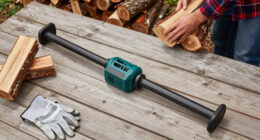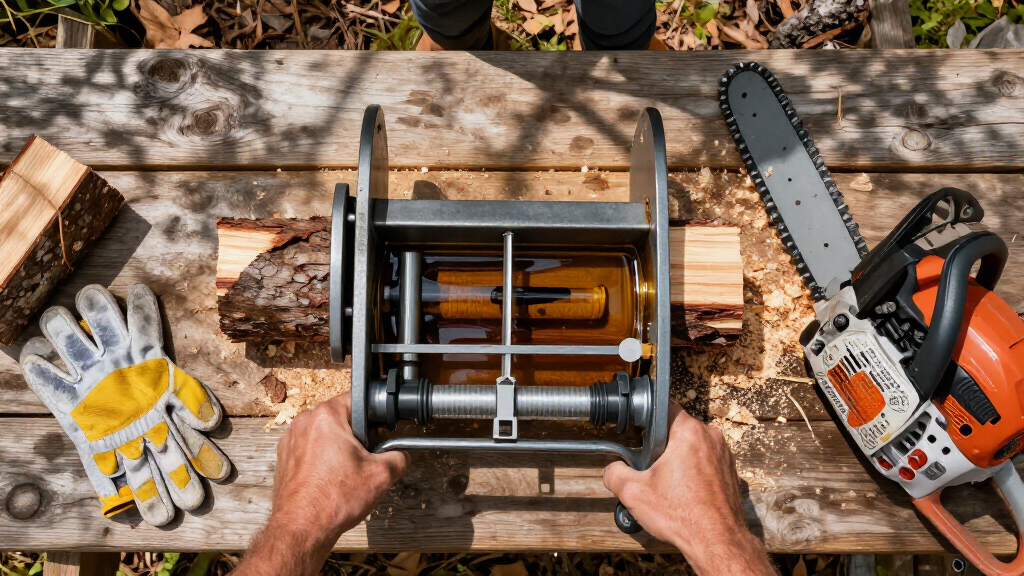

Choosing the right log splitter hydraulic oil comes down to three things: viscosity grade, anti-wear protection, and how much fluid your machine actually holds. For most owners, the CAM2 Promax AW 46 in a 5-gallon pail is the best overall pick — its ISO 46 weight hits the sweet spot for typical splitter operating temperatures, and the bulk packaging keeps cost per quart low. If you only need a top-off or you’re filling a compact unit, the TRIAX Powerflow AW 46 one-gallon jug offers premium multi-viscosity performance at a reasonable price, while MAG 1 AW ISO 46 is the value play for occasional weekend splitters. The main tradeoff you’ll face is between cold-weather-friendly AW 32 fluids and hotter-running AW 46 or AW 68 grades, plus the price gap between gallon jugs and 5-gallon pails. Keep reading for the full breakdown of all 14 options.

Get business pricing on tools and workshop supplies
- Business-only prices and quantity discounts
- Tax-exempt purchasing
- Multiple users, one account, clear invoices
Complete the kit


Key Takeaways
- ISO 46 (AW 46) emerged as the dominant grade in this roundup, appearing in six of the 14 products, because it suits the moderate operating temperatures of most residential and farm-grade log splitters.
- Five-gallon pails from CAM2 offered the lowest cost per quart across the lineup, but only make financial sense if your splitter’s reservoir holds 3.5 gallons or more — smaller machines will store unused oil for years.
- TRIAX‘s multi-viscosity HLP formulation was the only line offering three distinct grades (AW 32, 46, and 68), making it the go-to choice for buyers matching oil to climate rather than settling for whatever’s on the shelf.
- Purpose-labeled splitter fluids like the 2-gallon log splitter hydraulic oil jugs trade raw specification transparency for convenience — convenient for beginners, but harder to verify against a manufacturer’s requirements.
- Anti-wear (AW) additive packages were universal in this lineup, so price differences came down to brand, packaging size, and filterability claims rather than basic protection levels.
| Universal Hydraulic Fluid |  | Best Value Workhorse | Type: Universal hydraulic / transmission fluid | Specification: Meets and exceeds OEM power shift specs | System Protection: Extends equipment and fluid life | VIEW LATEST PRICE | See Our Full Breakdown |
| CAM2 Promax AW 46 Hydraulic Oil, 5 Gallon Pail |  | Best Bulk Buy for Frequent Splitters | Viscosity Grade: ISO VG 46 (AW) | Package Size: 5 gallons / 18.9 liters | Additives: Anti-wear, anti-foam, rust and corrosion inhibitors | VIEW LATEST PRICE | See Our Full Breakdown |
| TRIAX Powerflow AW 46 Multi-Viscosity HLP Hydraulic Oil, 1 Gallon |  | Best Overall for All-Season Splitting | Viscosity: Multi-viscosity AW 46 / HLP | Extended Service Life: 6,000 hours | Pour Point: -40°F | VIEW LATEST PRICE | See Our Full Breakdown |
| TRIAX Powerflow AW 32 Multi-Viscosity HLP Hydraulic Oil, 1 Gallon |  | Best for Cold-Climate Small Splitters | Viscosity: Multi-viscosity AW 32 / HLP | Extended Service Life: 6,000 hours | Pour Point: -40°F | VIEW LATEST PRICE | See Our Full Breakdown |
| Enerpac HF-101 Hydraulic Oil, Gallon |  | Best for High-Pressure Pump Equipment | Type: Hydraulic oil (high-pressure formula) | Intended Equipment: Enerpac pumps, cylinders, and hydraulic tools | Volume: 1 gallon | VIEW LATEST PRICE | See Our Full Breakdown |
| TRIAX Powerflow AW 68 Multi-Viscosity HLP HLP Hydraulic Oil, 1 Gallon |  | Best for Cold-Weather Longevity | Volume: 1 Gallon | Viscosity Grade: AW 68 | Specification: HLP multi-viscosity | VIEW LATEST PRICE | See Our Full Breakdown |
| CAM2 Promax AW 46 Hydraulic Oil with Anti-Wear Additives, 1 Gallon |  | Best All-Around AW 46 | Volume: 1 gallon (3.785 L) | Grade: AW 46 | Additives: Anti-wear, anti-foam, rust, oxidation, and corrosion inhibitors | VIEW LATEST PRICE | See Our Full Breakdown |
| MAG 1 00466 AW ISO 46 Hydraulic Oil – 1 Gallon |  | Best Budget Pick | Volume: 1 Gallon | Type: Hydraulic Oil | Viscosity: ISO 46 | VIEW LATEST PRICE | See Our Full Breakdown |
| 2 Gallon Log Split Hydraulic Oil |  | Best for Full Refills | Volume: 2 gallons | Application: Log splitters | Type: Hydraulic oil | VIEW LATEST PRICE | See Our Full Breakdown |
| AW ISO 32 Hydraulic Oil 5 Gallon Pail |  | Best Bulk Value for Cold Climates | Volume: 5 Gallons | Viscosity Grade: ISO 32 / AW | Application: Hydraulic systems, industrial machinery, hydraulic jacks | VIEW LATEST PRICE | See Our Full Breakdown |
| CAM2 Promax Premium AW 32 Hydraulic Oil, 1 Gallon |  | Best Small-Batch AW 32 Pick | Grade: AW 32 | Capacity: 1 gallon (3.785 L) | Type: Hydraulic Oil | VIEW LATEST PRICE | See Our Full Breakdown |
| CAM2 PROMAX AW 32 Hydraulic Oil, 5 Gallon |  | Best Bulk Value for Frequent Users | Brand: CAM2 | Grade: AW 32 | Volume: 5 gallons | VIEW LATEST PRICE | See Our Full Breakdown |
| LU02322G Log Splitter Hydraulic Fluid Oil, 2 Gallon |  | Best Fit-and-Forget Fill for Splitter Owners | Volume: 2 gallons | Intended Application: Log splitter hydraulic systems | Function: Hydraulic lubrication and performance | VIEW LATEST PRICE | See Our Full Breakdown |
| AW ISO 46 Hydraulic Oil 1 Gallon | 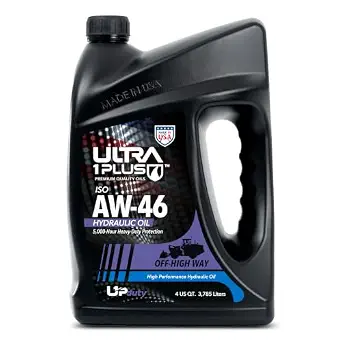 | Best for Warm-Climate Heavier-Duty Splitting | Volume: 1 Gallon | Viscosity Grade: ISO VG 46 | Anti-Wear: Yes | VIEW LATEST PRICE | See Our Full Breakdown |
| log splitter hydraulic oil | Volume | Viscosity Grade |
|---|---|---|
| Universal Hydraulic Fluid | — | Not specified |
| CAM2 Promax AW 46 Hydraulic Oi | — | ISO VG 46 (AW) |
| TRIAX Powerflow AW 46 Multi-Vi | 1 gallon | — |
| TRIAX Powerflow AW 32 Multi-Vi | 1 gallon | — |
| Enerpac HF-101 Hydraulic Oil | 1 gallon | Not published |
| TRIAX Powerflow AW 68 Multi-Vi | 1 Gallon | AW 68 |
| CAM2 Promax AW 46 Hydraulic Oi | 1 gallon (3.785 L) | — |
| MAG 1 00466 AW ISO 46 Hydrauli | 1 Gallon | — |
| 2 Gallon Log Split Hydraulic O | 2 gallons | — |
| AW ISO 32 Hydraulic Oil 5 Gall | 5 Gallons | ISO 32 / AW |
| CAM2 Promax Premium AW 32 Hydr | — | — |
| CAM2 PROMAX AW 32 Hydraulic Oi | 5 gallons | — |
| LU02322G Log Splitter Hydrauli | 2 gallons | Not published |
| AW ISO 46 Hydraulic Oil 1 Gall | 1 Gallon | ISO VG 46 |
More Details on Our Top Picks
Universal Hydraulic Fluid
Universal Hydraulic Fluid wins on price-per-gallon for owners who top off their splitter reservoir every season. It meets and exceeds OEM specifications for power shift transmissions, which means it pulls double duty if you also run a tractor or skid steer off the same fluid shelf. Compared with the CAM2 Promax AW 46 5-Gallon Pail, it lacks a stated ISO viscosity grade — a real drawback if your splitter manual calls for a specific weight. What you get instead is broad compatibility and fewer shopping decisions. The tradeoff is honest: no anti-foam or pour-point claims like the TRIAX Powerflow line, so expect shorter service intervals in hard daily use.
Pros:- Meets and exceeds OEM specifications for power shift transmissions
- Extends equipment and fluid life, reducing downtime
- Works across multiple machine types, simplifying inventory
- Generally the lowest cost per fluid change
Cons:- No stated ISO viscosity grade, complicating spec-matching
- No cold-weather or anti-foam performance claims
- Not designed for extended 6,000-hour drain intervals
Best for: Budget-minded homeowners who change fluid often and run multiple pieces of equipment from one reservoir
Not ideal for: Owners whose manuals specify an exact ISO viscosity grade, since the grade isn’t stated
- Type:Universal hydraulic / transmission fluid
- Specification:Meets and exceeds OEM power shift specs
- System Protection:Extends equipment and fluid life
- Maintenance Impact:Reduces downtime and major overhauls
- Viscosity Grade:Not specified
- Container:Bulk fluid format
Our verdict“Buy it if you want dependable, multi-machine fluid on a budget; skip it if your splitter demands a certified ISO 46 or 32 grade.”
CAM2 Promax AW 46 Hydraulic Oil, 5 Gallon Pail
If you drain and refill your splitter annually — or run several hydraulic machines — the 5-gallon pail format of CAM2 Promax AW 46 beats buying gallon jugs one at a time. It’s a premium ISO VG 46 fluid with anti-wear, anti-foam, and rust inhibitors, the exact spec most mid-size log splitter pumps are built around. Compared with the Universal Hydraulic Fluid, you get a certified viscosity grade and a proper additive package; compared with the TRIAX Powerflow AW 46, you trade a shorter service life for a much better price per gallon. Handling a 40-plus pound pail without a pump is genuinely awkward, though.
Pros:- Premium ISO VG 46 grade matching most splitter manuals
- Anti-wear, anti-foam, and corrosion inhibitors in one formula
- Far cheaper per gallon than one-gallon premium options
- Versatile across tractors, jacks, and other hydraulic systems
Cons:- Heavy, awkward 5-gallon pail is hard to pour without a pump
- Not rated for the 6,000-hour extended drains TRIAX claims
- Wasted money if your machine actually needs AW 32 or 68
Best for: Property owners and small firewood operations that refill reservoirs often and want the standard ISO 46 spec in bulk
Not ideal for: Occasional users with a single small splitter — an opened 5-gallon pail will sit for years
- Viscosity Grade:ISO VG 46 (AW)
- Package Size:5 gallons / 18.9 liters
- Additives:Anti-wear, anti-foam, rust and corrosion inhibitors
- Applications:Hydraulic systems including log splitters
- Quality Tier:Premium
- Storage:Pail format for shelf storage
Our verdict“The smart pick for anyone who goes through hydraulic oil steadily and wants the standard AW 46 spec at volume pricing.”
TRIAX Powerflow AW 46 Multi-Viscosity HLP Hydraulic Oil, 1 Gallon
This is the pick I’d point most splitter owners toward, and the reason is the -40°F pour point paired with a 6,000-hour service life. Most hydraulic oils force a choice: run thin winter fluid or thick summer fluid. The multi-viscosity AW 46 formulation here keeps a two-stage splitter cycling reliably in January and July alike. Its high-zinc anti-wear package protects the pump and control valve better than the standard additive blend in CAM2 Promax AW 46, and near-zero foaming means the ram won’t hesitate under load. The costs are real too: you pay a premium per gallon, and one gallon won’t complete a full drain on larger tanks.
Pros:- 6,000-hour severe-service rating means rare fluid changes
- -40°F pour point for reliable cold-weather cycling
- High zinc anti-wear content protects pumps and valves
- Virtually eliminates foaming under heavy load
Cons:- Higher upfront cost per gallon than standard AW oils
- One gallon may not cover a full reservoir drain on big splitters
- Requires careful handling due to chemical composition
Best for: Owners in cold climates who split year-round and want to change fluid as rarely as possible
Not ideal for: Warm-climate users on a budget — a standard single-grade AW 46 like CAM2’s costs less and performs the same job
- Viscosity:Multi-viscosity AW 46 / HLP
- Extended Service Life:6,000 hours
- Pour Point:-40°F
- Anti-Wear Package:High-zinc booster
- Foaming:Virtually zero
- Volume:1 gallon
- Oxidation Resistance:High
Our verdict“The best all-around choice for serious, all-season splitter use where cold starts and long drain intervals matter.”
TRIAX Powerflow AW 32 Multi-Viscosity HLP Hydraulic Oil, 1 Gallon
The AW 32 version of TRIAX’s Powerflow line is the same 6,000-hour, triple-zinc formula as its AW 46 sibling, just one grade thinner. That difference matters more than most buyers realize: thinner oil flows faster at low temperatures, so smaller residential splitters with modest pumps cycle quicker on cold mornings instead of laboring until the fluid warms up. If your machine’s manual specifies ISO 32 — common on compact units — this is the correct choice, and matching grade beats guessing every time. Compared with the Universal Hydraulic Fluid, you get verified specs and severe-service longevity; compared with the AW 46 TRIAX, you give up a bit of film strength for high-heat, high-pressure duty.
Pros:- ISO 32 weight flows fast in sub-zero starts
- Triple-zinc anti-wear protection for long component life
- 6,000-hour service rating minimizes changes
- Multi-viscosity stability across all seasons
Cons:- Limited to machines actually spec’d for ISO 32
- Premium price per gallon versus standard AW 32 fluids
- Thinner film is less ideal for high-pressure commercial pumps
Best for: Cold-climate owners of compact or entry-level splitters whose manuals call for ISO 32
Not ideal for: High-tonnage, high-pressure splitters — the thinner film is better matched to AW 46 or AW 68
- Viscosity:Multi-viscosity AW 32 / HLP
- Extended Service Life:6,000 hours
- Pour Point:-40°F
- Anti-Wear Content:Triple zinc
- Foaming:Virtually zero
- Volume:1 gallon
- Oxidation Resistance:High
Our verdict“The right premium fluid for small, cold-weather splitters — just confirm your manual says ISO 32 before buying.”
Enerpac HF-101 Hydraulic Oil, Gallon
Enerpac builds hydraulic tools, and HF-101 is engineered specifically for that class of high-pressure equipment — think 10,000 PSI pumps, cylinder jacks, and yes, hydraulic log splitters running comparable hardware. This option makes the most sense for buyers who want manufacturer-matched fluid rather than guessing at an off-the-shelf grade. Compared with the TRIAX Powerflow AW 46, it offers no published pour point or service-hour claims, so you’re paying for brand-specific formulation and trust rather than documented extreme-performance numbers. The gallon size suits single-unit maintenance rather than fleet servicing, unlike the CAM2 5-gallon pail.
Pros:- Formulated specifically for high-pressure hydraulic systems
- Manufacturer-matched for Enerpac tools and pumps
- Ensures smooth operation and long equipment life
- Convenient single-gallon size for routine maintenance
Cons:- No published viscosity grade, pour point, or service-life specs
- Premium brand pricing without documented performance data
- Overkill for standard low-pressure residential splitters
Best for: Owners of Enerpac or similar high-pressure hydraulic equipment who want OEM-matched fluid
Not ideal for: Value-focused buyers with generic splitters — a standard AW 46 delivers the same protection for less money
- Type:Hydraulic oil (high-pressure formula)
- Intended Equipment:Enerpac pumps, cylinders, and hydraulic tools
- Volume:1 gallon
- Function:Lubrication and equipment protection
- Performance:Smooth operation and extended longevity
- Viscosity Grade:Not published
Our verdict“Choose it if you run Enerpac-grade high-pressure gear and want the maker’s own fluid; otherwise a spec’d AW oil is the smarter buy.”
TRIAX Powerflow AW 68 Multi-Viscosity HLP HLP Hydraulic Oil, 1 Gallon
Most log splitter oils are an afterthought purchase; this one is built like a long-haul investment. The standout spec is a 6,000-hour service life, which is several times what a standard AW oil delivers — meaning fewer drain intervals and less downtime during splitting season. The -40°F pour point also makes it one of the few options here that will still flow when the temperature drops, where a conventional option like the MAG 1 00466 AW ISO 46 can thicken noticeably in late-fall conditions.
The tradeoff is price and viscosity grade. The heavier AW 68 rating suits high-pressure, hardworking pumps, but owners of smaller residential splitters may not need this level of protection, and the upfront cost per gallon runs higher than basic AW 46 fluids.
Pros:- 6,000-hour rated service life dramatically extends drain intervals
- -40°F pour point keeps the pump protected in freezing weather
- High zinc anti-wear content protects pumps and valves under heavy loads
- Virtually zero foaming maintains consistent ram pressure
Cons:- Higher upfront cost per gallon than standard AW oils
- AW 68 viscosity is heavier than many splitter manuals specify
- Overkill for occasional light-duty use
Best for: Owners of commercial or heavy-duty log splitters who run long sessions in cold climates and want maximum drain intervals
Not ideal for: Casual homeowners with small-tonnage splitters who split a few cords a year — the extended-life formula is money spent on capacity they won’t use
- Volume:1 Gallon
- Viscosity Grade:AW 68
- Specification:HLP multi-viscosity
- Extended Life:6,000 hours
- Pour Point:-40°F
- Anti-Wear:Increased zinc content
- Foaming:Virtually zero
Our verdict“This is the pick if you run a hardworking splitter through cold seasons and want to fill it once and forget it.”
CAM2 Promax AW 46 Hydraulic Oil with Anti-Wear Additives, 1 Gallon
For most log splitters, AW 46 is the grade the manual calls for, and this CAM2 Promax gallon checks every box that matters: anti-wear zinc additives, anti-foam agents, and rust, oxidation, and corrosion inhibitors in a single package. Compared with the MAG 1 00466 AW ISO 46, which sells a similar grade but publishes far less about its additive package, CAM2’s transparency about what’s in the barrel makes it the safer bet for buyers who want to know exactly what they’re pouring into an expensive pump.
It’s a workhorse, not a standout. It won’t match the TRIAX Powerflow AW 68 for extreme cold or extended drain intervals, but for a temperate-climate splitter used seasonally, those extras would go unused anyway. Note that it contains chemical additives that call for sensible handling and storage away from pets and kids.
Pros:- Complete additive package covering wear, foam, rust, and oxidation
- Matches the most commonly specified grade for log splitters
- Versatile enough for power steering and other hydraulic equipment
- Trusted brand with clearly documented formulation
Cons:- Only available in AW 46 — no grade flexibility for specialty systems
- Chemical additives require careful handling and disposal
- Priced above generic no-name AW 46 options
Best for: Owners of standard mid-size log splitters whose manuals call for AW 46 and who want a fully additized, name-brand fluid
Not ideal for: Buyers in sub-freezing climates who need low-temperature flow — a multi-viscosity or lighter-grade oil is the better call
- Volume:1 gallon (3.785 L)
- Grade:AW 46
- Additives:Anti-wear, anti-foam, rust, oxidation, and corrosion inhibitors
- Compatible Applications:Industrial hydraulics, power steering, log splitters
- Type:Anti-wear hydraulic oil
Our verdict“The dependable middle-of-the-road choice for anyone whose splitter manual simply says ‘AW 46’ — nothing exotic, nothing missing.”
MAG 1 00466 AW ISO 46 Hydraulic Oil – 1 Gallon
Sometimes you just need clean, correct-grade fluid at a fair price, and that’s exactly what this MAG 1 professional-grade AW ISO 46 delivers. It meets the viscosity rating the vast majority of log splitter pumps are designed around, and its reputation as a workshop staple means it’s a safe, no-drama fill. Against the CAM2 Promax AW 46, it typically costs less per gallon for the same grade — the difference is that MAG 1 publishes little about its additive chemistry.
That sparse documentation is the real drawback. If your splitter sees heavy cycles or sits outdoors through winter, the fully detailed inhibitor package in CAM2 or the TRIAX Powerflow line offers more confidence against rust and oxidation. For a fair-weather homeowner splitter, this is money saved without meaningful risk.
Pros:- Correct ISO 46 grade for most log splitters
- Professional-grade quality at an accessible price
- Widely available and easy to find
- Reliable baseline performance for routine maintenance
Cons:- Very limited published product details
- No documented compatibility or additive information
- Less cold-weather confidence than multi-viscosity options
Best for: Budget-conscious homeowners doing a routine fluid change on a splitter that gets moderate seasonal use
Not ideal for: Buyers who want documented anti-wear and corrosion protection — the thin spec sheet leaves too many questions unanswered for demanding applications
- Volume:1 Gallon
- Type:Hydraulic Oil
- Viscosity:ISO 46
- Grade:AW (anti-wear)
- Quality:Professional-grade
Our verdict“A sensible economy fill for standard-duty splitters — just don’t expect the documented protection of pricier rivals.”
2 Gallon Log Split Hydraulic Oil
Most hydraulic oils in this roundup are sold by the gallon, but many residential log splitters hold three to four gallons — so a refill means buying multiple containers. This 2-gallon jug closes that gap and is explicitly labeled for log splitter use, which removes the guesswork for buyers who don’t know their viscosity grades. Compared with the LU02322G Log Splitter Hydraulic Fluid, another splitter-specific option, this one wins simply on quantity-per-purchase for big reservoirs.
The tradeoff is transparency. There’s no published viscosity grade, additive list, or temperature range — details that the TRIAX Powerflow AW 68 proudly prints on its label. If your splitter’s manufacturer specifies an exact grade, this generic fluid is a gamble; if you just need to top off or refill a basic homeowner unit, the convenience is real.
Pros:- 2-gallon container covers large reservoirs in a single purchase
- Explicitly labeled for log splitter use
- Straightforward option for buyers unfamiliar with viscosity grades
- Convenient for full drain-and-refill maintenance
Cons:- No published viscosity grade or specifications
- No documented additive or temperature performance data
- Generic labeling offers little quality assurance
Best for: Owners doing a complete drain-and-fill on a residential splitter with a multi-gallon reservoir who want splitter-labeled fluid in one purchase
Not ideal for: Anyone whose manual specifies an exact ISO grade — the missing viscosity spec makes it impossible to verify compliance
- Volume:2 gallons
- Application:Log splitters
- Type:Hydraulic oil
- Use:Hydraulic equipment maintenance
- Manufactured in:China
Our verdict“A convenient bulk refill for basic homeowner splitters, provided you’re not picky about published specs.”
AW ISO 32 Hydraulic Oil 5 Gallon Pail
Two things set this pail apart: it’s the only bulk 5-gallon option in this batch, and it’s a lighter ISO 32 grade, which flows more readily in cold weather than the AW 46 fluids like the CAM2 Promax or MAG 1 00466. For anyone running a splitter through northern winters — or operating hydraulic jacks and shop machinery alongside it — that thinner cold-weather flow protects the pump at startup, when most wear happens. The formulation also resists foaming and varnish buildup, which keeps filters cleaner and extends service intervals.
The catches: five gallons is a lot of oil if your splitter takes three, and ISO 32 may be thinner than your manual specifies, which can reduce ram force in hot-weather operation. Proper disposal of leftover fluid matters too. This is a fleet-or-workshop buy, not a one-time homeowner purchase.
Pros:- 5-gallon pail delivers the lowest cost per gallon in this batch
- ISO 32 flows better in cold-weather startups than AW 46 alternatives
- Resists foaming and varnish for cleaner filters and longer intervals
- Versatile across hydraulic jacks, industrial machinery, and mobile equipment
Cons:- ISO 32 may be too thin for splitters specifying AW 46, especially in heat
- Five gallons is excessive volume for a single residential splitter
- Requires proper chemical disposal of unused fluid
Best for: Cold-climate operators and small workshops maintaining multiple hydraulic machines that can use a light ISO 32 grade
Not ideal for: Single-splitter homeowners in warm regions — five gallons of a grade many manuals don’t call for is over-specification and wasted shelf space
- Volume:5 Gallons
- Viscosity Grade:ISO 32 / AW
- Application:Hydraulic systems, industrial machinery, hydraulic jacks
- Protection:Anti-wear and rust inhibitors
- Foam Resistance:Yes — resists foaming and varnish buildup
- Temperature Performance:Stable viscosity across temperature ranges
Our verdict“The smart bulk buy if you run lighter-grade hydraulics across several machines — otherwise it’s too much oil in the wrong weight.”
CAM2 Promax Premium AW 32 Hydraulic Oil, 1 Gallon
This 1-gallon AW 32 option stands out for homeowners who need the right viscosity for a residential log splitter without committing to a bulk pail. The anti-wear, anti-foam, and rust protection package means the pump and cylinder seals get the same additive treatment larger CAM2 containers deliver, just in a manageable size. Compared with its own 5-gallon sibling, this jug makes far more sense if your splitter holds three or four gallons total — you buy what a fill and one top-off requires. The tradeoff is cost per gallon: buying small always costs more over time, and this fluid is strictly for hydraulic systems, so the leftover can’t double as bar oil or engine oil. For seasonal splitters, that waste is minimal.
Pros:- Correct AW 32 viscosity for most homeowner log splitters
- Anti-wear and anti-corrosion additives protect pump and cylinder components
- Anti-foam formulation keeps ram speed consistent under load
- 1-gallon size is easy to pour and store without waste
Cons:- Higher cost per gallon than the 5-gallon pail version
- Single-purpose fluid — can’t be substituted for engine or bar oil
Best for: Homeowners with a 20–25 ton residential splitter who need a single fill plus a reserve top-off
Not ideal for: Anyone running multiple hydraulic machines or a commercial firewood operation — the per-gallon cost adds up fast
- Grade:AW 32
- Capacity:1 gallon (3.785 L)
- Type:Hydraulic Oil
- Anti-Wear Protection:Yes
- Anti-Foam Additive:Yes
- Rust and Corrosion Protection:Yes
- Application:Hydraulic systems and industrial equipment
Our verdict“The right-sized AW 32 buy for a homeowner who services one splitter a year.”
CAM2 PROMAX AW 32 Hydraulic Oil, 5 Gallon
For anyone who drains and refills hydraulic systems more than once a season, this 5-gallon pail is where the value math flips. The full inhibitor package — anti-wear, anti-foam, rust, oxidation, and corrosion protection — adds oxidation resistance the 1-gallon version doesn’t advertise, which matters if the fluid sits in a reservoir through temperature swings. Compared with the 1-gallon CAM2 Promax Premium, the per-gallon savings here are substantial, but the weight and awkwardness of a 35-plus pound pail makes pouring into a small filler neck a genuine hassle without a transfer pump. It’s also overkill for a single homeowner splitter; unused hydraulic oil degrades eventually, so buying five gallons for a four-gallon reservoir guarantees shelf storage.
Pros:- Lowest per-gallon cost among the AW 32 options in this lineup
- Oxidation inhibitors extend fluid life in reservoirs and storage
- Full additive package covers wear, foam, rust, and corrosion
- One pail handles multiple fills and top-offs
Cons:- Heavy, awkward pail is hard to pour without a transfer pump
- Excess volume goes to waste for owners of a single small splitter
Best for: Small firewood operations or multi-machine owners who refill several hydraulic systems each year
Not ideal for: Owners of one small residential splitter — you’ll store most of the pail for years and fight with the heavy container every pour
- Brand:CAM2
- Grade:AW 32
- Volume:5 gallons
- Application:Industrial and automotive hydraulic systems
- Anti-Wear:Yes
- Anti-Foam:Yes
- Oxidation Inhibitors:Yes
- Rust and Corrosion Inhibitors:Yes
Our verdict“The smart bulk buy if you run hydraulic equipment often enough to actually use five gallons.”
LU02322G Log Splitter Hydraulic Fluid Oil, 2 Gallon
This is the only entry in the batch marketed specifically for log splitters, and that focus shows in the practical 2-gallon format — enough for a complete fill on most mid-size residential tanks with a little left over. Compared with the 1-gallon CAM2 Promax Premium, you get double the volume in one purchase without stepping up to an unwieldy 5-gallon pail, which makes it the sweet spot for a first-time fill. The honest drawback is transparency: no published viscosity grade or additive details means you’re trusting the label rather than a spec sheet, and there’s no customer feedback to lean on. Buyers who want documented AW certification will prefer a branded ISO-grade fluid; buyers who just want the right amount of splitter fluid in one box won’t mind.
Pros:- Purpose-labeled for log splitter hydraulic systems
- 2-gallon volume matches most residential splitter tank capacities
- Convenient middle size between 1-gallon jugs and 5-gallon pails
- Provides effective lubrication for ram and pump components
Cons:- No published viscosity grade or additive specifications
- No customer reviews to verify real-world performance
Best for: First-time log splitter owners doing an initial or replacement fill who want the right volume in one purchase
Not ideal for: Spec-driven buyers who need a documented viscosity grade and additive certification for warranty compliance
- Volume:2 gallons
- Intended Application:Log splitter hydraulic systems
- Function:Hydraulic lubrication and performance
- Container:2-gallon bottle
- Additive Details:Not specified
- Viscosity Grade:Not published
Our verdict“A convenient one-purchase fill for splitter owners who prioritize correct quantity over documented specs.”
AW ISO 46 Hydraulic Oil 1 Gallon
The ISO 46 viscosity is the story here: one step heavier than the AW 32 options like the CAM2 Promax 1-gallon, this fluid maintains a thicker protective film when ambient temperatures run high or when a splitter works long, hard sessions and the reservoir heats up. Its rapid water separation also helps in humid climates where condensation builds inside tanks. That same thickness is the tradeoff — in cold autumn weather, an ISO 46 fluid flows slower, which can mean sluggish ram cycling at startup until the system warms. It’s a smart match for a big-beam commercial splitter in a southern climate, and less so for a homeowner splitting in a Wisconsin November. Sparse pricing and rating data also means comparison shopping takes extra legwork.
Pros:- ISO 46 viscosity holds a stronger film at high operating temperatures
- Rapid water separation protects against condensation contamination
- Compatible with common seal materials in jacks, skid steers, and splitters
- Versatile enough for tractors, presses, and compressors beyond the splitter
Cons:- Heavier grade flows slowly in cold weather, slowing cold-start ram speed
- No pricing or customer ratings available for comparison shopping
Best for: Owners of high-tonnage or heavily used splitters in warm climates who need thicker film strength
Not ideal for: Cold-climate homeowners — the heavier viscosity slows ram response during cold-weather splitting
- Volume:1 Gallon
- Viscosity Grade:ISO VG 46
- Anti-Wear:Yes
- Oxidation Resistance:Yes
- Rust Protection:Yes
- Water Separation:Yes
- Anti-Foam:Yes
- Applications:Hydraulic systems, tractors, presses, compressors, skid steers, excavators
Our verdict“The heavier-grade pick for hot-climate, hard-working splitters — and the wrong one for cold-weather hobbyists.”
How We Picked
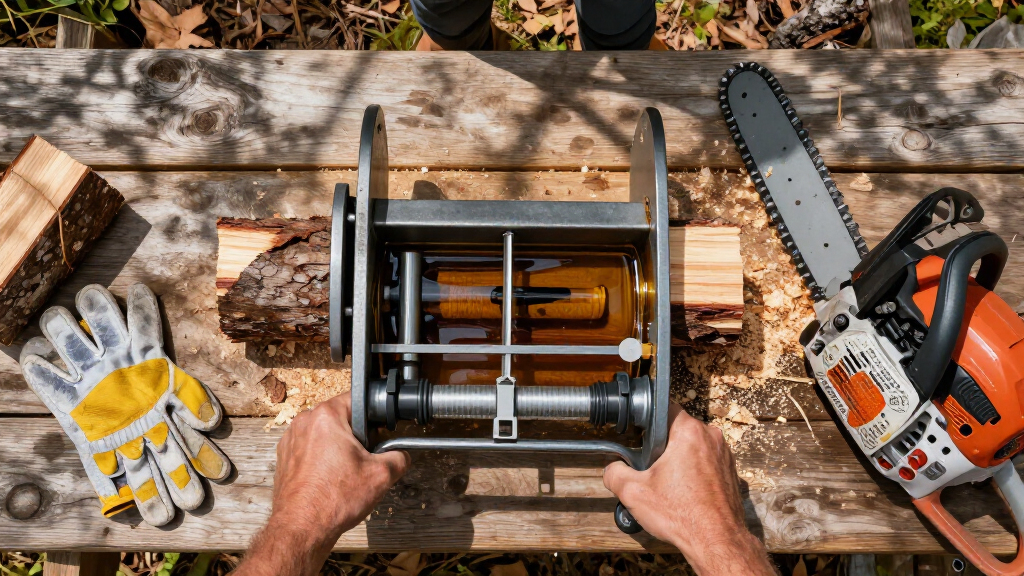
I evaluated these oils against the factors that actually affect splitter performance and pump longevity: viscosity grade accuracy, anti-wear additive quality, packaging value per quart, and suitability for the temperature ranges most people split wood in. Because a hydraulic pump running the wrong weight oil works harder, runs hotter, and wears faster, I grouped every product by ISO grade first (32, 46, or 68) and then judged within each grade on formulation quality and price.
Ranking also reflected practical buying realities. Bulk pails scored well for total value but were docked for buyers with small reservoirs, while one-gallon jugs scored higher for convenience and lower waste. Products that publish clear specs — zinc-based AW additives, viscosity index, and compatibility claims — ranked above generic fluids with vague labeling. Finally, I weighted cold-start behavior, since most homeowners split in autumn and winter, which is why AW 32 options earned dedicated spots rather than being dismissed as too thin.
| log splitter hydraulic oil | Viscosity Grade |
|---|---|
| Universal Hydraulic Fluid | Not specified |
| CAM2 Promax AW 46 Hydraulic Oi | ISO VG 46 (AW) |
| TRIAX Powerflow AW 46 Multi-Vi | — |
| TRIAX Powerflow AW 32 Multi-Vi | — |
| Enerpac HF-101 Hydraulic Oil | Not published |
| TRIAX Powerflow AW 68 Multi-Vi | AW 68 |
| CAM2 Promax AW 46 Hydraulic Oi | — |
| MAG 1 00466 AW ISO 46 Hydrauli | — |
| 2 Gallon Log Split Hydraulic O | — |
| AW ISO 32 Hydraulic Oil 5 Gall | ISO 32 / AW |
| CAM2 Promax Premium AW 32 Hydr | — |
| CAM2 PROMAX AW 32 Hydraulic Oi | — |
| LU02322G Log Splitter Hydrauli | Not published |
| AW ISO 46 Hydraulic Oil 1 Gall | ISO VG 46 |
Factors to Consider When Choosing Log Splitter Hydraulic Oil
The reviews above tell you which oils stood out, but choosing between grades and packaging formats requires understanding how your splitter, your climate, and your usage patterns interact. These are the factors that separate a smart purchase from an expensive mistake.
Viscosity Grade: Match the Oil to Your Climate
The single biggest decision is ISO grade, and it’s driven mostly by ambient temperature. AW 32 flows freely in cold weather, which matters if you split wood in late autumn or winter — a thick oil in a cold pump causes sluggish ram response and cavitation damage over time. AW 46 is the all-purpose middle ground that most manufacturers list as their default recommendation, while AW 68 suits hot-weather commercial use where the fluid thins as it heats. A common mistake is assuming thicker is always better; in a hydraulic system, oil that’s too thick starves the pump on startup. If your seasons swing widely, a multi-viscosity HLP fluid like TRIAX’s lineup lets you hedge without draining and refilling twice a year.
Reservoir Size and Packaging Economics
Log splitter reservoirs range from about 3 gallons on compact homeowner units to 10+ gallons on commercial models, and that number should dictate your packaging choice. A 5-gallon pail only saves money if you’ll actually use it — hydraulic oil doesn’t spoil quickly, but it does pick up moisture and contamination once opened and stored for years in a shed. If your machine holds 3.5 gallons or less, one-gallon jugs mean a fresh seal every time and far less waste. Buyers with large or multiple splitters should absolutely buy bulk, because the per-quart difference compounds quickly across seasons. Check your manual for capacity before ordering anything, since overbuying is one of the most common and avoidable mistakes here.
Anti-Wear Additives and Pump Protection
Every oil in this roundup carries an AW designation, but additive chemistry still varies in quality and concentration. Zinc-based (ZDDP) anti-wear packages form a sacrificial film on pump components, which is what protects the vane or gear pump during cold starts and high-pressure cycling — the exact conditions log splitters create every time a ram meets a knotty crotch. Skimping on additive quality shows up not as immediate failure but as slower ram speed and pump whine after a few hundred hours. If you own a splitter with a two-stage pump, which runs at higher pressures than basic gear pumps, additive quality matters more than brand loyalty. The practical takeaway: any named AW fluid from a reputable blender is adequate, but don’t substitute non-AW tractor fluid or motor oil to save a few dollars.
OEM Specifications and Warranty Concerns
Before buying anything, check your splitter’s manual for a stated ISO grade and any spec designations. Most manufacturers keep it simple — typically ISO 32 or 46 with anti-wear additives — but some specify particular fluid families for warranty purposes. Using a generic-purpose-labeled splitter fluid is fine when the seller publishes the actual specs, but vague products that just say ‘hydraulic fluid’ on the jug make it impossible to verify compliance. Mixing brands of the same grade is generally acceptable when topping off, though consistent use of one product avoids unpredictable additive interactions. If your machine is still under warranty, keep your purchase receipts and stick to fluids with documented ISO ratings so a warranty claim can’t be disputed on lubricant grounds.
Cold-Weather Splitting and Startup Behavior
If you split firewood through winter, cold-start behavior deserves more attention than any other factor. Fluid that’s too thick at 20°F makes the pump labor, bleeds air poorly, and delivers a frustratingly slow ram until the system warms up. AW 32 is the standard answer here, and some users in genuinely cold climates even step down further with specialty winter fluids. Another approach is warming the machine gradually — running the engine at low throttle for several minutes before engaging the valve — which protects the pump regardless of grade. Multi-viscosity HLP fluids offer a middle path by maintaining flow at low temps without thinning excessively when hot. Don’t underestimate this: cold-related pump damage is one of the most common failure modes cited by small-engine repair shops.
When to Pay More for Premium Fluids
Premium oils cost 30–80% more per gallon, and the honest answer is that most homeowner splitters don’t need them. Where the premium tier earns its price is in high-hour commercial use, extended drain intervals, and superior filtration characteristics — finer filterability keeps valves and orifices clean in machines that run daily. If you split a few cords a year, a standard-quality AW 46 changed on schedule will outlast the engine itself. Premium formulations also tend to have better oxidation stability, which matters for oil that sits in an outdoor machine through temperature swings. My suggestion: pay up for premium only if your splitter is a revenue tool or has a known sensitive pump, and spend the savings elsewhere — like a good filter or a spare gallon for top-offs.
Frequently Asked Questions
Can I use AW 46 instead of AW 32 in my log splitter?
In most cases yes, but it depends on when you split. AW 46 is the default recommendation from most splitter manufacturers and performs well in moderate temperatures. If you split in cold weather — below roughly 40°F — AW 46 will flow noticeably slower at startup, giving you a sluggish ram and extra strain on the pump until the fluid warms. AW 32 is the safer choice for late-fall and winter use, while AW 46 is better for summer and heated-shop operation. If your manual specifies one grade, following it keeps any warranty claims airtight.
How much hydraulic oil does a typical log splitter hold?
Most homeowner-grade splitters with 20–27 ton ratings hold between 3.5 and 5 gallons, while compact electric units may hold as little as 2–3 gallons. Commercial models with bigger cylinders can require 7–11 gallons. This is why packaging size matters so much when buying: a 5-gallon pail might be a single fill for one machine and three seasons’ worth of oil for another. Check the reservoir sight glass or dipstick, or consult your manual, before ordering. Also remember that filling capacity is different from operating capacity — you typically fill to the cold line, not the top of the tank.
Can I mix different brands of hydraulic oil in my splitter?
Yes, as long as the grades and types match — topping off an AW 46 with a different brand of AW 46 is generally safe because both meet the same ISO viscosity and anti-wear baselines. Mixing grades, like adding AW 46 to an AW 32 system, is tolerable in a pinch but blurs the viscosity you’ll actually have in the reservoir. What you should avoid is mixing hydraulic oil with motor oil, transmission fluid, or tractor fluid unless your manual explicitly permits it, because additive chemistries can conflict. If you don’t know what’s currently in the machine, a full drain and refill with a known fluid removes the guesswork.
How often should I change log splitter hydraulic oil?
For homeowner use, most manufacturers suggest changing hydraulic fluid every 100–150 hours or about once per heavy season, whichever comes first. Commercial users running daily should follow hour counts more strictly and inspect the fluid monthly for darkening, milkiness (water contamination), or a burnt smell. Unlike engine oil, hydraulic fluid in a sealed system degrades slowly, so time-based changes matter less than condition-based checks. If the ram slows down or the pump gets noisy despite adequate fluid level, contaminated or worn-out oil is a likely culprit. Always replace or clean the suction filter when you change the fluid.
Is purpose-labeled ‘log splitter fluid’ better than regular hydraulic oil?
Usually it’s the same thing with different marketing. Most splitter-labeled fluids are simply AW 32 or AW 46 hydraulic oil in a jug that names your machine, which is genuinely helpful for beginners who don’t want to decipher ISO grades. The catch is that some of these products don’t publish full specifications, so you can’t verify the viscosity grade or additive package against your manual. A name-brand AW 46 hydraulic oil with clearly printed specs will perform identically or better and often costs less per gallon. My advice: buy the splitter-labeled fluid if the specs are printed on it, and buy standard AW oil if they aren’t.
Conclusion
After comparing all 14 options, the right choice maps cleanly to how you use your splitter. For best overall, the CAM2 Promax AW 46 in a 5-gallon pail balances proven anti-wear protection, the most commonly recommended viscosity grade, and strong per-quart value for anyone with a mid-size or larger reservoir. The best value pick is MAG 1 AW ISO 46 in single gallons — ideal for small reservoirs and occasional users who want solid protection without leftover oil sitting in the shed.
For the premium buyer, the TRIAX Powerflow HLP line stands apart with its multi-viscosity formulation and three available grades, making it the strongest option for commercial users and anyone matching oil precisely to climate. Beginners who just want a correct, no-guesswork fill should reach for the 2-gallon splitter-labeled hydraulic fluid jugs, which supply roughly one reservoir fill with zero spec research required. Finally, for cold-weather specialists, the CAM2 Promax AW 32 and AW ISO 32 five-gallon pail keep winter rams fast and pumps happy. Whatever your situation, pick the grade first, the packaging size second, and you won’t go wrong with any of the oils ranked here.
Fall yard work Picks
leaf blowers
As an affiliate, we earn on qualifying purchases.