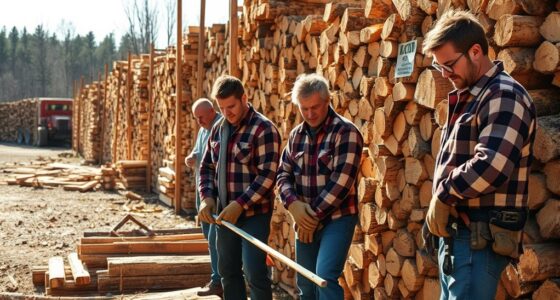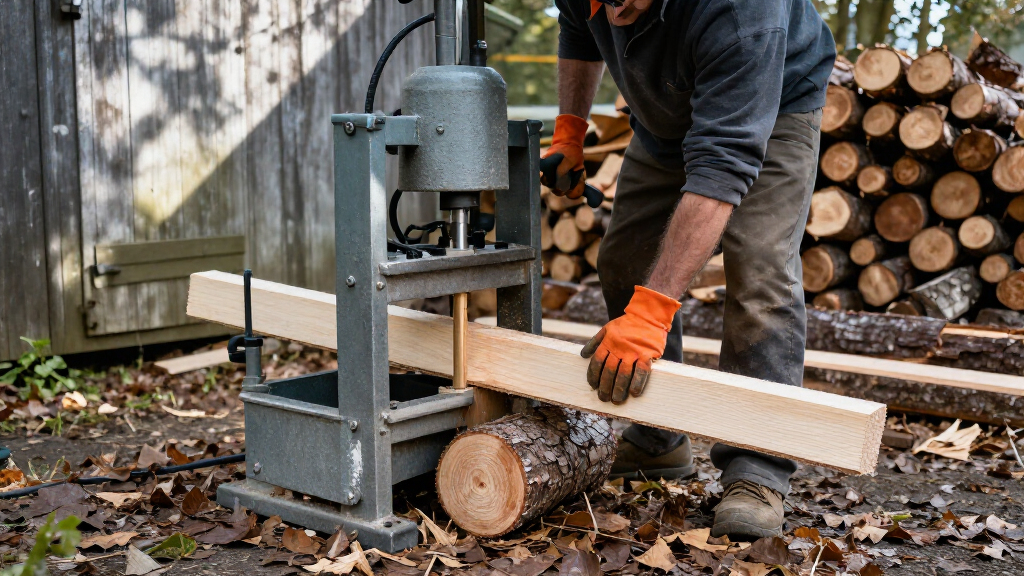

Hydraulic log splitters range from quiet electric models for occasional home firewood to high-tonnage gas machines built for large, demanding rounds. My best overall pick is the DEWALT 28-Ton Hydraulic Log Splitter, which pairs substantial splitting force with a branded gas engine. The Landworks 20-Ton Gas Splitter stands out for buyers who want a portable gas model, while the BILT HARD 14-Ton Electric Splitter offers more force than the smaller electric options without requiring gas. The main tradeoffs are power versus noise and upkeep, plus portability versus the stability and capacity of larger machines. Read on for the full comparison and guidance on matching a splitter to your wood, workload, and workspace.

Get business pricing on tools and workshop supplies
- Business-only prices and quantity discounts
- Tax-exempt purchasing
- Multiple users, one account, clear invoices
Complete the kit



Key Takeaways
- The DEWALT 28-ton model is the most balanced high-capacity pick in this lineup: it offers more force than the 20-ton gas options without moving into the heaviest 30- to 35-ton class.
- Electric models trade peak force for simpler home use. The 6.5-ton BILT HARD splitters suit smaller workloads, while the 14-ton version gives electric buyers a stronger option and a stated 20-inch capacity.
- Manual splitters are the low-complexity choice, not the fast choice. The three 12-ton models avoid gas engines, but their hand-operated pumping makes them better suited to modest batches than sustained processing.
- Log-handling features separate the largest machines. The BILT HARD 35-ton and Full Boar 35-ton add log lifts and multi-way wedges, features that can matter more during repeated handling than a small increase in splitting force.
- Portable gas options are not interchangeable. Landworks lists rapid auto return, while the other 20-ton gas models emphasize different configurations; compare transport needs, operating setup, and return features rather than tonnage alone.
| BILT HARD 6.5-Ton Electric Log Splitter |  | Best for Quiet, Light-Duty Splitting | Splitting force: 6.5 tons | Motor: 15 amps | Maximum log diameter: 9.8 inches | VIEW LATEST PRICE | See Our Full Breakdown |
| DEWALT 28-Ton Hydraulic Log Splitter, 196cc 6.5 HP Kohler Engine |  | Best for Large Logs and Towable Work | Splitting force: 28 tons | Maximum log length: 25 inches | Engine: 196cc, 6.5 HP Kohler | VIEW LATEST PRICE | See Our Full Breakdown |
| GarveeTech 12-Ton Manual Hydraulic Log Splitter |  | Best for Off-Grid, Low-Volume Splitting | Splitting force: 12 tons | Maximum log length: 18.7 inches | Maximum log diameter: 8 inches | VIEW LATEST PRICE | See Our Full Breakdown |
| BILT HARD 6.5-Ton Electric Log Splitter with Stand |  | Best for a Raised Electric Work Position | Splitting force: 6.5 tons | Motor: 15 amps | Maximum log diameter: 9.8 inches | VIEW LATEST PRICE | See Our Full Breakdown |
| 20-Ton Gas-Powered Horizontal Log Splitter, 209cc |  | Best for Faster Gas-Powered Batches | Splitting force: 20 tons | Engine: 209cc, 4-stroke | Engine power: 7 HP | VIEW LATEST PRICE | See Our Full Breakdown |
| 12-Ton Manual Hydraulic Log Splitter with Steel Frame and Transport Wheels |  | Best for Fuel-Free Manual Splitting | Splitting force: 12 tons | Operation: Manual hydraulic | Handle length: 37 inches | VIEW LATEST PRICE | See Our Full Breakdown |
| BILT HARD 35-Ton Gas Log Splitter with Log Lift and 4-Way and 6-Way Wedges |  | Best for High-Volume, Heavy-Log Work | Splitting force: 35 tons | Engine: 306cc, 10 HP | Hydraulic pump: 18 GPM Bucher two-stage | VIEW LATEST PRICE | See Our Full Breakdown |
| Full Boar 33-Ton Gas-Powered Log Splitter with 223cc Engine |  | Best for Vertical-and-Horizontal Positioning | Splitting force: 33 tons | Engine: 223cc Full Boar OHV | Cycle time: 14.3 seconds | VIEW LATEST PRICE | See Our Full Breakdown |
| BILT HARD 14-Ton Electric Log Splitter, 15-Amp, 20-Inch Capacity |  | Best Electric Middle Ground | Splitting force: 14 tons | Motor: 15 amp, 1,800 W | Power supply: 120 V | VIEW LATEST PRICE | See Our Full Breakdown |
| BILT HARD 6.5-Ton Portable Log Splitter |  | Best for Compact Storage | Splitting force: 6.5 tons | Maximum log length: 20.5 inches | Maximum log diameter: 9.8 inches | VIEW LATEST PRICE | See Our Full Breakdown |
| BILT HARD 30-Ton Horizontal/Vertical Gas-Powered Hydraulic Log Splitter |  | Best for Large, Heavy Logs | Splitting force: 30 tons | Engine: 7.5 HP, 223cc single-cylinder OHV | Splitting positions: Horizontal and vertical | VIEW LATEST PRICE | See Our Full Breakdown |
| Full Boar 35-Ton 306cc Gas Log Splitter with 4-Way and 6-Way Wedges and Hydraulic Log Lift |  | Best for High-Volume Processing | Splitting force: 35 tons | Engine displacement: 306cc | Power source: Gas | VIEW LATEST PRICE | See Our Full Breakdown |
| 12-Ton Manual Hydraulic Log Splitter with 18.7-Inch Capacity and Two-Speed Pump |  | Best No-Fuel Option | Maximum splitting force: 12 tons | Maximum log length: 18.7 inches | Maximum log diameter: 8 inches | VIEW LATEST PRICE | See Our Full Breakdown |
| Landworks Portable 20-Ton Gas Log Splitter, 7 HP, with Rapid Auto Return |  | Best for Fast, Portable Gas Splitting | Splitting force: 20 tons | Engine: 7 HP | Maximum log length: 20 inches | VIEW LATEST PRICE | See Our Full Breakdown |
| Ezasin 20-Ton Gas Log Splitter, 209cc 7 HP |  | Best Lightweight 20-Ton Pick | Engine: 209cc, 7 HP | Splitting force: 20 tons | Maximum log length: 20.5 inches | VIEW LATEST PRICE | See Our Full Breakdown |
| hydraulic log splitter | Splitting force | Maximum log length | Weight |
|---|---|---|---|
| BILT HARD 6.5-Ton Electric Log | 6.5 tons | 20.5 inches | 98 pounds |
| DEWALT 28-Ton Hydraulic Log Sp | 28 tons | 25 inches | — |
| GarveeTech 12-Ton Manual Hydra | 12 tons | 18.7 inches | — |
| BILT HARD 6.5-Ton Electric Log | 6.5 tons | 20.5 inches | 114.6 pounds |
| 20-Ton Gas-Powered Horizontal | 20 tons | 20 inches | — |
| 12-Ton Manual Hydraulic Log Sp | 12 tons | — | 95.8 pounds |
| BILT HARD 35-Ton Gas Log Split | 35 tons | — | 1,035 pounds |
| Full Boar 33-Ton Gas-Powered L | 33 tons | 24 inches | 473 pounds |
| BILT HARD 14-Ton Electric Log | 14 tons | — | 133.3 pounds |
| BILT HARD 6.5-Ton Portable Log | 6.5 tons | 20.5 inches | — |
| BILT HARD 30-Ton Horizontal/Ve | 30 tons | 24 inches | 533 pounds |
| Full Boar 35-Ton 306cc Gas Log | 35 tons | — | 1,045 pounds |
| 12-Ton Manual Hydraulic Log Sp | — | 18.7 inches | 97.4 pounds |
| Landworks Portable 20-Ton Gas | 20 tons | 20 inches | 148.7 pounds |
| Ezasin 20-Ton Gas Log Splitter | 20 tons | 20.5 inches | 135 pounds |
More Details on Our Top Picks
BILT HARD 6.5-Ton Electric Log Splitter
I’d choose this electric hydraulic splitter for routine batches of smaller firewood where low noise and no exhaust matter more than speed. Its 6.5-ton force and 18-second cycle suit logs up to 9.8 inches wide and 20.5 inches long, but the wait between cycles makes it a slower choice than the 20-Ton Gas-Powered Horizontal Log Splitter. The 15-amp motor avoids gas-engine upkeep, while two-hand controls add a safety-minded operating requirement. At 98 pounds, it is lighter than the stand-equipped BILT HARD 6.5-Ton Electric Log Splitter, though moving it still takes effort. The short warranty and 15-meter recommended extension-cord limit narrow its appeal for remote or extended work sessions.
Pros:- Electric operation produces no exhaust during use and is quieter than gas-powered designs.
- Two-hand controls support safer operation.
- Wheels and a horizontal beam make it more manageable to move than heavier gas splitters.
- Handles logs up to 20.5 inches long, giving it more length capacity than many compact light-duty options.
Cons:- The 18-second cycle slows repeated splitting compared with the 20-Ton Gas-Powered Horizontal Log Splitter.
- The recommended extension cord length is limited to 15 meters, restricting placement.
- The 90-day warranty is short for equipment intended for recurring seasonal work.
Best for: Homeowners splitting modest batches of smaller firewood near a suitable electrical outlet who want to avoid exhaust and gas-engine maintenance.
Not ideal for: People processing large, knotty rounds or working far from an outlet; its 6.5-ton force, 18-second cycle, and cord-length guidance limit that use.
- Splitting force:6.5 tons
- Motor:15 amps
- Maximum log diameter:9.8 inches
- Maximum log length:20.5 inches
- Cycle time:18 seconds
- Power source:Electric
- Weight:98 pounds
- Warranty:90 days
Our verdict“Choose this BILT HARD for quieter, outlet-accessible firewood splitting, but pick the 20-ton gas model for faster cycles and tougher rounds.”
DEWALT 28-Ton Hydraulic Log Splitter, 196cc 6.5 HP Kohler Engine
Among these five, I’d put the DEWALT first for buyers who need high splitting force, long-log capacity, and horizontal-or-vertical operation. Its 28 tons and 25-inch log limit exceed the 20-Ton Gas-Powered Horizontal Log Splitter’s 20 tons and 20-inch capacity, making this the stronger fit for larger rounds. The automatic return cylinder frees the operator to prepare for the next log during the return stroke, while the integrated cradle and table help manage split pieces. Road-ready tires, a ball coupler, and safety chains make towing part of its design rather than an afterthought. That capability comes with a major burden: at 536 pounds, it needs a suitable tow vehicle and hitch, and is far less convenient to reposition by hand than either BILT HARD electric model.
Pros:- 28 tons of force and a 25-inch log limit suit larger pieces than the 20-ton gas model can handle.
- Horizontal and vertical operation gives buyers flexibility when handling heavy rounds.
- Automatic cylinder return supports a steadier work rhythm.
- Integrated log table, cradle, pneumatic wheels, coupler, and safety chains support handling and towing.
Cons:- At 536 pounds, it is difficult to move or store without planning.
- Towing requires a compatible vehicle and hitch.
- Its gas engine brings fuel and engine upkeep absent from the BILT HARD electric splitters.
Best for: Firewood processors handling large rounds and logs up to 25 inches long who have a suitable towing vehicle and want vertical as well as horizontal operation.
Not ideal for: Occasional users with limited storage, no towing setup, or mostly small logs; its 536-pound weight and gas engine are excessive for that work.
- Splitting force:28 tons
- Maximum log length:25 inches
- Engine:196cc, 6.5 HP Kohler
- Operation:Horizontal or vertical
- Return stroke:Automatic
- Wheels:16-inch pneumatic, DOT-approved
- Coupler:2-inch ball coupler
- Item weight:536 pounds
Our verdict“Pick the DEWALT when large logs, vertical splitting, and towing-ready transport justify its substantial weight and gas-powered setup.”
GarveeTech 12-Ton Manual Hydraulic Log Splitter
I’d consider the GarveeTech when independence from fuel and electricity matters more than output per hour. Its manual hydraulic system delivers 12 tons, more force than either 6.5-ton BILT HARD electric splitter, and its two-speed action is designed to balance quicker ram travel with higher-force splitting. The 37-inch handles give the operator leverage, but they do not remove the physical work: unlike the electric models, each cycle depends on the user pumping the handles. Its 18.7-inch length and 8-inch diameter limits also rule out larger rounds that the 20-Ton Gas-Powered Horizontal Log Splitter can accept. Built-in wheels help move the 97-pound steel unit, though it remains a substantial object to lift or maneuver over rough ground.
Pros:- Operates without gas or electrical power, making it useful away from outlets.
- 12 tons of force exceeds the 6.5-ton output of the BILT HARD electric models.
- Two-speed operation and 37-inch handles provide leverage for manual splitting.
- Built-in wheels support relocation without a separate transport setup.
Cons:- Manual pumping requires repeated physical effort and limits sustained throughput.
- The 18.7-inch length and 8-inch diameter limits exclude larger rounds handled by the 20-ton gas model.
- At 97 pounds, it can be awkward to lift or maneuver despite its wheels.
Best for: Off-grid property owners or occasional users splitting smaller logs in low volumes who prefer a splitter that needs no gas, electrical cord, or powered engine.
Not ideal for: People processing large logs or sustained batches; manual pumping, a 97-pound frame, and the 18.7-inch log limit constrain throughput and handling.
- Splitting force:12 tons
- Maximum log length:18.7 inches
- Maximum log diameter:8 inches
- Handle length:37 inches
- Operation:Manual, two-speed
- Construction:Laser-cut steel
- Return mechanism:Spring-loaded
- Item weight:97 pounds
Our verdict“Choose the GarveeTech for small, occasional batches where power independence matters more than speed or large-log capacity.”
BILT HARD 6.5-Ton Electric Log Splitter with Stand
This stand-equipped BILT HARD is the better pick over the BILT HARD 6.5-Ton Electric Log Splitter for buyers who want a 33-inch working height instead of a lower horizontal setup. That raised position can reduce the need to work close to the ground, while the same 6.5-ton force and 9.8-inch diameter limit keep it firmly in the light-duty category. Its 15-amp motor, two-hand safety control, and automatic ram return support a straightforward electric workflow, but the product data calls for a 40-amp circuit breaker for optimal performance. At 114.6 pounds, it is heavier than the 98-pound BILT HARD without a stand, so the ergonomic gain comes with less convenient handling. I’d skip it for large rounds or frequent heavy-duty batches.
Pros:- Included stand raises the working height to 33 inches.
- Two-hand ZHB controls stop operation when either control is released.
- Automatic ram return prepares the splitter for the next cycle.
- Electric operation avoids exhaust during use and is quieter than gas models.
Cons:- The 6.5-ton force and 9.8-inch diameter limit are less suited to demanding logs than the 20-ton gas splitter.
- Optimal performance calls for a 40-amp circuit breaker, which may require checking or changing the worksite setup.
- At 114.6 pounds, it is heavier than the comparable BILT HARD electric model without a stand.
Best for: Homeowners with a suitable electrical circuit who split smaller firewood regularly and prefer a raised working position over a lower horizontal splitter.
Not ideal for: Buyers who need to split large or dense rounds, lack the specified electrical setup, or prioritize the lightest unit for moving and storage.
- Splitting force:6.5 tons
- Motor:15 amps
- Maximum log diameter:9.8 inches
- Maximum log length:20.5 inches
- Power:120V household outlet
- Working height:33 inches
- Safety system:Two-hand ZHB control
- Weight:114.6 pounds
Our verdict“Choose this stand-equipped BILT HARD if a raised working height matters more than lighter handling or higher splitting force.”
20-Ton Gas-Powered Horizontal Log Splitter, 209cc
I’d select this model for buyers who want a faster gas-powered workflow without stepping up to the DEWALT’s heavier, tow-oriented 28-ton design. Its 20 tons of force, 8-second cycle, and automatic return make it a more productive choice for repeat batches than either 6.5-ton BILT HARD electric splitter. It also accepts logs up to 18 inches in diameter and 20 inches long, though its length limit is shorter than the DEWALT’s 25 inches. The two-stage pump and hardened steel wedge support the splitting setup, while 10-inch pneumatic tires and ergonomic handles help with repositioning. The tradeoffs are gas-engine upkeep and a horizontal-only configuration; there is no vertical mode for handling heavy rounds at ground level.
Pros:- 20 tons of force and an 8-second cycle support faster batches than the 6.5-ton BILT HARD electric models.
- Automatic ram return reduces idle time between logs.
- Handles logs up to 18 inches in diameter.
- Pneumatic tires and ergonomic handles aid repositioning.
Cons:- Gas operation brings fuel and engine upkeep that electric options avoid.
- Horizontal-only operation offers less flexibility than the DEWALT’s vertical-and-horizontal setup.
- The 20-inch log length limit is shorter than the DEWALT’s 25-inch capacity.
Best for: Homeowners processing regular batches of medium-to-large firewood who want an 8-second cycle and do not need vertical splitting or logs longer than 20 inches.
Not ideal for: Buyers seeking quiet, cord-free electric operation, vertical handling, or greater log length capacity; the BILT HARD electrics avoid engine fuel, while the DEWALT accepts longer logs and changes orientation.
- Splitting force:20 tons
- Engine:209cc, 4-stroke
- Engine power:7 HP
- Pump:2-stage gear pump
- Cycle time:8 seconds with automatic return
- Maximum log length:20 inches
- Maximum log diameter:18 inches
- Orientation:Horizontal
Our verdict“Choose this 20-ton splitter for faster batches of logs up to 20 inches long when gas power and horizontal-only operation fit your worksite.”
12-Ton Manual Hydraulic Log Splitter with Steel Frame and Transport Wheels
This manual hydraulic splitter suits buyers who want more force than a small portable unit without an engine or a power cord. Its 12-ton capacity and two-speed control give it more splitting leverage than the BILT HARD 6.5-Ton Portable Log Splitter, while the 37-inch handles provide room to operate the pump. The tradeoff is labor: splitting still depends on repeated manual effort, so it is a poor fit for large batches or users who cannot comfortably work the handles. At 95.8 pounds, it is also not lightweight, although the built-in wheels help move it across uneven ground. I’d choose it for occasional, self-paced firewood preparation where quiet, mechanical operation matters more than speed.
Pros:- 12 tons of hydraulic splitting force without an engine
- Two-speed control and 37-inch handles support manual pumping
- Transport wheels help move it over grass and uneven ground
- Avoids fuel use, exhaust fumes, and powered-engine noise
Cons:- Repeated manual pumping takes physical effort and slows batch work
- Its 95.8-pound weight can make lifting and loading difficult
- Horizontal operation may require more log positioning than a vertical-capable splitter
Best for: Homeowners splitting occasional firewood away from outlets who want hydraulic force without fuel, exhaust, or engine noise
Not ideal for: People processing large woodpiles, handling logs routinely, or unable to exert repeated force on manual handles
- Splitting force:12 tons
- Operation:Manual hydraulic
- Handle length:37 inches
- Speed control:Two-speed
- Frame:Steel
- Orientation:Horizontal
- Transport:Built-in wheels
- Weight:95.8 pounds
Our verdict“Choose this for occasional, quiet splitting without fuel or electricity, but skip it if manual effort will limit your workload.”
BILT HARD 35-Ton Gas Log Splitter with Log Lift and 4-Way and 6-Way Wedges
This is the lineup’s worksite-scale choice: 35 tons of force, a 306cc engine, and an included 700-pound log lift address both splitting power and the strain of positioning heavy rounds. Its interchangeable 4-way and 6-way wedges can produce multiple pieces per pass, a clear productivity advantage over the Full Boar 33-Ton Gas-Powered Log Splitter’s two-way wedge. That added capacity comes with a substantial footprint: at 1,035 pounds, this machine needs a suitable towing vehicle and a planned storage spot. The 15-second cycle time is also slower than the Full Boar’s stated 14.3 seconds, despite the BILT HARD’s higher force. I’d favor it when log handling and multi-piece splitting matter more than easy transport or compact storage.
Pros:- 35-ton force and 306cc, 10 HP engine suit demanding logs
- 700-pound log lift reduces manual lifting of heavy rounds
- Interchangeable 4-way and 6-way wedges support faster multi-piece output
- Towable setup includes a 2-inch ball coupler, safety chains, and DOT-approved tires
Cons:- At 1,035 pounds, it is difficult to maneuver and requires substantial storage space
- The 15-second cycle is slower than the Full Boar 33-Ton’s 14.3-second cycle
- Logs are limited to 24 inches long and 20 inches in diameter
Best for: Firewood operators and property owners who routinely process heavy rounds and can benefit from a log lift and multi-way splitting
Not ideal for: Occasional users without a capable tow vehicle, ample storage, or a need to move a machine weighing over 1,000 pounds
- Splitting force:35 tons
- Engine:306cc, 10 HP
- Hydraulic pump:18 GPM Bucher two-stage
- Cycle time:15 seconds
- Log lift capacity:700 pounds
- Wedges:Interchangeable 4-way and 6-way
- Maximum log size:24 inches long; 20 inches in diameter
- Weight:1,035 pounds
Our verdict“Pick this for frequent heavy-log work where the lift and interchangeable wedges justify the weight and towing demands.”
Full Boar 33-Ton Gas-Powered Log Splitter with 223cc Engine
The Full Boar’s standout advantage is its pivoting cylinder handle, which supports vertical or horizontal operation when positioning larger rounds is a concern. It delivers 33 tons of force with a 14.3-second cycle, so it sits close to the BILT HARD 35-Ton Gas Splitter for power while weighing considerably less at 473 pounds. The compromise is splitting versatility: its two-way wedge does not match the BILT HARD’s interchangeable 4-way and 6-way wedges for producing several pieces in one pass. Its 223cc engine is also smaller than the BILT HARD’s 306cc unit, and it remains a heavy gas machine rather than an easy-to-store option. I’d put it ahead for buyers who value log positioning and a lighter towable frame over maximum output per pass.
Pros:- 33-ton force handles demanding splitting jobs
- Pivoting cylinder handle allows vertical or horizontal operation
- 14.3-second cycle time supports steady work
- Road tires, ball hitch, and safety chains support towing to a worksite
Cons:- The two-way wedge is less versatile than the BILT HARD 35-Ton’s interchangeable wedges
- At 473 pounds, it still requires planning to move and store
- Maximum log length is limited to 24 inches
Best for: Rural property owners splitting large rounds who want vertical and horizontal positioning in a towable gas model
Not ideal for: Buyers seeking a compact, quiet splitter or multi-way wedge output for rapid high-volume processing
- Splitting force:33 tons
- Engine:223cc Full Boar OHV
- Cycle time:14.3 seconds
- Stroke:22.75 inches
- Maximum log length:24 inches
- Construction:Heavy-duty H-beam
- Wedge:Two-way
- Weight:473 pounds
Our verdict“Choose the Full Boar if positioning large rounds matters more than multi-way splitting or low equipment weight.”
BILT HARD 14-Ton Electric Log Splitter, 15-Amp, 20-Inch Capacity
For buyers who want powered hydraulics without maintaining a gas engine, this 14-ton electric splitter occupies a useful middle ground. Its 15-amp, 120-volt motor and two-stage pump handle logs up to 20 inches long and 16 inches in diameter, giving it more capacity than the BILT HARD 6.5-Ton Portable Log Splitter. Compared with the 12-ton EliteEdge manual splitter, it removes the repeated pumping effort, but that convenience depends on access to household power. The 133.3-pound weight also makes it a wheeled machine to roll rather than an easy lift. Two-hand operation and overload protection are useful safeguards, though neither changes the need to position logs carefully. I’d choose it for home batches near an outlet, not remote woodlots or oversized rounds.
Pros:- 14 tons of force exceed the BILT HARD 6.5-Ton Portable model
- Electric operation avoids gasoline, exhaust, and engine maintenance
- Two-hand operation and overload protection add safety features
- Transport wheels and a support leg aid positioning
Cons:- Requires access to a 120-volt power supply
- At 133.3 pounds, it is awkward to lift and relies on wheels for movement
- Capacity is limited to logs 20 inches long and 16 inches in diameter
Best for: Homeowners processing moderate firewood batches near a 120-volt outlet who want powered splitting without gasoline
Not ideal for: People working far from household power or splitting rounds beyond its 20-inch length and 16-inch diameter limits
- Splitting force:14 tons
- Motor:15 amp, 1,800 W
- Power supply:120 V
- Hydraulic pump:Two-stage
- Maximum log size:20 inches long; 16 inches in diameter
- Hydraulic oil reservoir:1.45 gallons
- Safety features:Two-hand operation, overload protection, support leg
- Weight:133.3 pounds
Our verdict“Choose this for powered, moderate-duty splitting near an outlet; pick a gas model for remote work or larger rounds.”
BILT HARD 6.5-Ton Portable Log Splitter
This model earns its place through small-log capacity and storage flexibility, not raw force. Its 6.5-ton rating and 9.8-inch diameter limit make it a better match for smaller rounds than the BILT HARD 14-Ton Electric Log Splitter, which takes larger logs and offers more force. The portable unit can handle logs up to 20.5 inches long, and its integrated handle and rear wheels help reposition it around a home work area. At 103.6 pounds, though, “portable” does not mean easy to carry; moving it still calls for rolling rather than lifting. Upright storage is a practical advantage for garages with limited floor space, but its modest force and diameter capacity rule it out for knotty, oversized wood. I’d choose it for smaller, prepared rounds and occasional household firewood.
Pros:- Upright storage helps reduce its floor-space footprint
- Handles logs up to 20.5 inches long
- Integrated handle and rear wheels aid repositioning
- Full-beam steel frame provides a substantial structural base
Cons:- 6.5-ton force is well below the BILT HARD 14-Ton Electric model
- Maximum log diameter is limited to 9.8 inches
- At 103.6 pounds, it is heavy to lift despite its portable design
Best for: Homeowners with limited storage who split smaller-diameter rounds and want a wheeled unit that can stand upright
Not ideal for: Users handling large-diameter, knotty, or heavy rounds who need more force than 6.5 tons can provide
- Splitting force:6.5 tons
- Maximum log length:20.5 inches
- Maximum log diameter:9.8 inches
- Frame:Full-beam steel
- Rear wheel size:5.7 inches
- Storage:Upright
- Item weight:103.6 pounds
Our verdict“Pick this for smaller rounds and tight storage; choose a higher-force splitter for larger or tougher logs.”
BILT HARD 30-Ton Horizontal/Vertical Gas-Powered Hydraulic Log Splitter
The BILT HARD pairs 30 tons of force with a vertical splitting position, so buyers can work on larger rounds without lifting each one onto the beam. That flexibility gives it an advantage over the Landworks 20-Ton Portable, which is lighter and faster-cycling but has less splitting force. An 11-second cycle is capable for substantial firewood sessions, though it is slower than Landworks’ stated 7.5 seconds. The 24-inch log capacity also exceeds the 20-inch limit on that model. The tradeoff is substantial: at 533 pounds, this splitter takes more planning to store and move, and its gas engine calls for outdoor operation and maintenance. I’d choose it for demanding rounds and towable transport, not for a small yard where easy handling matters most.
Pros:- Horizontal and vertical positions reduce the need to lift heavy rounds onto the beam.
- 30-ton force and a 24-inch log limit suit larger pieces than the Landworks 20-Ton.
- 11-second cycle supports steady processing of substantial logs.
- 16-inch DOT-certified tires and a 2-inch ball coupler support towing.
Cons:- At 533 pounds, it is demanding to maneuver and requires substantial storage space.
- Gas operation requires fuel, engine upkeep, and outdoor use.
- The 11-second cycle is slower than the Landworks 20-Ton’s stated 7.5 seconds.
Best for: Firewood users handling long, heavy rounds who want vertical operation and a splitter that can be towed between work areas.
Not ideal for: Occasional users with limited storage or anyone seeking a lightweight splitter that is easy to reposition by hand.
- Splitting force:30 tons
- Engine:7.5 HP, 223cc single-cylinder OHV
- Splitting positions:Horizontal and vertical
- Maximum log length:24 inches
- Cycle time:11 seconds
- Hydraulic flow rate:14 GPM
- Hydraulic oil capacity:6 gallons
- Weight:533 pounds
Our verdict“Choose the BILT HARD if vertical splitting and capacity for logs up to 24 inches matter more than compact storage and quick repositioning.”
Full Boar 35-Ton 306cc Gas Log Splitter with 4-Way and 6-Way Wedges and Hydraulic Log Lift
The Full Boar is the lineup’s most work-focused choice: it combines 35 tons of force with interchangeable 2-way, 4-way, and 6-way wedges, letting one stroke produce multiple sections when the wood suits that setup. Its 700-pound hydraulic log lift also reduces the burden of loading heavy rounds, a feature the BILT HARD 30-Ton lacks. The 32-inch tray helps keep split pieces supported during a session, while the reinforced box beam is designed for demanding work. This capacity comes with a serious footprint: the machine weighs 1,045 pounds, so it is a poor match for buyers who need to move or store a splitter casually. It also requires more setup and space than the manual Takywep. I’d shortlist it for sustained, high-volume work, but skip it for occasional household firewood.
Pros:- 35-ton force provides the highest stated splitting force among these five products.
- Interchangeable 2-way, 4-way, and 6-way wedges can split suitable logs into multiple sections per stroke.
- Hydraulic lift raises logs up to 700 pounds and doubles as a work table.
- 32-inch log tray supports pieces during processing.
Cons:- At 1,045 pounds, it is exceptionally difficult to reposition and needs a substantial storage area.
- Its large size and feature set are excessive for occasional, low-volume firewood work.
- The product title notes a California state restriction.
Best for: High-volume firewood processors who regularly handle heavy rounds and can dedicate equipment space to a large gas splitter.
Not ideal for: Homeowners with limited storage, buyers who need a portable machine, or anyone processing only a small seasonal woodpile.
- Splitting force:35 tons
- Engine displacement:306cc
- Power source:Gas
- Blade options:2-way, 4-way, and 6-way
- Hydraulic log lift capacity:700 pounds
- Log tray length:32 inches
- Dimensions:112.2 x 59 x 47.2 inches
- Weight:1,045 pounds
Our verdict“Pick the Full Boar for frequent, heavy-duty processing where its log lift and multi-way wedges justify the machine’s size and weight.”
12-Ton Manual Hydraulic Log Splitter with 18.7-Inch Capacity and Two-Speed Pump
The Takywep takes a different approach from gas models: its manual hydraulic pump supplies up to 12 tons without gasoline, electricity, or a power cord. That makes it a practical fit for remote work areas and buyers who want to avoid engine maintenance. The two-speed pump and 37-inch handles give the operator a way to build pressure by hand, but each log still demands physical effort. Compared with the Landworks 20-Ton, the Takywep is much lighter and simpler to power, yet it gives up force, log capacity, and powered cycling. Its 18.7-inch length and 8-inch diameter limits also rule out larger rounds. Built-in wheels help move its 97.4-pound frame, although that weight is still noticeable when lifting it into storage. I’d choose it for small, accessible pieces—not a large firewood backlog.
Pros:- Manual hydraulic operation needs no gasoline or electrical connection.
- Two-speed pump provides a manual approach for developing splitting force.
- Built-in wheels help move the splitter around an outdoor work area.
- Spring-loaded ram return helps reset the mechanism between logs.
Cons:- Repeated pumping requires physical effort and limits productivity during long sessions.
- Maximum capacity is limited to 18.7-inch-long, 8-inch-diameter logs.
- At 97.4 pounds, it is not effortless to lift or carry.
Best for: Buyers splitting modest quantities of smaller logs away from electrical service who prefer to avoid fuel and engine upkeep.
Not ideal for: People processing large rounds or high volumes, or anyone who cannot sustain repeated manual pumping.
- Maximum splitting force:12 tons
- Maximum log length:18.7 inches
- Maximum log diameter:8 inches
- Pump:Two-speed manual
- Handle length:37 inches
- Reset mechanism:Spring-loaded return knob
- Weight:97.4 pounds
Our verdict“Choose the Takywep for smaller firewood jobs where fuel-free operation matters more than speed, capacity, or reduced physical effort.”
Landworks Portable 20-Ton Gas Log Splitter, 7 HP, with Rapid Auto Return
The Landworks earns its place by combining 20-ton force with a stated 7.5-second cycle and a 148.7-pound weight. That makes it easier to reposition than the BILT HARD 30-Ton, which offers more force and a 24-inch log limit but weighs 533 pounds. Landworks handles logs up to 20 inches long and 16 inches in diameter, enough capacity for many yard-scale firewood jobs, while its two-stage Bucher pump and automatic return support a brisker rhythm. Its lower force means it is not the pick for the toughest, largest rounds; the Full Boar’s 35 tons is better suited to that work, though far heavier and more specialized. Plan on sourcing AW32 hydraulic fluid separately, and operate the gas engine outdoors with proper ventilation. This is the more mobile powered option, not a stationary heavy-duty rig.
Pros:- 7.5-second stated cycle and automatic return support a quicker work rhythm.
- 20-ton force handles logs up to 20 inches long and 16 inches in diameter.
- At 148.7 pounds, it is much lighter than the BILT HARD 30-Ton and Full Boar.
- Gas engine allows operation without an electrical connection.
Cons:- Hydraulic fluid is not included and must be obtained before operation.
- Gas-powered use requires outdoor operation with proper ventilation.
- Its 20-ton force and 20-inch length capacity fall short of the BILT HARD 30-Ton for larger rounds.
Best for: Homeowners who want a powered splitter for regular yard use and need to move it between work areas without handling a half-ton machine.
Not ideal for: Buyers splitting very large or difficult rounds, or anyone who needs a complete setup without sourcing hydraulic fluid separately.
- Splitting force:20 tons
- Engine:7 HP
- Maximum log length:20 inches
- Maximum log diameter:16 inches
- Cycle time:7.5 seconds
- Hydraulic pump:Two-stage Bucher hydraulic gear pump
- Hydraulic fluid:Not included; AW32 recommended
- Weight:148.7 pounds
Our verdict“Choose the Landworks if you want a relatively mobile gas splitter with a quick stated cycle for routine yard-scale firewood work.”
Ezasin 20-Ton Gas Log Splitter, 209cc 7 HP
The Ezasin delivers the same stated 20-ton force as the Landworks, but puts it in a lighter 135-pound frame and allows logs up to 20.5 inches long. Its 8-second cycle is close to Landworks’ 7.5 seconds, so the difference is less about speed than portability and capacity: Ezasin is 13.7 pounds lighter and lists a slightly longer maximum log length, while Landworks has the quicker stated cycle. Automatic ram return and a dual-stage pump make the Ezasin a straightforward gas-powered choice for repeated yard work. The setup requires attention before the first split: hydraulic oil, engine oil, and gasoline are all required, and the splitter is not ready to run straight from the box. Its 20-ton force remains below the BILT HARD 30-Ton for larger, tougher work. I’d favor it for buyers prioritizing manageable weight over maximum force.
Pros:- 20-ton force and a 20.5-inch log-length limit suit many household firewood jobs.
- At 135 pounds, it is lighter than the Landworks 20-Ton.
- Automatic ram return reduces manual steps between splits.
- Dual-stage pump and pneumatic tires support powered work and movement around a yard.
Cons:- Hydraulic oil, engine oil, and gasoline must be added before operation.
- Its 20-ton force is below the BILT HARD 30-Ton and Full Boar for demanding rounds.
- The 8-second cycle is slightly slower than the Landworks’ stated 7.5-second cycle.
Best for: Homeowners seeking a lighter 20-ton gas splitter for logs up to 20.5 inches and who are comfortable filling its fluids before use.
Not ideal for: Buyers who need higher splitting force for especially large rounds or want equipment that arrives ready to operate without fluid and fuel preparation.
- Engine:209cc, 7 HP
- Splitting force:20 tons
- Maximum log length:20.5 inches
- Maximum log width:16 inches
- Cycle time:8 seconds
- Pump:Dual-stage aluminum gear pump
- Hydraulic oil requirement:1.6 gallons of AW32 or AW46
- Weight:135 pounds
Our verdict“Choose the Ezasin if you want a lighter 20-ton gas splitter with a slightly longer stated log capacity than the Landworks and can handle the initial fluid setup.”

How We Picked
I compared all 15 models around the decisions that shape real firewood work: power source, stated splitting force, capacity, handling, and operating effort. Electric and manual splitters earn consideration for lower-complexity home use, while gas models are ranked higher when their force and features better suit larger or tougher workloads. I also looked at distinctions such as horizontal/vertical operation, stands, transport wheels, auto return, log lifts, and multi-way wedges because those features affect how a splitter fits a workday.
The ranking reflects fit for the broadest set of buyers, not tonnage alone. Models with useful combinations of capability and practical features rank ahead of machines whose appeal is narrower or whose listed details point to a more specific workload. Where products share a class, I separate them by their stated capacity, handling features, and likely operating role; I do not infer durability or performance beyond the supplied specifications.
Factors to Consider When Choosing Hydraulic Log Splitters
Choosing among hydraulic log splitters starts with the wood and the amount you actually process, not the largest tonnage on a product label. These factors help narrow the field before you weigh individual models.
Match Splitting Force to Your Wood, Not Just the Number
Higher stated tonnage can help with larger or more difficult rounds, but it does not tell the whole story of how a splitter will perform on your wood. Consider the species, round diameter, knotting, and whether you commonly split seasoned rounds. A buyer processing small, manageable pieces may gain little from choosing the heaviest class in this lineup. On the other hand, repeatedly forcing a low-tonnage machine through demanding wood can turn routine work into a slow, frustrating task. Treat tonnage as one selection filter, then check capacity and the maker’s guidance for the kinds of logs you plan to split.
Choose a Power Source That Fits Your Worksite
Electric models avoid gasoline and engine maintenance, but they need an appropriate power source and a workable cord setup. Before buying, check the machine’s electrical requirements, the location of your outlet, and the distance to your splitting area; a long or unsuitable extension arrangement can undermine convenience. Gas splitters suit outdoor work away from household power and offer higher-force choices here, but bring fuel, engine upkeep, exhaust, and more operating noise. Manual models sidestep both electrical and engine needs, though the operator supplies repeated effort. The right power source is the one that fits the site and routine you can maintain, not simply the one with the most force.
Check Capacity Against Your Largest Regular Rounds
Capacity describes the log dimensions a splitter is designed to accommodate, so compare it with the largest rounds you regularly handle rather than an occasional outlier. The BILT HARD 14-ton electric model lists a 20-inch capacity, a detail that makes it easier to judge against wood size than tonnage alone. A round that is too long or wide may need to be cut down before splitting, adding time and another tool to the process. Also think about where the log rests and how you will position it; a machine’s listed capacity does not remove the work of moving heavy wood. If your supply varies, a little headroom can be more useful than choosing a machine that only fits your typical smallest pieces.
Account for Handling, Setup, and Storage
A splitter’s practical workload includes moving the machine, feeding rounds, and putting it away. Transport wheels or a portable design can help when the work area changes, but they do not make a heavy machine effortless to maneuver over uneven ground. A stand can make an electric model more convenient to operate at a suitable height, while a log lift can reduce repeated lifting on a high-volume gas machine. Horizontal/vertical operation may help with larger rounds that are awkward to raise, though changing configurations takes space and time. Measure storage and access routes before buying, and plan for the path from woodpile to splitter as carefully as the machine’s rated force.
Decide Whether Faster Processing Features Will Pay Off
Features such as rapid auto return, a two-speed pump, and multi-way wedges matter most when you process many rounds in a session. A return feature can reduce waiting between cycles, while a two-speed pump may alter how quickly the ram approaches or works against resistance. Four-way and six-way wedges can split suitable wood into multiple pieces per cycle, reducing repeated repositioning. Those additions can be less useful for occasional small batches, especially if setup and handling outweigh the saved cycles. Pay for throughput features when your routine involves repeated processing and the wood is suited to them; otherwise, a simpler splitter may be easier to live with.
Plan for Maintenance and Safe Operation
Hydraulic equipment requires more than a quick check of the engine or power switch. Read the manual for hydraulic-fluid specifications, inspection intervals, storage preparation, and any limits on operating conditions before purchase. Gas models add engine care, while electric models remove that engine work but still require checks of hydraulic components and electrical connections. Keep hands clear of the wedge and ram, stabilize logs as directed, and use protective equipment specified by the manufacturer. A machine that matches your maintenance habits is more likely to remain a sensible choice than a more powerful option whose upkeep you will postpone.
Frequently Asked Questions
Is a 6.5-ton electric splitter enough for the firewood I burn at home?
It can suit a modest workload with rounds that fit the machine’s capacity and are not unusually difficult to split. If your wood is large, heavily knotted, or frequently seasoned, the 6.5-ton models may feel limiting compared with the 14-ton electric or gas options in this roundup. The 14-ton BILT HARD model also lists a 20-inch capacity, giving buyers a clearer size reference. Check both the machine’s force and its stated log limits against your actual supply. If you process only a small quantity each season, the lower-force electric class may be a more practical fit than buying capacity you rarely use.
Should I choose a 20-ton gas splitter or a 28- to 35-ton model?
Start with the size and difficulty of your regular rounds and how many you process in a session. The 20-ton group can make sense for buyers who want a portable gas machine and do not routinely face the most demanding wood. The DEWALT 28-ton model offers a step up in force, while the 30- to 35-ton machines add higher capacity classes and, on some models, features such as vertical operation or log lifts. More force can help with tough work, but it also means accepting a larger gas-powered machine and its related storage and maintenance needs. Choose the lowest class that suits your regular work rather than treating maximum tonnage as a goal by itself.
Do I need a log lift or a multi-way wedge?
These features are most useful when you process many rounds and want to reduce repeated lifting or repositioning. A log lift can help manage heavy pieces, while a four-way or six-way wedge can create multiple splits from a suitable round in one cycle. Neither feature makes an oversized or poorly positioned log safe to handle, and multi-way wedges may not suit every wood shape. For occasional firewood, the added equipment may provide little benefit compared with a simpler machine. If your workload is large and repetitive, compare these handling aids alongside tonnage because they can affect effort across an entire session.
Can I use an electric hydraulic splitter away from a household outlet?
Electric splitters need a suitable electrical supply, so the worksite and distance from power should be checked before purchase. Read the manufacturer’s electrical requirements and follow its guidance for any extension cord rather than assuming a long cord will work. If your woodpile is far from an outlet or spread across remote areas, a gas model may be more practical despite its engine maintenance and exhaust. A portable electric machine can still be awkward if the power connection limits where you can operate it. Choose based on the location where you will split most often, not just where the machine will be stored.
Is a manual hydraulic splitter a good choice if I want to avoid engine maintenance?
A manual splitter is a reasonable choice when your priority is avoiding a gas engine and your workload is limited. The GarveeTech and other 12-ton models in this roundup offer a lower-complexity alternative to gas, but manual pumping adds operator effort and can slow repeated processing. A two-speed pump on one model may improve how the operating effort is applied, though it does not turn the machine into a powered splitter. Consider the number of rounds you handle, your comfort with repeated pumping, and whether you can work at a steady pace. For large batches, an electric or gas model may be a better match even if it asks more of your setup and maintenance routine.
Conclusion
For the broadest mix of force and gas-powered capability, I recommend the DEWALT 28-Ton Hydraulic Log Splitter as the best overall choice. The BILT HARD 6.5-ton electric models are the value-oriented picks for modest home workloads, while the BILT HARD 14-ton electric is a stronger fit for buyers who want more force without moving to gas. Beginners with small batches should start by comparing electric operation with the straightforward but effort-intensive 12-ton manual options. For premium, high-volume work, look at the BILT HARD or Full Boar 35-ton models, especially if a log lift and multi-way wedge match your routine. Choose the Landworks 20-ton gas splitter for a portable gas-oriented role, or the 30-ton BILT HARD model if horizontal/vertical operation matters; match the machine to your wood, site, and workload rather than buying on tonnage alone.