
To clear brush with a brush axe, select the right tool for your task, guaranteeing it has a sharp blade and a sturdy handle. Wear safety gear and inspect your axe before use. Use controlled swings, targeting thick stems and branches, while keeping your stance stable. Regularly maintain and sharpen your axe to ensure efficiency. If you want to master effective techniques and safety tips, continue exploring how to use your brush axe effectively.

Get business pricing on tools and workshop supplies
- Business-only prices and quantity discounts
- Tax-exempt purchasing
- Multiple users, one account, clear invoices
Key Takeaways
- Match the brush axe size and blade type to the vegetation density and project scope for effective clearing.
- Identify vegetation (grass, shrub, or young tree) to select appropriate cutting techniques and ensure thorough removal.
- Use controlled swings from the hips with proper stance to maximize power, safety, and precision during cutting.
- Regularly inspect, clean, and sharpen the axe blade to maintain cutting efficiency and prevent accidents.
- Clear the workspace of obstacles and wear protective gear to ensure safety while swinging and handling the tool.
As an affiliate, we earn on qualifying purchases.
Understanding the Features of a Brush Axe
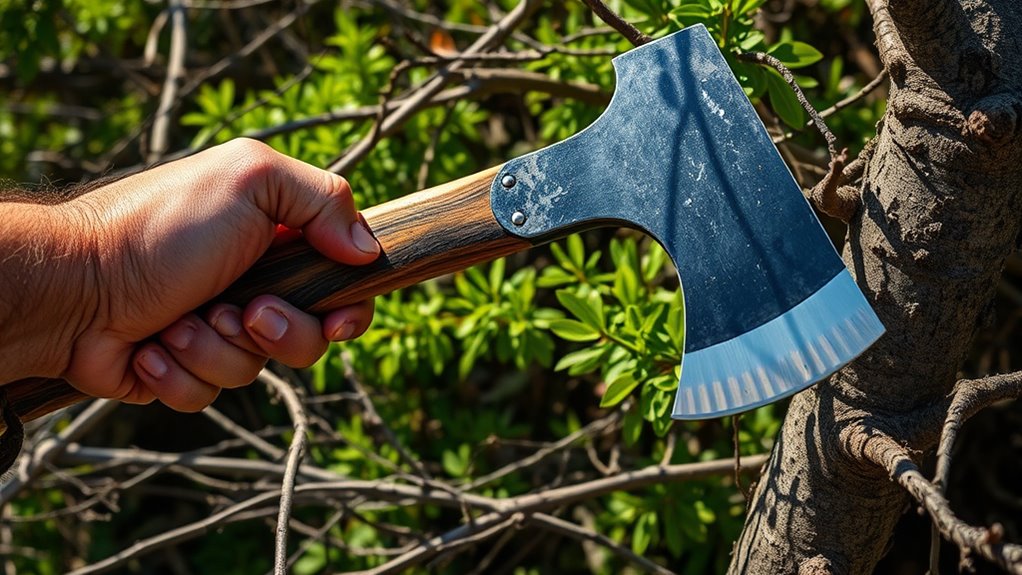
A brush axe is specially designed to handle thick, dense vegetation, and understanding its features can help you use it more effectively. The head typically combines a sharp axe blade with a prying or pick end, allowing you to cut through branches and pry up roots or tangled brush. The blade’s curvature helps you slice efficiently, while the weight distribution provides leverage and power with each swing. The handle is usually made from durable materials like fiberglass or wood, offering strength and shock absorption. Some models include a protective guard to prevent debris from striking your hands. Recognizing these features helps you choose the right tool for tough jobs, ensuring you maximize efficiency and safety while clearing brush. Additionally, tool design can influence how comfortably and safely you can operate the axe during extended use. Proper ergonomic features are crucial for reducing fatigue and increasing control during prolonged tasks.
Choosing the Right Brush Axe for Your Needs
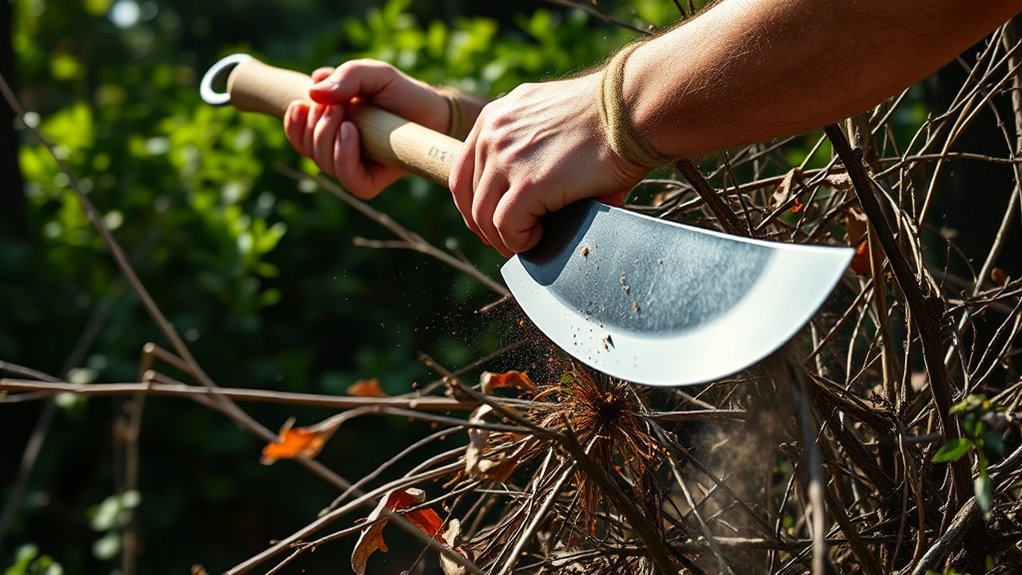
Selecting the right brush axe depends on the scope of your clearing projects and your comfort with different tool features. If you’re tackling small, light brush, a lightweight axe with a narrower blade works best, offering better control. For thicker, tougher brush, choose a heavier-duty axe with a broader blade and a sturdy handle to generate more chopping power. Consider the handle material—fiberglass offers strength and shock absorption, while wood provides a traditional grip. Blade design matters too; a beveled edge cuts more efficiently, especially through dense growth. Think about how often you’ll use the axe and how much weight you’re comfortable handling. Matching the tool’s size and weight to your strength and the job’s demands ensures better control, reduces fatigue, and makes clearing safer and more effective. Additionally, understanding different hatchet and axe types can help you select the most appropriate tool for your specific needs. Being aware of types of blades can also influence your choice, as some blades are better suited for certain types of brush or wood. Proper maintenance and sharpening are essential to keep your axe performing at its best and prolong its lifespan. When selecting a brush axe, also consider the ergonomics of the handle, which can significantly impact comfort during extended use. Knowing about cultural heritage and upbringing can sometimes influence your choice of traditional or modern tools for specific tasks.
Safety Precautions Before Using a Brush Axe
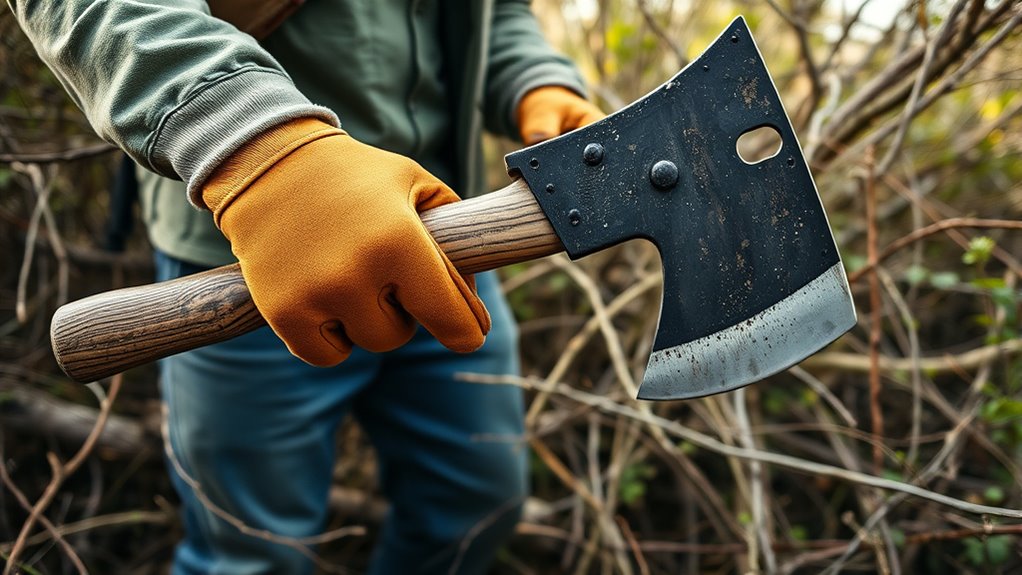
Before you start using a brush axe, it’s essential to prioritize safety to prevent accidents and injuries. First, inspect your axe for damage, such as cracks or loose handles, to ensure it’s in good condition. Second, wear protective gear like gloves, safety glasses, sturdy boots, and long sleeves to shield yourself from flying debris and accidental cuts. Third, clear the area of bystanders, pets, and obstacles to create a safe workspace. Fourth, familiarize yourself with the axe’s weight and balance so you can handle it confidently. Additionally, understanding the proper tool maintenance can extend the lifespan of your equipment and ensure safer operation, especially considering the importance of industry trends in maintaining effective safety standards. Regularly inspecting and maintaining your tools is a crucial part of safe tool handling practices, reducing the likelihood of accidents. Incorporating safety protocols into your routine further enhances overall safety during brush clearing activities. Staying informed about safety regulations can also help ensure you follow best practices and stay compliant with local guidelines.
Proper Techniques for Swinging a Brush Axe
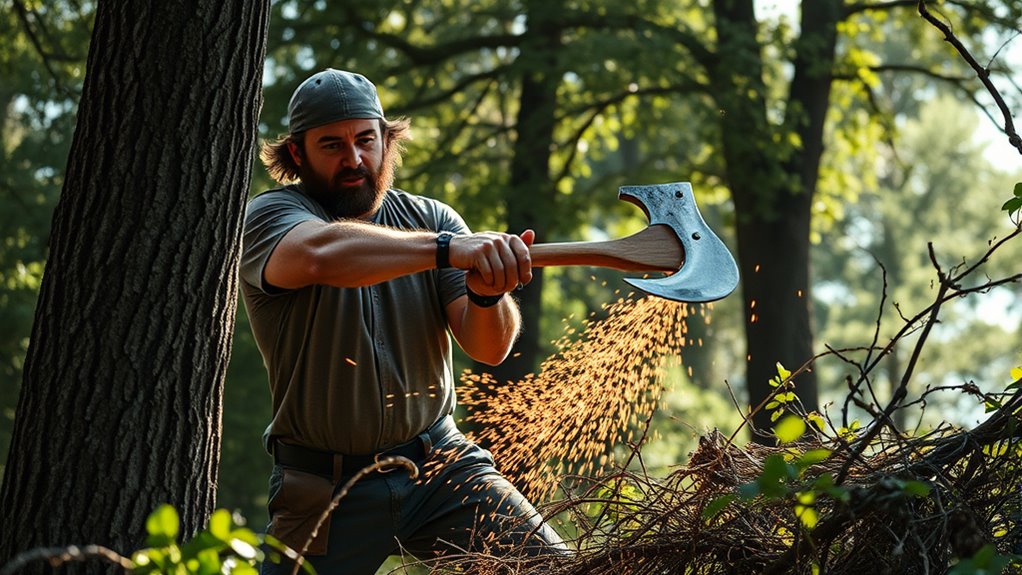
To swing a brush axe effectively, you need to master proper technique to guarantee safety and efficiency. Start by gripping the handle firmly with both hands, keeping your stance steady and balanced. As you lift the axe, engage your core muscles and use a controlled, fluid motion. Focus on swinging from your hips rather than just your arms, generating power through your whole body. Keep your eyes on the target, aiming for clean, precise cuts to avoid missed strikes or accidents. Follow through with your swing, allowing the axe to naturally rebound before preparing for the next. Always maintain control and avoid overexertion. Proper technique minimizes fatigue and reduces the risk of injury, making your clearing work safer and more effective. Additionally, understanding market trends and insights can help you optimize your approach and improve overall efficiency. Being aware of tuning options for equipment or tools can also enhance performance and safety. Incorporating training practices can further develop your skills and confidence with the brush axe. Regular practice using visual and auditory cues can significantly enhance your technique and safety awareness.
Maintaining and Sharpening Your Brush Axe
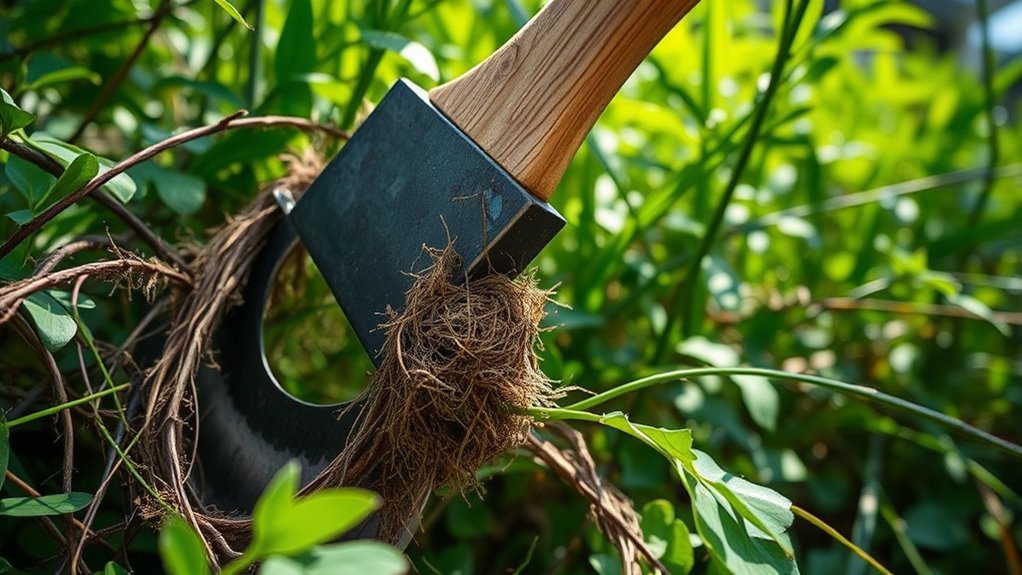
Regular maintenance and sharpening are essential to keep your brush axe performing at its best. A well-maintained axe cuts more efficiently and lasts longer. To keep your tool in top shape, follow these steps:
- Clean the axe head after each use to remove dirt, sap, and debris.
- Inspect the blade for chips or dullness regularly.
- Sharpen the edge with a file or sharpening stone, maintaining the bevel angle.
- Apply a light coat of oil to prevent rust and corrosion.
- Consider using proper wicking materials to ensure consistent moisture and reduce the need for frequent sharpening, especially if the axe is used in damp conditions. Regularly checking for fire safety compliance and maintaining a clean work area can help prevent accidents during maintenance.
Tips for Efficiently Clearing Different Types of Vegetation

To clear vegetation efficiently, you need to identify the different types you’re dealing with. Knowing the right cutting techniques for each guarantees you cut cleanly and save effort. Mastering these skills helps you work faster and reduces fatigue.
Identifying Vegetation Types
Understanding the different types of vegetation you encounter is essential for clearing efficiently with a brush axe. Recognizing plant types helps you choose the right cutting approach and avoid unnecessary effort.
- Grasses and Reeds: These are soft and flexible; a quick chop or pull usually suffices.
- Shrubs and Bushes: Thicker stems require targeted strikes at the base to cut through the wood.
- Young Trees: Small trees need precise, forceful strikes at the trunk or root collar to fell them effectively.
- Vines and Creepers: These can be tangled; cut close to the ground and remove the entire plant to prevent regrowth.
Identifying vegetation types saves time and energy, making your clearing more efficient and safer.
Proper Cutting Techniques
When clearing different types of vegetation with a brush axe, applying the right cutting technique can make a significant difference in your efficiency and safety. For woody stems and thick brush, use controlled, powerful swings, aiming to cut through with each stroke. Keep your grip firm and your stance stable to maintain control. For lighter, softer vegetation like small saplings or grasses, use quick, sweeping motions, letting the axe’s weight do the work. Always aim for a clean, direct cut to avoid splintering or tearing. Be mindful of the angle; a slight tilt can improve cutting efficiency. Regularly inspect your axe’s edge, sharpening it as needed for smooth, effortless cuts. Proper technique minimizes fatigue and reduces the risk of accidents.
Common Mistakes to Avoid When Using a Brush Axe
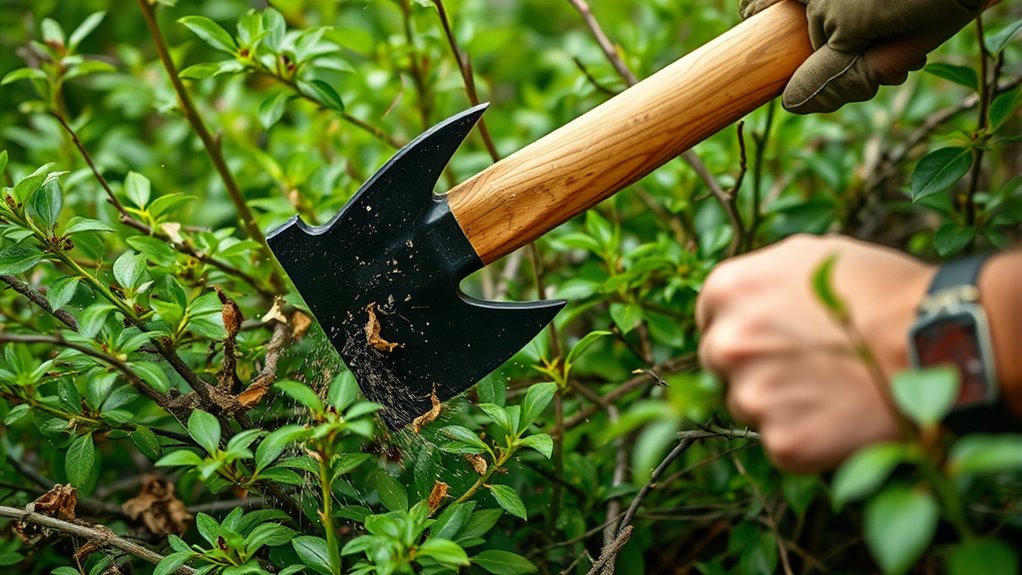
One of the biggest mistakes you can make is neglecting blade maintenance, which can lead to inefficient cuts or accidents. Using incorrect swing techniques increases the risk of injury and reduces your effectiveness. Additionally, working in an unsafe environment, like cluttered or uneven terrain, can cause accidents—so always stay alert and prepared.
Improper Blade Maintenance
Failing to properly maintain your brush axe blade can lead to reduced cutting efficiency and increased safety risks. Dull or rusty blades make it harder to cut through tough brush and increase the chance of accidents. To keep your blade in top shape, avoid these common mistakes:
- Neglecting regular sharpening, which dulls the edge.
- Ignoring rust or corrosion, weakening the blade.
- Failing to clean the blade after use, causing buildup and damage.
- Not inspecting for chips or cracks, risking blade failure during use.
Proper maintenance involves sharpening the blade frequently, cleaning and drying it after each use, removing rust with a wire brush, and checking for damage before each job. Keeping your blade sharp and clean ensures safer, more effective clearing.
Incorrect Swing Technique
Using an improper swing technique with your brush axe can substantially reduce its cutting power and increase the risk of injury. Common mistakes include overextending your arms, swinging too quickly, or failing to follow through. These errors lessen control and force, making cuts less effective and raising safety concerns. To improve, focus on a smooth, controlled motion, keeping your grip firm and your body centered. Proper technique involves a balanced stance, a full shoulder turn, and a controlled follow-through. Avoid rushing your swings, as this compromises accuracy and safety. Here’s a quick guide:
| Mistake | Correct Practice | Consequence |
|---|---|---|
| Overextending arms | Use your whole body for momentum | Reduced power, fatigue |
| Swinging too fast | Maintain controlled, steady swings | Loss of accuracy |
| Not following through | Complete the swing with control | Poor cuts, injury risk |
| Poor stance | Keep feet shoulder-width apart | Loss of balance |
| Ignoring body rotation | Use hips to generate force | Ineffective strikes |
Unsafe Work Environment
Working in an unsafe environment considerably increases the risk of accidents when using a brush axe. To stay safe, pay attention to your surroundings and eliminate hazards. Here are four common mistakes to avoid:
- Ignoring uneven or unstable ground, which can cause slips or falls.
- Working without clear visibility, increasing the chance of accidentally hitting objects or people.
- Overcrowding the workspace, making it difficult to maneuver safely.
- Neglecting nearby obstacles like branches or rocks that could cause you to trip or lose control.
Always inspect your work area beforehand, clear potential hazards, and ensure good lighting. Staying aware and prepared minimizes accidents and keeps your work safe.
Storing Your Brush Axe for Longevity
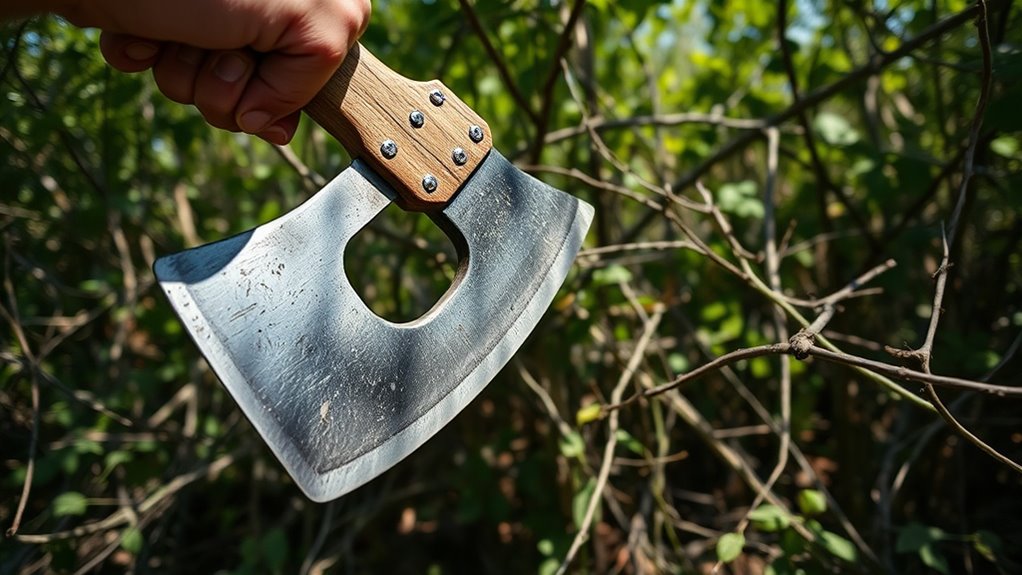
Properly storing your brush axe is essential to keep it in top condition and extend its lifespan. After use, clean off any dirt, sap, or debris with a damp cloth, then dry it thoroughly to prevent rust. Store the axe in a dry, sheltered place away from moisture and extreme temperatures. Keep the blade covered with a sheath or blade guard to protect the edge and prevent accidents. If the handle is wooden, consider applying a light coat of oil to prevent cracking and maintain flexibility. Avoid leaving the axe on the ground or in direct sunlight. Regularly inspect it for signs of rust or damage, and address issues promptly. Proper storage guarantees your brush axe stays sharp, safe, and ready for your next project.
Frequently Asked Questions
Can a Brush Axe Be Used for Cutting Thick Tree Trunks?
You’re wondering if a brush axe can cut thick tree trunks. While a brush axe is great for clearing brush and small branches, it isn’t designed for heavy-duty trunk cutting. For thick trunks, you should use a hatchet or a chainsaw, which have the power and blade strength needed. Using a brush axe on large trunks can be dangerous and ineffective, so choose the right tool for the job.
What Are the Best Weather Conditions for Using a Brush Axe?
Did you know that working in ideal weather boosts safety and efficiency by 50%? When using a brush axe, it’s best to go in dry, mild conditions—preferably between 50-70°F with low humidity. Avoid rain or high winds, as wet wood becomes slippery and dangerous, and strong gusts can cause accidents. Clear, calm weather guarantees safer, easier work, helping you cut through brush more effectively.
Is It Necessary to Wear Protective Gear When Using a Brush Axe?
When using a brush axe, you should always wear protective gear. It’s essential to safeguard your eyes from flying debris, your hands with sturdy gloves, and your feet with boots. A long-sleeved shirt and pants help prevent scratches and cuts. Wearing ear protection is also wise, especially if you’re working in a noisy environment. Prioritizing safety guarantees you avoid injuries and make your task easier and more efficient.
How Long Does a Typical Brush Axe Blade Stay Sharp?
You wonder how long a typical brush axe blade stays sharp. It really depends on how often you use it and the type of wood you’re cutting. Generally, with regular use, the blade stays sharp for about 10 to 20 hours of cutting. To keep it in top shape, you should sharpen it regularly and avoid cutting through very hard or abrasive materials. Proper maintenance extends its sharpness and effectiveness.
Can a Brush Axe Be Used for Landscaping or Gardening Projects?
You can definitely use a brush axe for landscaping or gardening projects. It’s great for clearing overgrown areas, trimming thick branches, or removing stubborn brush. Its design allows you to tackle tough jobs quickly and efficiently, saving you time and effort. Just make sure to handle it safely, wear protective gear, and keep the blade sharp for peak performance. A brush axe is a versatile tool for many outdoor projects.
Conclusion
Using a brush axe can boost your clearing efficiency, saving you time and effort. With over 60% of outdoor enthusiasts preferring manual tools for precision, mastering your brush axe makes a real difference. Remember to follow safety tips, choose the right tool, and maintain it properly. By doing so, you’ll clear brush more effectively and enjoy your outdoor projects safely and confidently. Happy chopping!
Halloween Picks
halloween
As an affiliate, we earn on qualifying purchases.