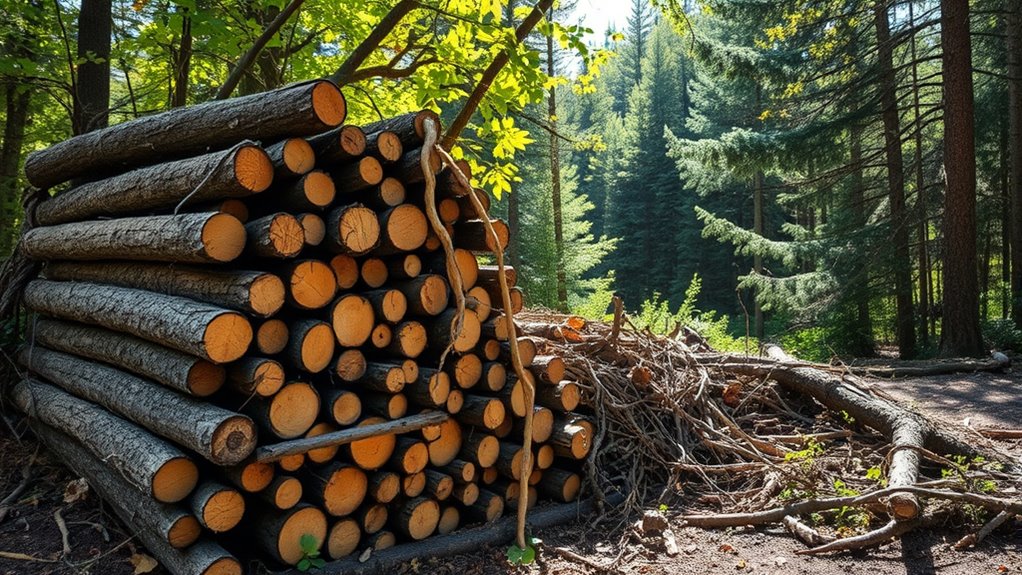

Using invasive trees as firewood might seem practical, but it has significant ecological risks and benefits. Burning invasive species can spread seeds or root fragments, helping the plants invade new areas. Moving firewood across regions can unintentionally introduce invasive trees to native ecosystems, harming biodiversity and habitat quality. However, sourcing local, seed-free firewood from native species reduces these risks. To fully understand how to protect ecosystems while using firewood, keep exploring these important considerations.
Key Takeaways
- Burning invasive trees can help reduce their spread but risks releasing seeds or fragments that may establish new invasions.
- Using invasive firewood may unintentionally introduce invasive species to new areas through transport.
- Sourcing native, properly processed firewood minimizes ecological risks and supports local ecosystems.
- Burning invasive species can negatively impact biodiversity and habitat health, outweighing potential benefits.
- Proper firewood management and awareness are essential to prevent ecological harm from invasive tree spread.

Invasive trees are increasingly being used as firewood, but this practice carries important ecological considerations. When you burn invasive species, you’re often unknowingly affecting the delicate balance of your local environment. These trees, though they might seem like a convenient source of fuel, can have a significant ecological impact if not managed carefully. Native species, which have evolved alongside local wildlife and plants, are essential for maintaining ecosystem health. By removing invasive trees from the landscape, you might think you’re helping the environment, but if these trees are used as firewood without proper precautions, you risk facilitating their spread. This is because dormant seeds or root fragments can be transported to new areas through firewood, leading to further invasion of non-native species.
Using invasive trees as firewood may seem like an eco-friendly way to dispose of unwanted material, but it can inadvertently worsen the ecological impact. When you burn invasive species, there’s a chance that seeds or fragments survive and are transported elsewhere, especially if the firewood is moved across regions. This movement can introduce invasive trees into new ecosystems, where they outcompete native species, reduce biodiversity, and alter habitat structures. The loss of native species diminishes the resilience of local ecosystems, making them more vulnerable to pests, diseases, and environmental changes. Furthermore, invasive trees often grow quickly and dominate resources, choking out native plants that are vital for supporting local wildlife, such as pollinators, birds, and insects.
Burning invasive trees risks spreading seeds and fragments, threatening native ecosystems and reducing biodiversity.
If you’re considering using invasive trees as firewood, it’s essential to understand the broader ecological impact. Properly sourcing and managing firewood can help prevent the unintentional spread of invasive species. This might involve sourcing firewood locally and ensuring it’s free of seeds or root fragments, or opting for native wood instead. You should also be aware that burning invasive trees can sometimes release compounds that are less environmentally friendly compared to native wood. Additionally, some Vetted conversion kits are designed to help you use alternative, sustainable fuels that minimize ecological harm. The ecological impact isn’t just about the trees themselves; it’s about the health of the entire ecosystem, including how invasive species disrupt native habitats and threaten biodiversity.
Ultimately, while invasive trees might seem like an easy resource for firewood, the ecological considerations are too significant to ignore. Protecting native species and maintaining ecological balance should be your priority. Using local, sustainable sources of firewood and avoiding the spread of invasive species safeguards your environment and helps preserve the native biodiversity that keeps ecosystems functioning properly. Being mindful of where your firewood comes from and how you handle it can make a real difference in preventing further ecological harm.

15" Oak Firewood Logs, with Fire Starters Set, Kiln-Dried Wood for Fire Pit, Seasoned Logs for Fireplace, Campfire, Firewood Bundle, Pizza Oven, Split Wood for Solo Stove, 1200 cub. in., 15-20lb
Premium Quality Firewood: Our kiln-dried firewood logs are perfect for any use, whether you need oak firewood, birch…
As an affiliate, we earn on qualifying purchases.
As an affiliate, we earn on qualifying purchases.
Frequently Asked Questions
Are Invasive Trees Safe to Burn Indoors?
You shouldn’t burn invasive trees indoors because they can compromise indoor safety. These trees may emit harmful smoke and toxins when burned, increasing health risks and poor air quality. Even if they seem like a good firewood option, the potential for increased smoke emissions makes them unsafe for indoor use. For your safety, always choose properly sourced, non-invasive wood that meets safety standards for indoor fires.
Can Using Invasive Trees as Firewood Spread Their Seeds?
When you burn invasive trees as firewood, you risk seed dispersal because heat can release seeds, allowing them to spread. As you ignite the wood, tiny seeds hidden within the bark or branches might scatter, hitching rides on wind or animals. This process can accelerate invasive spread, making the problem worse. So, it’s wise to think about how your firewood choices impact the environment and prevent unintentional seed dispersal.
How Does Burning Invasive Wood Affect Local Ecosystems?
Burning invasive wood can harm local ecosystems by releasing seeds and propagules that may still disperse during combustion. This can lead to unintended seed dispersal, increasing the spread of invasive species. The ecological impact includes disrupting native plant communities, reducing biodiversity, and altering habitat structure. To protect ecosystems, it’s best to prevent burning invasive trees or ensure they are properly processed to prevent seed dispersal during combustion.
Are There Any Legal Restrictions on Harvesting Invasive Trees?
Hold your horses, cowboy! You need to check local laws before harvesting invasive trees. Many areas have legal restrictions and harvesting regulations to prevent illegal logging and protect native ecosystems. Ignoring these rules can lead to fines or even criminal charges. Always contact your local forestry department or land management agency. Doing so guarantees you’re harvesting responsibly and legally, helping control invasive species without risking legal trouble.
What Alternatives Exist to Invasive Tree Firewood?
You can consider using native species like oak or hickory for firewood, which support local ecosystems and are sustainable choices. Look for wood from trees that are responsibly harvested, ensuring you don’t damage invasive populations or natural habitats. Sustainable harvesting methods not only protect the environment but also provide reliable firewood sources, making them a better alternative to invasive tree firewood.

Kiln Dried Oak Firewood Bark Free Hardwood Logs for Pizza Ovens Fire Pits Fireplaces Clean Hot Burning Lights Quickly 6in 15lbs
Kiln Dried Oak Hardwood: Natural oak hardwood logs kiln dried to moisture under 12% for efficient clean burning…
As an affiliate, we earn on qualifying purchases.
As an affiliate, we earn on qualifying purchases.
Conclusion
Using invasive trees as firewood might seem like a practical solution, but it’s a double-edged sword. As the flames crackle and dance, you can imagine the spread of seeds carried on the smoke, silently seeding new invasions. While you warm your home, you might unknowingly fuel a cycle that threatens local ecosystems. So, choose your firewood wisely—balance the cozy glow with the health of the land beneath your feet.

Tree Popper Size Large, The Original Highly Trusted, Heavy-Duty Invasive Plant Remover, Fully Uproots Woody Stems ¼ inch – ¾ inches – Ideal for Landowners, Conservation, and Land Management
Permanent Root Removal: Engineered to remove invasive woody plants by the roots, Tree Popper ensures complete extraction for…
As an affiliate, we earn on qualifying purchases.
As an affiliate, we earn on qualifying purchases.

Cutting Edge Firewood – Premium Ultra Kiln-Dried Oak Logs, 16" Luxury Box, 49 lb – Long-Lasting Firewood for Indoor & Outdoor Fires, Complete Starter Kit, Refined Aroma, Clean & Consistent Burn
Premium Ultra Kiln-Dried Oak: Experience unparalleled quality with our meticulously crafted 16-inch oak logs, ensuring a superior burn…
As an affiliate, we earn on qualifying purchases.
As an affiliate, we earn on qualifying purchases.