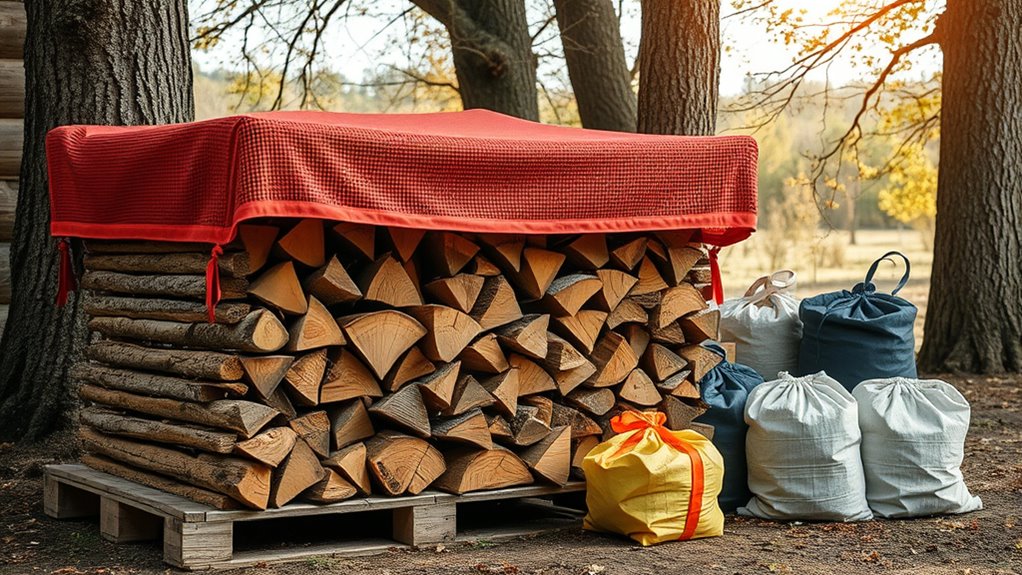

To cut down on plastic in firewood storage, opt for natural, biodegradable covers made from materials like cornstarch, hemp, or cloth, which break down naturally and reduce waste. Elevate your firewood on pallets or racks to keep it dry and use breathable, eco-friendly wraps that promote airflow. Proper stacking and ventilation are key to preventing mold, while embracing sustainable choices helps protect the environment. Keep exploring to discover more eco-friendly storage tips.

Get business pricing on tools and workshop supplies
- Business-only prices and quantity discounts
- Tax-exempt purchasing
- Multiple users, one account, clear invoices
Key Takeaways
- Use biodegradable, natural fiber covers instead of plastic to protect firewood while ensuring eco-friendly decomposition.
- Elevate firewood on pallets or racks to improve airflow and reduce the need for plastic moisture barriers.
- Opt for reusable, eco-friendly packaging like cloth wraps or natural fiber tarps instead of single-use plastic covers.
- Properly ventilate and loosely cover firewood with biodegradable materials to prevent moisture buildup without plastic.
- Incorporate sustainable storage techniques, such as wooden racks, to minimize plastic reliance and promote environmental health.
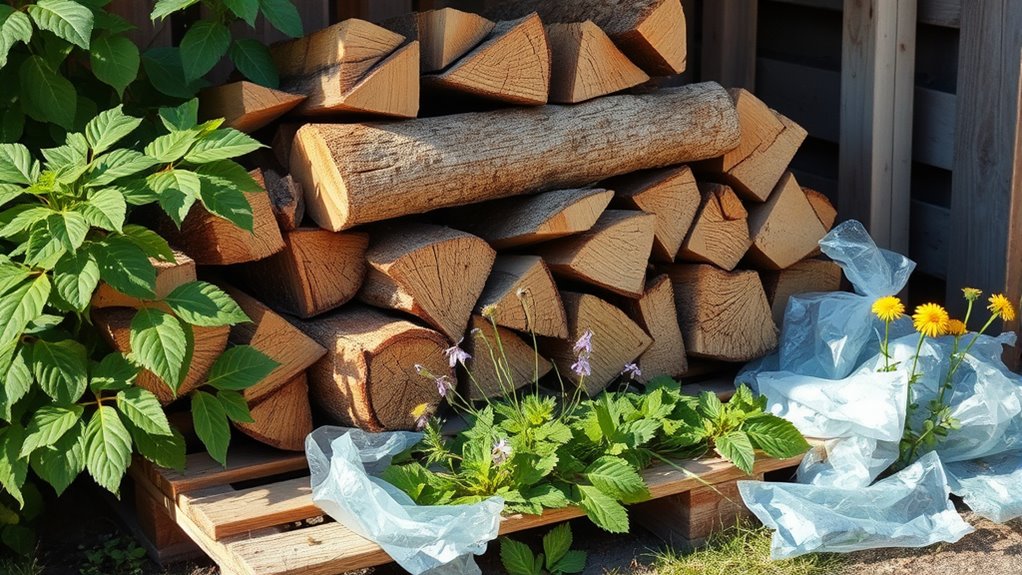
Many firewood storage methods rely on plastic coverings, but these can pose environmental and health risks. Plastic, especially single-use types, often ends up in landfills or the ocean, taking hundreds of years to degrade. When exposed to the elements, plastic covers can break down into microplastics, which threaten wildlife and contaminate soil and water sources. Additionally, burning plastic releases toxins that can harm both the environment and your health. Recognizing these issues, many homeowners are turning to biodegradable covers and alternative packaging solutions to reduce plastic waste in firewood storage.
Biodegradable covers are designed to break down naturally over time, often within months or a few years, depending on environmental conditions. Made from renewable resources like cornstarch, hemp, or other plant-based materials, these covers offer a sustainable alternative to traditional plastic. They protect your firewood from rain, snow, and dirt while guaranteeing that they won’t linger as waste after use. When choosing biodegradable covers, look for products certified by reputable organizations, which assures that they’ll decompose properly and won’t leave harmful residues behind. Using biodegradable covers not only helps reduce plastic waste but also minimizes your carbon footprint, supporting a healthier planet.
Biodegradable covers naturally break down, protecting your firewood and the environment.
In addition to biodegradable covers, exploring other forms of alternative packaging can further cut down on plastic use. For example, you might opt for natural fiber tarps or cloth wraps that can be reused multiple times. These materials are durable, breathable, and less likely to trap moisture, which is vital for keeping firewood dry and preventing mold. Wooden or metal racks also serve as effective storage solutions that eliminate the need for plastic altogether. These options are often more robust and long-lasting, reducing the frequency of replacement and waste. By shifting away from plastic-based packaging and embracing alternative materials, you’re actively contributing to waste reduction and environmental conservation.
Furthermore, combining biodegradable covers with proper stacking and sheltering techniques enhances the effectiveness of your firewood storage while staying eco-friendly. Elevate your firewood off the ground on pallets or racks to prevent moisture absorption from the soil. Cover the firewood loosely with biodegradable or natural fiber covers, making sure good airflow to prevent mold and decay. This approach guarantees your firewood remains dry and ready to burn while aligning with eco-conscious practices. Additionally, learning about the importance of mindful material choices can help you make better decisions for sustainable living. Making these small changes in your firewood storage routine can have a meaningful impact, helping you reduce reliance on plastic, protect ecosystems, and promote sustainable living.
As an affiliate, we earn on qualifying purchases.
Frequently Asked Questions
What Are Eco-Friendly Alternatives to Plastic for Firewood Storage?
You can switch to biodegradable bags or wooden crates for firewood storage. Biodegradable bags break down naturally, reducing environmental impact, while wooden crates provide a sturdy, reusable option that’s both eco-friendly and durable. Both alternatives help you cut down on plastic waste, making your firewood storage more sustainable. By choosing these options, you actively contribute to reducing plastic pollution and supporting eco-friendly practices.
How Does Plastic Impact Firewood Quality and Safety?
Plastic can secretly jeopardize your firewood’s quality and safety. When exposed, plastic pollution can cause firewood contamination, releasing harmful chemicals that might ignite during burning. You might not notice the danger until it’s too late. Keep your firewood safe and clean by avoiding plastic storage, ensuring you’re not unknowingly risking health or safety. Protect your home and environment by choosing eco-friendly storage options instead.
Are There Specific Storage Methods to Reduce Plastic Use?
You can reduce plastic use by opting for biodegradable containers and reusable crates for storing firewood. These options are eco-friendly, helping cut down plastic waste while keeping your firewood organized and dry. Make sure to choose sturdy, breathable containers to prevent moisture buildup. Using reusable crates also allows for easy transport and storage, ultimately supporting sustainable practices and protecting the environment.
Can Plastic-Free Storage Solutions Prevent Pest Infestations?
Plastic-free storage solutions can considerably prevent pest infestations by avoiding plastic’s tendency to trap moisture and create a haven for pests, which can be as destructive as a hurricane. Without plastic pollution, you reduce environmental impact and help protect ecosystems. Using breathable materials like wood or metal allows proper airflow, discouraging pests and mold. So, yes, switching to plastic-free options keeps pests out and promotes a healthier, more sustainable environment.
What Are the Cost Differences Between Plastic and Eco-Friendly Options?
The cost comparison shows eco-friendly storage options often cost more upfront than plastic ones, but they can save you money long-term. Price analysis reveals that biodegradable or wooden containers tend to be pricier initially but last longer and reduce waste disposal costs. Plastic might seem cheaper initially, but eco-friendly choices offer durability and environmental benefits that can outweigh the initial expense over time.
Conclusion
By reducing plastic in your firewood storage, you protect the environment and your health. Less plastic means fewer pollutants and a cleaner, safer space for your family. It’s about choosing sustainability over convenience, quality over quantity. Think of the contrast—disposable plastic versus durable, natural materials. Embrace eco-friendly habits, and you’ll enjoy not only a greener home but also a clearer conscience. Small changes today create a cleaner, healthier tomorrow.
Fall yard work Picks
leaf blowers
As an affiliate, we earn on qualifying purchases.