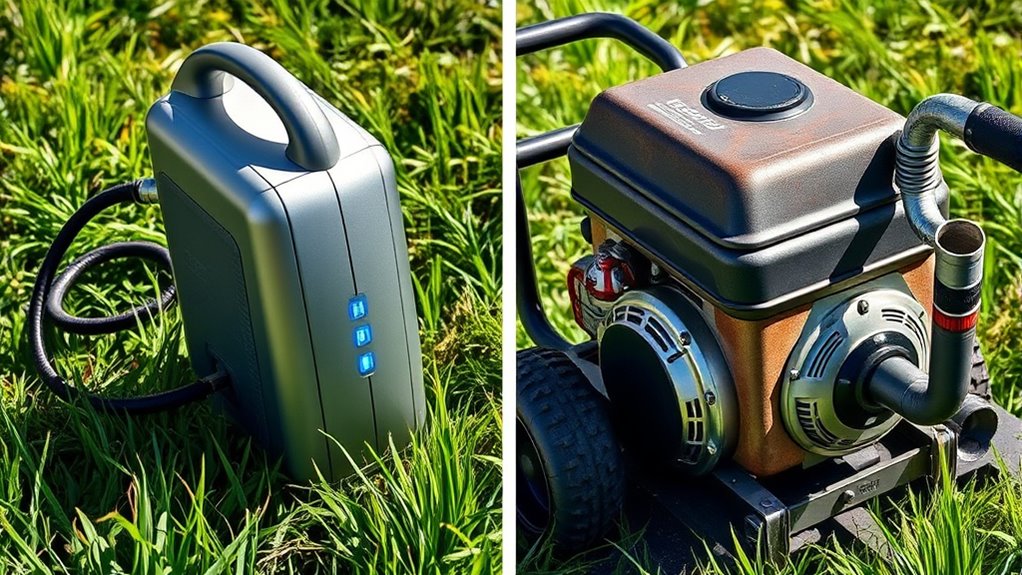

When comparing the energy footprint of electric and gas splitters, electric models typically use electricity that can come from renewable sources, making them more sustainable and eco-friendly. They also produce fewer emissions and have lower operational costs over time, especially for smaller jobs. Gas splitters rely on fossil fuels, leading to higher carbon emissions and a larger environmental impact. To understand how this impacts your project and environment, explore further for detailed insights.

Get business pricing on tools and workshop supplies
- Business-only prices and quantity discounts
- Tax-exempt purchasing
- Multiple users, one account, clear invoices
Key Takeaways
- Electric splitters have a lower carbon footprint due to reliance on electricity, especially from renewable sources.
- Gas splitters consume fossil fuels, resulting in higher greenhouse gas emissions during operation.
- Electric models are more energy-efficient for small to medium tasks, reducing overall energy consumption.
- Gas splitters’ higher power output often requires more energy, increasing their environmental impact.
- The energy footprint depends on electricity source; renewable energy minimizes environmental effects of electric splitters.

Are electric and gas splitters truly different in performance and convenience? When it comes to choosing between these two options, one of the first things you’ll notice is how they operate and how that impacts your work environment. Electric splitters tend to be much quieter than their gas-powered counterparts, making them more suitable for residential areas or jobs where noise reduction is a priority. Gas splitters, on the other hand, usually produce more noise, which can be disruptive and may require you to wear hearing protection or inform neighbors. This difference in noise levels isn’t just about comfort—it also influences where and when you can use each type without causing issues.
Electric splitters are quieter and ideal for residential use, while gas models tend to be louder and more powerful.
In addition to noise levels, maintenance costs play a significant role in your decision. Electric splitters generally have fewer moving parts and don’t require oil changes or engine tune-ups, so their maintenance costs are lower over time. You’ll spend less time and money on repairs and upkeep, which makes them more economical in the long run, especially if you plan to use the splitter frequently. Gas splitters, however, demand more attention. They need regular oil changes, fuel stabilization, spark plug replacements, and thorough cleaning to keep the engine running smoothly. These ongoing maintenance tasks can add up, both in terms of money and time, and if neglected, they might lead to more costly repairs down the line.
Another factor related to energy footprint is how each type consumes power. Electric splitters draw electricity, which can be more sustainable if you’re using renewable energy sources or if your local electricity grid is greener. Gas splitters rely on fossil fuels, which contribute more to your overall carbon footprint. This environmental impact might influence your choice if sustainability is important to you. Plus, electric models tend to be more energy-efficient for smaller jobs, while gas splitters can handle larger, more demanding tasks thanks to their higher power output. Additionally, electric splitters often have less environmental impact due to lower emissions during operation.
Ultimately, your decision hinges on your specific needs and environment. If you prefer a quieter, low-maintenance machine for light to moderate work, an electric splitter makes sense. But if you need raw power for heavy-duty projects and don’t mind the noise and higher upkeep, a gas splitter might be better. Just remember that the environmental footprint of each also varies, so consider how your choice aligns with your values and daily routines. Both options have their advantages, but understanding their differences in noise levels, maintenance costs, and energy consumption will help you pick the right splitter for your needs.
As an affiliate, we earn on qualifying purchases.
Frequently Asked Questions
How Do Maintenance Costs Compare Over the Lifespan of Each Splitter?
You’ll find electric splitters generally have lower maintenance costs over their lifespan because they have fewer moving parts and less wear and tear. Gas splitters might require more frequent repairs and part replacements, increasing long-term expenses. This difference impacts cost efficiency, making electric models more economical over time. So, if you prioritize long-term savings, electric splitters tend to be the better choice, with lower maintenance costs enhancing overall cost efficiency.
Are Electric Splitters Suitable for Heavy-Duty or Commercial Use?
Electric splitters are suitable for heavy-duty applications, especially if you think they lack power. Thanks to electric power advancements, they now handle demanding tasks efficiently. You’ll find many models designed for commercial use, offering durability and high performance. While gas splitters still excel in extreme conditions, electric options provide quieter, cleaner operation, making them a practical choice for heavy-duty or commercial jobs where convenience and reduced emissions matter.
What Are the Safety Considerations for Electric Versus Gas Splitters?
When using electric or gas splitters, you need to consider safety carefully. Electric splitters pose electrical hazards, so always check cords and outlets for damage and avoid water exposure. Gas splitters involve fuel safety risks, like leaks or fumes, so ensure proper ventilation and inspect for leaks regularly. Always follow manufacturer instructions, wear protective gear, and keep a fire extinguisher nearby to prevent accidents with either type.
How Does Noise Pollution Differ Between Electric and Gas Splitters?
Imagine standing in your yard as your splitter hums away—electric models produce a quieter buzz, like a gentle breeze, thanks to lower noise levels and effective sound insulation. Gas splitters, however, roar like a thunderstorm, filling the air with louder noise. You’ll notice the difference during long projects, making electric splitters a more peaceful choice, especially if you value minimizing noise pollution for yourself and your neighbors.
Can Electric Splitters Operate Effectively in Cold or Extreme Weather Conditions?
Electric splitters generally struggle with cold weather performance, as low temperatures can affect their motor efficiency and battery life. In extreme climate operation, they may not deliver the same power or reliability as gas splitters. If you’re working in harsh conditions, a gas splitter often provides better performance and durability, ensuring consistent operation regardless of cold or extreme weather.
Conclusion
Choosing between electric and gas splitters is like picking a trusted friend—you’ll want one that aligns with your values and needs. Electric splitters shine with their cleaner energy footprint, making them a greener choice for the environment. Gas splitters, while powerful, leave a heavier mark on our planet. Your decision can be a beacon of hope, guiding us toward a future where we work with nature, not against it. Make your choice with heart.
Fall yard work Picks
leaf blowers
As an affiliate, we earn on qualifying purchases.