To avoid bringing pests indoors with your firewood, store it in a well-ventilated, dry area away from walls and furniture. Use racks with gaps that promote airflow and regularly inspect each piece for signs of insects or damage. Cover the top of the pile to protect it from rain while allowing moisture to escape. Keeping your storage tidy and dry helps prevent pests and mold. For more tips on pest-proofing your firewood, keep exploring these best practices.
Key Takeaways
- Inspect firewood for pests, holes, or larvae before bringing it indoors.
- Store firewood in a dry, well-ventilated area away from walls and furniture.
- Use open, slatted racks to promote airflow and prevent moisture buildup.
- Cover the top of the wood pile, leaving sides open for ventilation, to protect from rain.
- Regularly check and clean storage areas to remove debris and detect pests early.
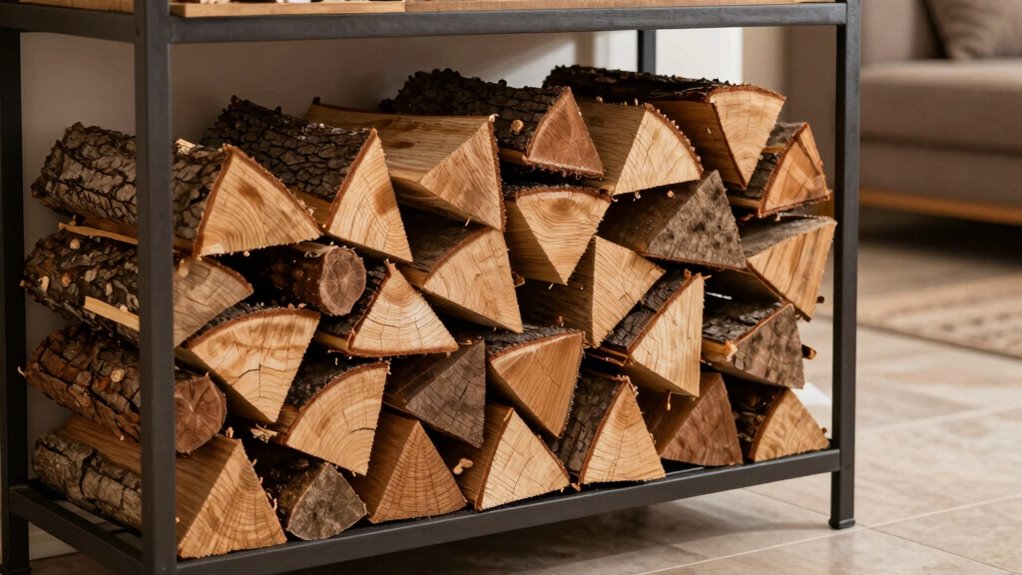
Are you wondering how to keep your firewood dry and ready for use without cluttering your home? Proper indoor firewood storage is essential to prevent pests and maintain a clean, safe environment. When you store firewood inside, pests like termites, ants, and beetles can hitch a ride into your living space, causing damage and discomfort. To avoid this, you need effective pest prevention strategies combined with smart storage tips that keep your wood dry and isolated.
Proper indoor firewood storage prevents pests and keeps your home safe and clean.
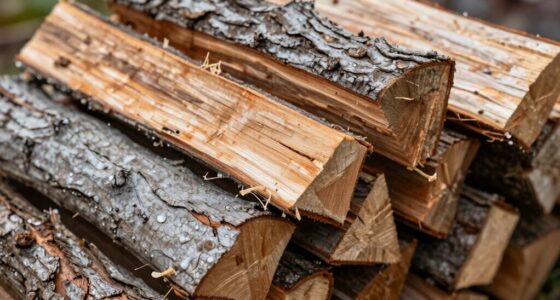
First, focus on where and how you store your firewood. Choose a location that’s well-ventilated and away from direct contact with walls or furniture. Elevate the wood off the ground on a rack or pallet. This prevents moisture buildup at the base, which can attract pests and promote mold growth. Using a covered and open storage rack allows air circulation, helping the wood dry thoroughly and discouraging pests that thrive in damp environments. When selecting your storage container, opt for a metal or plastic rack with slats or gaps. This design promotes airflow and makes it easier to spot any pests or signs of infestation early.
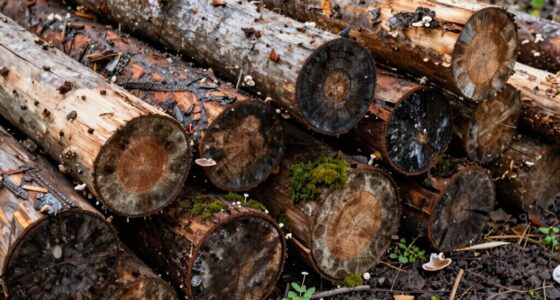
Before bringing the firewood inside, inspect each piece carefully. Look for signs of pests, such as small holes, sawdust, or larvae. If you find any, avoid storing those pieces indoors—they can introduce unwanted guests into your home. Consider storing firewood in a shed or garage temporarily if it’s heavily infested, then treat it or let it dry out completely before bringing it inside.
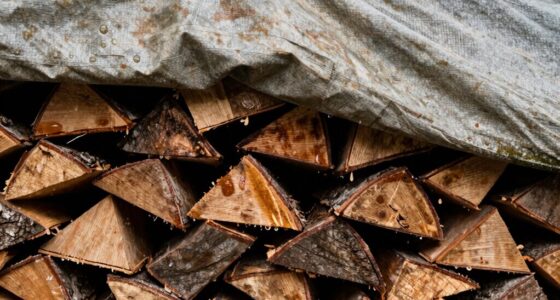
Another essential pest prevention tip is to keep the firewood dry. Moisture attracts pests and encourages mold, both of which can compromise indoor air quality and damage your home. Store your wood in a dry, cool area, and avoid stacking it directly against walls or in enclosed spaces with poor ventilation. You can also cover the top of your firewood pile with a tarp or a weather-resistant cover, but leave the sides open for air circulation. This prevents rain or snow from soaking the wood while still allowing moisture to escape.
Additionally, selecting seasonally appropriate firewood can help reduce pest risks, as certain pests are more active during specific times of the year. Finally, practice good hygiene by regularly checking your firewood storage area for signs of pests or mold. Keeping the area tidy and removing any debris or old wood helps prevent pest infestations. By following these storage tips and prioritizing pest prevention, you’ll ensure your firewood stays dry, pest-free, and ready to use whenever you need it, all while keeping your home clean and safe.

Woodhaven Black 4 Foot – Heavy Duty Made In USA – Indoor Outdoor – 1/4 Cord Firewood Storage Log Rack With Seasoning Cover Combo Set – Metal Log Storage – 48” x 48”
𝗜𝗚𝗡𝗜𝗧𝗘 𝗧𝗛𝗘 𝗡𝗜𝗚𝗛𝗧. Keep your firewood stacked, dry, and ready with this durable steel firewood organizer — a…
As an affiliate, we earn on qualifying purchases.
As an affiliate, we earn on qualifying purchases.
Frequently Asked Questions
How Often Should I Inspect Stored Firewood for Pests?
You should inspect your stored firewood at least once a month to catch pests early. Regular firewood maintenance and pest monitoring help prevent infestations from spreading indoors. Look for signs like holes, sawdust, or insect activity. If you notice pests, take immediate steps to remove affected wood and clean the storage area. Consistent inspections make certain your firewood stays pest-free and safe to burn inside your home.
What’s the Best Way to Prevent Mold on Firewood Indoors?
To prevent mold on your indoor firewood, focus on moisture control and mold prevention. Keep the wood in a dry, well-ventilated area, and avoid stacking it directly on the floor—use pallets or shelves. Cover the top to shield it from humidity and rain, but leave the sides open for air circulation. Regularly check for excess moisture, ensuring your firewood stays dry and mold-free.
Can Certain Types of Firewood Attract More Pests?
Certain types of firewood can act like a magnet for pests, drawing them in with their unique scents and moisture levels. Softwoods like pine and cedar tend to attract more pests compared to hardwoods like oak or maple, which are less inviting. You need to be mindful of pest attraction when choosing your firewood, as some types naturally harbor more insects or pests, increasing the risk of bringing unwanted critters indoors.
How Long Can Firewood Safely Be Stored Indoors?
You can safely store firewood indoors for about 1 to 2 months if you practice seasonal storage and moisture control. Keep the wood in a well-ventilated area, and avoid stacking it directly on the floor to prevent excess moisture. Check regularly for pests or mold, and bring in only what you’ll burn soon. Proper storage helps prevent pests from entering your home and keeps your firewood dry and ready.
Are There Natural Pest Repellents Suitable for Indoor Use?
Think of natural repellents as your home’s silent guardians against pests. Yes, there are effective options for indoor pest control. You can try essential oils like peppermint, eucalyptus, or tea tree—just a few drops in a diffuser or mixed with water. These natural repellents discourage pests without harsh chemicals, keeping your firewood area pest-free and your home healthier. Use them regularly for ongoing protection and peace of mind.
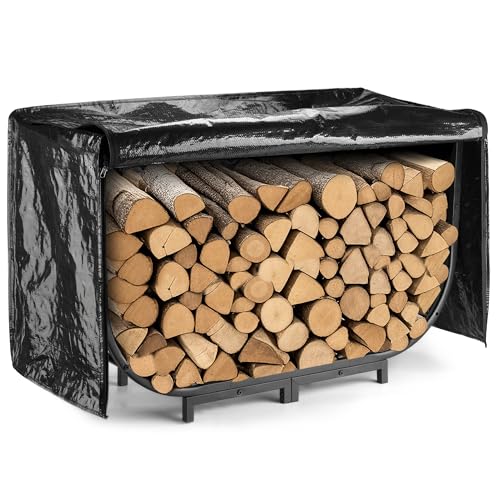
facka 40 Inch Heavy Duty Firewood Rack Outdoor with Cover, Waterproof Log Storage for Fireplace, Indoor & Outdoor Metal Wood Holder, Rustproof
ALL-SEASON Protection: This ultimate firewood rack outdoor with cover provides complete, military-grade defense. The premium cover offers Waterproof,…
As an affiliate, we earn on qualifying purchases.
As an affiliate, we earn on qualifying purchases.
Conclusion
By storing firewood carefully, you prevent pests from sneaking inside and turning your home into a pest paradise. Keep firewood dry, off the ground, and away from your house to avoid inviting trouble. Remember, an ounce of prevention is worth a pound of cure—don’t let pests hitch a ride into your home. Stay vigilant and treat your firewood like precious cargo, and you’ll keep your indoor space safe and pest-free.

LittleVoleSherry Magnetic Firewood Measuring Tool,Magnetic Log Marker Firewood Marker with Measured Marks,Chainsaw Measuring Tool for Firewood, Freely Adjust from 16'' and 29'',High Vis Orange
【QUICKLY CUT WOOD BLOCKS OF UNIFORM LENGTH】This is a quick, adjustable and telescopic firewood measuring tool. For quickly…
As an affiliate, we earn on qualifying purchases.
As an affiliate, we earn on qualifying purchases.

RDINSCOS Wood Moisture Meter for Hardwood and Softwood
Instant & Accurate Readings – Measures up to 12mm deep for precise wood moisture results. Save readings with…
As an affiliate, we earn on qualifying purchases.
As an affiliate, we earn on qualifying purchases.