
To decide between mid-range and heavy-duty gas splitters, consider how often you’ll use it and the size of logs you’ll handle. Mid-range models are great for occasional projects and lighter logs, offering easier handling and lower costs. Heavy-duty splitters are better for frequent, demanding work, dealing with larger or tougher logs, but they come with higher prices and maintenance. If you’re unsure which suits your needs best, there’s more to uncover to help you make the right choice.
Key Takeaways
- Assess your workload frequency and volume to determine if a mid-range or heavy-duty splitter best suits your needs.
- Consider the size and toughness of logs; heavy-duty splitters handle larger, more demanding wood types.
- Evaluate your budget, balancing higher upfront costs of heavy-duty models against long-term durability and performance.
- Review safety features and maintenance requirements to ensure reliable operation during intensive or frequent use.
- Match engine specifications and performance capabilities to the complexity and scale of your wood-splitting tasks.
Are you unsure whether a mid-range or heavy-duty gas splitter best suits your needs? Making this decision depends on understanding how each type balances performance, maintenance frequency, and cost effectiveness. Mid-range splitters are designed for occasional to moderate use, making them perfect if you handle firewood on weekends or for small projects. They usually feature a smaller engine and lighter construction, which means they’re easier to maneuver and store. Because of their simpler design, the maintenance frequency tends to be lower, saving you time and money over the long run. Plus, they’re generally more affordable upfront, making them a cost-effective choice if your workload doesn’t demand maximum power.
Mid-range splitters suit occasional use with easier maneuverability and lower maintenance costs.
On the other hand, heavy-duty gas splitters are built for frequent, demanding use. If you’re a professional or you regularly process large quantities of wood, investing in a heavy-duty model makes sense. These splitters come with larger engines, reinforced frames, and more robust components, which allow them to handle tougher logs and extended operation without breaking down. While they might cost more initially, their durability and higher performance can lead to better cost effectiveness over time, especially if you consider the reduced downtime and fewer repairs needed for such models. Keep in mind, though, that their increased capacity and power often mean higher maintenance frequency, as their complex parts and heavier workload can lead to more wear and tear. Regular maintenance becomes essential to keep them running smoothly and to maximize their lifespan. Additionally, understanding the engine size and its impact on performance can help you make a more informed choice. Recognizing the importance of proper maintenance can significantly influence the longevity and efficiency of your splitter. Conducting a thorough inspection before each use can help identify potential issues early and prevent costly repairs. Furthermore, selecting the right model also involves assessing the safety features included, which are crucial for safe operation during demanding tasks.
A thorough understanding of engine specifications can help you select a model that perfectly matches your needs and ensures optimal performance. Choosing between these options also involves considering your budget and the scale of your wood-splitting tasks. If you only need a splitter for occasional use and want to keep costs low, a mid-range model is likely your best bet. It provides sufficient power, requires less maintenance, and costs less upfront. Conversely, if your projects are large, frequent, or you need a machine that can handle tough logs day after day, a heavy-duty splitter may be worth the investment. Although it demands more maintenance and comes with a higher initial cost, its robustness and efficiency can ultimately save you time and money in the long run.
Ultimately, your decision hinges on balancing your workload with the ongoing costs of operation and maintenance. Understanding these factors ensures you pick the right gas splitter that offers the best combination of performance, durability, and cost effectiveness for your specific needs.
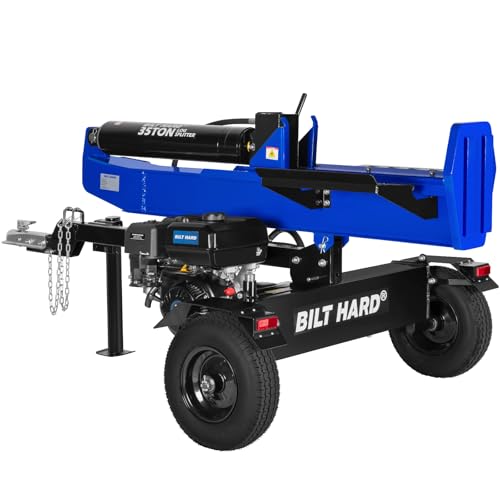
BILT HARD 35-Ton Horizontal/Vertical Gas Powered Hydraulic Full Beam Log Splitter with 301cc OHV Engine, 2" Ball Coupler, 16" DOT Tires, 2 Stage Gear Pump, Firewood Splitting Wood Machine, Auto Return
- Splitting Capacity: 35-ton hydraulic force with 10 HP engine
- Mobility: Equipped with 16-inch DOT tires for easy towing
- Towing Compatibility: Includes 2-inch ball coupler and safety chains
As an affiliate, we earn on qualifying purchases.
As an affiliate, we earn on qualifying purchases.
Frequently Asked Questions
What Safety Features Should I Look for in Gas Splitters?
You should look for safety features like clear safety protocols and an emergency shutoff in gas splitters. These elements help prevent accidents and guarantee quick response if issues arise. An emergency shutoff allows you to instantly stop gas flow during emergencies, while safety protocols guide proper operation. Prioritize models with reliable safety features to protect yourself and your equipment, making your work safer and more efficient.
How Does Maintenance Differ Between Mid-Range and Heavy-Duty Splitters?
You’ll find maintenance differs mainly in frequency and complexity. Heavy-duty splitters demand more regular upkeep to guarantee gas efficiency and prevent breakdowns, often involving detailed inspections and part replacements. Mid-range splitters typically require less maintenance, saving you money over time. When doing a cost comparison, consider how often each needs service—heavy-duty units might cost more initially but can last longer with proper care.
Are There Specific Brands Known for Durability?
You’ll notice brands like Honda, Briggs & Stratton, and Kohler stand out for durability, their reputations echoing through countless work sites. Think of these brands as sturdy bridges, built to withstand heavy use and harsh conditions. Their durability factors—robust construction, quality materials, and reliable performance—make them trustworthy choices. When you choose these brands, you’re investing in equipment that promises longevity and resilience, even under demanding tasks.
Can These Splitters Handle Different Types of Gases?
Yes, these splitters can handle different types of gases, but you need to check their gas compatibility first. Heavy-duty splitters generally offer greater versatility, allowing you to work with a broader range of gases safely. Always verify the specifications to confirm your chosen splitter matches your gas type, as this guarantees peak performance and safety. Properly matching your splitter to your gas needs makes your setup more reliable and efficient.
What Is the Typical Lifespan of Each Type?
Think of your splitter as a trusted companion, with a lifespan that mirrors its resilience. Generally, mid-range splitters offer 5-7 years, balancing gas efficiency and portability, while heavy-duty models can last 10+ years if maintained well. Portability features enhance their adaptability, but durability depends on usage and care. Choosing the right one means investing in a partner that will serve you reliably over many seasons.
Conclusion
Ultimately, choosing between a mid-range and heavy-duty gas splitter depends on your specific needs. Don’t worry about overestimating your requirements—opting for a heavier model won’t hurt and can provide extra durability for future projects. Plus, it’s better to have a splitter that’s slightly more powerful than you need than one that struggles with tougher jobs. So, assess your workload now and plan for potential growth—your future self will thank you!