
To change hydraulic oil and filter, start by turning off and cooling the equipment. Drain the old oil into a container, then replace the filter carefully to prevent debris entry. Clean the filter housing and install the new filter securely. Refill the system with high-quality oil, ensuring the level is correct. Start the machine, check for leaks, and run it to circulate the new oil. If you keep going, you’ll find out all the detailed steps to do it right.
Key Takeaways
- Turn off and cool the equipment, then position a container beneath the drain plug before removing it to drain old oil.
- Inspect hydraulic fluid regularly for contamination, discoloration, or foul odors, and replace if degraded.
- Carefully remove the old filter, clean the housing, then install a new filter securely to prevent leaks.
- Refill the reservoir with high-quality hydraulic oil matching manufacturer specifications and run the system to circulate.
- Check for leaks, monitor oil levels and condition, and perform final system tests to ensure proper operation.
Regularly changing your hydraulic oil and filters is crucial to keep your equipment running smoothly and prevent costly repairs. Proper hydraulic maintenance ensures your system operates efficiently and reduces the risk of breakdowns caused by oil contamination. When hydraulic oil becomes contaminated, it can lead to increased wear on components, reduced hydraulic power, and ultimately, system failure. That’s why timely oil and filter changes are critical in maintaining peak performance.
Regular oil and filter changes are essential for optimal equipment performance and longevity.
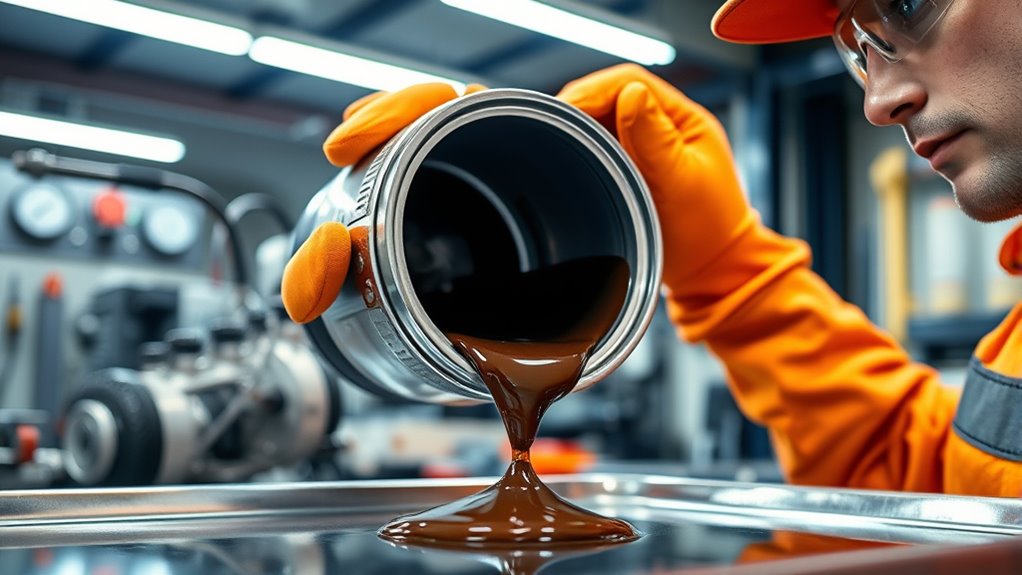
You should start by inspecting your hydraulic fluid regularly. Look for signs of contamination such as sludge, discoloration, or a foul odor. If the oil appears dirty or degraded, it’s time for a change. Before draining the old oil, ensure your equipment is turned off and cooled down to prevent accidents and avoid hot oil burns. Position a container beneath the drain plug, then carefully remove it to allow the contaminated oil to flow out. Be mindful of any residual pressure in the system, and follow manufacturer instructions to safely depressurize if necessary.
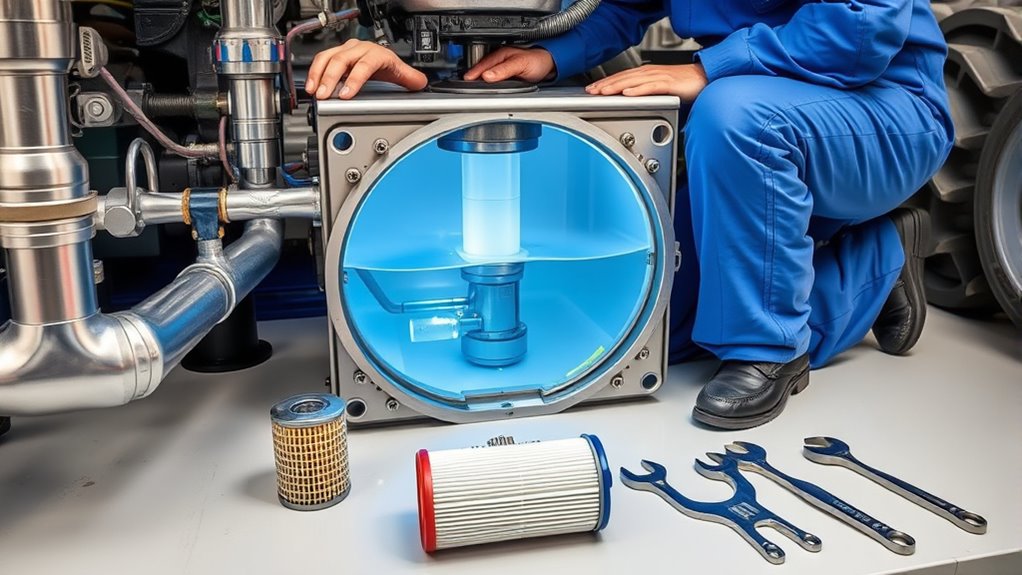
When replacing the filter, it’s important to select the right type and size recommended by your equipment manufacturer. Remove the old filter carefully, taking care not to spill oil or debris into the system. Clean the filter housing thoroughly before installing the new filter to prevent dirt or old oil from contaminating the system. Once installed, fill the hydraulic reservoir with fresh, high-quality hydraulic oil that meets the specifications outlined in your equipment manual. Using the correct oil type and maintaining the proper level is essential for hydraulic maintenance and avoiding issues like oil contamination.
After filling, start the system and let it run for a few minutes. This helps circulate the new oil and allows any trapped air to escape. Check for leaks around the filter and drain plug, tightening connections as needed. It’s also wise to run the equipment through its typical operations to ensure everything functions properly. During this process, keep an eye on the oil level and condition, topping off if necessary. Regularly scheduled oil and filter changes are an investment in your equipment’s longevity, helping you avoid costly repairs caused by oil contamination and worn components.
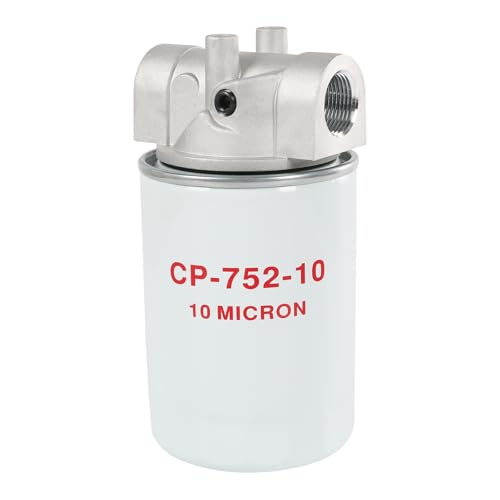
DICMIC 10 Micron Hydraulic Oil Filter Assembly, Spin-On Design, Return Line Filter with Indicator Port, 20 GPM Flow Rate, 200 PSI, 3/4" NPTF Port, Replace# 221006
- Filter Type: Hydraulic oil filter assembly
- Filtration Precision: Removes 10-micron contaminants
- Application: Suitable for hydraulic systems
As an affiliate, we earn on qualifying purchases.
As an affiliate, we earn on qualifying purchases.
Frequently Asked Questions
How Often Should I Check Hydraulic Oil Levels?
You should check hydraulic oil levels daily, especially before heavy use. During inspections, monitor hydraulic fluid viscosity and oil temperature to guarantee proper functioning. If the fluid appears thin or thick, or if temperatures are unusually high, top up or replace the fluid as needed. Regular checks help prevent equipment damage, maintain ideal performance, and prolong the lifespan of your hydraulic system.
Can I Reuse Old Hydraulic Oil?
You shouldn’t reuse old hydraulic oil, as over 80% of hydraulic oil contaminants come from dirt and oxidation. Recycling oil is an option, but it’s best to use fresh oil for peak performance. When considering oil recycling, ensure you select the right filter types to remove impurities. Reusing contaminated oil can damage your equipment, so always replace or properly recycle it to maintain system efficiency and longevity.
What Are Signs of Hydraulic Oil Contamination?
You can spot hydraulic oil contamination by looking for oil degradation signs like a cloudy appearance, unusual odors, or thick, sludgy consistency. Contamination indicators also include increased wear on system components, inconsistent operation, or visible particles and debris in the oil. If you notice any of these signs, it’s a clear warning that your hydraulic oil is contaminated, and you should consider changing it to protect your equipment.
Is It Necessary to Bleed the System After Oil Change?
Yes, you should bleed the system after an oil change. During the oil refill procedures, air can get trapped, which affects hydraulic performance. To guarantee proper system bleeding, start the equipment and operate it at various speeds to help release any air pockets. Check for leaks and verify oil levels again. Proper system bleeding guarantees smooth operation and prevents damage caused by air in the hydraulic system.
What Type of Hydraulic Filter Is Best for My Equipment?
You should choose a hydraulic filter that matches your equipment’s specifications for essential performance. Focus on filter selection based on compatibility considerations, such as size, flow rate, and the type of hydraulic fluid used. It’s best to consult your equipment’s manual or manufacturer recommendations to guarantee the filter you select is compatible, helping to prevent system damage and maintain smooth operation. Proper filter selection is vital for efficiency and longevity.
Conclusion
By regularly rejuvenating your hydraulic oil and filters, you guarantee smooth, steady operation and prevent costly breakdowns. Stay vigilant, and you’ll safeguard your equipment’s longevity and performance. Remember, consistent care creates confidence, clarity, and control. Keep your hydraulic system healthy by handling hazards hastily, and you’ll harness harmony and high productivity in your work. Maintain momentum with mindful maintenance, and your machinery will master the mission with minimal mishaps.