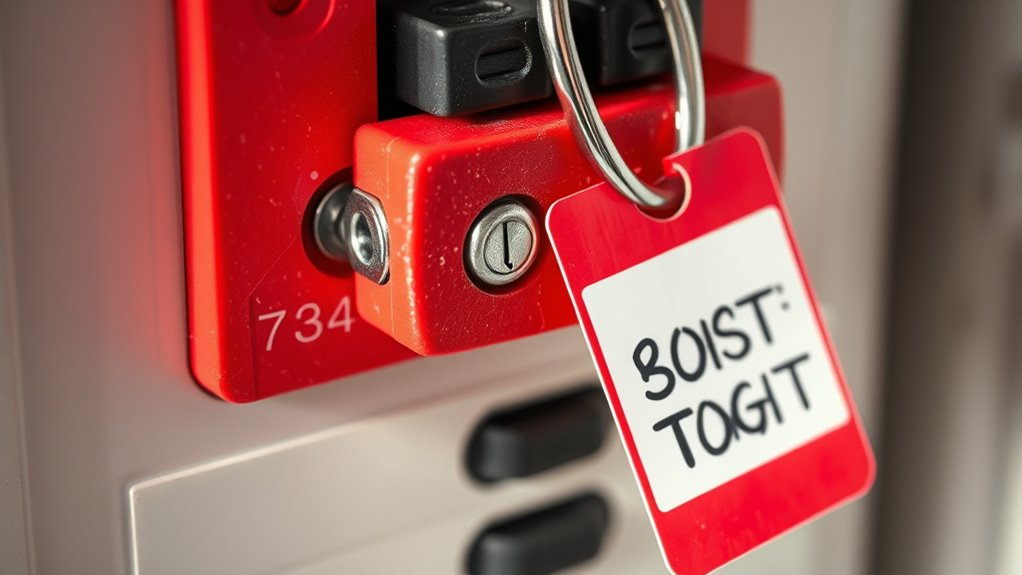

When performing maintenance at home, it’s vital to follow proper lockout/tagout procedures to stay safe. Start by turning off the appliance and disconnecting it from the power source. Use a lock or padlock to secure the switch and attach warning labels to prevent accidental energization. Verify the appliance is de-energized with a multimeter before beginning work. Following these steps protects you from shocks or injuries—and there’s more to guarantee your safety effectively.
Key Takeaways
- Identify all energy sources (power cords, switches, circuit breakers) before beginning maintenance.
- Disconnect the appliance from its power source and verify de-energization with a tester.
- Apply lockout devices and attach warning tags to prevent accidental power restoration.
- Use appropriate safety gear like insulated gloves and safety glasses during maintenance.
- Follow consistent procedures to enhance safety and emergency preparedness while performing lockout/tagout.
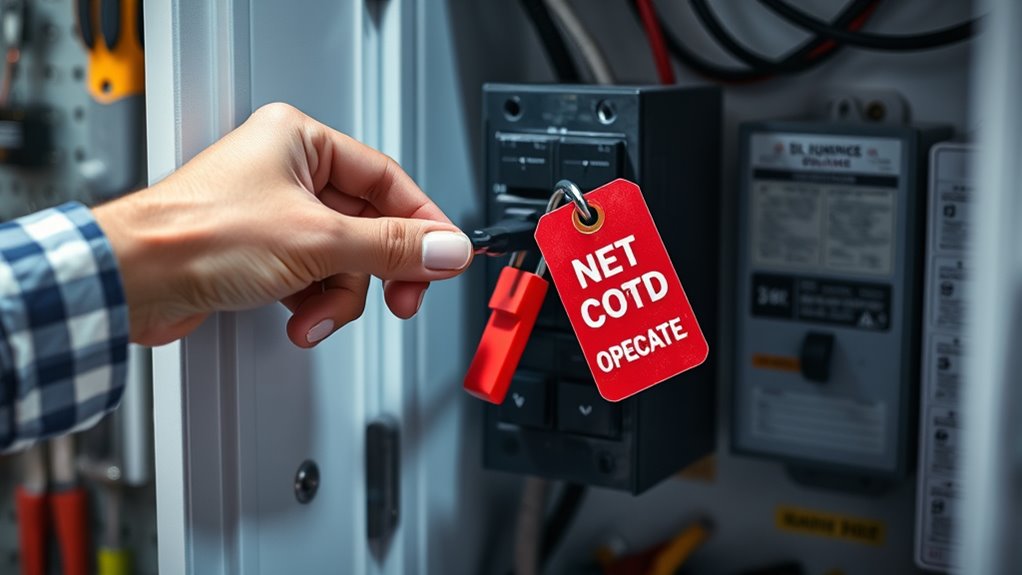
When performing maintenance on household appliances or electrical devices, implementing lockout/tagout procedures is essential for safety. These safety procedures help prevent accidental activation of equipment while you’re working on it, reducing the risk of electrical shock, burns, or other injuries. Before starting any repair or maintenance task, you need to ensure the appliance is completely de-energized and cannot turn on unexpectedly. Lockout/tagout isn’t just a formal safety protocol used in industrial settings; it’s equally important at home, especially when dealing with high-voltage appliances or complex systems.
The first step in lockout/tagout is identifying the energy sources connected to the device. This could be a power cord, a circuit breaker, or a switch. Once identified, you should disconnect the appliance from its power source and verify that it’s fully de-energized. Check for residual power by attempting to turn it on or using a voltage tester. This step is critical to confirm that no current is flowing before you proceed. Proper safety procedures demand that you communicate your intentions clearly, especially if other household members might also use the appliance or switch off the power. Using a lockout device, like a lock or a padlock, ensures that no one can accidentally restore power while you’re working. Tagging the device with a clear warning label is also advisable, so others know maintenance is in progress. Incorporating color accuracy and appropriate lighting conditions can help you better assess the situation and avoid mistakes during repairs.
Incorporating lockout/tagout into your routine enhances emergency preparedness. Knowing how to safely disable electrical equipment means you’re better equipped to handle unexpected situations, such as a power surge or accidental contact with live parts. Preparing for emergencies also involves having the right tools and safety gear—insulated gloves, safety glasses, and a multimeter—to verify de-energization and protect yourself during maintenance. Following safety procedures consistently minimizes risks and builds good habits, creating a safer environment for everyone in your home.

Lockout Tagout Kit Electrical Loto – Clamp-On Circuit Breaker Lockout, Group Lockout Hasps, Lockout Tag, Universal Multi- Pole Breaker with Pocket Bag (Bigger Red Kit)
- Durable Lockout Pouch: Heavy-duty nylon with metal belt loops
- OSHA Compliant: Meets Lockout Standard requirements
- Personal Safety Padlocks: Includes two keyed different locks
As an affiliate, we earn on qualifying purchases.
As an affiliate, we earn on qualifying purchases.
Frequently Asked Questions
Can I Perform Lockout/Tagout on My Household Appliances?
Yes, you can perform lockout/tagout on your household appliances to guarantee appliance safety during DIY projects. Always disconnect power sources first, then use lockout devices or tamper-proof tags to prevent accidental energizing. This practice keeps you safe while maintaining or repairing appliances. Remember, following proper lockout/tagout procedures is essential for DIY safety, reducing the risk of electric shock or injury during home maintenance tasks.
What Tools Are Necessary for Effective Lockout/Tagout at Home?
To perform lockout/tagout at home, you need basic tools like padlocks, lockout hasps, and safety tags. Always wear personal protective equipment, such as insulated gloves and safety goggles, to safeguard yourself. Use electrical safety devices like circuit breakers or disconnect switches to guarantee appliances are de-energized. These tools help keep you safe while working on household appliances by preventing accidental energization during maintenance.
How Often Should I Review Lockout/Tagout Procedures?
Think of your safety as a garden that needs regular tending. You should review your lockout/tagout procedures at least annually, aligning with your maintenance schedule, to keep safety fresh and effective. Treat it as a safety refresher to prevent complacency. Regular reviews ensure your safety practices stay sharp, like pruning a garden to promote healthy growth. Stay vigilant, and don’t overlook these essential checks to protect yourself during home maintenance.
Are There Legal Requirements for Lockout/Tagout in Residential Settings?
There are no specific legal requirements for lockout/tagout procedures in residential settings, but safety regulations emphasize the importance of protecting yourself during maintenance. You should follow best practices to reduce liability concerns, ensuring your safety and preventing accidents. Using lockout/tagout devices when working on appliances or electrical systems helps you avoid hazards and demonstrates responsible maintenance, aligning with general safety principles even if not legally mandated at home.
What Should I Do if a Lockout Device Fails During Maintenance?
If a lockout device fails during maintenance, act quickly—your safety depends on it. According to safety reports, over 20% of accidents involve equipment malfunctions during lockout. First, follow your emergency procedures, ensuring the area is secure. Then, carefully replace or repair the device, using proper tools. Always notify others and document the incident. Prioritize safety, and never bypass a failed lockout device before ensuring it’s fully functional.
Conclusion
By mastering lockout/tagout, you protect your property and prevent potential pitfalls. Properly planning, placing, and powering down equipment keeps you safe and secures your space. Don’t delay—develop your DIY defense and demonstrate diligent diligence. With consistent caution and careful controls, you’ll confidently combat chaos and create a safer sanctuary. Remember, safety starts with you—so stay smart, stay secure, and stay safe each time you maintain at home.