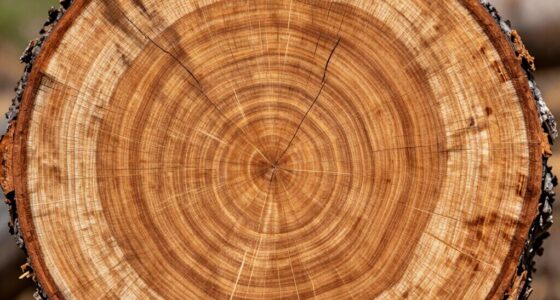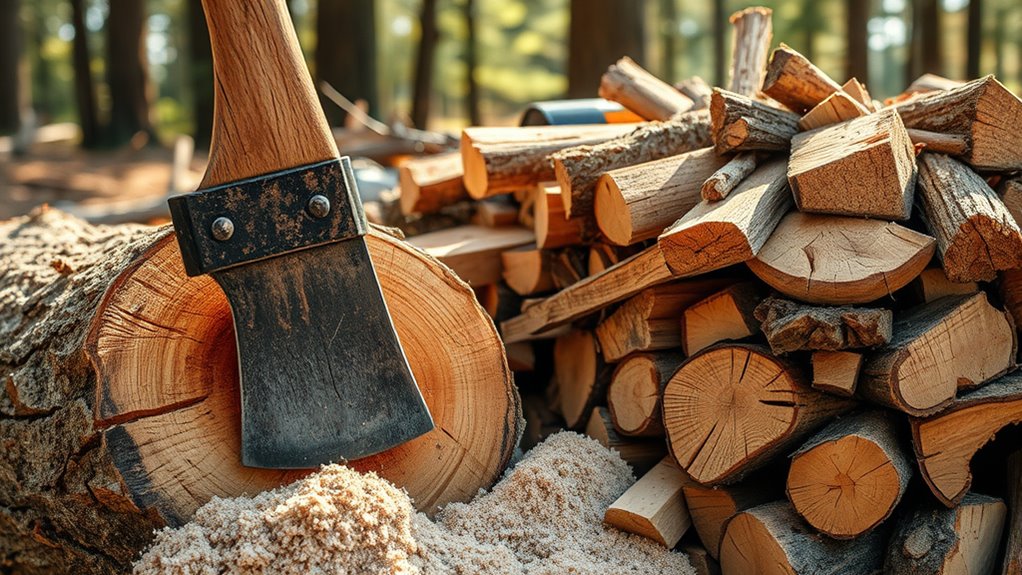
When splitting hardwoods like oak, maple, and hickory, you should use proper techniques tailored to each wood type to get the best results. Use a sharp axe and aim carefully along the grain to split the logs efficiently. For tougher knots or larger pieces, consider using a wedge. Proper safety gear and stable work surfaces make the process safer. Keep going to discover more tips for handling these hardwoods effectively.
Key Takeaways
- Use a sharp axe or splitting maul for efficient division, especially with dense hardwoods like oak and hickory.
- Aim strikes along the wood grain to facilitate easier splitting and reduce effort.
- Consider using wedges for tougher knots or larger oak and hickory logs that resist splitting.
- Recognize that maple may be softer but still requires proper technique to avoid accidents.
- Store split wood properly in a dry, ventilated area to enhance drying and prevent mold growth.
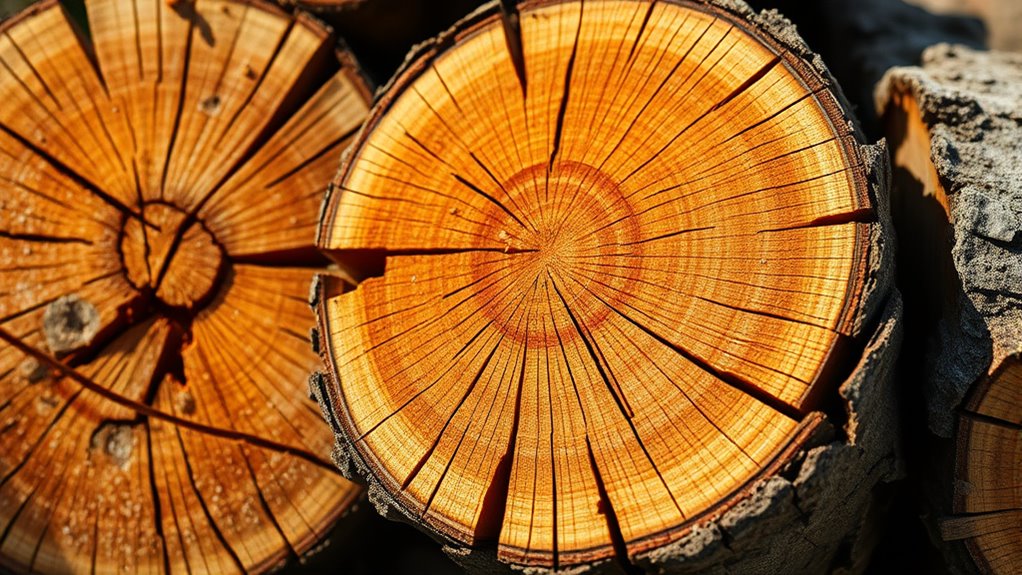
Ever wondered how to split hardwood effectively? If you’re planning to burn firewood, mastering the art of splitting hardwood like oak, maple, or hickory is essential. Proper splitting not only makes your logs easier to handle but also ensures a more efficient and longer-lasting burn. Before you start, it’s important to think about firewood storage. Storing your split wood correctly helps it dry faster and prevents mold or rot. Choose a dry, well-ventilated spot that keeps your firewood off the ground, ideally stacked in a crisscross pattern for good airflow. This way, your wood stays in prime condition for when you need it.
Master the art of splitting hardwood for efficient, safe, and long-lasting firewood storage.
When you begin splitting, safety precautions should be your top priority. Always wear safety gear, like goggles to protect your eyes from flying chips, sturdy gloves for grip and skin protection, and steel-toed boots to shield your feet. Keep your hands clear of the splitting wedge and axe blade, and make sure your work area is free of clutter to prevent trips or accidents. Use a stable, level surface like a chopping block to keep your logs steady and prevent the axe from bouncing unpredictably. Remember, a sharp axe is safer and more efficient than a dull one because it requires less force, reducing fatigue and accident risk. Additionally, understanding the different types of hardwood can help you choose the best logs for splitting and burning.
Position your log securely on the chopping block, and aim your strikes carefully. It’s best to split along the grain of the wood, which usually runs parallel to the length of the log. For larger or knotty pieces, you might need to make several cuts or work around knots to break the wood down into manageable pieces. When splitting, don’t force the axe if it sticks; instead, reposition or use a wedge to help loosen stubborn sections safely. Proper technique and patience are key to avoiding injury and ensuring clean splits.
Once you’ve split your hardwood into smaller pieces, stack it properly for ideal firewood storage. Keep the logs off the ground, and avoid stacking them directly against walls to promote airflow. Cover the top of your stack to shield it from rain and snow, but leave the sides open for ventilation. This prevents moisture buildup, which can lead to rotting and mold, making your firewood less effective and less safe to burn. By following these safety precautions and storage tips, you’ll enjoy a safe, efficient process that results in perfectly split hardwood ready for the fire.

Fiskars Pro IsoCore 8 lb Splitting Maul, 36" Wood Splitter Axe
- Multi-Use Axe: Ideal for firewood and yard work
- Shock-Absorbing Handle: Reduces hand strain and improves control
- Long-Lasting Steel Blade: Maintains sharpness longer for tough logs
As an affiliate, we earn on qualifying purchases.
As an affiliate, we earn on qualifying purchases.
Frequently Asked Questions
What Safety Equipment Is Recommended for Splitting Hardwoods?
For safe splitting, you should wear protective gear like safety glasses or goggles to shield your eyes from flying debris. Gloves help prevent splinters and improve grip, while sturdy boots protect your feet from falling logs or tools. Consider wearing ear protection if you’re using loud equipment. Always guarantee your workspace is clear and stable, so you can focus on safe splitting techniques and avoid accidents.
How Do Moisture Levels Affect Hardwood Splitting?
Did you know that wood with a moisture content above 20% is harder to split? Moisture levels considerably impact hardwood splitting because wetter wood is denser and more elastic. During the drying process, as moisture content drops, the wood becomes easier to split. To optimize your effort, let the wood dry thoroughly before splitting, reducing resistance and preventing damage to your tools.
Which Tools Are Best for Splitting Different Hardwood Types?
You should use splitting mauls for most hardwoods, especially knotty wood, as they deliver more force and help break through tough spots. For denser woods like oak or hickory, a heavier maul works best, while a wedge and sledgehammer can be useful for larger logs. Always wear safety gear, and position your tools carefully to handle knotty wood effectively, ensuring safer and easier splitting.
How Can I Prevent Wood From Splitting Unevenly?
Did you know that uneven splitting occurs in about 30% of hardwoods? To prevent this, pay close attention to the wood grain and splitting patterns. You should always split along the grain, not against it, to maintain evenness. Using sharp tools and applying steady, controlled force helps reduce the risk of uneven cracks. Additionally, score the wood first to guide your split, ensuring consistent and smooth results.
What Are the Environmental Considerations When Splitting Hardwoods?
When splitting hardwoods, you should consider environmental factors by using sustainable harvesting practices and eco-friendly splitting methods. Always verify the wood comes from responsibly managed forests to prevent deforestation. Opt for manual tools over machinery when possible, reducing carbon footprint. Properly recycling or reusing wood waste also minimizes environmental impact. By choosing these eco-conscious approaches, you help preserve forest ecosystems while efficiently splitting hardwoods like oak, maple, and hickory.
Conclusion
Splitting hardwoods like oak, maple, and hickory demands strength, patience, and technique. It’s about aligning your efforts with the wood’s grain, applying the right force at the right angle, and staying persistent through each split. As you strike, as you pry, as you release each piece, you create a rhythm. Embrace the challenge, respect the process, and enjoy the satisfaction of turning solid wood into manageable firewood. Just keep splitting, keep learning, and keep going.