
Chain pitch refers to the distance between the centers of two adjacent pins, determining the spacing between links and ensuring proper sprocket engagement. Gauge measures the thickness of the chain’s plates, affecting its strength and fit on sprockets. Both are vital for compatibility and smooth operation—using the wrong sizes can cause wear or failure. To learn how to identify and match these specifications, keep exploring for practical tips and insights.
Key Takeaways
- Chain pitch is the distance between the centers of two adjacent pins, determining the spacing between links.
- Chain gauge measures the thickness of the chain’s plates, indicating its strength and durability.
- Proper chain pitch ensures correct engagement with sprockets, preventing slipping and derailing.
- Correct chain gauge guarantees a snug fit on sprockets, reducing premature wear and breakage.
- Both pitch and gauge are essential for matching chains to sprockets for optimal performance and longevity.
Have you ever wondered how the size and fit of a chain are determined? It all comes down to two key measurements: chain pitch and gauge. These measurements guarantee your chain fits properly on your bike or machinery, providing smooth operation and safety. Understanding how these factors influence the chain’s performance can help you choose the right chain and keep it functioning at its best.
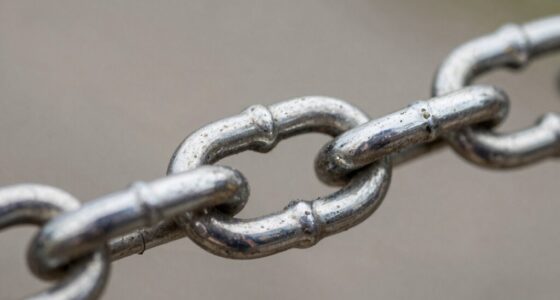
Chain pitch refers to the distance between the centers of two adjacent pins. Think of it as the “spacing” between links. When you measure this, you’re basically checking how far apart each link is from the next. A proper pitch ensures the chain engages correctly with the sprockets, preventing slipping or derailing during use. If the pitch is too large or too small for your sprockets, it can cause uneven wear, reduced efficiency, and potential damage. That’s why matching the chain pitch precisely to your sprockets is essential for maximum performance.
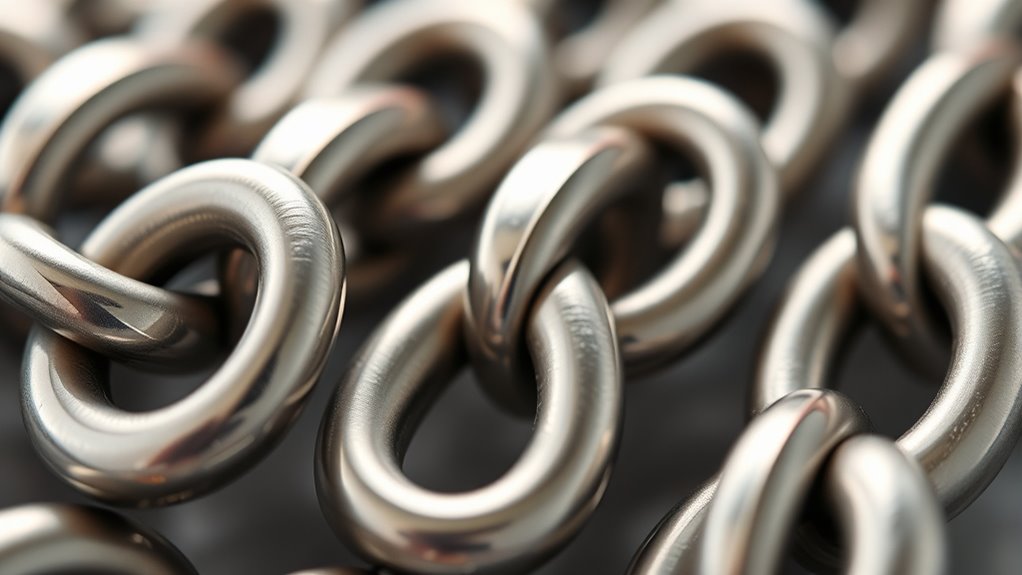
Chain pitch is the distance between the centers of two pins, ensuring proper engagement with sprockets for optimal performance.
Chain gauge, on the other hand, measures the thickness of the chain’s inner and outer plates. This measurement determines the chain’s strength and durability. A chain with the correct gauge will fit snugly onto the sprockets and withstand the stresses of riding or working under load. Choosing a chain with the wrong gauge can lead to premature wear or even breakage. It’s important to select a chain with an appropriate gauge for your application, whether it’s for a lightweight bicycle or a heavy-duty industrial setup.
Proper chain alignment also plays an important role in guaranteeing your chain’s longevity and performance. When the chain isn’t aligned correctly with the sprockets, it experiences uneven tension, which accelerates wear and causes noise or skipping. Regularly inspecting and adjusting chain alignment keeps everything running smoothly. Along with alignment, chain lubrication is equally significant. A well-lubricated chain reduces friction, minimizes wear, and prevents rust. Applying the right lubricant at regular intervals ensures your chain moves freely and maintains its integrity over time. Additionally, selecting a correct chain size that matches your sprockets is crucial for optimal operation.
Frequently Asked Questions
How Do Chain Pitch and Gauge Affect Bike Performance?
Chain pitch and gauge directly impact your bike’s performance by ensuring chain compatibility with your gears. Correct pitch allows smooth gear shifting and prevents slipping, while proper gauge supports durability and strength. If these aren’t matched to your bike’s drivetrain, you’ll experience poor shifting, increased wear, or chain failure. Always check your chain’s pitch and gauge to optimize performance, boost reliability, and extend your bike’s lifespan.
Can Chain Pitch and Gauge Be Mixed Between Different Brands?
You shouldn’t mix chain pitch and gauge between different brands because it can affect chain compatibility. Even if brands claim to use standard measurements, slight variations might cause poor shifting or chain slippage. To guarantee smooth performance and durability, stick to the same brand or check their specifications carefully. Mixing brands risks compatibility issues, so it’s best to match chain pitch and gauge precisely for ideal bike function.
What Tools Are Needed to Measure Chain Pitch and Gauge?
You might think you need fancy tools, but chain measurement tools and chain sizing gauges are enough to get accurate readings. Start with a simple ruler or calipers to measure pitch, then use chain gauges to check the gauge and link thickness. Although some experts believe digital tools offer precision, traditional chain measurement tools provide reliable results for most maintenance tasks. Always double-check with trusted gauges for accuracy.
Are Larger Chain Gauges More Durable?
Larger chain gauges often mean a more durable chain because they typically adhere to stricter manufacturing standards and are designed to withstand more wear. If your chain shows signs of wear, a thicker gauge can handle the stress better, extending its lifespan. Keep in mind, though, that proper maintenance and regular checks are essential to guarantee your chain remains reliable, regardless of gauge size.
How Do Chain Pitch and Gauge Impact Chain Replacement?
Chain pitch and gauge directly impact chain replacement by guaranteeing chain compatibility with your bike’s sprockets. If the pitch is off, the chain won’t fit properly, causing poor sprocket alignment and potential damage. A matching gauge maintains proper tension and durability. Always check these measurements before replacing your chain to ensure smooth operation, ideal performance, and to prevent unnecessary wear on other drivetrain components.
Conclusion
Understanding chain pitch and gauge helps you choose the right chain for your bike or machinery. For example, if you’re upgrading your mountain bike, knowing that a 12-inch pitch and 3/8-inch gauge fit your bike guarantees smooth rides and safety. By paying attention to these measurements, you prevent issues and enhance performance. So next time you’re shopping or replacing your chain, remember these details—your equipment will thank you with reliable, efficient operation.