If your chainsaw starts making strange noises, the chain slips often, or it struggles to cut, it’s time to replace the sprocket. Carefully inspect the sprocket for chipped, worn, or rounded teeth, and verify the chain fits snugly. To replace it, disconnect the spark plug, remove the side cover and bar, then install a compatible new sprocket, aligning everything properly. Keep the chain tension right and watch for signs of wear — if you follow these steps, you’ll keep your chainsaw running smoothly.

Get business pricing on tools and workshop supplies
- Business-only prices and quantity discounts
- Tax-exempt purchasing
- Multiple users, one account, clear invoices
Key Takeaways
- Replace the sprocket when you notice chain slip, unusual noises, or chipped/worn teeth to prevent further damage.
- Regularly inspect the sprocket for signs of wear or damage, especially if the chain binds or jumps during cutting.
- Disconnect the spark plug and wear gloves before removing side cover and bar to access the sprocket.
- Remove the side cover and chain to expose the sprocket, then carefully replace it with a compatible new part.
- After installation, adjust chain tension properly and run the saw briefly to ensure smooth, safe operation.

If your chainsaw starts to make unusual noises or the chain slips during cutting, it might be time to replace the sprocket. Recognizing the signs early can save you from more extensive damage and guarantee your chainsaw operates safely and efficiently. Regular chainsaw maintenance includes inspecting the sprocket for wear and tear, as a worn sprocket can cause the chain to slip or produce loud noises. Before attempting any repairs, make sure you follow safety precautions: disconnect the spark plug, wear gloves, and work on a stable surface to prevent accidents. This way, you protect yourself from potential injuries and keep the work area safe.
Regularly inspect your chainsaw sprocket to prevent damage and ensure safe, efficient operation.
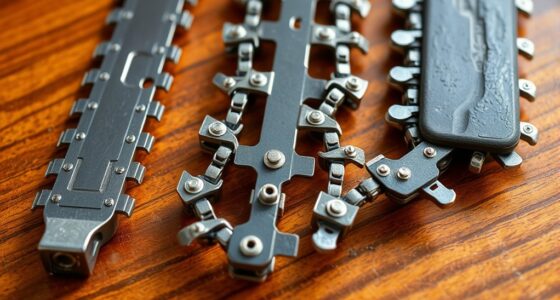
Knowing when to replace the sprocket is essential because a damaged or worn sprocket affects the chain’s grip on the drive gear, leading to poor cutting performance and increased risk of chain derailment. If you notice the chain frequently binding or jumping off, or if the sprocket’s teeth appear chipped or excessively worn down, it’s a clear sign that replacement is needed. Waiting too long can cause further damage to the drive mechanism or the chain itself, making repairs more costly and time-consuming. By staying proactive, you maintain your chainsaw’s longevity and safety.
Replacing a chainsaw sprocket isn’t overly complicated, but it requires some basic tools and a methodical approach. First, you’ll need to remove the side cover and the bar to access the sprocket. Carefully inspect the sprocket for damage—if the teeth are rounded, chipped, or uneven, it’s time for a new one. When installing the new sprocket, ensure it’s compatible with your chainsaw model. During reassembly, double-check that everything aligns correctly and that the chain tension is appropriate. Proper chain tension is essential for safe operation and efficient cutting. Remember to follow the manufacturer’s instructions and refer to your chainsaw’s manual if needed.
Throughout the process, stick to safety precautions: wear eye protection, keep your hands clear of moving parts, and work in a well-ventilated area. Regular chainsaw maintenance, including inspecting and replacing the sprocket when necessary, helps prevent accidents and keeps your tool functioning at its best. Additionally, understanding the benefits of regular maintenance can prolong your chainsaw’s lifespan and improve performance. After installing a new sprocket, run the chainsaw briefly to ensure smooth operation before starting your project. By paying attention to signs of wear and performing timely repairs, you extend your chainsaw’s life and keep your cutting tasks safe and effective.
chainsaw sprocket replacement kit
As an affiliate, we earn on qualifying purchases.
As an affiliate, we earn on qualifying purchases.
Frequently Asked Questions
How Often Should I Check the Sprocket’s Condition?
You should check the sprocket inspection and maintenance frequency every few uses, especially if you use your chainsaw regularly. Look for signs of wear, damage, or missing teeth during these inspections. Regularly maintaining your sprocket helps prevent chain problems and extends its lifespan. If you notice any issues, replace or service it promptly. Staying consistent with your maintenance frequency ensures peak chainsaw performance and safety during cutting tasks.
Can I Replace a Sprocket Without Removing the Chain?
You can replace a sprocket without removing the chain, but it’s tricky. To guarantee proper chain maintenance and sprocket alignment, you’ll need to carefully remove the cover and loosen the chain. Keep the chain in place if possible, but if it’s too tight or damaged, removing it makes the process easier. Always check the sprocket’s condition regularly to prevent unnecessary wear and ensure safe, smooth operation.
What Tools Are Necessary for Sprocket Replacement?
Did you know that using the right tools can reduce sprocket replacement time by up to 30%? When replacing a chainsaw sprocket, you’ll need a few essential tools. Start with a socket wrench or chain sprocket removal tool for sprocket inspection and removal. Make sure your tools are compatible with your saw’s model to avoid damage. A screwdriver and pliers can also help with chain tension and safety.
Is It Safe to Operate the Chainsaw After Replacing the Sprocket?
Yes, it’s safe to operate your chainsaw after replacing the sprocket if you check the chain tension and follow safety precautions. Make certain the chain is properly tensioned—not too tight or loose—and that all parts are securely installed. Always wear protective gear, keep your hands steady, and test the saw in a safe area. Regularly inspect the chain and sprocket to maintain safe operation and prevent accidents.
How Do I Know When the Sprocket Is Worn Out?
You’ll know the sprocket is worn out if you notice chain wear that’s uneven or rapid, and signs of sprocket damage like chipped or broken teeth. If the chain keeps slipping or doesn’t run smoothly, it’s a clear sign the sprocket isn’t functioning properly. Regular inspections help catch these issues early, preventing further damage and ensuring your chainsaw operates safely and efficiently.
Conclusion
Replacing your chainsaw sprocket might seem tricky, but with the right steps, you can tackle it like a pro. When you notice issues like chain slippage or excessive wear, don’t ignore it—your chainsaw’s performance depends on it. Just remember, if you let this essential part go unchecked, your saw could become as useless as a paperweight. Stay vigilant, follow the guide, and keep your chainsaw roaring like a lion on the hunt!
Fall yard work Picks
leaf blowers
As an affiliate, we earn on qualifying purchases.