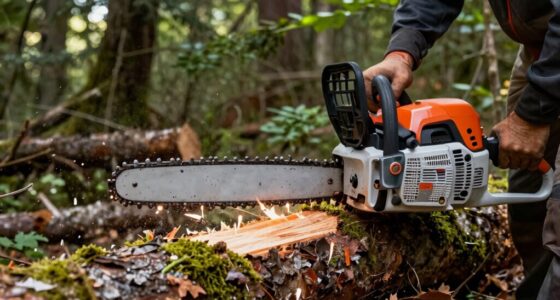
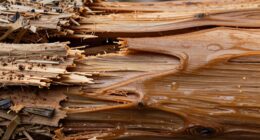
To avoid pinching the bar when cutting storm-damaged wood, always guarantee your cuts are controlled and deliberate. Use sharp blades to reduce friction and force, and plan your cuts to account for unpredictable shifts or breaks. Secure the wood firmly and stay alert for signs of movement. Don’t rush or force cuts that cause binding. If you keep these tips in mind, you’ll handle storm-damaged wood more safely—and discover additional techniques to improve your safety and cutting efficiency.

Get business pricing on tools and workshop supplies
- Business-only prices and quantity discounts
- Tax-exempt purchasing
- Multiple users, one account, clear invoices
Key Takeaways
- Ensure the saw blade is sharp to reduce the likelihood of pinching during cuts.
- Make controlled, deliberate cuts and avoid forcing the saw through tight spots.
- Use proper cutting techniques, such as making relief cuts to prevent binding.
- Support and secure the wood firmly to minimize movement and pinching risks.
- Always plan cuts carefully, considering the wood’s internal weaknesses and potential reactions.

After a storm, working with damaged wood can be tricky, especially when it comes to avoiding pinched bars. Storm damage often leaves trees unstable, with broken limbs or snapped trunks that can shift unexpectedly. Before you start, prioritize tree safety—assess the situation carefully. Look for hanging branches or leaning trunks that could fall or shift unexpectedly. If you’re unsure about the stability, it’s best to call in professionals. Staying safe is your top priority, so don’t rush into the work without proper precautions. Emergency preparedness also plays a key role here; having the right tools, safety gear, and a clear plan can prevent accidents. Always wear gloves, eye protection, and steel-toed boots to protect yourself from flying debris or sudden movements in the wood.
When handling storm-damaged wood, you want to minimize the risk of pinched bars, which can happen if the wood shifts during cutting or splitting. To avoid this, ensure your cutting tools are sharp and in good condition. Dull blades require more force and increase the chance of wood pinching the bar. Before you start, examine the wood closely. Look for knots, cracks, or irregular shapes that could cause unexpected movement. Make controlled, deliberate cuts rather than rushing through the process, and always secure the wood firmly with wedges or clamps. If the wood is large or unstable, consider using a winch or other support to hold it steady while you work. Proper wood stabilization techniques can significantly reduce the risk of accidents. Additionally, understanding storm damage can help you better assess the risks involved. Recognizing signs of internal structural weakness can also prevent accidents during the process. Being aware of the potential hazards associated with storm-damaged trees can help you plan your approach more effectively.
Pay attention to how the wood reacts during cutting. If it begins to shift or bind, stop immediately. Forcing the cut can cause the bar to pinch or break, which can be dangerous. Be mindful of the direction you’re cutting; always cut away from your body and ensure your stance is stable. If you’re unsure about the stability of the wood or the safest way to proceed, don’t hesitate to call in experienced professionals. They understand the nuances of storm-damaged trees and can handle the situation safely. Remember, working with storm-damaged wood is inherently risky, but with proper planning, safety measures, and patience, you can avoid pinching the bar and complete your task efficiently. Your safety and the integrity of your tools depend on cautious, deliberate action, especially when dealing with unpredictable, storm-battered wood.
Products Worth Considering

Ring Battery Doorbell Plus, Satin Nickel

Dyson Ball Animal 3 Extra Upright Vacuum

Levoit Core 600S-P Smart Air Purifier for Large Rooms
As an affiliate, we earn on qualifying purchases.
Frequently Asked Questions
What Tools Are Best for Removing Storm-Damaged Wood?
You should use power saws, like chainsaws or reciprocating saws, for quick and precise removal of storm-damaged wood. Pry bars are essential for prying loose pieces and lifting heavy debris safely. Make sure to choose the right size and type of pry bar for the job, and always wear protective gear. Combining power saws and pry bars allows you to efficiently and safely clear storm-damaged wood from your property.
How Do I Identify Compromised Wood Before Cutting?
To identify compromised wood before cutting, you need to perform a thorough wood inspection. Look for damage indicators such as discoloration, soft spots, or cracks. Tap the wood gently to listen for hollow sounds, which signal rot or decay. Check for mold, fungal growth, or areas that crumble easily. Recognizing these damage indicators helps you avoid cutting into unsafe or weakened wood, ensuring safer and more effective removal.
Can Safety Gear Prevent Injuries During Removal?
Did you know that proper safety gear can reduce injury risk by over 70%? Yes, protective gloves and safety helmets are essential when removing storm-damaged wood. They shield your hands from splinters and cuts and protect your head from falling debris. Always wear gloves to prevent pinching injuries and a helmet to prevent head trauma. Staying cautious with the right gear keeps you safe and lets you work efficiently.
What Are Signs of Structural Damage Beyond Visible Damage?
You should look for signs of hidden weaknesses or unseen damage such as sagging, unusual creaking, or cracks that extend beyond visible areas. When inspecting storm-damaged wood, pay attention to soft spots, discoloration, or warping, which indicate deeper structural issues. If you notice these signs, avoid putting stress on the material, as unseen damage can compromise safety. Always consider consulting a professional for a thorough assessment of potential hidden weaknesses.
How Long Should I Wait Before Removing Storm-Damaged Wood?
You should wait at least a few days to a week before removing storm-damaged wood, allowing time for initial assessments and stabilization. During this period, focus on proper wood preservation and storm cleanup techniques to prevent further damage. If the wood shows signs of ongoing structural issues or instability, consult a professional before removal. Patience guarantees safety and helps maintain the integrity of your property during storm recovery.
Conclusion
By following these tips, you can prevent pinching the bar and make your storm-damaged wood work safer and easier. Did you know that over 70% of woodworking accidents happen due to improper handling or equipment misuse? Staying vigilant and using the right techniques not only protects you but also boosts your efficiency. Remember, taking a little extra time now can save you from costly repairs or injuries later. Stay safe and keep your projects smooth!