To avoid kickback, ensure your blade is sharp, properly aligned, and at the correct height and angle for the task. Maintain a firm grip with both hands and focus fully on your work, keeping hands away from the blade’s path. Wear safety glasses, hearing protection, and a dust mask, while making certain safety guards are in place. Proper technique and gear markedly reduce risks—exploring these tips further can help you work more safely and effectively.
Key Takeaways
- Maintain a sharp, properly aligned blade and set at the correct height and angle for safe cuts.
- Use two hands and a firm grip to control the tool and keep hands away from the blade’s path.
- Wear safety gear such as safety glasses, hearing protection, and dust masks to stay protected.
- Regularly inspect and maintain equipment, ensuring safety features are engaged and functioning.
- Keep the work area clean and free of obstructions, and follow proper stance and control techniques.

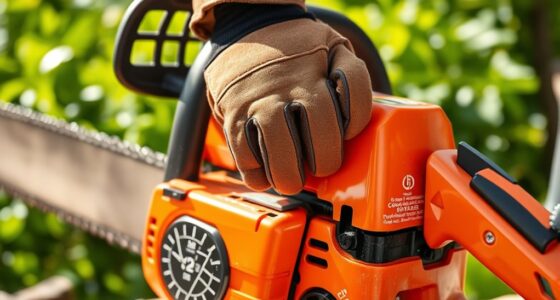
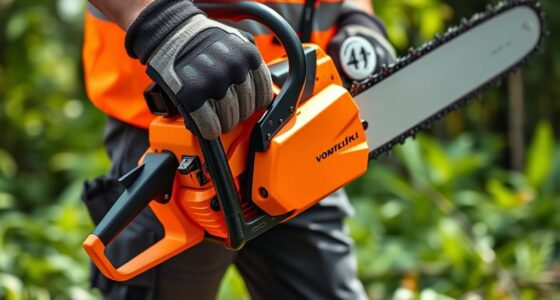
Have you ever experienced a sudden jolt or kickback while using power tools? It’s a startling moment that can cause injury or damage your work. The key to preventing this is understanding proper technique and always prioritizing safety gear. One of the most critical aspects of safe operation is blade positioning. When you’re preparing to cut, make sure the blade is sharp and correctly aligned. A dull blade requires more force to cut through material, increasing the risk of the blade catching or binding, which often results in kickback. Always check the blade’s position before starting, ensuring it’s set at the correct height and angle for your specific task. Proper blade positioning not only improves cut quality but also minimizes the chances of unexpected movement that could lead to injury. Using safety standards helps ensure your equipment is maintained properly and reduces hazards. Equally important is wearing the right safety gear. Safety glasses or a face shield protect your eyes from flying debris, which is common during kickback episodes. Hearing protection is advisable since power tools can be loud and cause long-term damage. Gloves may seem like a good idea for grip, but they can sometimes get caught in moving parts—so use them with caution and only when appropriate. A dust mask or respirator helps prevent inhalation of dust particles, especially when working with wood or other materials that produce fine debris. Never underestimate the importance of safety gear; it’s your first line of defense against accidents and injuries. When using power tools, maintain a firm grip and stable stance. Keep your hands away from the blade’s path and focus entirely on the task. Using two hands to operate the tool provides better control, especially when dealing with tougher materials. Also, pay attention to the feed rate—pushing too hard or rushing can cause the material to bind or kick back unexpectedly. Let the tool do the work at a steady, controlled pace. Be aware of your surroundings and ensure the work area is clear of obstructions or distractions that could impair your focus. In addition to proper blade positioning and safety gear, always double-check that your tool’s guards are in place. Never bypass safety features; they’re designed to prevent accidents. When you follow these practices—keeping the blade sharp and correctly aligned, wearing appropriate safety gear, maintaining control, and respecting safety features—you greatly reduce the risk of kickback. Remember, a cautious approach and respect for your equipment can prevent injuries and help you produce quality work efficiently.
Frequently Asked Questions
What Are the Common Signs of Impending Kickback?
You’ll notice signs of impending kickback like sudden, jerky movements or a loud pop from the saw. If you’ve had proper safety training, you’ll recognize these early warnings and stop work immediately. Always follow emergency procedures, such as turning off the saw and maintaining a safe distance. Staying alert and aware of your equipment’s behavior helps prevent kickback and keeps you safe while working.
How Does Blade Sharpness Affect Kickback Risk?
A sharp blade is your best friend when it comes to saw blade safety because it greatly reduces kickback risk. Dull blades tend to grab and bind, which can lead to dangerous kickbacks—it’s like playing with fire. Regular blade maintenance ensures your saw operates smoothly and safely. Keep your blades sharp, inspect them often, and always prioritize proper technique to stay ahead of potential hazards and keep your workspace safe.
Are There Specific Brands With Safer Equipment?
Yes, some brands have a better reputation for safety gear and produce equipment with safety features that reduce kickback risk. You should look for brands known for quality and reliability, like Bosch or Makita. Always check their safety gear offerings and guarantee they meet industry standards. Choosing reputable brands helps you stay safer during cuts, as their gear is designed with user protection in mind.
How Often Should Equipment Maintenance Be Performed?
You should perform equipment maintenance regularly, ideally before each use, to guarantee safety and peak performance. Focus on preventive maintenance, checking for worn or damaged parts, and tightening loose components. Conduct safety inspections to identify potential hazards. By maintaining your gear consistently, you reduce risks of kickback and other accidents, keeping yourself safe and extending the lifespan of your equipment. Regular upkeep is essential for safe, efficient operation.
Can Operator Fatigue Increase Kickback Chances?
Yes, operator fatigue can increase kickback chances because it diminishes your mental alertness and reaction time. When you’re tired, you’re less likely to notice hazards or respond quickly to unexpected situations, making kickback more likely. To stay safe, take regular breaks, stay hydrated, and make certain you’re well-rested. Maintaining high mental alertness helps you control equipment better and minimizes the risk of dangerous kickback incidents.
Conclusion
By following proper technique and using the right gear, you can substantially reduce the risk of kickback and work safely. Remember, kickback incidents account for over 30% of woodworking injuries, so staying vigilant is essential. Always stay alert, keep your hands clear of the blade, and double-check your equipment before starting. With these precautions, you’ll enhance your safety and enjoy your projects with confidence. Stay cautious, and your craftsmanship will thrive.