
To safely start a chainsaw, wear proper protective gear like gloves, goggles, and hearing protection. Check that the chain is sharp, tensioned, and that fuel and oil levels are sufficient. Make sure the chain brake is disengaged, then place the saw on a flat surface or hold it firmly against your thigh. Activate the choke and pull the starter cord steadily until the engine fires, then gradually move the choke to open. For detailed steps tailored to your model, keep exploring further.
Key Takeaways
- Always wear full safety gear, including gloves, eye protection, hearing protection, and a helmet with face shield.
- Conduct equipment inspection: ensure the chain is sharp, tensioned, and fuel levels are adequate.
- Familiarize yourself with controls and safety features, especially the chain brake, before starting.
- Place the chainsaw on a stable surface or hold it firmly against your thigh with proper posture.
- Start the engine following the specific model instructions, engaging the choke and maintaining a firm grip.
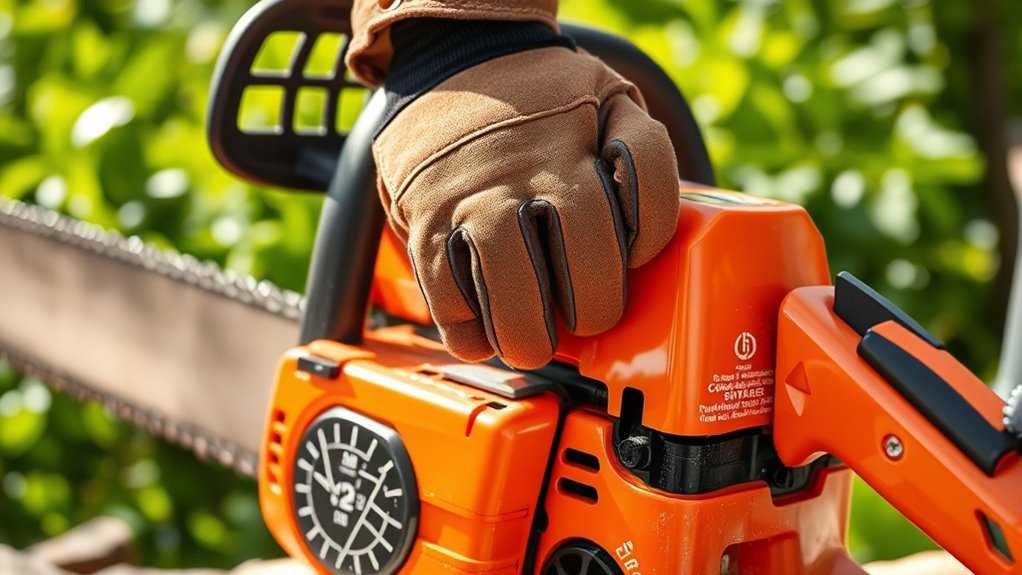
Starting a chainsaw correctly is essential to guarantee safety and efficient operation. Before you even attempt to start your chainsaw, make sure you’re wearing the right safety gear. This includes sturdy gloves to protect your hands, eye protection such as safety glasses or goggles to shield against flying debris, and hearing protection to guard against the loud noise. A helmet with a face shield can add extra safety, especially if you’re working in dense woods or with larger trees. Wearing proper safety gear not only minimizes the risk of injury but also helps you stay focused and confident during operation.
Once your safety gear is in place, ensure the chainsaw is in good condition. Check that the chain is sharp and properly tensioned, and inspect the fuel and oil levels. Familiarize yourself with the chainsaw’s controls—knowing where the choke, throttle, and stop switch are located makes starting smoother and quicker. If your chainsaw isn’t starting, troubleshoot by reviewing common issues like a clogged spark plug or stale fuel. Troubleshooting tips can save you time and prevent frustration, especially when you’re in the middle of a job. For example, if it doesn’t start after a few pulls, double-check the spark plug and clean or replace it if necessary. Make sure the chain brake is disengaged since this safety feature prevents accidental movement of the chain during startup. Additionally, understanding the importance of engine performance can help you maintain your chainsaw for optimal operation.
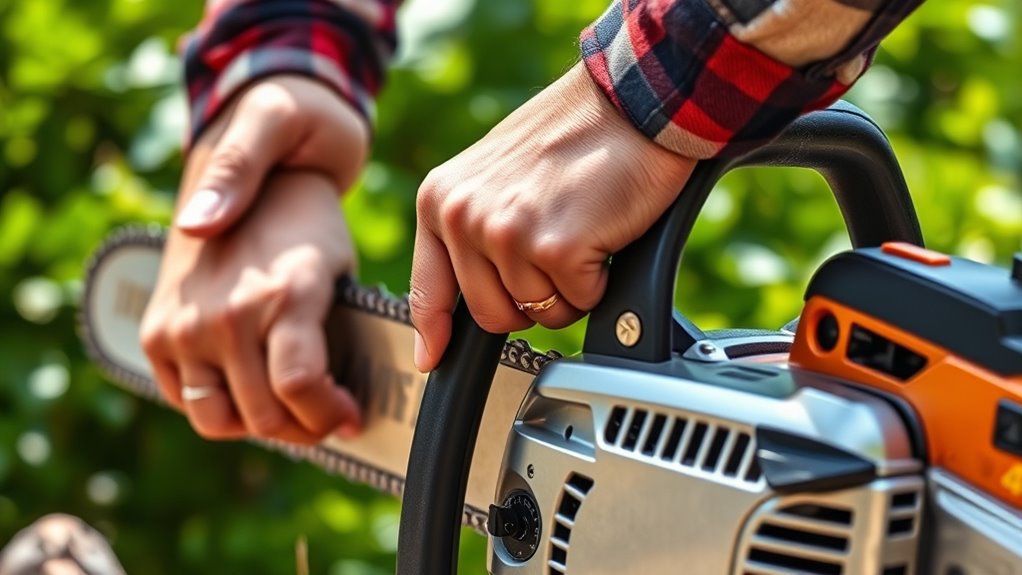
When you’re ready to start, place the chainsaw on a flat, stable surface, or hold it firmly against your thigh if you’re starting it in a safe, controlled manner. Engage the chain brake if it’s not already engaged, then activate the choke if the engine is cold. Pull the starter cord steadily until the engine fires, then gradually move the choke to the open position while giving a few more pulls if needed. Always keep a firm grip on the chainsaw and maintain proper posture to avoid sudden kicks or slips. Remember, starting procedures may vary slightly depending on the model, so consult your user manual for specific instructions.

Husqvarna 590091101 Classic Power Kit with Chainsaw Chaps, Safety Kit
- Complete Safety Kit: Includes chaps, helmet, and gloves
- Proper Personal Protection: Ensures safety for chainsaw users
- Injury Risk Reduction: Chainsaw chaps and helmet protect legs and head
As an affiliate, we earn on qualifying purchases.
As an affiliate, we earn on qualifying purchases.
Frequently Asked Questions
What Safety Gear Should I Wear When Starting a Chainsaw?
When starting a chainsaw, you should wear the proper safety gear and safety apparel. Put on protective gloves to prevent cuts, safety goggles or a face shield to protect your eyes, and hearing protection to guard against noise. Wear durable chaps or cut-resistant pants to shield your legs, and sturdy boots with steel toes for foot safety. This gear keeps you safe from unexpected accidents during startup and operation.
How Do I Prevent a Chainsaw From Kicking Back During Startup?
To prevent a chainsaw from kicking back during startup, focus on kickback prevention by using proper starter techniques. Keep your hands firmly on the saw, maintain a balanced stance, and avoid dull or loose chains. Always start with the chainsaw on the ground or a stable surface. Position your body to the side of the chain, and never force the saw. These steps help you control the saw and reduce kickback risks effectively.
Can I Start a Chainsaw on a Slope Safely?
Yes, you can start a chainsaw safely on a slope by paying attention to chainsaw ergonomics and proper startup techniques. Always position yourself with a firm footing, keeping the saw below your waist level for better control. Engage the chain brake before starting, and use the correct starting technique—pull the starter cord firmly with steady, controlled motions. Stay alert and avoid overreaching to prevent accidents caused by unstable footing.
What Are Signs of a Chainsaw That Needs Maintenance Before Starting?
Think of your chainsaw like a well-oiled machine: if it’s making unusual noises or the chain isn’t moving smoothly, it’s a sign you need maintenance. Check the chain tension—if it’s too loose or tight, it’s a problem. Also, verify the chain is properly lubricated; dry or rusty chains indicate lubrication issues. Addressing these signs before starting prevents damage and keeps your work safe and efficient.
How Should I Store My Chainsaw to Ensure Safe Startups Later?
To guarantee safe startups later, you should store your chainsaw properly. Keep it in a dry, secure place away from children and pets. Drain the fuel or add a fuel stabilizer to prevent leaks and corrosion, which can cause startup issues. Store it in a well-ventilated area, and consider removing the chain for safety. Proper chainsaw storage keeps the tool in good condition and ensures easy, safe startup when needed.
Conclusion
Remember, safe chainsaw starting methods protect you, prevent accidents, and guarantee your work goes smoothly. Follow the proper steps, stay alert, and use the right techniques each time you start your chainsaw. Stay cautious, stay prepared, and stay safe. By doing so, you’ll enjoy efficient cutting, avoid injuries, and keep your projects on track. Safety isn’t just a step—it’s a mindset that keeps you confident, competent, and in control every time you pull that starter cord.