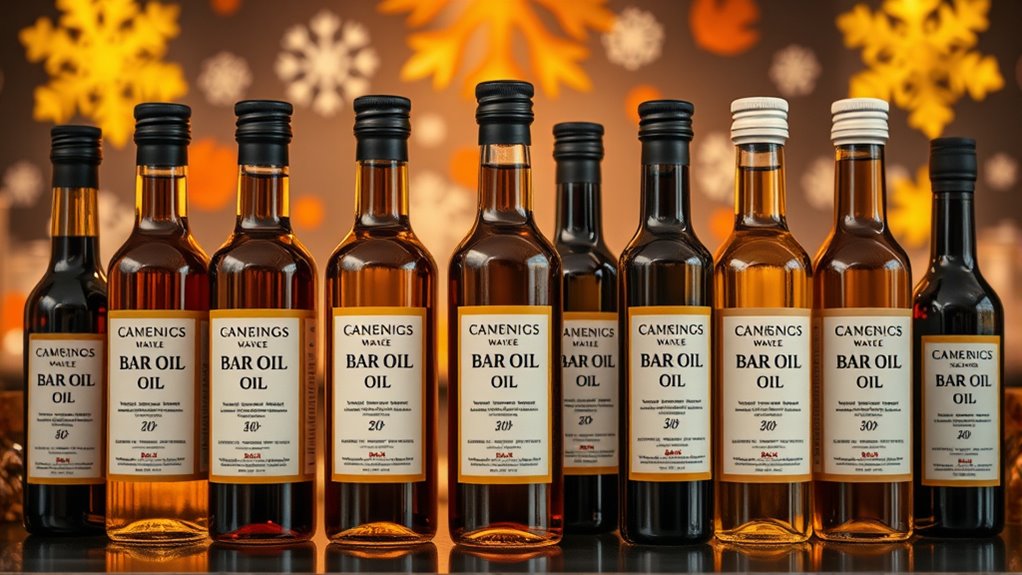

To choose the right bar oil by season, consider temperature fluctuations. In warm months, opt for lower viscosity synthetic oils that flow easily and reduce friction, helping your chain run smoothly. During colder months, switch to thicker, winter-grade oils to prevent thinning and fling-off, ensuring consistent lubrication. By adjusting your oil type and viscosity seasonally, you help your chainsaw work efficiently all year. Keep exploring to discover more tips for peak performance.
Key Takeaways
- Use synthetic oil for better performance and longer-lasting lubrication across all seasons.
- Opt for lower viscosity oil in summer to reduce heat and improve flow; higher viscosity in winter to prevent thinning.
- Seasonal viscosity adjustments help maintain optimal chain and bar lubrication, reducing wear and extending equipment life.
- Mineral oils may require more frequent reapplications, especially in extreme temperatures, compared to synthetic oils.
- Evaluate your climate and operating conditions to select the appropriate oil type and viscosity for year-round saw maintenance.

Are you unsure which bar oil is best for your chain? Choosing the right bar oil is essential for maintaining ideal chain lubrication, preventing wear, and ensuring your saw runs smoothly. The key factors to evaluate include the type of oil—synthetic versus mineral—and the viscosity suited for different seasons. Synthetic oils are often more refined and engineered for superior performance, while mineral oils are more traditional and typically less expensive. If you’re looking for better lubrication and less friction, synthetic oils tend to provide longer-lasting protection because they flow more consistently and resist breakdown over time. They also tend to adhere better to the chain, reducing fling-off and waste. Mineral oils, on the other hand, are made from simpler, less processed petroleum products. They can be effective but often require more frequent application, especially in demanding conditions. When it comes to chain lubrication, understanding the differences between synthetic and mineral oils helps you make an informed choice based on your needs and budget.
Seasonal changes greatly influence the viscosity you should select for your bar oil. In warmer months, a lower viscosity oil flows more easily, ensuring the chain receives proper lubrication at higher operating temperatures. This prevents overheating and reduces wear. Conversely, in colder weather, a thicker, higher viscosity oil sticks better to the chain and bar, resisting the tendency to thin out and fling off due to the cold. Using a winter-grade oil with higher viscosity ensures consistent lubrication during freezing temperatures, preventing the chain from running dry. Many professionals recommend switching to a thinner oil in summer and a thicker one in winter to adapt to changing conditions. This seasonal adjustment helps maintain the right balance of lubrication, reduces maintenance needs, and prolongs the lifespan of your chain and bar.
It’s important to consider that synthetic oils generally perform better across a wider temperature range because they don’t thin out as much in heat nor thicken excessively in cold. This makes them a versatile choice if you operate your saw year-round in varying climates. Mineral oils might require more frequent reapplication or switching between different viscosities to achieve the same level of performance. Ultimately, your choice depends on your climate, frequency of use, and budget, but understanding the importance of chain lubrication and the differences between synthetic and mineral oils helps you keep your saw in top shape. Proper selection of viscosity by season ensures your chain remains well-lubricated, cuts smoothly, and lasts longer, no matter the weather.
Frequently Asked Questions
How Do I Determine the Best Oil Viscosity for My Climate?
To determine the best oil viscosity for your climate, consider climate considerations like temperature ranges and humidity levels. In colder climates, you’ll want a lower viscosity oil that flows easily, ensuring better oil performance and proper chain lubrication. For warmer conditions, a higher viscosity oil offers better protection. Test different options if needed, and always follow your chain saw manufacturer’s recommendations for ideal results.
Can I Switch Between Different Bar Oils Seasonally?
Yes, you can switch between different bar oils seasonally, but you need to guarantee bar oil compatibility with your chain saw. Using seasonal oil switching helps maintain ideal lubrication and performance in varying temperatures. Just make sure to clean your chain thoroughly before changing oils to avoid mixing viscosities, which could cause issues. Always follow your saw manufacturer’s recommendations for oil types and viscosities to keep your equipment running smoothly year-round.
Are Synthetic Oils Better Than Mineral Oils for Long-Term Storage?
Imagine your chainsaw resting peacefully in a shed, waiting for its next cut. Synthetic oils are better for long-term storage because their synthetic benefits prevent gum buildup and resist oxidation, keeping your chain lubricated and protected. Mineral oils, on the other hand, have drawbacks like quicker degradation and more residue formation. So, for extended storage, synthetic oils guarantee your equipment stays in top shape, ready to roar when you need it.
How Often Should I Change My Bar Oil Based on Season?
You should change your bar oil seasonally to maintain ideal chain lubrication and guarantee proper storage maintenance. In warmer months, opt for a thinner oil to prevent gumming, while in colder seasons, thicker oil helps reduce leaks and wear. Check your bar oil regularly, especially before storing your chainsaw for an extended period, and top it up or replace it as needed to keep your equipment running smoothly year-round.
What Are the Signs of Using Incorrect Oil Viscosity?
You’ll notice signs of using incorrect oil viscosity through increased oil consumption, reduced engine performance, and engine overheating. When the oil is too thick or too thin, it struggles to lubricate properly, leading to more frequent consumption and inefficiency. You might also hear unusual noises or see smoke, indicating poor lubrication. Pay attention to these signs, because using the right viscosity keeps your engine running smoothly and efficiently.
Conclusion
Choosing the right bar oil and viscosity for each season keeps your chain running smoothly. Remember, switching to a thinner oil in summer can reduce friction by up to 15%, preventing overheating and wear. As temperatures soar above 85°F, your chain faces more stress, making the right oil choice vital. Keep your saw performing at its best year-round by adjusting your lubricant to match the season—your chainsaw will thank you for it.