To get started with a chainsaw mill, guarantee your chainsaw is in good condition, with a sharp chain and proper tension. Secure your log on sturdy supports and attach the mill guide firmly, checking for proper alignment. Mark your cut lines carefully, set the guide to your desired thickness, and proceed slowly and steadily for smooth cuts. Following safety tips and proper setup will help you produce quality lumber; explore further to master the process in detail.

Get business pricing on tools and workshop supplies
- Business-only prices and quantity discounts
- Tax-exempt purchasing
- Multiple users, one account, clear invoices
Key Takeaways
- Secure logs properly on supports or sawhorses to ensure stability and safety during milling.
- Attach and align the chainsaw firmly to the mill guide for accurate, even cuts.
- Measure and mark the desired lumber thickness carefully before each cut.
- Maintain consistent speed and pressure, avoiding rushing to prevent uneven cuts or kickback.
- Regularly inspect and sharpen the chain, and keep the chainsaw well-maintained for optimal performance.
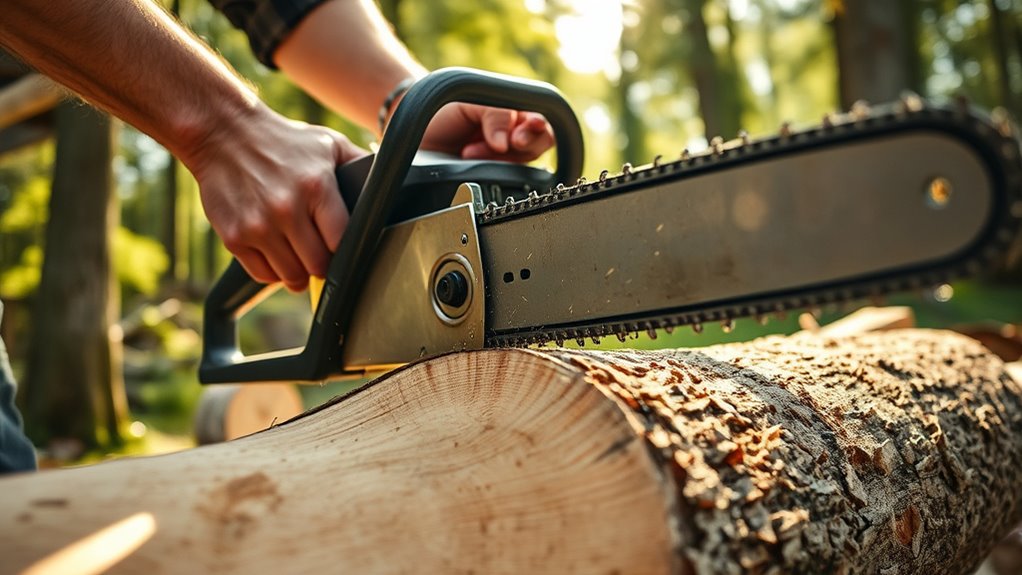
Have you ever wanted to turn a rough log into perfectly cut lumber? Using a chainsaw mill can make that happen, but it’s important to approach the task with care and preparation. Before you start, understanding safety precautions is essential. Always wear protective gear, including eye protection, earplugs or muffs, gloves, and sturdy boots. Chainsaws are powerful tools, and mishandling them can lead to serious injuries. Make sure your work area is clear of obstacles and bystanders, and check that your chainsaw is in good condition. Never operate the saw when tired or distracted, and always follow the manufacturer’s instructions for safe use. Proper safety precautions not only protect you but also ensure the quality of your cut.
Once safety is sorted, focus on the maintenance tips for your chainsaw. Regularly inspect the chain for sharpness and tension; a dull chain can cause the saw to bind or kick back. Keep the bar oil reservoir full to ensure smooth operation and prevent overheating. Clean the air filter regularly, as a clogged filter reduces engine efficiency. Check the spark plug and replace it if necessary to maintain consistent power. Keeping your chainsaw well-maintained allows for cleaner cuts, reduces wear on the tool, and minimizes the risk of accidents caused by equipment failure. Additionally, understanding potential risks and how to mitigate them can help prevent accidents and ensure safe operation.
Regularly inspect and maintain your chainsaw for safe, efficient lumber cutting.
When setting up your chainsaw mill, make sure the log is properly secured and stable. Use sawhorses or supports to prevent movement during cutting. Measure carefully and mark your cuts with chalk or a pencil to follow a straight line. Attach the chainsaw to the mill guide, ensuring it’s firmly secured and aligned. Adjust the guide for the desired thickness of your lumber before making each cut. Take your time with each pass, maintaining a steady pace and consistent pressure. Rushing can cause uneven cuts or kickback, which is dangerous.
Throughout the process, keep an eye on the chain’s tension and the saw’s performance. After each cut, inspect your work for accuracy and smoothness. Clean the chainsaw thoroughly after finishing, removing sawdust and debris that can affect future performance. Regular maintenance tips, like checking tension and sharpening the chain, will keep your chainsaw in top shape. By following these safety precautions and maintenance tips, you’ll be able to produce quality lumber safely and efficiently with your chainsaw mill. With patience and care, turning logs into usable boards becomes a rewarding project that you can be proud of.
As an affiliate, we earn on qualifying purchases.
Frequently Asked Questions
What Safety Gear Should I Wear When Using a Chainsaw Mill?
You should wear protective clothing and safety equipment when using a chainsaw mill. This includes a helmet with a face shield or safety goggles to protect your eyes and face, sturdy gloves for a firm grip and hand protection, ear protection to guard against loud noise, and steel-toe boots for foot safety. Long sleeves and pants made of durable material also help prevent cuts and abrasions. Always prioritize safety gear to stay safe during operation.
How Do I Maintain and Sharpen My Chainsaw Blade Properly?
Oh, sharpening your chainsaw blade is just like giving it a spa day—except with more sparks. To maintain your chain, regularly inspect for dullness, then use a file or grinder for chain sharpening, ensuring the teeth are even. Keep the blade clean and properly tensioned, and don’t forget to oil it well. Good blade maintenance means smoother cuts, less effort, and fewer surprises in the woods.
What Types of Wood Are Best Suited for Chainsaw Milling?
You should focus on softwoods like pine, cedar, and fir for chainsaw milling because their lower wood density makes cutting easier. Also, choose wood with moderate moisture content—ideally around 12-15%—to prevent warping and guarantee smoother milling. Hardwoods like oak or maple are tougher and require more power, so they’re less ideal for entry-level milling. Stick with softer, properly dried wood for the best results.
How Do I Select the Right Chainsaw Mill Size for My Projects?
To select the right chainsaw mill size, start with a project scope assessment—consider the maximum width and thickness of the logs you’ll mill. Check chain size compatibility to make certain your chainsaw fits the mill’s specifications. If you plan larger projects, opt for a bigger mill with a wider cut capacity. For smaller tasks, a compact mill will do. Matching your project needs with mill size ensures efficient, safe operation.
Are There Specific Techniques for Cutting Different Wood Grain Patterns?
You should modify your cutting techniques based on the grain patterns you encounter. For straight grain, keep your cuts steady and consistent to avoid splintering. When working with wavy or irregular grain, use lighter cuts and go slowly to prevent tearing. Always observe the grain direction and follow it, as cutting against the grain can cause rough surfaces. Adapting your technique ensures cleaner cuts and better-quality lumber.
Conclusion
Now that you’ve learned the basics, you’re ready to carve your own path with a chainsaw mill. Think of it as planting seeds of craftsmanship that will grow into sturdy, beautiful projects. With patience and practice, each cut becomes a brushstroke on your masterpiece. Remember, every log you mill is a step closer to turning raw wood into something truly special—like turning raw potential into lasting beauty. Embrace the journey, and let your skills flourish.
Fall yard work Picks
leaf blowers
As an affiliate, we earn on qualifying purchases.