You’ll find that timber jacks save the most effort by quickly lifting and stabilizing logs, reducing physical strain during handling. Peaveys make prying, lifting, and dragging easier, while cant hooks are ideal for rolling and repositioning logs without heavy lifting. Each tool offers unique advantages, but timber jacks stand out for heavy lifting tasks. If you want to discover how to choose the right tool for your needs, keep exploring these options further.
Key Takeaways
- Timber jacks lift and support logs, significantly reducing manual effort during positioning or cutting.
- Cant hooks provide leverage and grip, making rolling and repositioning logs easier with less physical strain.
- Peaveys excel at prying, lifting, and dragging logs, reducing effort in handling large or stubborn timber.
- Power tools like chainsaws and log splitters complement manual tools, further decreasing manual effort.
- Overall, timber jacks often save the most effort by minimizing physical strain in heavy lifting and support tasks.
When working with logs and timber, having the right tools can make all the difference. Whether you’re felling a tree, bucking logs, or moving heavy timber, choosing the right equipment can save you time and energy. Tools like cant hooks, peaveys, and timber jacks each serve specific purposes, but understanding which one saves the most effort depends on the task at hand. If you’re considering how to make your work easier, it’s worth exploring how these tools compare, especially when paired with power tools like a chainsaw or log splitter.
Choosing the right manual tools enhances efficiency and safety alongside power equipment in logging tasks.
A chainsaw is often your first choice when it comes to cutting through large logs quickly. It reduces the physical effort needed to fell trees or cut logs to size. Once the logs are cut, a log splitter can take over, making the task of splitting firewood or splitting large logs into manageable pieces much easier than doing it by hand. These power tools significantly cut down on manual labor, but they don’t replace the need for manual leverage tools like cant hooks, peaveys, and timber jacks. Instead, these tools complement your power equipment by helping you handle, move, and position logs safely and efficiently.
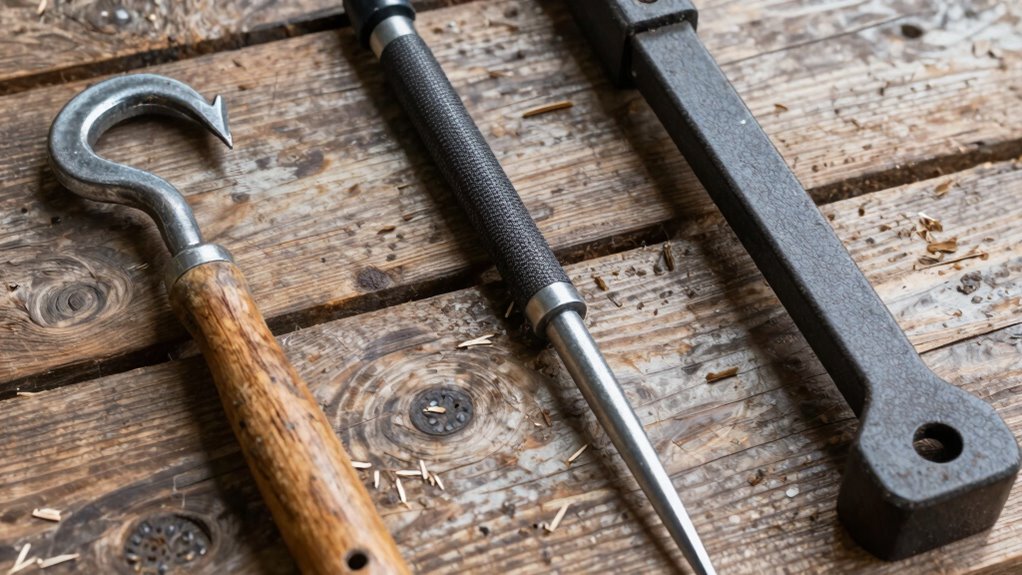
A cant hook is a classic tool designed for rolling, gripping, and controlling logs. It’s especially helpful when you need to maneuver logs into position or prepare them for cutting or splitting. With a cant hook, you apply leverage to roll or reposition logs without having to lift or carry them. This minimizes strain on your back and arms, especially when dealing with large, unwieldy logs. The tool’s hook and lever mechanism mean you can manipulate logs with less effort, which is invaluable when working in tight spaces or with logs that are too heavy to handle manually. Plus, a well-designed cant hook can help reduce manual labor, making your work more efficient and less physically taxing. Additionally, understanding the proper techniques for using these tools can further enhance your efficiency and safety. Recognizing the importance of biodiversity and sustainable practices in forestry can also inform safer and more environmentally responsible tool usage and logging methods.
Peaveys are similar but are generally more versatile, often featuring a pointed end and a hook. They’re excellent for prying, lifting, and pulling logs or timber. The pointed end allows you to dig into logs for better grip, while the hook can be used to lift or drag timber. When used properly, peaveys reduce the effort needed to move or reposition logs, making them a practical choice for logging and sawmill work.
Timber jacks are designed for lifting and supporting logs, especially when you need to elevate or stabilize timber for cutting or splitting. They can help you lift heavy logs off the ground, reducing the physical strain and risk of injury. Timber jacks work well alongside power tools like chainsaws and log splitters by positioning logs at the right height, making subsequent cutting or splitting easier and safer. Knowing how to safely operate and position a timber jack can significantly improve your workflow and minimize potential hazards. Emphasizing sustainable logging practices, such as careful planning of log movement, can also help preserve biodiversity and reduce environmental impact.

Timberjack Log Roller Lifter, 50.8" Long Handle Log Roller Tool
- Material: Heavy-duty carbon steel construction
- Finish: Black powder-coated surface for rust resistance
- Adjustability: Adjustable cant hook for logs 3-25 inches
As an affiliate, we earn on qualifying purchases.
As an affiliate, we earn on qualifying purchases.
Frequently Asked Questions
How Do Different Wood Types Affect Tool Performance?
Different wood types markedly impact tool performance because of their wood density. Denser woods, like oak or hickory, require stronger, more compatible tools to prevent damage and guarantee efficiency. Softer woods, such as pine or cedar, are easier to work with and demand less effort. Always consider wood density to select tools that match your wood type, guaranteeing better tool compatibility and making your work safer and more effective.
What Are the Safety Precautions for Using These Tools?
Using these tools is like walking a tightrope—you need to stay balanced. Always wear personal protective equipment like gloves, eye protection, and sturdy boots. Follow proper handling techniques—keep a firm grip, stay aware of your surroundings, and use controlled movements. Never rush or force the tool, and inspect it regularly for damage. Staying cautious helps prevent accidents and guarantees you work safely and efficiently.
Which Tool Is Best for Novice Users?
For novice users, a cant hook offers the best user experience and ergonomic comparison. Its design is straightforward, making it easier to handle and control without much effort. Unlike peaveys and timber jacks, which require more skill to operate safely, a cant hook minimizes strain and reduces the risk of accidents. You’ll find it more intuitive, helping you build confidence as you learn proper technique.
How Should These Tools Be Maintained and Stored?
Think of your tools as loyal allies in your forest journey. Keep them sharp with regular tool sharpening, like polishing a warrior’s sword. Store them in a dry, organized space—use wall hooks or a dedicated toolbox—to prevent rust and damage. Proper storage techniques and routine maintenance guarantee your tools stay ready for action, reducing effort and extending their life. Treat them well, and they’ll serve you well.
Are There Environmentally Friendly Options Available?
Yes, eco-friendly options are available for these tools. You can choose tools made from eco-friendly materials like recycled steel or sustainably sourced wood. Some brands now offer biodegradable options or tools with non-toxic, environmentally safe coatings. By selecting these environmentally conscious tools, you reduce your ecological footprint and promote sustainability. Always check product labels for eco-friendly certifications to guarantee you’re making a responsible choice.
Conclusion
Choosing between cant hooks, peaveys, and timber jacks is like selecting the right tool for a dance—you need the one that moves with your rhythm. While each tool has its strengths, the timber jack often acts as your sturdy partner, saving you the most effort by offering leverage and control. When you’re in the woods, let this trusty sidekick lighten your load and turn heavy lifting into a graceful waltz.