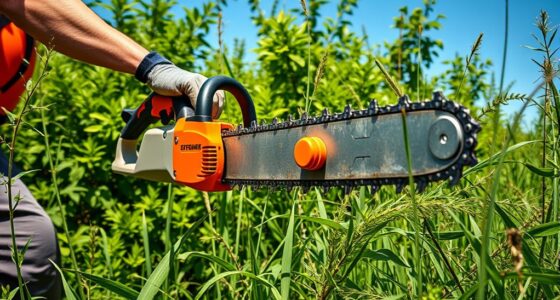
Full-chisel chains have deep, square-cornered cutters that cut faster and are great for heavy-duty work, but they require precise sharpening and wear out faster if not maintained. Semi-chisel chains feature rounded cutters, offering smoother operation and better resistance to dirt, making them ideal for lighter tasks and outdoor environments with debris. Understanding these differences helps you choose the right chain, and if you keep exploring, you’ll learn how each type performs in various situations.

Get business pricing on tools and workshop supplies
- Business-only prices and quantity discounts
- Tax-exempt purchasing
- Multiple users, one account, clear invoices
Key Takeaways
- Full-chisel chains have deep, square-cornered cutters for maximum efficiency and high-performance cutting.
- Semi-chisel chains feature rounded cutters, offering smoother operation and easier maintenance.
- Full-chisel chains cut faster and stay sharper longer but are noisier and more aggressive.
- Semi-chisel chains are more durable in dirty environments and require less frequent sharpening.
- Choose full-chisel for demanding tasks like logging, and semi-chisel for light-duty, hobbyist use.
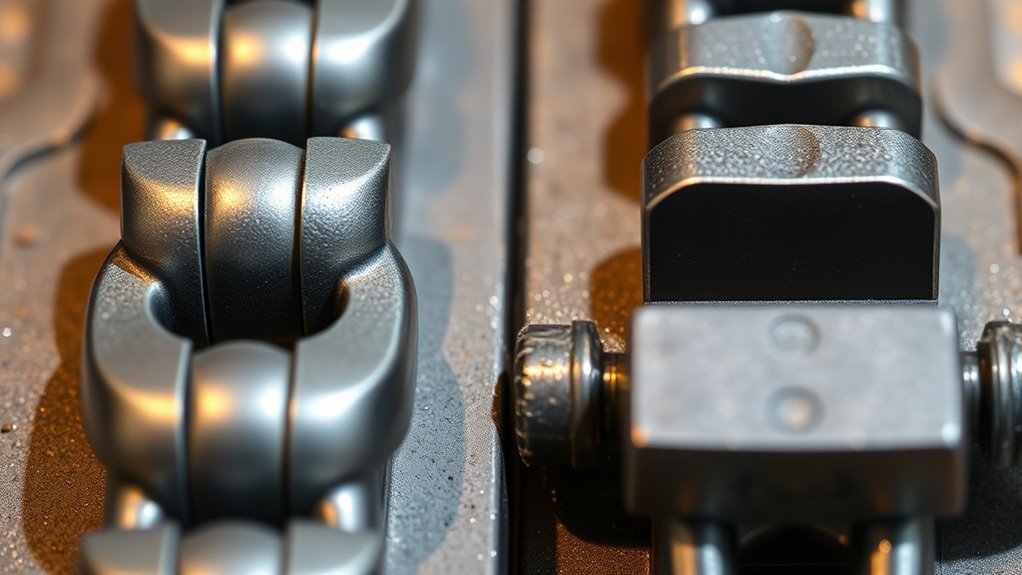
Choosing the right chain type is essential for ensuring your bike, jewelry, or machinery performs reliably. Whether you’re a casual rider, a professional mechanic, or someone working with precision equipment, understanding the differences between full and semi-chisel chains can considerably influence your chain maintenance routine and overall performance. The type of chain you pick impacts durability, cutting efficiency, and ease of sharpening, which are all critical factors in effective chain selection.
Full-chisel chains are designed for high-performance cutting. They feature deep, square-cornered cutters that bite into wood or other materials with maximum efficiency. This design makes them ideal for demanding tasks like professional logging or heavy-duty chainsaw work. The deeper cutters provide a cleaner cut and tend to stay sharper longer because they remove more material per sharpening. However, this comes with some trade-offs. Full-chisel chains tend to produce more vibration, generate more heat, and wear out faster if not properly maintained. They also tend to be noisier and more aggressive, which might be less comfortable for casual users. Proper chain maintenance becomes vital here, as dull or poorly maintained full-chisel chains lose efficiency quickly, risking damage to your equipment or injury.
Semi-chisel chains, on the other hand, feature rounded or less aggressive cutters. They are designed for smoother operation and easier sharpening, making them a popular choice for hobbyists and light-duty applications. Their design offers a good balance between cutting performance and chain longevity. They tend to produce less vibration and heat, which means they’re more forgiving on your equipment and easier to handle during extended use. When it comes to chain selection, semi-chisel chains excel because they require less frequent sharpening and are more resilient to dirt and debris, common in casual or outdoor environments. Their durability makes them suitable for a variety of tasks where precision and ease of maintenance are priorities.
As an affiliate, we earn on qualifying purchases.
Frequently Asked Questions
Are Semi-Chisel Chains Better for Outdoor Cutting?
Yes, semi-chisel chains are better for outdoor cutting. They’re designed to handle dirt, debris, and rough wood more effectively, which boosts safety considerations by reducing the risk of kickback. Plus, semi-chisel chains offer a good balance of cutting speed and durability, making them ideal for outdoor tasks. You’ll find they perform well in challenging conditions, giving you efficient cuts without compromising safety or speed.
How Long Do Full-Chisel Chains Typically Last?
Think of your full-chisel chain as a racehorse — it can last quite a while if you keep up with chain sharpening and chain lubrication. Typically, it’ll serve you for about 8 to 12 hours of cutting, but that varies with wood type and use. Regular maintenance prevents dullness, ensuring it remains sharp and efficient. Proper care extends its lifespan, helping you cut smoothly and safely for longer periods.
Can I Convert a Full-Chisel Chain to Semi-Chisel?
You can’t convert a full-chisel chain to semi-chisel because chain compatibility depends on the chain’s design and dimensions. The conversion methods aren’t feasible since full- and semi-chisel chains have different tooth shapes and cutting profiles. Instead, you should select the right chain type for your saw and task to guarantee safety and performance. Always check your chainsaw’s specifications before making any replacements or modifications.
Which Chain Type Is Quieter During Operation?
Imagine a gentle breeze whispering through the trees—that’s how quiet semi-chisel chains feel during operation. They produce lower noise levels and less vibration impact compared to full-chisel chains, making your cutting experience smoother and less jarring. If you prioritize a quieter, more comfortable cut, semi-chisel chains are your best choice, especially when working in noise-sensitive environments or for extended periods.
Do Semi-Chisel Chains Require More Maintenance?
Semi-chisel chains generally require more maintenance because they tend to dull faster and need more frequent sharpening. While they have good chain durability, the increased maintenance frequency means you’ll spend more time keeping them in ideal condition. If you prefer a chain that stays sharp longer and requires less upkeep, a full-chisel chain might be a better choice. However, semi-chisel chains are easier on the bar and offer smoother cuts.
Conclusion
Now that you know the difference between full and semi-chisel chains, you’re better equipped to pick the right tool for your needs. Remember, choosing the right chain can make your cutting tasks smoother and more efficient. Don’t just jump in blindly—think carefully and weigh your options. With the right chain, you’ll be sailing smoothly through your projects, turning a sometimes tough job into a walk in the park.
Fall yard work Picks
leaf blowers
As an affiliate, we earn on qualifying purchases.