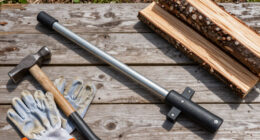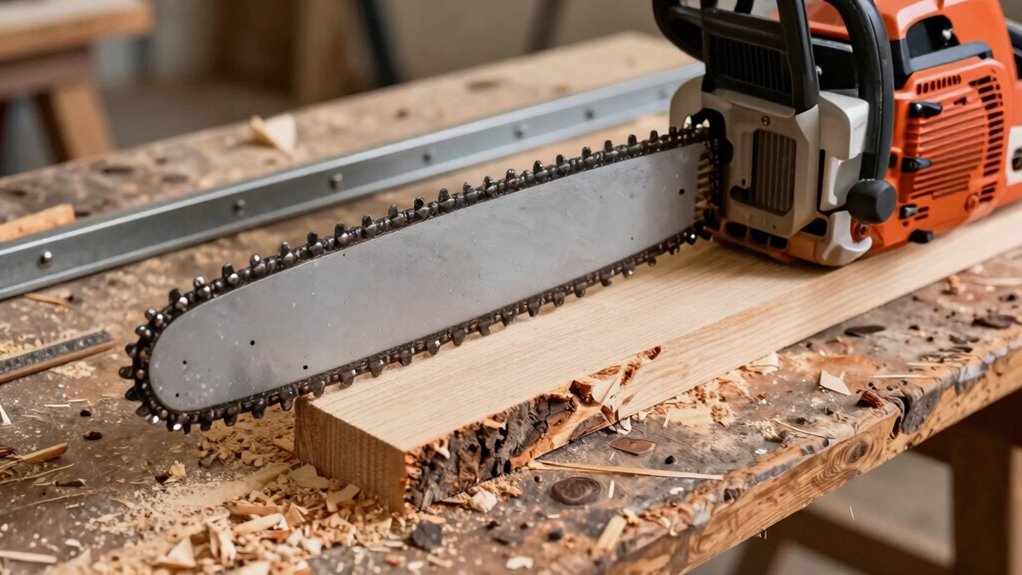

Chainsaw mills might look simple, but proper setup is crucial for accurate cuts, safety, and efficiency. You need to choose a stable, level workspace and secure the mill firmly. Adjust chain tension correctly to prevent slipping or strain on the motor. Always check safety gear and equipment condition before starting. Fine-tune guide rails and test with scrap pieces to guarantee straight, clean cuts. Keep these steps in mind—there’s more to discover that’ll help you get perfect results every time.

Get business pricing on tools and workshop supplies
- Business-only prices and quantity discounts
- Tax-exempt purchasing
- Multiple users, one account, clear invoices
Key Takeaways
- Proper setup ensures accurate cuts, safety, and efficiency, despite the simplicity of chainsaw mills.
- Stable, level workspace and secure components prevent misalignment and crooked cuts.
- Correct chain tension reduces motor strain, improves cutting accuracy, and extends chain lifespan.
- Regular safety checks and protective gear are essential for safe operation and equipment longevity.
- Final test cuts and adjustments optimize performance, reduce effort, and prevent mishaps.
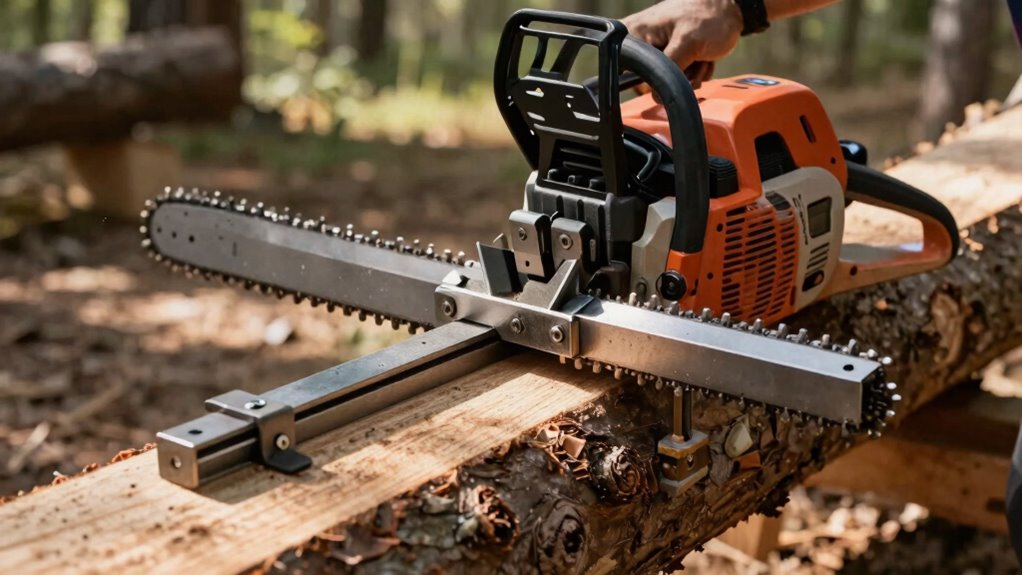
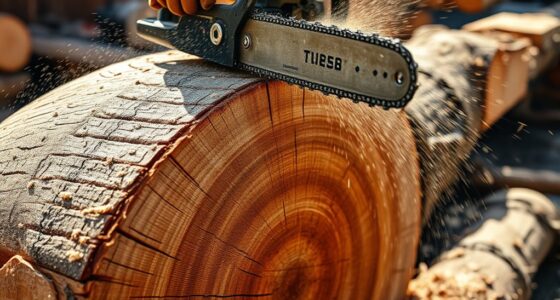
Setting up your chainsaw mill correctly is essential to achieving smooth, accurate cuts and ensuring safety during operation. While chainsaw mills may look simple at first glance, proper setup is crucial for both performance and safety. A well-aligned mill not only produces cleaner cuts but also helps you conserve fuel, making each cut more efficient. If your setup is off, you risk uneven work, increased fuel consumption, and potential accidents. Taking the time to set up your mill properly ensures you’re working with optimal safety precautions** and maximizing fuel efficiency. Ensuring all components are properly aligned before starting can significantly impact the quality of your work. Start by carefully selecting a stable, level workspace. An uneven surface can throw off your mill’s alignment, resulting in crooked cuts and increased effort. Once in position, secure your chainsaw firmly in the guide system, making sure the blade is perpendicular to the workpiece. Misalignment here can lead to rough cuts and uneven wear on the chain, which in turn affects fuel efficiency. Properly tightening all bolts and clamps is essential; loose components can cause the mill to shift during operation, jeopardizing safety. Double-check everything before starting the engine. Next, pay close attention to the chain tension. A chain that’s too tight puts extra strain on the motor and increases fuel consumption, while a loose chain can slip or derail, posing safety risks. Adjust the tension so the chain moves smoothly around the guide bar but isn’t slack. Proper tension not only improves cutting accuracy but also prolongs chain life, saving you money and reducing the need for premature replacements. Remember to wear protective gear, including gloves and eye protection, as part of your safety precautions during setup and operation. Adjust the guide rails to match the thickness of the lumber you plan to cut. Precise adjustments will help keep your cuts straight and consistent, which saves time and fuel. The right setup minimizes unnecessary effort, reducing the risk of operator fatigue or mishaps. Additionally, regularly inspecting your equipment for wear and tear can prevent unexpected breakdowns and enhance safety. Regular maintenance and correct assembly are key to ensuring your mill operates safely and efficiently. Proper equipment setup can also improve the overall lifespan of your chainsaw mill. Once everything is aligned, do a test cut on a scrap piece. Assess the quality of the cut, and make further adjustments if necessary. Always keep safety precautions in mind—never operate your chainsaw mill if you feel unsure or if safety features are compromised**.
As an affiliate, we earn on qualifying purchases.
Frequently Asked Questions
How Do I Choose the Right Chainsaw Mill for My Project?
To choose the right chainsaw mill, consider your project size and type of wood. You should focus on choosing blades compatible with your chainsaw and the thickness of cuts you need. Power sources matter too—gas engines offer more power for tough projects, while electric models are lighter and quieter. Match the mill’s features with your skill level and project demands to guarantee smooth setup and efficient cutting.
What Safety Precautions Should I Follow During Setup?
Think of setup like preparing a ship before sailing—safety is your anchor. Always wear safety gear—gloves, goggles, and ear protection—to shield yourself from hazards. Before starting, guarantee emergency stops are in place and functioning correctly. Double-check the stability of your setup, secure loose parts, and clear your work area. Staying vigilant and prepared reduces accidents, making your project safer and more successful.
Can I Use a Chainsaw Mill Indoors?
You shouldn’t use a chainsaw mill indoors due to safety concerns. Indoor ventilation is essential because chainsaws produce fumes and smoke, which can be harmful in enclosed spaces. Dust management becomes difficult indoors, increasing the risk of fire and health issues. Always operate chainsaw mills outdoors where you can guarantee proper airflow and control dust, keeping yourself safe and the environment healthy.
How Do I Maintain and Sharpen the Chainsaw Blade?
Imagine you’re a modern-day blacksmith—blade maintenance is key. To sharpen your chainsaw blade, use sharpening techniques like filing the cutters at the correct angle, usually 30 degrees. Regularly inspect for dullness or damage, and keep the chain properly tensioned. Clean the chain and bar after each use. Proper maintenance guarantees efficient cuts and prolongs your chainsaw’s life, making your work smoother and safer.
What Are Common Mistakes to Avoid During Setup?
You should avoid neglecting tool calibration and skipping safety gear during setup. Make sure your chainsaw is properly calibrated to prevent uneven cuts or accidents. Always wear safety gear like gloves, goggles, and ear protection to stay safe. Don’t rush the setup process—double-check all connections, chain tension, and alignment. Mistakes like ignoring calibration or safety can lead to injury or poor results, so take your time and follow the instructions carefully.
Conclusion
Remember, a successful sawmill starts with a solid setup. Precision and patience pay off, proving that planning and positioning are paramount. Get your gears in gear, grip the guide, and gauge your cuts carefully. With a bit of bravery and a lot of focus, you’ll forge forward, forging fantastic timber. So, stay steady, streamline your setup, and soar with your skills — because in this simple yet significant task, setup truly shapes your success.
Fall yard work Picks
leaf blowers
As an affiliate, we earn on qualifying purchases.