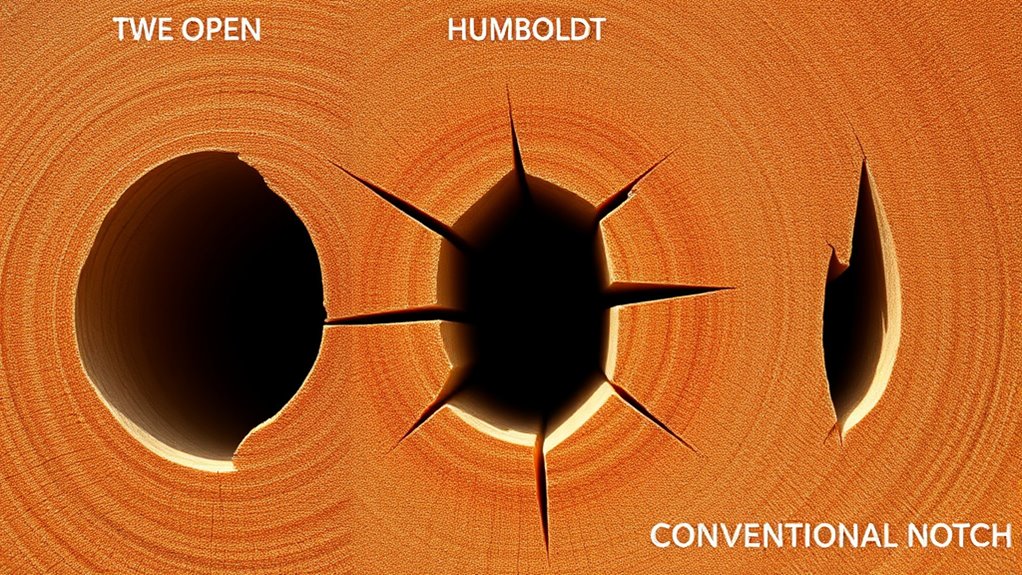
When choosing felling notches, you’ll find open notches are simple, shallow cuts ideal for small trees or quick jobs. Humboldt notches are deeper and more precise, perfect for larger trees needing controlled falls. Conventional notches balance safety and control, with a triangular shape for most situations. Knowing which to use depends on the tree’s size and condition. Continue to explore these notch techniques for safer, more effective tree felling.
Key Takeaways
- Open notches are simple, wide, shallow cuts suitable for small trees or quick cuts, but less secure for larger trees.
- Humboldt notches are precise, deeper cuts with sharper angles, ideal for larger trees requiring controlled, safe felling.
- Conventional notches combine top and bottom cuts to form a triangular face, balancing control and ease of cutting for various situations.
- Proper notch design, including accurate dimensions and angles, is essential for safe, predictable tree felling.
- Choice of notch type depends on tree size, lean, and desired fall direction, emphasizing safety and control in timber harvests.
Felling notches are essential cuts made in a tree trunk to control the direction of its fall safely and efficiently. When you’re planning to fell a tree, understanding timber fall techniques begins with mastering how to create effective notches. The notch design principles are fundamental because they determine how well the tree will fall and how predictable the process will be. Different types of notches, such as open, Humboldt, and conventional, each have their advantages and specific applications, but all share the goal of directing the fall while maintaining safety.
The open notch is one of the simplest forms and is often used for smaller trees or when quick cuts are needed. Its design involves a wide, shallow cut that forms a relatively open face, which helps guide the tree in a particular direction. The open notch is easier to cut and requires less precision, making it suitable for less complex felling jobs. However, because it’s less secure than other designs, it’s not recommended for larger or leaning trees where more control is necessary. When you’re using this technique, you rely on the natural lean and the cut’s angle to guide the fall, so understanding the tree’s behavior and applying proper timber fall techniques is crucial.
The Humboldt notch is a more advanced design, often used for larger trees or when a more controlled fall is needed. It features a sharper, more precise angle that creates a more secure hinge, providing better control over the fall. The key to effective use of this notch lies in adhering to notch design principles that emphasize proper dimensions and angles. You’ll typically see a deeper, narrower cut with a more acute angle, which helps the tree fall exactly where intended. When you’re planning to use this notch, ensure your cuts are clean and accurate because the stability of the hinge directly impacts safety and control during the felling process. Additionally, understanding the IRS regulations governing tree felling and timber harvests can help ensure compliance and safety during larger projects.
The conventional notch, also known as a traditional or standard notch, is the most widely used in professional felling. It combines a top cut and a bottom cut to form a triangular face. This design balances control and ease of cutting, making it suitable for most situations. Using proper timber fall techniques with the conventional notch involves precise measurements to ensure the face cut is adequate and the hinge is strong enough to guide the fall. It’s especially effective when you’re working with trees that lean or have irregular growth patterns, as it offers predictability and safety.
In all cases, understanding and applying the right notch design principles plays a vital role in safe, effective tree felling. Each notch type serves a specific purpose, but they all rely on your ability to execute clean, accurate cuts tailored to the tree’s condition and the desired fall direction. Mastering these techniques ensures you can fell trees efficiently while minimizing risk.
Frequently Asked Questions
How Do I Choose the Best Felling Notch for Specific Tree Types?
To choose the best felling notch for specific tree types, consider the tree’s size and wood hardness. An open notch offers better cutting precision and is ideal for larger or harder trees, providing durability during the cut. Humboldt notches work well for medium trees, balancing durability and precision. Conventional notches suit smaller or softer trees, ensuring clean cuts. Match the notch type to your tree’s characteristics for ideal durability and cutting accuracy.
What Safety Precautions Should I Take When Cutting Notches?
When cutting notches, prioritize tree safety by wearing proper gear and making sure your workspace is clear. Use sharp tools for precise notches, which enhances notch precision and reduces kickback risks. Always check the tree’s fall direction, maintain a safe distance, and have an escape route planned. Keep others away during cutting, and never work alone on unstable or leaning trees. These precautions help prevent accidents and ensure a safe, controlled felling process.
Can I Modify a Traditional Notch for Larger Trees?
Yes, you can modify a traditional notch for larger tree felling by adjusting its size and angle to handle the increased weight and leverage. Make sure you deepen or widen the notch as needed, ensuring it remains stable and effective. Always prioritize safety during these modifications, and double-check that the altered notch maintains proper direction and support, helping prevent accidents and ensuring clean, controlled cuts on larger trees.
How Does the Angle of the Notch Affect Tree Fall Direction?
They say “look before you leap,” and it applies here—your notch angle directly influences the fall direction. A steeper notch angle guides the tree more predictably, ensuring it falls where you want. Conversely, a shallow angle can cause unpredictable movement. By adjusting your notch angle carefully, you control the fall direction, making your felling safer and more precise. Always plan your cuts with the fall path in mind.
Are There Environmental Considerations When Using Different Notch Types?
When choosing different notch types, you should consider environmental impacts like wildlife disturbance and soil erosion. For example, open notches may cause more soil erosion due to increased exposure, while Humboldt notches might disturb less wildlife if properly planned. Always assess the site and select the notch that minimizes harm to ecosystems, ensuring you balance safe felling with protecting the environment. Proper planning helps prevent unnecessary wildlife impacts and soil degradation.
Conclusion
Now that you know about open, Humboldt, and conventional felling notches, you’re better equipped to choose the right one for your task. Did you know that using the correct notch type can reduce tree felling time by up to 30%? This efficiency not only saves you effort but also improves safety. So, take your time to select the appropriate notch, and you’ll ensure a cleaner, safer cut every time.