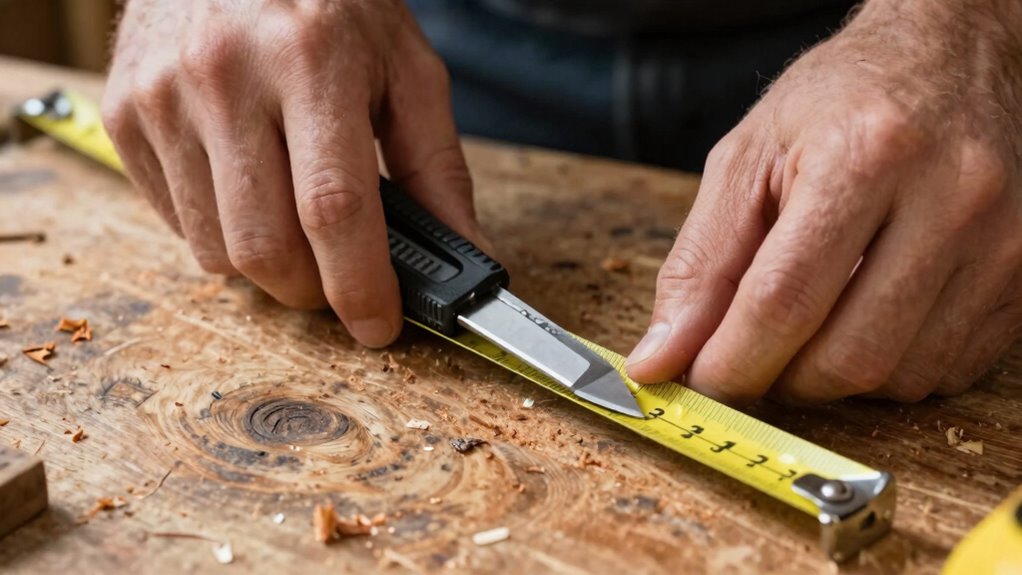

To keep your cuts straighter in the field, make sharpening a regular habit before and during your work, using proper abrasive techniques that maintain the correct blade angle. Keep a portable sharpening kit handy and check your blades often for dullness or chips. Consistently maintaining sharp blades prevents uneven cuts and safety issues. Mastering these practices guarantees better control and precision, giving you cleaner, straighter cuts every time—if you want to learn more, there’s plenty more to explore.

Get business pricing on tools and workshop supplies
- Business-only prices and quantity discounts
- Tax-exempt purchasing
- Multiple users, one account, clear invoices
Key Takeaways
- Regularly inspect blades to identify dull edges before cutting to maintain sharpness.
- Keep a portable sharpening kit nearby to quickly refresh blades during fieldwork.
- Maintain the correct sharpening angle specific to each blade for consistent, straight cuts.
- Use even, consistent pressure with abrasive tools to ensure uniform edge sharpening.
- Develop a routine to sharpen blades after each use or daily to prevent dullness and improve cut accuracy.

Maintaining a sharp blade is vital for making straight, precise cuts, especially when working outdoors or in the field. When your blade dulls, it can lead to uneven cuts, increased effort, and even safety hazards. That’s why adopting a regular blade-sharpening habit is fundamental, and understanding abrasive techniques can make all the difference. Proper blade maintenance isn’t just about sharpening — it’s about guaranteeing your tools stay effective and reliable, no matter where your work takes you.
Keeping blades sharp ensures clean cuts, safety, and reliability in every outdoor task. Regular maintenance is essential.
Abrasive techniques are key to keeping your blades in top shape. You might use a sharpening stone, a file, or a specialized abrasive wheel, depending on the tool and the context. The main goal is to remove any dull or chipped edges and restore the blade’s original sharpness. When you perform blade maintenance, you want to maintain the correct angle, which varies based on the blade’s purpose. For example, a pruning saw might need a different angle than a craft knife. Regularly inspecting your blade helps you identify when sharpening is necessary, preventing dullness from becoming a bigger problem. Developing a blade maintenance routine can further enhance your efficiency and safety.
Using abrasive techniques in the field requires a bit of preparation. Keep a portable sharpening kit with the right abrasive stones or files, so you’re ready to refresh your blade anytime. When sharpening, apply consistent, even pressure and follow the blade’s original angle. This consistency guarantees an even edge, which translates into straighter, cleaner cuts. Don’t rush the process—taking your time during blade maintenance pays off by extending the lifespan of your tools and maintaining their precision. Additionally, understanding blade angles and how they affect cutting performance can help you achieve better results. Regular maintenance also involves understanding how abrasive techniques remove dull edges effectively, which is crucial for keeping blades sharp. Being familiar with sharpening equipment and its proper use can improve your technique and results. Developing a routine for blade sharpening can significantly improve your overall efficiency and safety in the field.
As an affiliate, we earn on qualifying purchases.
Frequently Asked Questions
How Often Should I Sharpen My Field Tools for Optimal Results?
You should sharpen your field tools regularly, ideally after every few uses, to maintain best results. Frequent tool maintenance ensures cleaner cuts and reduces strain on your equipment. Always follow safety precautions, like wearing gloves and eye protection, when sharpening. Check for dullness or damage before each use, and sharpen as needed. Staying consistent keeps your tools effective, prolongs their lifespan, and minimizes accidents caused by dull blades.
What Types of Sharpening Stones Are Best for Field Tools?
Think of sharpening your tools like tending a garden—choosing the right stones nurtures their edge. For field tools, water stones are your rain, providing quick, smooth sharpening with less mess. Oil stones act like the rich soil, offering durability and precise edges. Both are excellent, but water stones are often favored outdoors for their ease and speed. Pick based on your preference, and your tools will stay sharp and ready.
Can Improper Sharpening Damage My Cutting Tools?
Improper sharpening can damage your tools, affecting both tool maintenance and blade durability. If you use the wrong angle or too much pressure, you risk dulling or chipping the blade, which shortens its lifespan. Always sharpen carefully, using the right stones and techniques, to prevent damage. Proper maintenance guarantees your tools stay sharp longer, perform better, and last through many tasks without needing early replacements.
Is There a Specific Technique for Sharpening in the Field?
Yes, there’s a specific technique for sharpening in the field. You should use portable sharpening tools designed for field maintenance, like a compact stone or honing rod. Keep your blade at the correct angle, usually around 20 degrees, and make steady, consistent strokes. Regularly check your edge to avoid over-sharpening, and clean your blade afterward. This approach guarantees your tools stay sharp, effective, and ready for whatever task you face.
How Do Weather Conditions Affect the Sharpening Process?
Ironically, weather variability can be your worst enemy during sharpening, as humidity effects make blades either rust or glide too smoothly. High humidity can lead to rust spots, ruining your edge, while dry air might cause your stone to clog faster. So, you need to adapt your technique—perhaps sharpening in more controlled conditions or adjusting your cleaning routine—because unpredictable weather definitely keeps your sharpening process more challenging than it should be.
Conclusion
By sharpening your blade before each cut, you guarantee precision, improve safety, and achieve cleaner results. By sharpening your blade before each cut, you maintain control, prevent mistakes, and save time in the long run. By sharpening your blade before each cut, you develop consistency, boost confidence, and elevate your craftsmanship. Embrace this simple habit—sharpen, cut, and create with confidence, knowing that every stroke is as sharp as your skills.
Fall Picks
fall essentials
As an affiliate, we earn on qualifying purchases.