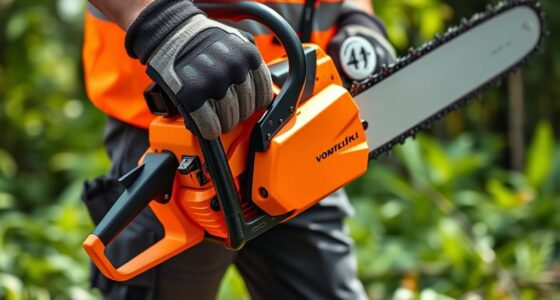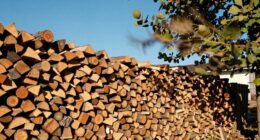
To get the best results, adjust your saw setup based on whether you’re bucking hardwood or softwood firewood. For hardwood, make sure your chain tension is precise to handle its density, and keep the chain sharp for smoother, safer cuts. In softwood, a slightly looser chain reduces wear and improves efficiency. Proper carburetor adjustments and fuel efficiency tips also help. Keep these factors in mind to maximize safety and performance—there’s more to perfecting your setup below.

Get business pricing on tools and workshop supplies
- Business-only prices and quantity discounts
- Tax-exempt purchasing
- Multiple users, one account, clear invoices
Key Takeaways
- Adjust chain tension slightly tighter for hardwood to handle higher density and prevent derailment.
- Use a looser chain tension for softwood to reduce wear and improve cutting speed.
- Ensure proper carburetor tuning to optimize fuel efficiency for both wood types.
- Regularly sharpen the chain to maintain cutting performance and reduce engine strain.
- Maintain proper saw setup, including balanced tension and lubrication, tailored to wood density for safety and efficiency.

Choosing the right saw setup is essential when bucking hardwood versus softwood firewood, as each type has different cutting requirements. The key factors to consider include chain tension and fuel efficiency, both of which significantly influence your cutting performance and overall experience. When working with hardwood, you need a saw setup that maximizes power and precision. Hardwood is denser and tougher, so ensuring your chain is properly tensioned allows for smoother cuts and reduces the risk of chain derailment. A well-tensioned chain maintains consistent contact with the wood, preventing the chain from slipping or jumping off the guide bar, which can be dangerous and damaging. Regularly checking and adjusting chain tension before each cut guarantees optimal performance, especially when tackling hardwood’s resistance. Additionally, maintaining proper chain lubrication helps reduce friction and wear, further improving your cutting efficiency.
Fuel efficiency is also a crucial aspect of your saw setup, particularly when working on larger hardwood logs that demand extended cutting sessions. A saw that runs efficiently saves you money on fuel and reduces emissions, making your work more environmentally friendly. Adjusting your carburetor to the correct settings, using the right chain oil, and maintaining proper chain tension all contribute to fuel efficiency. A sharp, well-maintained chain requires less power to cut through dense wood, meaning your saw consumes less fuel and operates more smoothly. Conversely, a dull chain increases resistance, forcing the engine to work harder, which burns more fuel and wears out components faster.
When bucking softwood, your setup can be slightly different. Softwood is less dense and easier to cut, so you don’t need as much power or aggressive chain tension. Over-tightening the chain in softwood can cause unnecessary wear and reduce fuel efficiency because the engine has to overcome increased resistance. Instead, you should aim for a slightly looser chain tension, which allows the chain to move freely and reduces strain on the saw’s motor. This setup not only prolongs the life of your saw but also ensures that your cuts are clean and safe. Softwood cuts are typically quicker, so maintaining optimal chain tension and fuel efficiency helps you work more quickly without sacrificing safety or performance. Proper saw setup tailored to the type of wood you’re working with can significantly improve your overall cutting experience.
As an affiliate, we earn on qualifying purchases.
Frequently Asked Questions
How Does Saw Blade Type Affect Cutting Efficiency?
Your saw blade type greatly impacts cutting efficiency by influencing how well it cuts through different woods. Blade material determines durability and sharpness, with carbide-tipped blades lasting longer. Tooth configuration affects cut speed and smoothness; for example, fewer teeth cut faster but rougher, while more teeth provide smoother cuts. Choosing the right combination based on your wood type guarantees efficient, clean cuts, saving you time and effort.
What Safety Gear Is Recommended for Different Wood Types?
Think of your safety gear as your shield against flying sparks and debris. You should always wear protective eyewear to guard your eyes from wood chips, and hearing protection to block out loud saw noise. For hardwood, consider heavier-duty gear since it demands more power. Softwood might require less, but never skip safety essentials—your gear keeps you safe as you carve through nature’s toughest and gentlest woods alike.
How Do Moisture Levels Impact Saw Setup Choices?
Moisture levels considerably influence your saw setup choices. When wood has high moisture content, it’s heavier and harder to cut, so you might need a more powerful saw with a sharper chain and proper tension. During the drying process, as moisture content decreases, you can switch to a less aggressive setup for cleaner cuts. Monitoring the moisture content helps you optimize your saw setup, making bucking easier and safer.
Can Specific Saw Setups Reduce Wood Splitting?
Yes, specific saw setups can reduce wood splitting by improving cutting precision and blade durability. Using a sharp, well-maintained blade with the right tooth configuration minimizes unnecessary force, preventing splits. Adjusting the saw’s tension and choosing a blade designed for hardwood or softwood guarantees cleaner cuts. This setup not only enhances cutting accuracy but also prolongs blade life, ultimately reducing the risk of splitting during bucking or firewood preparation.
What Maintenance Is Required for Different Saw Setups?
You might think maintenance is complicated, but with the right approach, it’s straightforward. Regularly sharpen your blades to guarantee clean cuts and prevent strain on your saw. Keep your dust collection system clear to maintain airflow and reduce debris buildup. Check and tighten bolts, lubricate moving parts, and inspect cords. Proper maintenance keeps your saw running efficiently, whether you’re bucking hardwood or softwood, making each cut safer and easier.
Conclusion
In sum, selecting the suitable saw setup sparks superior sawing success. Whether you’re tackling tough hardwoods or softwoods, matching your gear to your goals guarantees great gains. Gear up with the right blade, balance, and power for peak performance. Proper setup not only simplifies your task but also sparks satisfaction and safety. So, seize your saw, set it smartly, and let your skills shine—making every cut a confident and satisfying conquest!
Fall yard work Picks
leaf blowers
As an affiliate, we earn on qualifying purchases.