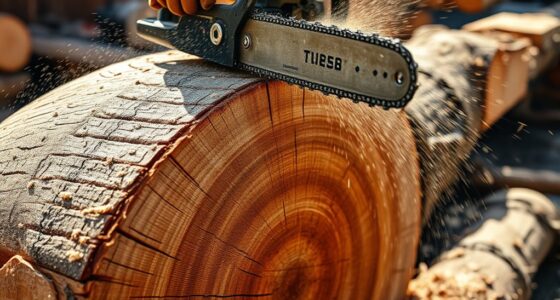

When limbing trees, the “two-side” rule helps guarantee safety and control. You should work on the side opposite the fall direction, making cuts from that side to guide the branch or limb safely down. This approach prevents unexpected falls or injury by maintaining stability. Always plan your cuts carefully and stay aware of the branch’s movement. Keep learning the best techniques to keep your work safe and efficient every time.
Key Takeaways
- The “two-side” rule involves working on the opposite side of the tree from the desired limb fall direction.
- Always plan your cuts to control the limb’s fall, reducing the risk of damage or injury.
- Begin cutting from the bottom side of the limb, then make the top cut to guide the fall safely.
- Maintain proper footing and safety equipment when working on the side opposite the fall direction.
- Using the “two-side” rule helps ensure controlled limb removal and enhances overall safety during limbing.
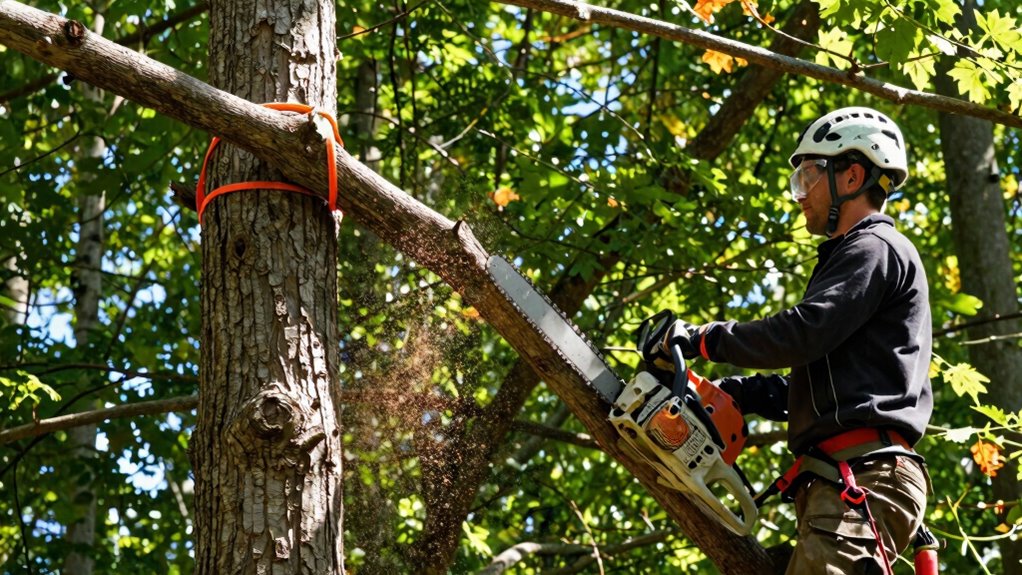
Limbing a tree can be dangerous if you don’t follow proper safety procedures. When you’re working on removing branches, understanding the right cutting techniques is essential to prevent accidents and guarantee a clean cut. Using proper cutting techniques reduces the risk of branches snapping unpredictably, which could cause injury or damage to surrounding property. Always cut just outside the branch collar to promote healthy healing and avoid tearing the bark. For larger branches, make a three-cut process: first, make an undercut a few inches away from the trunk, then a top cut a little further out to remove the branch cleanly, and finally, trim the remaining stub close to the trunk. This method minimizes the risk of bark tearing and guarantees a safer, cleaner removal. Additionally, utilizing connected equipment like safety harnesses and communication devices can enhance safety during high or complex cuts.
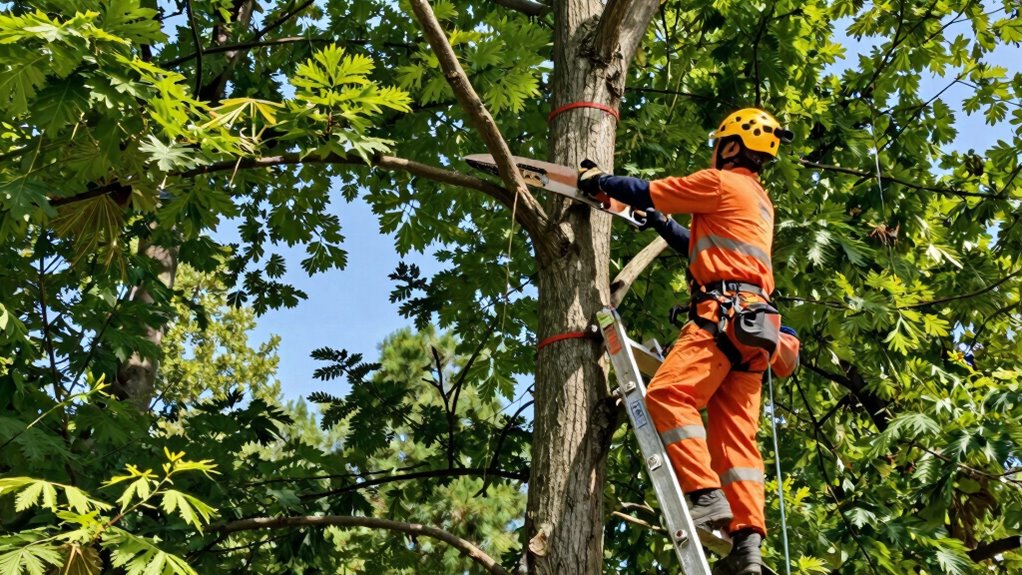
As you work your way down the tree, consider the order in which you remove branches. Start from the bottom and work upward, which helps maintain the tree’s stability and reduces the risk of falling limbs. Keep your footing secure and always use the right tools, like pruning shears or a saw suited for the branch size. Make sure your equipment is sharp; dull tools require more force and increase the chance of slips or accidents. Never overreach or work on a ladder unsafely—stability is vital when you’re cutting high branches.
Once you’ve completed the limb removal, you’ll need to address stump removal. Stump removal is often overlooked but is vital for a tidy yard and preventing pest infestations. You can opt for mechanical methods, such as stump grinding, which quickly chews up the stump into mulch-like chips, or chemical methods that accelerate decomposition over time. Regardless of the method, safety remains a priority—wear eye protection, gloves, and sturdy footwear. If you’re using power equipment, follow all manufacturer instructions and keep bystanders clear.
Throughout the entire process, remember the “two-side” rule: always work on the side opposite the direction you want the branch to fall. This ensures the branch falls away from you and any structures, reducing the risk of injury. When dealing with stump removal, be mindful of underground utilities and the surrounding landscape to avoid damage. Proper planning and adherence to safe cutting techniques protect you from injury and help you achieve a professional-looking result. Whether you’re pruning, removing limbs, or tackling stump removal, staying safe is your top priority, and understanding these techniques makes all the difference in completing the job efficiently and securely.
Frequently Asked Questions
What Equipment Is Essential for Safe Limbing?
To limb safely, you need essential equipment like a climbing harness to secure yourself and a chainsaw designed for safety. Always wear proper protective gear, including gloves, helmet, and eye protection, to prevent injuries during chainsaw use. Make certain you follow chainsaw safety protocols, maintain a firm grip, and stay aware of your surroundings. This equipment helps you stay balanced and protected while working on the tree, reducing the risk of accidents.
How Do Weather Conditions Affect Limbing Safety?
A stitch in time saves nine, so pay attention to weather hazards when limbing. You should consider seasonal considerations, as rain, snow, or wind can make conditions slippery and unpredictable. Poor weather can increase the risk of slips, falls, or losing control of the saw. Always check the forecast, plan for changing conditions, and adjust your approach to stay safe. Remember, safety isn’t just a rule, it’s a mindset.
What Are Common Mistakes to Avoid During Limbing?
To guarantee chain saw safety and maintain limb control, avoid common mistakes like cutting above shoulder height, rushing your cuts, or removing too much wood at once. Always plan your cuts carefully and stay aware of your limb’s position. Don’t forget to use proper technique, keep a firm grip, and stay alert to prevent accidents. These steps help you avoid injuries and keep your limbing safe and controlled.
How Should I Prepare My Workspace Before Limbing?
Before you start tree pruning, you should clear your workspace and conduct a hazard assessment. Remove any obstacles that could trip you or interfere with your movements, like branches or tools. Set up your safety gear and make sure your footing is stable. By preparing your workspace, you create a safer environment, reducing risks as you work on the limbing process, allowing you to focus on the task at hand confidently.
Are There Specific Techniques for Limbing Different Tree Species?
When limbing different tree species, you should use species-specific cuts tailored to each type. For hardwood limbing, focus on clean, controlled cuts to prevent splintering and damage. Adjust your techniques based on the tree’s wood density and branch structure. Always stay alert to the tree’s response and make precise, deliberate cuts. This approach guarantees safety and efficiency, especially when dealing with varied species and hardwoods.
Conclusion
Remember, applying the “two-side” rule isn’t just about following a step—it’s about staying safe when every cut counts. One slip, one overlooked branch, and everything could change in an instant. So, stay alert, keep your focus sharp, and never underestimate the power of proper limbing. Because in the end, the biggest danger isn’t the tree itself—it’s what you might miss if you’re not paying close enough attention. Are you prepared for what’s just around the corner?