When storm cleanup requires chainsaws, you need a different plan. Prioritize safety gear like gloves, eye protection, and hard hats, and inspect your equipment beforehand. Carefully evaluate the scene for hazards such as unstable branches and leaning trees, then plan your cuts to prevent unexpected falls. Clear escape routes and work methodically to avoid rushing. Being prepared for unpredictable debris and hazards makes your cleanup safer and more efficient. Keep going to discover essential tips for mastering storm debris removal.

Get business pricing on tools and workshop supplies
- Business-only prices and quantity discounts
- Tax-exempt purchasing
- Multiple users, one account, clear invoices
Key Takeaways
- Conduct thorough scene assessment to identify unstable branches and hanging limbs before starting chainsaw work.
- Ensure all safety gear is prepared and easily accessible to handle unpredictable debris and storm damage.
- Plan controlled cuts and fall directions to avoid damage to structures and ensure safe escape routes.
- Regularly inspect and maintain chainsaw equipment for optimal performance and safety in challenging conditions.
- Adapt your storm debris removal plan based on storm severity, debris type, and local regulations for efficient cleanup.

When a storm sweeps through your area, swift and efficient cleanup becomes essential, and a reliable chainsaw can be your best tool. After strong winds or heavy rain, fallen trees and broken branches can block roads, damage property, and pose serious safety hazards. To handle this situation effectively, you need a well-thought-out plan that accounts for the unique challenges of storm cleanup. Unlike regular tree removal, storm cleanup often involves unpredictable debris, unstable trees, and urgent timelines. Your first step should be evaluating the scene carefully, identifying hazards like hanging branches or leaning trees, which could shift unexpectedly during cutting.
Using a chainsaw for storm cleanup requires more than just pulling it out of the shed. Safety gear becomes your top priority. Invest in sturdy gloves, eye protection, earplugs or earmuffs, and a hard hat to shield yourself from flying debris. Steel-toed boots provide stability and protect your feet from heavy logs. When you’re working in a chaotic environment, PPE (personal protective equipment) minimizes your risk of injury. Remember, storm-damaged trees can be unpredictable—roots might be undermined, or branches could snap without warning. Always plan your cuts carefully, starting from a secure position and avoiding working beneath unstable limbs. Additionally, understanding tree stability can help you assess which trees or branches are safe to cut and which ones pose a risk of unexpected movement. Properly assessing hazards is crucial for reducing accidents during this high-risk work.
Tree removal during storm cleanup demands a strategic approach. You can’t simply cut and go; instead, you need to think about how falling logs will land and clear a safe escape route. Use your chainsaw to make controlled cuts, ensuring the tree or branches fall in a direction that minimizes damage to nearby structures or other trees. If you’re not experienced with large-scale tree removal, consider calling a professional—storm cleanup can be dangerous, especially with compromised trees. When you do proceed yourself, work slowly and methodically, taking breaks to stay alert and avoid fatigue. Planning your work also involves considering storm damage assessment, which can guide your priorities and safety measures. It’s also wise to stay informed about local regulations regarding debris removal and disposal to avoid legal issues.
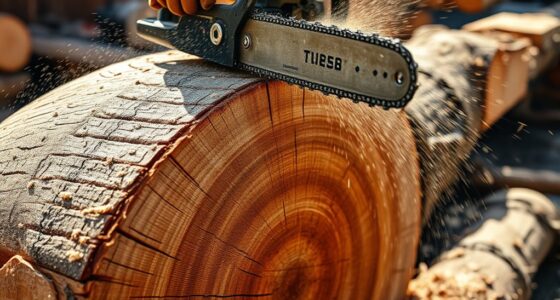
Storm cleanup chainsaws need a different kind of planning because of the urgency and the hazards involved. Prepare your equipment in advance—check the chainsaw’s fuel, chain tension, and sharpness. Have your safety gear ready and accessible. Map out a plan for removing debris in stages, prioritizing safety above all. Additionally, understanding hazard identification can help you better recognize and mitigate potential dangers during the cleanup process. Keep an eye on the weather; if conditions worsen, pause your work. Remember, rushing can lead to accidents. Storm cleanup is physically demanding, but with proper planning, safety gear, and cautious execution, you can clear the damage efficiently while protecting yourself from injury.
storm cleanup chainsaw safety gear
As an affiliate, we earn on qualifying purchases.
As an affiliate, we earn on qualifying purchases.
Frequently Asked Questions
What Safety Gear Is Essential for Storm Cleanup With Chainsaws?
You need essential safety gear like protective gloves to guard your hands and hearing protection to block out loud chainsaw noise during storm cleanup. Wear sturdy, non-slip boots for stability, eye protection to shield against debris, and a helmet if falling branches are a risk. Always make sure your gear fits well and is in good condition. Proper safety equipment keeps you safe and allows you to work efficiently amid the chaos.
How Do You Maintain a Chainsaw After Heavy Storm Use?
Did you know that properly maintained chainsaws last 30% longer? After heavy storm use, you should clean the chain and bar thoroughly, then check and sharpen the chain for maximum cutting efficiency. Fuel maintenance is essential—drain old fuel and replace it with fresh mix to prevent engine issues. Regularly inspect the chain tension, and lubricate the chain to guarantee smooth operation and extend your chainsaw’s lifespan.
Are Electric Chainsaws Effective for Large Storm Debris?
Electric chainsaws can be effective for large storm debris, especially with modern battery efficiency. While they may not match the raw power of gas-powered models, advances in battery technology improve their performance, making them suitable for many heavy-duty tasks. You’ll find that their ease of use, quieter operation, and lower maintenance make them a practical choice, especially when considering power comparison and convenience during storm cleanup.
What Are the Best Techniques for Cutting Fallen Trees Safely?
You should always plan your tree felling carefully, as about 30% of storm-related injuries happen during limb removal and tree cutting. To do this safely, check the tree’s lean and wind direction, clear the area, and use proper techniques. Make controlled cuts, start with small cuts to guide the fall, and always wear protective gear. This approach minimizes risks and guarantees a safer cleanup process.
How Do Weather Conditions Affect Chainsaw Operation During Cleanup?
Weather conditions profoundly impact chainsaw operation during cleanup. Storm winds can cause unpredictable tree movements, making cuts dangerous, while rain hazards create slippery surfaces that increase slipping risks. You should slow down and exercise extra caution, ensuring your equipment is dry and stable. Avoid working in high winds or heavy rain, as these conditions compromise safety, and always wear proper gear to protect yourself from unexpected hazards caused by the weather.
Conclusion
When storm cleanup hits, remember that planning with your chainsaw is key. Stay prepared, follow safety tips, and keep your tools sharp. Like a well-tuned orchestra, your efforts will run smoothly if you’re ready to adapt. After all, Rome wasn’t built in a day, and neither is a safe, efficient cleanup. With patience and the right approach, you’ll clear the mess and restore order—step by step.
Fall yard work Picks
leaf blowers
As an affiliate, we earn on qualifying purchases.