
TL;DR

Get tools and workshop supplies delivered free — and shop member deals
- Fast, free delivery on millions of items
- Access to Prime Big Deal Days deals on October 6–7
- Prime Video, Amazon Music and more included
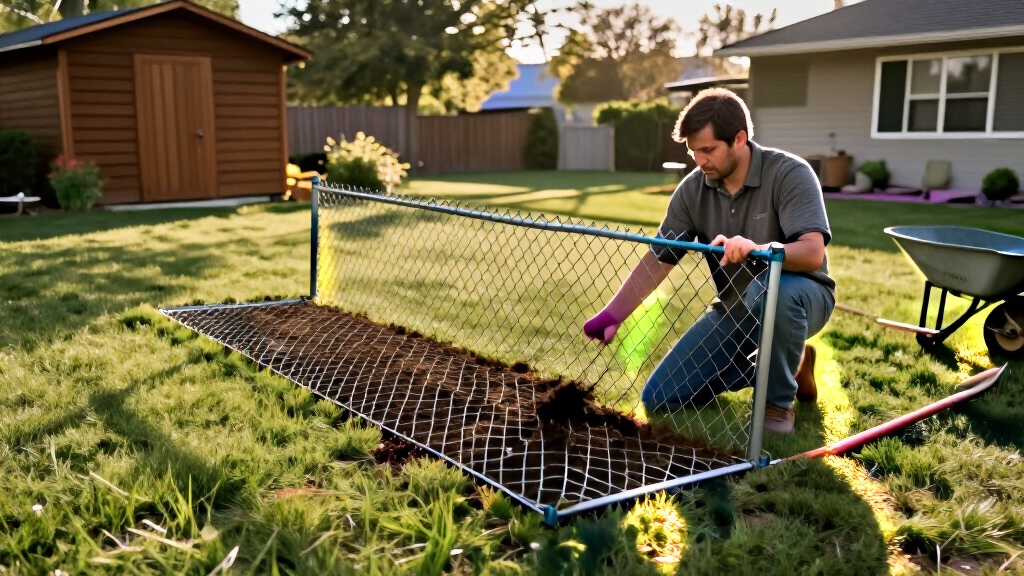
A Hunker report describes reusing a short piece of chain-link fence as a low-cost drag harrow to spread topsoil or sand and smooth minor lawn irregularities. The method relies on a securely attached weight and a suitable tow vehicle; it is not presented as a fix for major grading problems.
The method uses a section of chain-link fencing, ideally about five feet long, pulled across the lawn behind a riding mower or ATV. Hunker says the fence’s uneven wire pattern helps distribute material as it moves, making it more suited to spreading soil or breaking up aeration cores than to aggressive scraping. The report says it can be used after adding sand or topsoil, or after core aeration, when the ground is bare or about to be seeded.
To make the drag easier to tow, the report recommends a gate section with end panels that help keep the fence flat. If using a plain piece of fencing, a board or metal bar across the leading edge can provide a place to attach the tow line. A chain, rope or ratchet strap can connect both sides of the drag to the mower or ATV’s tow hitch. Hunker advises adding weight—such as landscaping timbers, old tires or cinder blocks—and fastening it securely because bumps can dislodge loose loads.
The report says galvanized chain-link is less prone to rust and is more suitable for ground dragging than some other types of fencing, including welded wire. It also gives examples of retail alternatives: at the time reflected in the source, chain-link gates were listed at Home Depot for about $56 to $77, while a Yard Tuff 5-by-4-foot ATV drag harrow was listed for about $137. Hunker listed a more substantial 4-by-4-foot chain harrow at about $284. Those prices are source-reported examples and may have changed.
A Low-Cost Tool for Minor Repairs
For a homeowner who already has a tow vehicle and can obtain scrap fencing, the approach may reduce the need to buy a purpose-built leveling tool. Reusing available materials can also keep a small lawn repair inexpensive. The guide’s examples show that a commercial drag harrow can cost more than a homemade version made from reclaimed parts, though the total DIY cost depends on what the owner already has and the price of any purchased hardware.
The limits matter: Hunker describes this as a way to address minor grade inconsistencies and distribute loose material. It does not establish that a fence drag can correct severe slopes, drainage problems or substantial unevenness. Those conditions may need a different assessment or a more controlled grading method.
chain-link fence for lawn leveling
As an affiliate, we earn on qualifying purchases.
As an affiliate, we earn on qualifying purchases.
How the Fence Becomes a Harrow
Drag harrows are based on farm implements used to smooth fields and tamp down weeds. The report distinguishes the DIY lawn version from heavier harrows fitted with tines or spikes, which can require a tractor and substantially more pulling power. A short section of chain-link is intended to glide behind a riding mower or ATV for lighter work.
Hunker presents two lawn uses: dragging across cores after aeration, followed by fertilizing and waiting for another cycle, or pulling the fence over newly added sand or topsoil to distribute it. It also says similar drags can smooth gravel driveways, where securely fastening the weight is especially relevant because the surface can be rough.
Limits and Costs Depend on the Yard
The report does not provide a controlled comparison of the DIY drag with a leveling rake or a commercial harrow, and it gives no measured results for how much material the fence can spread in one pass. It also does not specify a safe maximum weight or towing speed. The actual cost will vary with access to scrap fencing, attachment hardware and a suitable mower or ATV. The retail prices are figures cited in the source and may no longer reflect current listings.
It is also unclear from the guide how well the method performs on lawns with substantial elevation changes, compacted soil or drainage issues. The advice is framed for minor inconsistencies and loose material, so readers should not treat it as a guarantee of a level lawn.
Check the Surface Before Towing
Anyone considering the approach would first need to inspect the area and decide whether the unevenness is minor and suitable for surface smoothing. They would then need to find an appropriate piece of chain-link, fit a stable leading edge if necessary, and attach both the tow line and added weight securely before making a slow trial pass. The source does not give a detailed operating procedure or a schedule for repeat passes.
Hunker’s report is a how-to guide, with no announced follow-up or evaluation results. Whether this budget method works for a particular yard remains dependent on its surface, the equipment available and the amount of leveling required.
Key Questions
What kind of fence does the guide recommend?
Hunker recommends galvanized chain-link, ideally a gate section with panels at the ends to help keep it flat. It cautions that welded wire may not stand up to being dragged across the ground as well.
What can the drag be used for?
The report describes using it to spread sand or topsoil over minor lawn irregularities and to break up soil cores after aeration. It also mentions smoothing gravel driveways.
Does the homemade version cost nothing?
It can be very inexpensive if reclaimed fence, a tow line and weights are already available. Buying new components adds cost; the prices in Hunker’s examples are source-reported figures that may have changed.
Can it fix a steep or badly uneven lawn?
The guide discusses minor grade inconsistencies and does not show that a chain-link drag can correct major grading or drainage problems. It gives no measured performance results for severe unevenness.
Source: rss
Fall yard work Picks
leaf blowers
As an affiliate, we earn on qualifying purchases.