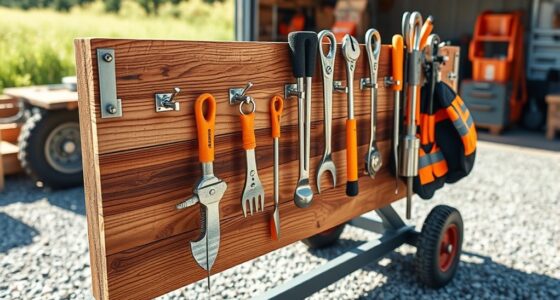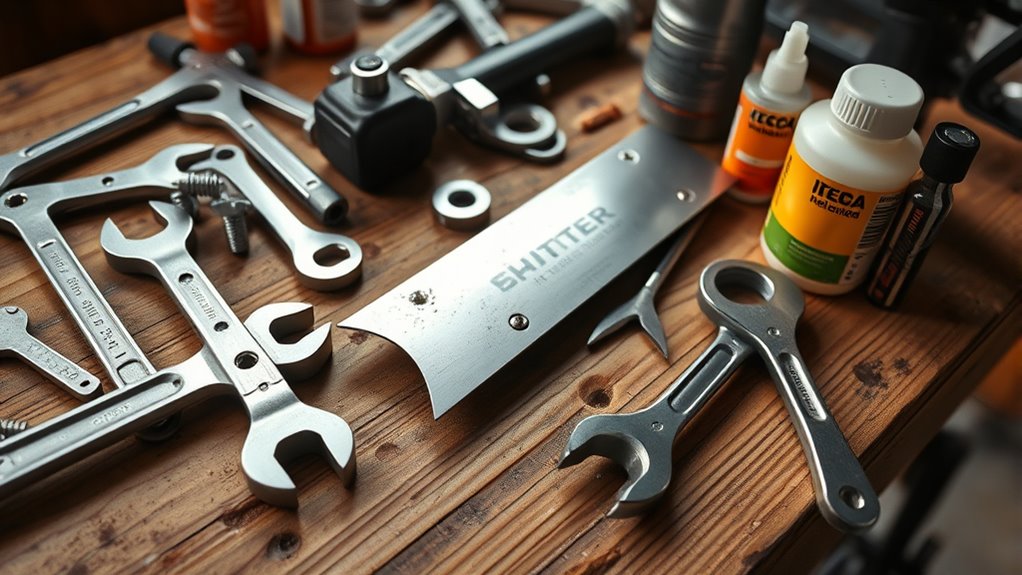

To optimize your log splitter maintenance, add mods like pegboards or tool rails for easy tool access, and incorporate adjustable vises or clamps for stability. Enhance visibility with small work lights, organize small parts on magnetic strips, and create designated testing areas for electrical checks. Keeping safety gear within reach and maintaining a clutter-free workspace reduces hazards and speeds repairs. Keep these improvements in mind to make your maintenance smoother—more helpful tips lie ahead if you keep exploring.
Key Takeaways
- Install a sturdy vise or adjustable clamps for secure holding of log splitter parts during maintenance.
- Add dedicated lighting, such as LED lamps, to improve visibility of hydraulic components and tight spaces.
- Incorporate magnetic strips or small trays to organize screws, nuts, and small parts for quick access.
- Mount testing stations for electrical switches, wiring, and sensors to facilitate diagnostics without disassembly.
- Create designated areas for hydraulic fluid checks and filter replacements to streamline routine maintenance.
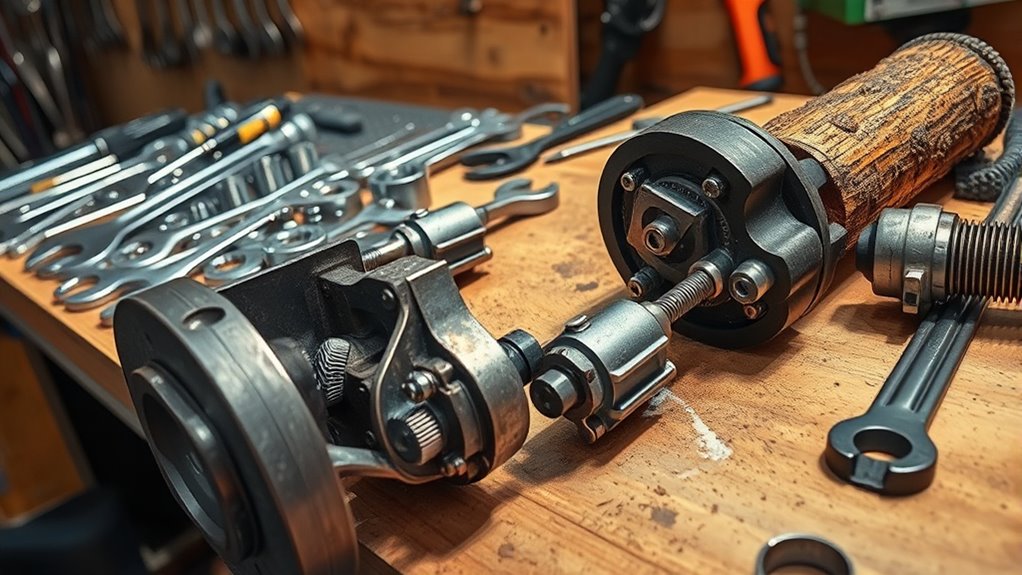
Maintaining your log splitter is essential for its longevity and ideal performance, and customizing your workbench can make this process much easier. When working on your splitter, safety gear should be your top priority. Always wear eye protection, gloves, and steel-toed boots to prevent injuries. A well-organized workbench that accommodates your safety gear ensures you have quick access to what you need, reducing the risk of accidents. Incorporate dedicated storage for safety equipment, making it easy to grab before starting maintenance or troubleshooting.
Customizing your workbench setup can streamline troubleshooting tips and routine checks. For example, installing pegboards or tool rails for hanging wrenches, screwdrivers, and other essential tools keeps everything within reach. Label compartments for different parts, such as hydraulic hoses, spark plugs, or filters, so you don’t waste time searching during maintenance. A clutter-free, organized space allows you to focus on the task at hand, reducing errors and making repairs more efficient.
Adding specialized mods to your workbench can also aid in troubleshooting. Consider mounting a sturdy vise or adjustable clamps to hold parts securely while inspecting or repairing. This stability simplifies diagnosing issues like hydraulic leaks or engine problems. Installing a small work light or adjustable LED lamp improves visibility, helping you spot leaks, cracks, or corrosion easily. When troubleshooting, having a clear view of your work area prevents mistakes and speeds up diagnosis.
When customizing your workbench, think about incorporating a dedicated area for testing components. For example, a small electrical testing station can help you verify switches, wiring, or sensors without dismantling the entire unit. This proactive approach saves time and reduces unnecessary parts replacement. Additionally, adding a magnetic strip or small parts tray keeps screws, nuts, and bolts organized and within arm’s reach, minimizing the chance of losing small components during repairs.
Finally, don’t forget about safety during maintenance. Before starting any work, disconnect the power source and bleed hydraulic lines if necessary. Use troubleshooting tips like checking for leaks, ensuring proper lubrication, and inspecting belts or chains regularly. Your customized workbench should facilitate these safety checks, making it easier to identify issues early and prevent bigger problems down the road. By integrating safety gear storage, organization solutions, and troubleshooting tools, you’ll create an efficient, safe space that makes maintaining your log splitter less formidable and more effective.
Frequently Asked Questions
What Safety Precautions Are Recommended for Workbench Modifications?
When modifying your workbench, always wear protective gear like gloves and safety glasses to prevent injuries. Keep your workspace organized, guaranteeing tools and materials are stored properly to avoid accidents. Clear the area of clutter, and work in well-lit conditions. Follow all safety guidelines, and double-check your modifications for stability before use. Taking these precautions helps protect you and ensures safe, effective workbench modifications.
Can I Convert My Log Splitter to Electric Using Workbench Mods?
Yes, you can convert your log splitter to electric by modifying it on your workbench, but verify workbench compatibility first. You’ll need to install an electric motor compatible with your splitter’s specifications and adjust the frame for proper mounting. Always verify electrical safety standards and make sure your workbench can handle the added weight and tools. Proceed carefully, following safety protocols to achieve a successful electric conversion.
What Tools Are Essential for Installing Workbench Mods?
You’ll need a good set of power tools, like drills and wrenches, to install workbench mods smoothly. Don’t forget safety gear—gloves, goggles, and ear protection—to keep yourself protected during the process. It’s funny how a simple screwdriver or a pair of pliers can become your best friends in these moments. With the right tools and safety precautions, you’ll have your mods installed efficiently and confidently, making your project a breeze.
How Do Workbench Mods Impact Log Splitter Warranty?
Workbench mods can void your log splitter warranty if they don’t align with the manufacturer’s modification policies. You should review these policies carefully before making any changes, as unauthorized modifications might lead to warranty voids. To protect your investment, verify your mods are approved or reversible, and keep documentation. This way, you minimize the risk of losing warranty coverage while customizing your equipment.
Are There Eco-Friendly Workbench Modification Options Available?
Did you know that over 80% of workbench modifications can be eco-friendly? You can choose sustainable materials like bamboo or recycled metal for your workbench, and use biodegradable lubricants to reduce environmental impact. These options not only help protect the planet but also guarantee your log splitter stays efficient. By making these eco-conscious choices, you contribute to sustainability without sacrificing functionality or durability in your workspace.
Conclusion
As you explore these workbench mods, you might find that the right tools and tweaks unexpectedly make your log splitter maintenance smoother. Sometimes, a simple upgrade or a clever addition can prevent a jam just when you need it most, saving you time and effort. It’s almost as if the universe aligns to help you stay prepared, turning routine maintenance into a hassle-free task. Embrace these mods, and you’ll be ready for whatever logs come your way.