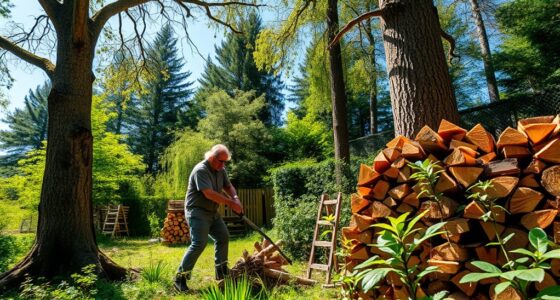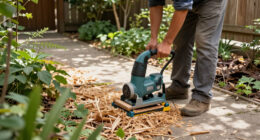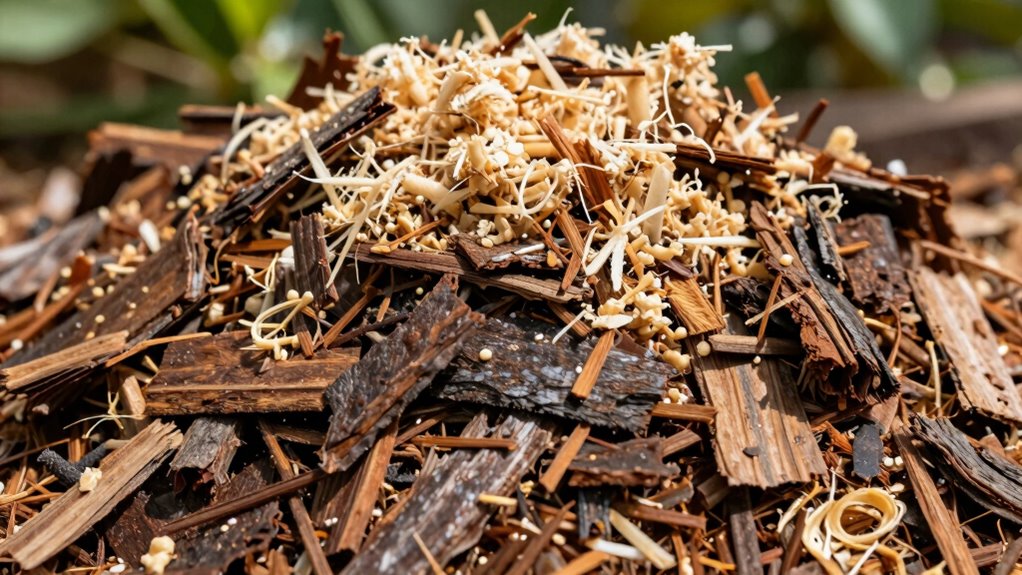

Yes, you can compost sawdust and bark, but you need to balance them with nitrogen-rich materials like grass clippings or food scraps. Managing moisture levels and ensuring proper aeration are essential to prevent odors and pests. Turn the pile regularly and keep it damp like a wrung-out sponge to promote decomposition. If you want to learn more about effectively composting these woody materials, keep exploring how to optimize your process.

Get business pricing on tools and workshop supplies
- Business-only prices and quantity discounts
- Tax-exempt purchasing
- Multiple users, one account, clear invoices
Key Takeaways
- Yes, sawdust and bark can be composted if balanced with nitrogen-rich materials like food scraps or grass clippings.
- Their high carbon content slows decomposition, requiring proper moisture, aeration, and nitrogen addition for effective composting.
- Mixing sawdust and bark regularly promotes airflow and prevents compaction, reducing foul odors and pest attraction.
- Proper moisture regulation is essential, keeping the pile damp but not overly wet to maintain aerobic microbial activity.
- Using microbial inoculants can accelerate decomposition of woody materials like sawdust and bark.
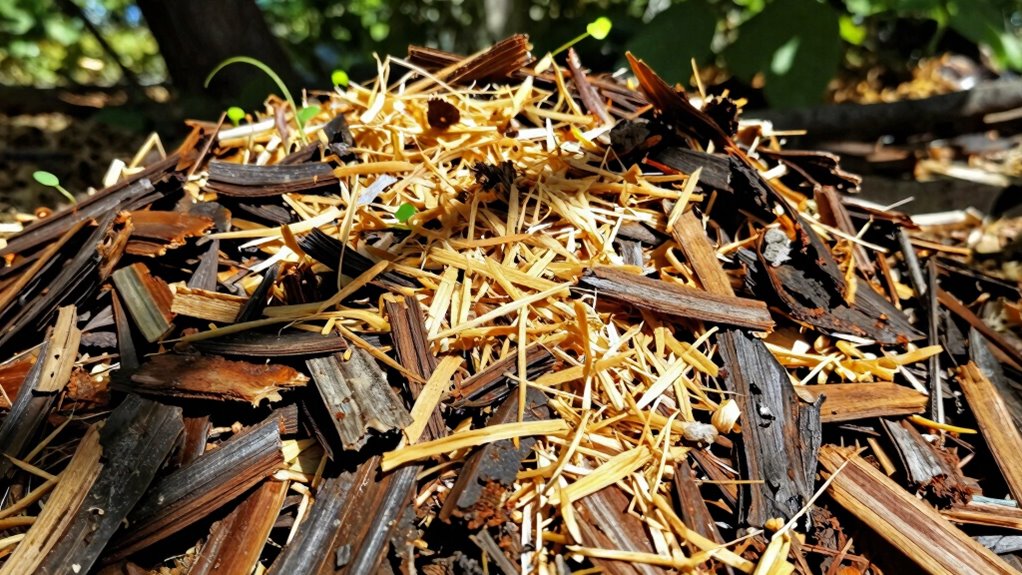
Composting sawdust and bark can be an effective way to turn yard waste into nutrient-rich soil, but it requires understanding how these materials decompose. Sawdust and bark are carbon-rich materials that add structure and bulk to your compost, but they also present unique challenges. One key aspect you’ll need to manage is pest control. If not properly balanced with nitrogen-rich materials like grass clippings or food scraps, these woody materials can slow down decomposition, creating pockets where pests might settle. To prevent pests, make certain your compost maintains good airflow and doesn’t become overly damp or smelly. Covering the pile with a tarp or adding a layer of soil can help keep pests at bay, especially during warm months when pests are more active.
Moisture regulation is vital when composting sawdust and bark. These materials tend to be very dry and can absorb moisture from the environment, leading to a pile that’s too dry for decomposition. Conversely, if your compost becomes waterlogged, it can turn anaerobic, producing foul odors and attracting pests. To strike the right balance, regularly check the moisture level—your compost should feel like a wrung-out sponge. If it’s too dry, add water or moist materials; if it’s too wet, turn the pile to aerate it and encourage excess moisture to evaporate. Proper moisture levels help microbes break down the bark and sawdust efficiently, speeding up the composting process. Additionally, understanding the carbon-to-nitrogen ratio is essential for successful composting, especially when working with high-carbon materials like bark and sawdust. Maintaining the correct decomposition process ensures that the materials break down properly and safely. Regular turning of the pile not only mixes the materials but also promotes airflow, which is essential for pest control and maintaining ideal moisture. This aeration prevents the pile from becoming compacted, which can lead to anaerobic zones that smell bad and invite pests. Additionally, incorporating microbial activity can help accelerate decomposition and improve compost quality. It’s also beneficial to monitor and adjust the pH level to prevent the compost from becoming too acidic or alkaline, which can hinder microbial activity. To support the microbial population, adding compost starters or inoculants can be a helpful microbial boost for faster and more efficient decomposition.
As an affiliate, we earn on qualifying purchases.
Frequently Asked Questions
How Long Does It Take for Sawdust and Bark to Decompose?
Sawdust and bark typically take several months to a year to decompose fully, depending on conditions. Your wood chip mulch undergoes organic decay as microbes break down the organic materials. To speed up the process, keep the pile moist, maintain good airflow, and balance green and brown materials. Turning the compost regularly helps distribute heat and microorganisms, ensuring faster decomposition of sawdust and bark into rich, usable compost.
Can Sawdust and Bark Be Used Directly in Vegetable Gardens?
You can use sawdust and bark directly in vegetable gardens, but it’s better to contemplate sawdust alternatives like composted wood chips or aged bark mulch. Bark mulch benefits include moisture retention and weed suppression, making it a good garden cover. However, fresh sawdust and bark may tie up nitrogen as they decompose, so mixing them with compost or using aged mulch helps improve soil health and plant growth.
Are There Any Pests Attracted by Composting Sawdust and Bark?
Composting sawdust and bark can attract pests if not managed properly. To prevent this, focus on pest prevention by turning the compost regularly and maintaining proper moisture levels. Pest identification helps you spot issues early, like rodents or insects. Keep the compost covered and avoid adding too much bark or sawdust at once. Proper management guarantees your compost remains pest-free and beneficial for your garden.
What Are the Best Conditions for Composting These Materials?
Think of your compost as a symphony where microbial activity conducts harmony. To achieve this, maintain ideal conditions by balancing moisture and aeration, ensuring the sawdust and bark stay damp but not soaked. Keep the temperature warm and turn the pile regularly to encourage decomposition. Proper moisture management and fostering microbial activity turn these materials into rich soil, transforming waste into nourishment and completing the cycle of growth.
How Do I Balance Nitrogen and Carbon When Composting Sawdust and Bark?
To balance nitrogen and carbon when composting sawdust and bark, you need to manage the carbon-to-nitrogen ratio for ideal microbial activity. Sawdust and bark are high in carbon, so add nitrogen-rich materials like grass clippings or kitchen scraps to speed up decomposition. Aim for a C:N ratio around 25-30:1, which promotes healthy microbial activity, ensuring your compost breaks down efficiently and produces rich, usable soil.
Conclusion
In the end, composting sawdust and bark isn’t a lost cause; you just need the right balance. It’s a bit of a tightrope walk, but with patience and proper aeration, you’ll turn these materials into rich, nourishing compost. Don’t throw in the towel too soon—remember, every cloud has a silver lining. Keep at it, and you’ll be surprised how these humble scraps transform into garden gold, rewarding your green thumb every time.
Fall Picks
fall essentials
As an affiliate, we earn on qualifying purchases.